If you are planning to buy or install a welding machine, one of the first questions you should ask is: how many amps does a welder use? The answer depends on several factors, including the type of welder, input voltage (110V or 220V), output settings, duty cycle, and the thickness of the material you are welding.
In general:
- Small 110V welders use 20 to 30 input amps
- Medium 220V welders use 30 to 50 input amps
- Large industrial welders can use 50 to 100+ amps
However, these numbers refer to input amps, not the welding output amps you see on the front panel. Understanding the difference is critical for choosing the right breaker, wiring, and generator.
In this complete guide, you’ll learn how many amps different welders use, how to calculate power requirements, what breaker size you need, and how to safely run a welder at home.
Table of Contents
Input Amps vs Welding Output Amps Explained
One of the biggest mistakes beginners make is confusing input amps with output amps.
Input Amps
Input amps are the electrical current drawn from your wall outlet or generator. This is what determines:
- Breaker size
- Wire gauge
- Generator requirements
- Electrical safety
Output Amps
Output amps refer to the welding current at the arc. For example, a 140-amp MIG welder produces up to 140 amps at the electrode, but it does not draw 140 amps from your outlet.
Because of voltage differences and efficiency losses, the input amps are much lower than the output amps.
Amps Depend on Welders
The rated amperage of a welder is its maximum output under ideal circumstances. It’s the number you’ll see on the machine. Many people use these numbers to compare welders. It doesn’t have much to do with the amount of current the welder will consume while welding. The welder will only use as much current as it needs to maintain a steady arc, and that number depends on several factors.
How Many Amps Does a 110V Welder Use

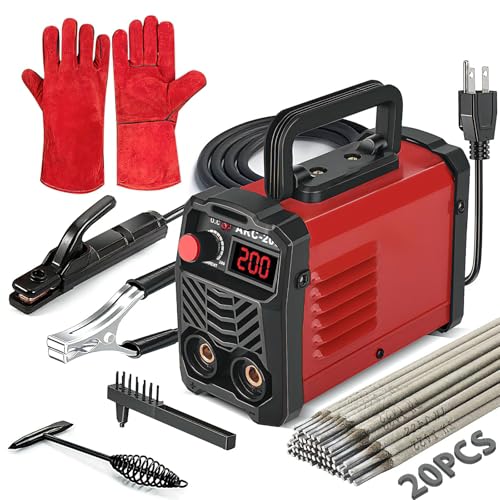
A typical 110V or 120V welder draws:
20 to 30 input amps
Small 120V welders are designed for home use and light fabrication. Many plug into standard household outlets, but most require:
- A dedicated 20-amp or 30-amp breaker
- 12-gauge or thicker wiring
Examples:
- 90-amp flux core welder: 15 to 20 amps input
- 140-amp MIG welder (120V): 20 to 25 amps input
Important: A standard 15-amp outlet may not be sufficient for most welders.
How Many Amps Does a 220V Welder Use

![ARCCAPTAIN 165A MIG Welder 110V/220V, 2025 Newest [Large LED Display] 4 in 1 Gasless/Gas MIG/Lift TIG/Stick Welding Machine Multiprocess Welder Machine, IGBT Inverter Welder with Synergy, 2T/4T](https://m.media-amazon.com/images/I/51GW2TUAy1L._SL500_.jpg)
A 220V or 240V welder typically draws:
30 to 50 input amps
Larger welders require higher voltage but often run more efficiently than 120V models.
Examples:
- 180-amp MIG welder: 30 to 40 amps input
- 200-amp TIG welder: 40 to 50 amps input
- 250-amp stick welder: 40 to 60 amps input
Most 220V welders require:
- 30-amp to 50-amp breaker
- 8-gauge or 6-gauge wire
How Many Amps Does a MIG Welder Use

MIG welders vary based on size and voltage.
120V MIG Welder:
- 20 to 25 amps input
220V MIG Welder:
- 30 to 40 amps input
MIG welding is efficient and commonly used in home garages and auto repair.
How Many Amps Does a TIG Welder Use


TIG welders often draw slightly more power, especially at higher output settings.
- Small 120V TIG: 20 to 30 amps
- 240V TIG: 30 to 50 amps
- High-end TIG: 50+ amps
TIG welding requires stable power for arc precision.
How Many Amps Does a Stick Welder Use
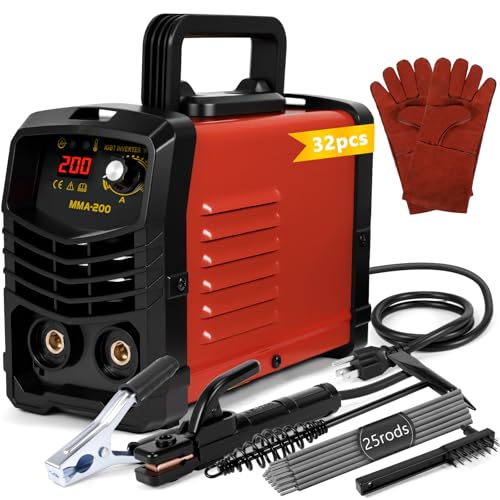
Stick welders typically draw more input amps due to higher output capacity.
- 120V stick welder: 20 to 30 amps
- 240V stick welder: 40 to 60 amps
- Industrial stick welder: 60+ amps
Stick welding is common for heavy fabrication and outdoor work.
How to Calculate Welder Power Consumption
To estimate power needs, use this formula:
Watts = Volts × Amps
Example:
240 volts × 40 amps = 9,600 watts
If choosing a generator, always add a 20 to 30 percent safety margin.
9,600 watts × 1.25 = 12,000 watts generator recommended
What Size Breaker Do You Need for a Welder
Breaker size depends on input amps.
For 120V welders:
- 20-amp breaker minimum
- 30-amp preferred for higher models
For 240V welders:
- 30-amp breaker for small machines
- 40-amp to 50-amp breaker for medium machines
- 60-amp breaker for heavy industrial welders
Always check the manufacturer’s data plate.
Can You Run a Welder at Home
Yes, but you must consider:
- Electrical panel capacity
- Dedicated circuit
- Proper grounding
- Wire gauge
Most homes can support a 120V welder easily. A 240V welder may require panel upgrades.
Generator Size for Running a Welder
Generator sizing depends on input watts.
Small 120V welder:
- 5,000 to 7,000 watt generator
Medium 240V welder:
- 10,000 to 12,000 watt generator
Large welder:
- 12,000+ watts
Inverter welders are more generator-friendly than older transformer models.
Complete Guide: How Many Amps Does a Welder Use
What are the Benefits of Higher Amperage Welding?
There is no doubt that higher amps welders have more advantages than low amps welders. My favorites are listed below.
- Consistently Cleaner Welds – One of the best things about higher amp welds is how clean and consistent they look.
- Enhanced Penetration – In welding penetration, the deeper the weld is, the better it’s chance of holding.
- More Robust Materials – When you use a machine with a higher amp rating, you can weld thicker materials.
- Increased Options – A higher amp machine gives you more options with welding.
What Do You Need to Know Before You Start Welding?
Before starting any job, you must research it. It is better to get a clear idea about that job. The same is valid for welding. Before starting welding, you must have the proper information about all pieces of equipment. In this way, you will be able to achieve good results.
Make sure you have the Right Equipment.
Welding is a dangerous activity that can cause severe injuries if you don’t have the proper equipment. Before you start welding, make sure you have the following items:
A welder is rated for the thickness of the metal you will be welding. A welding helmet with a dark lens safeguards your eyes from the bright flashes of light produced by welding. Use thick gloves to protect your hands from heat. A long-sleeved shirt or jacket shields your arms from the heat. Jeans or other heavy pants protect your legs from flying sparks. Boots with thick soles protect your feet from hot metal.
Read the Welder’s Manual
Welders should read their manuals before striking an arc. You must understand how your welder works and what materials best suit the process.
There are many dangers associated with welding. Always wear proper personal protective equipment, including a welding helmet, gloves, long sleeves and pants. Never weld in wet locations.
Welding produces harmful fumes and gases. Ensure you have proper ventilation when welding by working outdoors or using a fan to ventilate the area.
How to Set Up Your Welder
Before you can start welding, you need to set up your welder. It includes choosing a suitable welding machine, setting the power, and connecting the consumables. But how do you know which welder to choose, and how do you adjust the power? Read on to find out.
Choose the Right Location
When you’re ready to start welding, the first thing you need to do is choose the right location for your project. You’ll want to ensure that you have plenty of space to work and that the area is well-ventilated. It would be best if you also considered the following factors:
- Is the area well-lit?
- Are you working on a level surface?
- Do you have easy access to a power source?
- Are there any flammable materials nearby?
Once you’ve found a suitable location, set up your welder according to the manufacturer’s instructions. Ensure you wear proper safety gear, including gloves, long sleeves, and a welding helmet.
Connect the Power
Connect the power to the welder using the proper cables. Most welders will have either a 240-volt or a 208-volt power connection. The welder will also have a ground connection that needs to be attached to a metal surface that is clean and free of paint or rust.
Tips for Beginner Welders
Welding is joining two pieces of metal together using heat and pressure. The welder uses an electrode to create an arc of electricity between the two pieces of metal. This arc of electricity heats the metal, and the welder can then apply pressure to fuse the two pieces of metal.
Don’t be Afraid to Ask for Help
When you’re just starting, welding can be a very overwhelming process. There are so many different things to learn, and knowing where to start can be challenging. The best thing you can do is to find an experienced welder who is willing to help you and answer any questions you have. Don’t be afraid to ask for help. It’s the most effective way to learn.
Practice on Scrap Metal
Scrap metal is an excellent way to practice welding and improve your skills. You can find scrap metal at most hardware stores or online. When starting, try different types of metal to see which one you like best. Once you’ve found a kind of metal that you’re comfortable with, practice welding on it until you’re confident in your abilities.
Another effective way to practice welding is by taking apart old projects you’ve completed. It will allow you to see how your welds held up over time and how well they withstand stress. If you find any areas that need improvement, be sure to practice on those until you’re satisfied with the results.
FAQs
How many amps does a 220v welder consume?
It is estimated that a 220-volt welder will consume half the power of a similar 110-volt welder. The most common welders are 90-100 amps, but you can also find smaller and larger machines. There will probably be a lot less current required for an air compressor at 220v or 110v, perhaps 20-30 amps at 220v or 20-50 amps at 110v.
A 240V welder needs what size breaker?
A 50-amp circuit breaker and 6-gauge wiring are required for 240-volt, 40- to 50-amp welders. An 8-gauge wire and a 40-amp breaker are required for welders operating at 30 to 40 amps. A 30-amp circuit breaker can be used with 10-gauge wire for welders whose input amps do not exceed 30 amps.
What is the amp draw of a 240V welder?
In addition to a 50 amp circuit breaker, a 240-volt, 40 – 50 amp welder will require six gauge wiring. Wires of 8-gauge and at least a 40-amp breaker are needed for welders operating at 30 – 40 input amps. Wire of 10-gauge and a 30-amp circuit breaker can be used with smaller welders working below 30 amps.
A 225 amp welder needs what size breaker?
The breaker should be 50 amps and the wire should be 8/2 or 6/2. Although 6/2 is fine, but 8/2 will be more suitable for welders.
Does a stick welder require a specific size of breaker?
The most commonly used circuit breaker on welding installations is a double pole 60 amp. Most workshop units use 50 amps for light-duty work, even though the size is usually more than adequate.
Conclusion: Choosing the Right Amperage for Your Welder
Understanding how many amps a welder uses is essential for safety, performance, and electrical planning.
Small 120V welders typically draw 20–30 amps, making them suitable for home garages and light fabrication. Larger 240V welders can require 40–60 amps or more, especially for heavy-duty or industrial applications.
The most important factors to consider include:
- Input voltage (120V vs 240V)
- Maximum output amperage
- Duty cycle
- Circuit breaker size
- Extension cord rating
- Type of welding process
Never guess your electrical requirements. Always verify the machine’s input amp rating and ensure your breaker, wiring, and outlet can safely handle the load.
Choosing the correct amperage setup prevents tripped breakers, overheating wires, and potential fire hazards, while ensuring your welder performs at its best.
If you’re planning to buy a new machine, always compare input amps, output range, and power requirements before making your final decision.

James is a welding expert, accomplished author, and trusted guide with over 8 years of experience in the industry. With his in-depth knowledge and engaging writing style, James has become a true authority in the field, offering readers and clients invaluable expertise and insights to take their welding skills to new heights.