Walking into a welding supply shop or scrolling through online safety gear can be overwhelming. You see full jackets, aprons, and a strange-looking item that covers just your arms. You might ask yourself, are welding sleeves good protection, or are they just a gimmick? The short answer is yes. For many scenarios, they are the perfect piece of personal protective equipment (PPE). However, they are not for every single job. Understanding when and why to use them will save your skin from painful burns.
This article breaks down the reality of using sleeves. We will cover the materials, the comfort level, and the specific situations where sleeves outperform a heavy jacket. By the end, you will know exactly how to fit them into your safety routine.
Table of Contents
What Exactly Are Welding Sleeves
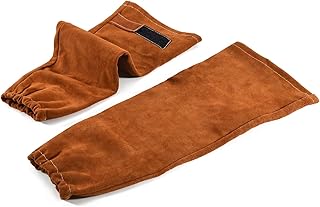
QeeLink Leather Welding Work Sleeves for Men & Women with Kevlar Stitching
Check PriceWelding sleeves are protective garments worn on the arms only. They typically extend from the wrist up to the bicep or shoulder. They attach to the arm via elastic bands, snaps, or hook-and-loop straps. Their sole purpose is to block sparks, spatter, and radiant heat from burning your forearms and upper arms.
Sleeves do not cover the torso. This makes them fundamentally different from a welding jacket. You get targeted protection without the bulk covering your chest and back. Most sleeves are made from flame-resistant (FR) leather or treated cotton.
Primary Materials Used
- Split Cowhide Leather: The gold standard for heavy-duty work. It offers exceptional heat and abrasion resistance. It naturally repels molten metal spatter.
- FR Treated Cotton: Lighter than leather. The fabric is chemically treated to self-extinguish. It is ideal for low-amp TIG welding or grinding.
- Kevlar Blend: Extremely cut-resistant and heat-resistant. Often used in combination with leather. It adds durability and flexibility in high-wear areas.
When Are Welding Sleeves a Good Choice
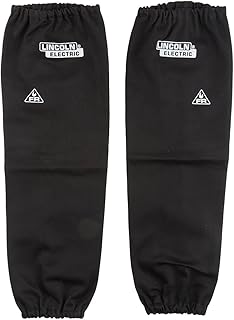
Lincoln Electric KH813 Flame-Resistant Welding Sleeves
Check PriceWelders love sleeves for their flexibility. You do not always need a fortress of leather around your whole body. If you are executing a quick tack weld in a hot warehouse, throwing on a heavy jacket can cause overheating. Sleeves offer a quick-on, quick-off solution.
Are welding sleeves good for bench work? Absolutely. When seated, your torso is often shielded by the welding table. The direct line of fire is toward your arms. Sleeves stop the spatter hitting your skin without trapping sweat across your back.
Comparing Sleeves vs. Jackets
The ongoing debate relies on the environment. A full jacket is mandatory for overhead welding. Gravity pulls molten metal straight down. However, for flat or horizontal positions, sleeves provide focused safety. They keep your underarms cooler, which drastically improves comfort during long shifts.
Comfort is a safety feature, not a luxury. If you are overheating, you are likely to unzip a jacket or take it off entirely. A pair of sleeves feels less restrictive. You maintain protection while avoiding heat stress. In terms of cost, sleeves are often cheaper than a premium jacket, allowing you to replace them frequently.
The Undeniable Advantages of Using Sleeves
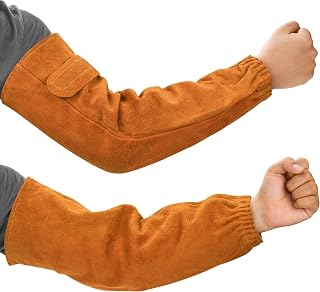
Leather Welding Sleeves for Men and Women, Real Cow Leather with Kevlar Stitching
Check PriceBeyond the basic coverage, sleeves solve specific problems. The upper back and shoulders often carry the brunt of heat buildup. Taking the weight of a jacket off your shoulders reduces fatigue. You feel more nimble, especially in a production shop where movement is constant.
- Targeted Shielding: You protect where impacts are highest, the inside of the forearm.
- Superior Ventilation: Air circulates around your core, drastically reducing sweat buildup.
- Economical: You can get high-quality leather protection for a fraction of the price of a jacket.
- Mobility: No chest zippers or bulky armpit seams to restrict overhead reaching.
Situations Where Sleeves Fall Short
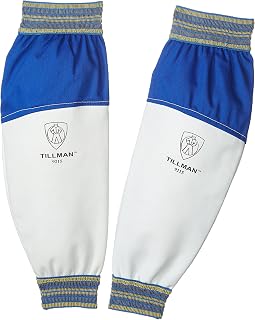
Tillman 9215 Goatskin/FR Leather Goatskin & Cotton Protective Welding Sleeves
Check PriceTo give an honest answer, we must acknowledge when sleeves are not good. If you are running high-amp flux-core welding, the spatter is massive. It can fill the air like a grenade. A sleeve leaves your neckline exposed. Spatter can bounce off the table and land on your lap or stomach.
Working in confined spaces often requires rolling around on the floor. A sleeve might spin on your arm or ride up, leaving your elbow exposed. A jacket stays anchored. If you are welding overhead, you need a cape or jacket. Sleeves cannot stop a blob of molten metal rolling down your shoulder onto your chest. Always assess the splatter radius before choosing just sleeves.
Picking the Right Pair for Your Process
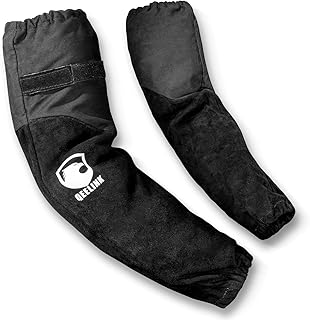
Leather Welding Work Safety Sleeves Heat & Flame Resistant with Kevlar Stitching
Check PriceNot all sleeves are created equal. The thickness and material must match the amperage. Thin cotton sleeves are perfect for a TIG welder running under 100 amps. They stop the UV burn and the occasional tiny spark. For stick welding or MIG above 200 amps, you need heavy cowhide.
Look at the attachment method. Some sleeves use a simple elastic band at the bicep. These are fast to remove but can slip down. Premium sleeves have adjustable straps with hook-and-loop. They also feature a thumb loop to prevent the sleeve from pulling back from the glove. This small detail ensures there is no skin gap between your welding gloves and the sleeve.
Sizing and Coverage Area
The length matters greatly. Short sleeves that stop at the elbow are practically useless for stick welding. You need the protection to go all the way to the shoulder. Look for 21-inch or 23-inch lengths. These overlap with the short sleeve of your cotton shirt, sealing the gap.
If you wear an apron, sleeves that buckle at the top work well. But if wearing just a shirt, you want a high attachment point near the shoulder cap. Tight armpit seams are the enemy. Look for a gusseted or scalloped shape at the top to allow full arm rotation.
Washing and Maintaining Welding Sleeves
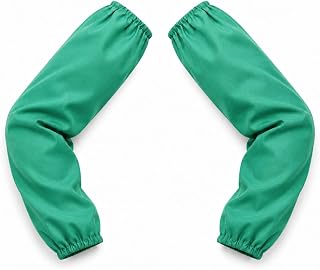
MAGID 180183 SparkGuard Cotton Flame Resistant Sleeve, 18″ Length, Green
Check PriceMaintenance is often overlooked. Dirty sleeves saturated with oil become a fuel source. Leather sleeves should be brushed clean but not soaked in water, which can harden the hide. Cotton FR sleeves can be washed, but skip the fabric softener. Softeners leave a flammable coating that defeats the chemical treatment.
Always check for burn holes. A spark passing through a hole in the sleeve is a direct hit to your skin. Inspect the elastic cuffs. Once they lose tension, sparks can fall into the wrist opening. In high-quality shops, sleeves are considered a consumable. Replace them the moment the integrity is compromised. You should also check how to properly maintain your full face protection by reviewing how proper welding helmet lens clean practices keep visibility clear.
Common Misconceptions About Arm Protection
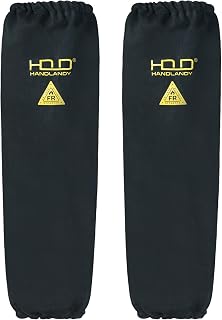
HANDLANDY Flame Resistant Welding Sleeves Arm Protection for Men and Women
Check PriceSome beginners believe a thick denim shirt acts as a welding sleeve. It does not. Denim is cotton. It catches fire and burns vigorously. FR cotton is chemically altered. It simply chars and goes out. Do not mix up fashion with safety. Real welding sleeves have an ASTM flame-resistance rating.
Another myth is that sleeves are only for hot work. They actually protect against severe sunburn from the arc flash. UV radiation from an arc is intense enough to cause skin cancer over time. Covering your arms with a sleeve blocks the radiation, even if you are far from the spatter zone. It is a shield against invisible light, not just a heat sink.
The Comfort Factor and Productivity
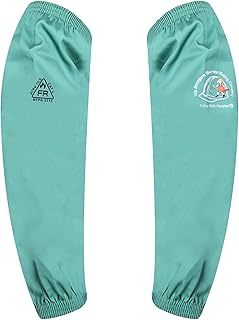
Strongarm FR Welding Sleeves, 9 oz FR Cotton/Hybrid Options, Elastic Cuffs
Check PriceConnecting comfort to productivity makes sense. A comfortable welder holds a steadier torch. If a sleeve makes you 5% more accurate because you are not fighting a heavy arm, the weld quality improves. The psychological aspect matters too. Knowing your arms are safe lets you focus entirely on the puddle.
Summer welding is brutal. Wearing a full leather jacket might lead to heat exhaustion. Using a leather sleeve paired with a light FR vest is a tactic many pipeline welders use. They stay cool but keep the critical impact zones covered. This balance of safety and thermoregulation is where sleeves shine brightest.
Integrating with Other PPE
Sleeves work best in a system. The classic combo is an FR long-sleeve shirt, capped by a welding sleeve, finished with a welding apron. This gives three layers on the arm. The apron protects the chest and lap. This modular setup allows you to peel off layers without ever exposing bare skin.
Make sure your helmet bib overlaps with the collar of the sleeve or shirt. Scan your body silhouette before striking an arc. Look for the V zone of the neck. A balaclava or bandana usually fills this gap, completing the shield.
Frequently Asked Questions
Are welding sleeves really necessary?
Yes. The arc emits UV radiation capable of burning skin within minutes. Spatter and slag from MIG or stick welding cause third-degree burns on unprotected arms. A sleeve is the minimum barrier required to work safely.
Can I wear welding sleeves instead of a jacket?
You can, if the work is horizontal. If the work is overhead or heavy structural welding with massive sparks falling like rain, a jacket is mandatory. Sleeves leave the torso open to falling debris.
How long should welding sleeves last?
A quality split cowhide sleeve used daily in heavy fabrication might last 3 to 6 months. Cotton FR sleeves degrade faster. Any cracking, charring, or loss of elasticity signals immediate replacement.
Are leather sleeves too hot for TIG welding?
Yes, sometimes. TIG produces almost no spatter. The main risk is UV burn. Lightweight FR cotton sleeves are much cooler and perfectly adequate for low-amperage TIG work. Save leather for high-heat processes.
Do welding sleeves restrict movement?
Good sleeves should not. Look for designs with a curved top and a stretch panel. They should not pull on your shoulder when you extend your arm. Proper fit allows for a fluid range of motion.
Conclusion
So, are welding sleeves good? They are not just good, they are essential for specific scenarios. They represent smart, targeted protection. They are the difference between sweating through hours of discomfort or staying cool and shielded. For bench work, TIG welding, and light fabrication, they are often superior to a bulky jacket.
Check your process today. If you are avoiding safety gear because it is too hot, grab a pair of quality leather or FR cotton sleeves. Combine them with an apron. You will never look back. Your skin deserves the barrier, no matter how small the weld.
For further reading on international safety protocols, consult the OSHA guidelines for welding safety.