If you are new to metal fabrication, you might pick up a standard permanent marker and wonder, what marker do welders use to make sure their layout lines survive grinding, heat, and heavy handling. The truth is, a regular office marker is not cut out for the job. Welders rely on a few specialized tools that leave crisp, visible lines on steel, aluminum, and other metals without contaminating the weld zone. Understanding the options will help you mark cleaner, work faster, and avoid costly mistakes on the plate.
In this guide, we will walk you through every popular marking tool used in professional welding shops, from simple soapstone sticks to industrial paint markers. You will learn how each marker works, when to use it, and what to avoid. By the end, you will have a clear plan for keeping your weld layout precise and easy to read under a hood.
Table of Contents
Why Welders Need Special Markers for Metal
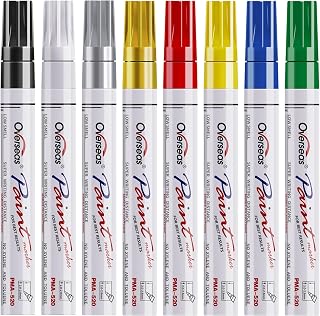
Overseas 8 Colors Paint Pens, Oil Based Permanent Paint Markers Medium Tip
Check PriceWelding introduces intense heat, slag, sparks, and bright light. A typical felt-tip marker will burn off instantly or vanish under the arc. The marker a welder uses must withstand high surface temperatures, remain visible through a darkened lens, and leave a residue that does not interfere with weld quality. Contaminants like wax, oil, or certain pigments can cause porosity, cracking, or lack of fusion. That is why the welding industry has adopted a handful of time-tested marking tools that are heat-resistant and chemically clean.
Another reason is contrast. When you look through a welding helmet with a shade 10 or 11 lens, faint pencil lines disappear. A good welding marker creates a bright, chalky mark or a vivid color that stands out against dull, mill-scale steel. This improves accuracy and reduces the chance of cutting along the wrong side of the line.
Types of Markers Welders Use
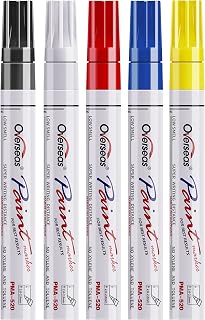
Overseas 5 Colors Paint Pens, Oil Based Permanent Paint Markers Medium Tip
Check PriceThe most common categories include soapstone, silver streak pencils, paint markers, and carbide scribers. Each has a specific job in the shop. Let’s break them down one by one so you can see exactly what marker welders use for different tasks.
Soapstone Markers
Soapstone is the classic, go-to marker for welders everywhere. It is a naturally occurring soft mineral, talc, that comes in flat rectangular sticks or round pencils. Welders sharpen the tip to a fine point and draw directly on metal. The mark looks like a thin, white chalk line and is highly visible through a welding hood.
Soapstone marks do not burn away easily. They can withstand high preheat temperatures and still show up after a torch pass. Because soapstone is inert, it does not contaminate the weld, making it safe for almost all materials, including carbon steel, stainless steel, and aluminum. It is also incredibly cheap, a single stick often costs less than a dollar and lasts for weeks.
The main downside is that soapstone lines are fragile. They rub off with a gloved hand or a few sparks. You also need to keep a sharpener handy to maintain a fine tip for precise layout work. Still, for most cutting and fit-up jobs, soapstone is the first tool a welder reaches for.
Silver Streak and Metal Markers
Often called a welder’s pencil or silver streak marker, this tool uses a harder, graphite-like core that writes on metal like a pencil on paper. The mark is a shiny metallic silver or gray line that resists heat and does not smudge easily. Many shops use silver streak markers when they need a finer, more durable line than soapstone can provide.
These markers are excellent for precision layout on clean, smooth surfaces. They are commonly used in fabrication for marking drill points, cut lines, and bend locations. The marks stay visible even after light grinding and do not wipe off with a casual brush of the hand. However, they are not as heat-resistant as soapstone, and the line can fade if you pass a torch directly over it. They are also a bit more expensive and require gentle handling to avoid snapping the core.
Paint Markers
When you need a bold, long-lasting mark that can survive grinding, oil, and rough handling, paint markers are the answer. These are not the same as your average office marker. Industrial paint markers contain oil-based or acrylic paint that dries quickly and bonds to metal surfaces. They come in a variety of colors, including white, yellow, and red, which makes them perfect for color-coding parts or marking on dark, rusty steel.
Welders use paint markers for layout lines that must last several days, for labeling cut pieces, and for writing on pipe or structural steel that will be exposed to weather. The thick paint line is highly visible even in bright sunlight. For a deep dive into the best options on the market, you can check out our guide on paint markers for metal that covers durability and tip styles.
One important warning: always verify that the paint marker is labeled as low-chloride or low-halogen if you are welding on stainless steel or high-alloy materials. Standard paint markers can contain chemicals that lead to corrosion or weld defects. A quick check of the manufacturer’s safety data sheet will keep your welds sound.
Carbide-Tipped Scribers
For the ultimate precision, a carbide-tipped scriber physically scratches a line into the metal surface. This is not a marker in the traditional sense, but many welders and fabricators use it as a marking tool. The scribed line is a thin, clean groove that will never burn off, wash away, or fade. It is the go-to choice for layout on stainless steel and aluminum where you want zero contamination risk.
Scribers are perfect for marking center punch points, long straight lines with a straightedge, and precise fit-up references. The main limitation is that the line can be hard to see under a welding hood unless you hold the material at the right angle. Some welders dust the scribed line with a little soapstone powder to make it pop. Still, a carbide scriber belongs in every welder’s tool pouch for those critical, no-mistake layouts.
How to Choose the Right Marker for Your Welding Project
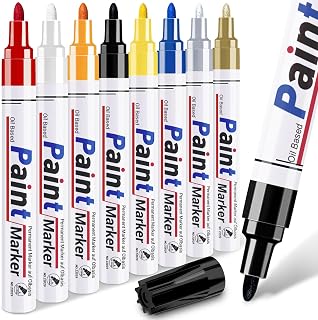
DAPAWIN Oil Based Paint Markers for Metal: 8 Colors Oil Based Permanent Paint Pens
Check PriceWith so many options, picking the right marker comes down to the material, the process, and how long the mark needs to last. Here is a simple decision path you can follow.
- For general cutting and fit-up on mild steel, reach for a soapstone stick. It is cheap, easy to see, and completely weld-safe.
- If you need a sharper, more permanent line on smooth steel, use a silver streak metal marker. It holds up to light handling and grinding.
- When you are marking parts that will sit for days or be exposed to rain and oil, a paint marker is the best choice. Choose a color that contrasts with the metal.
- For stainless steel, aluminum, or applications where contamination is a major concern, a carbide scriber paired with a straightedge gives you a clean, chemical-free line.
Many experienced welders keep a combination of soapstone and a paint marker in their pocket. The soapstone handles quick layout and flame cutting, while the paint marker labels parts and marks reference points that must not disappear. This combination, along with a few other essential welding accessories, will have you prepared for almost any project.
Tips for Using Markers on Metal
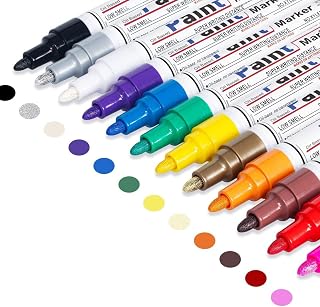
Oil Based Paint Pen, Permanent Paint Marker: Quick-Dry, Waterproof Marker Set of 12
Check PriceEven the best marker will let you down if you use it on a dirty surface. Always wipe the metal with a rag to remove oil, moisture, and loose mill scale before you draw a line. A clean surface gives you a brighter mark and prevents the marker tip from clogging. For soapstone, sharpen the edge to a chisel point instead of a round point, this gives a thinner, more consistent line.
When using paint markers, shake them well and press the tip down several times to get the paint flowing. Test the mark on a scrap piece first to make sure the paint is not too runny. Store paint markers horizontally to keep the tip saturated and prevent drying out. For carbide scribers, use a light but steady pressure. Too much force can cause the tip to wander and create a sloppy line.
Common Mistakes to Avoid
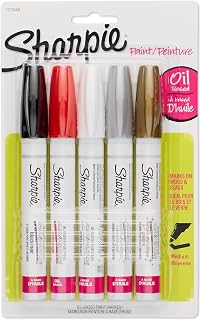
Sharpie Oil-Based Paint Markers, Medium Point, Assorted & Metallic Colors, 5 Count
Check PriceOne of the biggest errors beginners make is using a standard permanent marker on metal that will be welded. The ink burns instantly, leaving a black smudge, and the fumes can be unpleasant. Worse, the chemical residue can cause porosity in the weld. Another mistake is assuming all paint markers are the same. Some contain halogens that are strictly forbidden on stainless steel, so always check the label.
Many new welders also forget to sharpen their soapstone. A dull, rounded tip makes a thick, inaccurate line that can lead to a crooked cut. Take a few seconds to dress the edge on a piece of scrap metal or a file. Finally, avoid marking on heavy rust or scale without cleaning first. The mark will be faint and unreliable, and you will likely have to redo the layout. A little preparation goes a long way toward accurate, clean fabrication.
Frequently Asked Questions
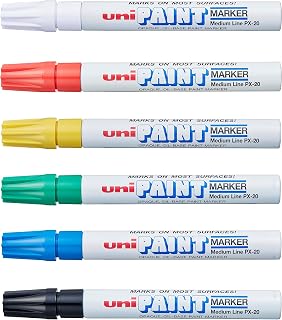
uni Paint PX-20 Paint Markers, Medium Line, Assorted, 6 Pack
Check PriceCan you use a regular Sharpie for welding?
No, a regular Sharpie is not designed for high heat. The ink burns off immediately under the arc and can leave residues that may contaminate the weld. Stick to soapstone, metal markers, or industrial paint markers that are made for metal fabrication.
What is the best marker for stainless steel?
A carbide-tipped scriber is the safest option because it does not introduce any chemicals. If you need a visible mark, use a low-chloride paint marker specifically labeled for stainless steel. Soapstone can also work, but it shows up better on darker steel.
How do you remove soapstone marks before welding?
Usually, you do not need to remove them. Soapstone is inert and does not affect weld quality. If you want to clean the surface for appearance, a quick wipe with a dry rag or a light pass with a wire brush will take the mark off.
Do paint markers work on hot metal?
Some high-temperature paint markers are rated for use on surfaces up to several hundred degrees, but most standard industrial paint markers will bubble or dry out on hot metal. Always check the temperature rating on the product. For preheated steel, soapstone is a more reliable choice.
Conclusion
Now you know exactly what marker do welders use and why a simple soapstone stick, a silver streak pencil, a paint marker, or a carbide scriber each have a distinct place in the shop. The right marking tool saves time, improves accuracy, and prevents weld defects. Start with a basic soapstone for everyday cutting, add a quality paint marker for labeling and long-lasting lines, and keep a scriber handy for precision work on stainless and aluminum.
Before you draw your next line, check the surface cleanliness, choose the marker that matches the job, and always verify that the marker is chemically safe for the metal you are welding. For more guidance on picking the best markers and other shop essentials, take a look at reliable industry guidelines from trusted welding resources. With the right tools in your pouch, your layout will be cleaner, your cuts straighter, and your welds stronger.