Welding generates intense heat and showers of molten metal. Every experienced welder knows that proper gear is not optional, it is a requirement. But when you look at your arms, you might wonder, “Are welding sleeves necessary, or is my jacket enough?” This question often comes up among newcomers building their first kit. We will break down exactly when sleeves keep you safe, and the rare times you might work without them.
Table of Contents
What Are Welding Sleeves?
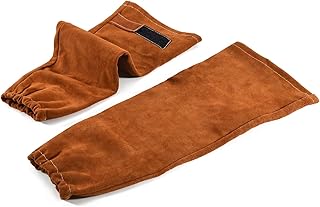
QeeLink Leather Welding Work Sleeves for Men & Women with Kevlar Stitching
Check PriceWelding sleeves are protective coverings that shield your arms from the shoulder to the wrist. They are separate from your jacket, allowing you to wear a lighter shirt underneath while still protecting your skin. Most sleeves are made from flame-resistant materials like split cowhide leather, pigskin, or heavy cotton treated with fire retardants. Some advanced models use Kevlar thread and aluminized backs to reflect radiant heat.
Sleeves come in different lengths, usually 18 inches for full arm coverage or shorter versions that just cover the forearms. They attach with elastic straps or snaps at the bicep and wrist. Unlike a full jacket, sleeves give you freedom of movement while focusing protection on the area that faces the arc most directly. They are a core piece of personal protective equipment (PPE) that meets OSHA’s personal protective equipment guidelines for protecting workers from recognized hazards.
Why Welding Sleeves Are Considered Essential PPE
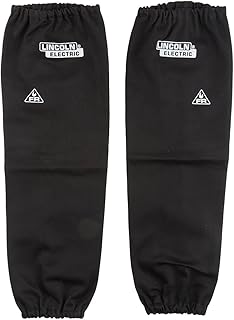
Lincoln Electric KH813 Flame-Resistant Welding Sleeves
Check PriceYour forearms sit extremely close to the welding arc and the puddle of molten metal. Even a quick pop of spatter can leave a permanent scar or ignite a cotton shirt. Welding sleeves are not just a suggestion from safety managers, they actually prevent burn injuries that happen in a fraction of a second. Without them, your skin is the only barrier against flying slag and ultraviolet radiation.
Protecting Against Sparks and Spatter
Stick welding and flux-cored processes throw a large amount of spatter. These tiny hot bits of metal can land on your arms and burn through clothing instantly. Leather sleeves catch these sparks, giving them time to cool down before they reach your skin. Even a stray spark that rolls into your glove cuff can be deflected if you have a sleeve overlapping properly.
Heat and Arc Radiation
The welding arc puts out massive infrared radiation that you cannot see. Over time, this exposure can cause skin burns that feel like a sunburn, a condition welders call “arc flash.” Your forearms are often the closest body part to the arc. A set of thick welding sleeves, like the ones reviewed in our guide to top-rated welding sleeves, blocks that radiation completely. This keeps your skin comfortable during long sessions and prevents long-term damage.
Shielding from UV and Infrared Rays
Arc welding produces ultraviolet light that can burn unprotected skin in minutes. While your welding helmet protects your face, the rest of your body needs coverage. Cotton shirts do not fully block UV rays, and synthetic fabrics can melt right into your skin. Welding sleeves made from dense leather or flame-resistant fabrics provide an opaque barrier that stops UV transmission.
Common Materials Used in Welding Sleeves
Not all sleeves are created equal. The material determines how much protection you get and how long the sleeves last. Understanding these differences helps you match your gear to your actual welding process.
Leather Sleeves
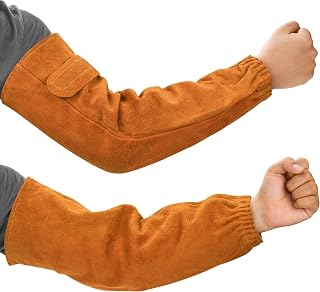
Leather Welding Sleeves for Men and Women, Real Cow Leather with Kevlar Stitching
Check PriceSplit cowhide and pigskin are the most popular choices. Leather resists sparks very well, stays flexible, and provides excellent heat insulation. It does not catch fire easily, even when heavy spatter lands on it. The trade-off is that leather can feel warmer in the summer, but for stick and flux-core welding, the protection is unmatched.
Cotton and Kevlar Blends
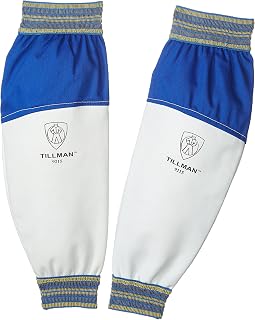
Tillman 9215 Goatskin/FR Leather Goatskin & Cotton Protective Welding Sleeves
Check PriceFlame-resistant cotton sleeves treated with ammonia cure or Proban chemicals are a lighter option. These are popular for TIG welding, where spatter is minimal but arc radiation is still present. Kevlar-blend sleeves add cut and heat resistance without the bulk of leather. They breathe better and can be washed, making them a favorite for precision applications.
Scenarios Where Welding Sleeves Are Absolutely Necessary
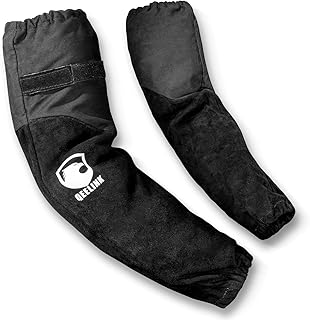
Leather Welding Work Safety Sleeves Heat & Flame Resistant with Kevlar Stitching
Check PriceYou can argue about many pieces of gear, but there are specific situations where skipping sleeves is simply dangerous. If you recognize any of these scenarios in your daily work, do not hesitate to put them on.
Overhead Welding
Welding in a vertical or overhead position sends gravity directly against you. Sparks and molten metal rain down on your arms, shoulders, and chest. In these positions, regular clothing offers almost zero protection. Heavy leather sleeves that extend high up the bicep become a critical layer that keeps you from getting burned while you concentrate on the puddle.
Stick and Flux-Cored Welding
Processes like SMAW and FCAW create a lot of spatter. The arc is aggressive, and the flux coating generates slag that flies off in all directions. If you are running 7018 stick rods or dual-shield flux-core wire, your arms are constantly under attack. In these conditions, welding sleeves are not a luxury, they are just as important as your helmet.
Heavy Industrial Environments
In shipyards, structural welding shops, or pipeline work, you often face confined spaces and awkward angles. You might be welding near other workers, grinding sparks, or hot surfaces. In these environments, the risk of incidental contact with hot metal is high. Sleeves protect your arms when you accidentally brush against a preheated joint or a recently welded plate.
When Can You Skip Welding Sleeves?
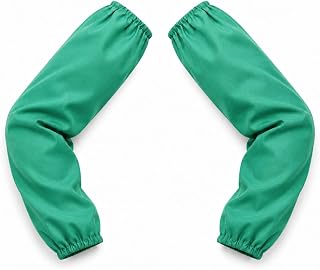
MAGID 180183 SparkGuard Cotton Flame Resistant Sleeve, 18″ Length, Green
Check PriceThere are a few controlled scenarios where experienced welders might work without dedicated sleeves. These are the exception, not the rule, and they require a careful assessment of risk. Even then, having protection nearby is wise.
Low-Amperage TIG Welding in a Controlled Setting
TIG welding thin stainless steel at low amperage produces almost no spatter. The arc is stable, and the heat-affected zone is confined. Some fabricators wear only a TIG welding jacket or a pair of heavy denim sleeves. However, UV rays still reflect off shiny surfaces, so you are rarely truly safe without any arm covering. A lightweight cotton sleeve is a good compromise here.
Using a Full Welding Jacket
A high-quality welding jacket with flame-resistant sleeves can replace standalone sleeves. If your jacket already has leather or Kevlar sleeves, you might not need a separate pair. Just make sure the jacket fits well and its cuffs close tightly around your gloves. Many welders prefer a jacket for upper body coverage and still add sleeves for extra forearm armor, but a premium jacket alone can be adequate for many jobs. You can compare coverage options in our list of recommended welding jackets.
Welding Sleeves vs. Welding Jackets: A Quick Comparison
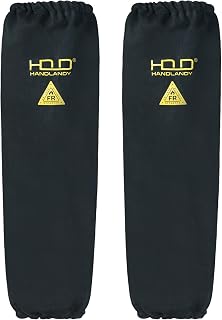
HANDLANDY Flame Resistant Welding Sleeves Arm Protection for Men and Women
Check PriceBoth pieces of PPE protect your arms, but they serve slightly different purposes. Understanding this helps you build a comfortable and safe kit.
- Coverage: A jacket covers your torso and arms in one piece, while sleeves focus only on the arms. Sleeves leave your chest free for a cooler shirt.
- Mobility: Sleeves typically offer more freedom of movement because there is no fabric across your back or shoulders.
- Heat Management: On hot days, wearing sleeves with a thin cotton shirt can be much cooler than a full leather jacket. You stay protected without overheating.
- Process Match: Heavy spatter processes benefit from thick leather jackets, but many welders pair a lighter jacket with beefy sleeves for extra forearm defense.
How to Choose the Right Welding Sleeves
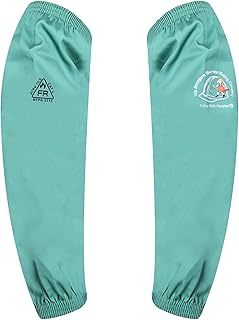
Strongarm FR Welding Sleeves, 9 oz FR Cotton/Hybrid Options, Elastic Cuffs
Check PriceBuying the first pair you see can lead to discomfort or early failure. A few simple checks ensure you get sleeves that last and keep you safe.
- Material: Pick leather for stick and flux-core, and treated cotton or Kevlar for TIG and light MIG work.
- Length: Standard 18-inch sleeves cover from wrist to just above the elbow. For overhead work, choose 21-inch sleeves that reach the bicep.
- Closure system: Elastic bands that sit snugly prevent sleeves from sliding down. Some have additional thumb loops to keep the cuff in place inside your glove.
- Stitching: Look for Kevlar thread in high-wear areas. Cotton thread can burn and unravel, causing the sleeve to fall apart quickly.
- Fit: The sleeve should not be so tight that it restricts blood flow or so loose that it hangs into the weld zone.
Frequently Asked Questions
Are welding sleeves required by OSHA?
OSHA does not spell out that you must wear welding sleeves by name, but it requires employers to provide PPE that protects workers from recognized hazards. Flying sparks, molten metal, and arc radiation are all recognized hazards. So if a hazard analysis shows a risk to forearms, sleeves are effectively required to meet workplace safety standards.
Can I just wear a long-sleeve cotton shirt?
A standard cotton shirt offers very limited protection. Sparks can ignite the fabric or burn right through it. Cotton also does not block UV radiation well enough to prevent arc burns. Only flame-resistant treated fabrics or leather can reliably protect you. A heavy denim shirt is slightly better, but it still cannot match dedicated welding sleeves.
How long do welding sleeves last?
It depends on the material and how much abuse they see. Leather sleeves used for daily stick welding might last six months to a year before becoming too stiff or developing holes. Cotton sleeves wear out faster, around three to six months if used heavily. Inspect your sleeves before each shift and replace them as soon as you notice burn-through or thinning material.
Do I need welding sleeves for MIG welding?
MIG welding does produce spatter, especially with short-circuit transfer or when welding dirty metal. While MIG is cleaner than stick, it still throws enough sparks to cause burns. Lightweight leather sleeves or heavy cotton sleeves are a smart choice. They protect your arms without adding too much heat stress.
Conclusion
So, are welding sleeves necessary? For the vast majority of welding tasks, the answer is a clear yes. A simple pair of leather sleeves is an inexpensive investment compared to the pain and cost of a serious burn. They let you focus on running a clean bead instead of flinching every time a spark lands. Even if you weld only occasionally, the protection they provide to your skin and clothing is well worth the small effort of putting them on.
The only time you might consider skipping them is during low-amperage TIG work or if you already wear a jacket with built-in protective sleeves. But even then, a lightweight sleeve adds a layer of defense that costs very little in comfort. Your arms deserve the same care you give your eyes and lungs. Make welding sleeves a non-negotiable part of your gear, and you will weld safer and with more confidence.
Ready to upgrade your arm protection? Check out our detailed selection of high-quality sleeves that match your process and budget. A little research now saves you from a lot of regret later.