If you have ever asked what are welding aprons made of, the answer depends on the type of welding and the level of protection you need. Welding aprons are built from heat-resistant materials that shield your body from sparks, spatter, and intense heat. The most common materials include leather, cotton, Kevlar, and aluminized fabric. Understanding the differences helps you choose the right protection for your work.
Welding exposes your torso and upper legs to serious hazards. A standard fabric apron can burn or melt quickly. A proper welding apron uses specialized materials designed to resist ignition and block hot debris. Before choosing one, it helps to understand why the material matters.
Table of Contents
Why Welding Apron Materials Matter

QeeLink Leather Welding Apron 6 Pockets Heat Flame Resistant for Blacksmith | Split Cowhide Work Tool Apron with Aramid Thread | Heavy duty | Adjustable M to XXXL for Men & Women
Check PriceA welding apron is a core piece of personal protective equipment, or PPE. It protects you from burns, molten metal, and ultraviolet light. The material has to handle extreme heat without catching fire or melting onto your skin.
Welding sparks can reach temperatures above 2,500 degrees Fahrenheit. Hot spatter can stick to fabric and burn through weak materials. That is why material selection is about more than comfort. It directly affects your safety and the lifespan of the apron.
Meeting OSHA PPE requirements means choosing equipment that is appropriate for the task. A welding apron made from the wrong fabric can leave you exposed. Always match the material to your welding process and environment.
Common Materials Used in Welding Aprons

LeaSeek Leather Welding Apron, Heat & Flame-Resistant Heavy Duty for Men | 24″x36″ cowhide leather apron, adjustable M-XXXL, for blacksmithing, forging, BBQ, grilling, workshop, woodworking
Check PriceWelding aprons are not made from one universal fabric. Each material offers a different balance of heat resistance, flexibility, weight, and cost. The most common options are leather, cotton, aluminized fabrics, Kevlar, and specialty blends.
Leather
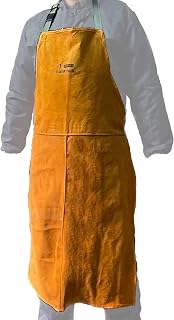
Leather Work Shop Apron, Buckle straps, Heat & Flame Resistant Heavy Duty Welding Apron
Check PriceLeather is the most popular material for welding aprons. It is durable, heat-resistant, and long-lasting. Cowhide and pigskin are the most common types, with split leather offering a rough, tough surface that resists punctures.
- Cowhide: Heavy, durable, and great for all-around heat protection.
- Pigskin: Softer and more flexible, with good resistance to moisture.
- Split leather: Rough texture, budget-friendly, and excellent against sparks.
- Grain leather: Smooth surface, lighter, suited for lighter welding tasks.
Leather welding aprons handle repeated spatter without catching fire easily. They can last for years with basic care. The downside is weight and heat retention. In hot shops, leather can feel heavy and warm, but many professionals still prefer it for its proven protection.
If you are shopping for new gear, review this guide to top-rated welding aprons for different budgets. It covers trusted leather options and other flame-resistant choices.
Cotton and Denim

Hobart 770686 Black Cotton Welding Apron | Flame-retardant cotton; adjustable elastic waist strap; 24 x 36 in, one size fits most
Check PriceCotton welding aprons are usually made from flame-resistant treated cotton or heavy denim. Untreated cotton burns easily, so manufacturers apply a flame-retardant treatment. This helps the fabric resist ignition and self-extinguish when the heat source is removed.
- Lightweight and breathable for low-spatter welding.
- Often treated with flame-resistant coatings.
- Less durable than leather over time.
- Best for TIG welding, light MIG, or occasional home use.
A cotton apron is a good choice for welders who need mobility. It does not offer the same heavy spatter protection as leather. If you do a lot of stick welding or flux-core welding, cotton may wear out quickly. For light work, however, it is much cooler and easier to move in.
Aluminized Fabrics
Aluminized aprons reflect radiant heat away from your body. These aprons usually start with a base fabric like fiberglass, Kevlar, or cotton. The surface is coated with a thin aluminum layer that reflects heat instead of absorbing it.
- Reflects radiant heat instead of absorbing it.
- Good for plasma cutting and heavy welding.
- Less flexible than standard leather or cotton.
- Can be more expensive than basic aprons.
Aluminized fabric is not always necessary for general welding. It shines in extreme heat conditions. If you work near high-amperage arcs or intense radiant heat, this material adds an extra layer of defense. The reflective layer can wear off with heavy abrasion, so inspect it regularly.
Kevlar and Other Aramid Fibers

ecoZen Waxed Canvas Welding Apron with Kevlar Thread – Heat and Chemical Resistant, Fully Adjustable to Comfortably Fit Men and Women, 27 x 34 inches, Heavy Duty Tool Apron – Black, Size S to XXL
Check PriceKevlar is a heat-resistant synthetic fiber known for its strength. It is lightweight and can withstand high temperatures without melting. Aramid fibers also resist cuts and abrasion, which makes them useful in demanding work environments.
- Excellent heat and flame resistance.
- High tensile strength and cut resistance.
- Lightweight compared to leather.
- Often more expensive than basic cotton.
Kevlar aprons are common in specialized industrial settings. They work well where both heat and sharp edges are present. A Kevlar blend may include cotton or leather for added comfort. The main drawback is cost, but it can be worth it for demanding jobs.
Carbon Fiber and Specialty Blends
Some modern welding aprons use carbon fiber or performance blends. Carbon fiber adds strength without much weight. It often appears in high-end protective garments. Other aprons combine silicone-coated fiberglass, nylon, or treated wool for specific hazards.
These materials are not as common as leather or cotton. They appear in premium or task-specific aprons. If your job has unusual risks like chemical splash or extreme radiant heat, a specialty blend may be the right call. Always check the manufacturer’s ratings for thermal and flame resistance.
How Welding Apron Materials Compare
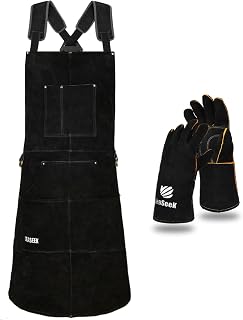
LeaSeek Leather Welding Apron, Heat & Flame-Resistant, 6 Pockets | Heavy-duty split cowhide apron, adjustable M-XXXL men & women, for blacksmithing, forging, and metalwork.
Check PriceEach material has trade-offs. Leather offers durability and heavy spatter protection. Cotton offers breathability and lower cost. Aluminized fabrics reflect radiant heat. Kevlar offers strong heat resistance with less weight. Comparing these materials helps you decide what fits your work.
- Leather: Best for durability and spatter resistance.
- Cotton: Best for lightweight comfort and low-spatter welding.
- Aluminized: Best for radiant heat reflection.
- Kevlar: Best for heat strength with reduced weight.
- Specialty blends: Best for task-specific hazards.
When comparing prices, cotton aprons are usually the least expensive. Split leather is moderately priced and widely used. Kevlar and aluminized aprons cost more, but they solve specific problems. If you weld as a hobby, a split leather or cotton apron is often enough. Full-time welders may want a high-quality leather apron with reinforced stitching.
Not sure whether you need full upper-body coverage? This comparison of a welding apron versus a full jacket helps you decide based on the type of welding you do.
How to Choose the Right Welding Apron Material

DURATECH 23″ × 36″ Leather Welding Apron for Heavy Duty Work | 6 Tool Pockets, Heat and Flame Resistant, Cowhide Construction, Adjustable Straps
Check PriceChoosing the right apron starts with understanding your welding process. MIG and stick welding produce more sparks and spatter. TIG welding produces less spatter but still exposes you to heat. Plasma cutting and carbon arc gouging generate intense radiant heat and flying debris.
Welding Process
- Stick or flux-core welding: Choose thick leather or Kevlar blends.
- MIG welding: Choose split leather or treated cotton for lighter work.
- TIG welding: Choose treated cotton or lightweight leather.
- Plasma cutting: Choose aluminized or heavy leather.
Fit and Coverage
The material must allow you to move. A stiff leather apron can restrict bending. A lighter cotton apron may give you more freedom. Check the apron length and strap design. It should cover your chest and knees when seated.
For overhead work, choose a material that does not gap or ride up. Adjustable straps and a bib-style front help keep the apron in place. The wrong fit reduces protection even if the material is strong.
Heat and Spatter Exposure
If sparks constantly hit your apron, do not choose untreated cotton. It will burn. Look for leather or a high-quality flame-resistant fabric. If you work in a hot shop, breathability matters. Cotton and lighter Kevlar blends can reduce heat stress. Balance protection with comfort based on your daily exposure.
For example, a hobbyist using a 120V MIG welder on thin steel will likely be fine with a treated cotton apron. A pipeliner running 6010 electrodes all day needs a thick split leather apron. Your process and environment decide the material.
Care and Maintenance by Material
Proper care extends the life of your welding apron. Each material has different cleaning rules. Never use harsh chemicals on heat-resistant fabrics unless the label allows it.
- Leather: Wipe with a damp cloth, use leather conditioner occasionally, and avoid soaking.
- Cotton: Machine wash on a gentle cycle if the flame-retardant treatment allows, and air dry.
- Aluminized: Wipe clean with mild soap and water, and avoid abrasives.
- Kevlar: Follow manufacturer instructions, usually mild detergent and air dry.
Inspect your apron before each use. Look for holes, burns, worn straps, and damaged stitching. A damaged apron can expose you to hot sparks. Replace any apron that has lost its flame-resistant properties or has deep tears.
Frequently Asked Questions

Leather Welding Apron with Sleeves,Heavy Duty Welding Jacket,Heat Flame Resistant Welder Apron for Men
Check PriceWhat is the best material for a welding apron?
Leather, especially split cowhide, is the best all-around material for most welding. It resists sparks and spatter better than untreated cotton. Cotton is great for light work, while Kevlar and aluminized fabrics perform better in specialized high-heat tasks.
Are cotton welding aprons safe?
Yes, if they are treated with flame-resistant chemicals. Untreated cotton can ignite. Check the label for a flame-resistant rating. Cotton is safest for low-spatter processes like TIG welding.
How thick should a leather welding apron be?
Look for leather that is at least 3 to 4 ounces in weight for light work, and 5 to 7 ounces for heavy welding. Thicker leather gives more protection but feels heavier. Split leather in the 5 to 6 ounce range works well for most professionals.
Can welding aprons catch fire?
Welding aprons are designed not to catch fire easily, but no material is fireproof. Leather and treated fabrics resist burning. However, heavy spatter, frayed edges, or chemical contamination can increase fire risk. Always inspect your apron before welding.
Do welding aprons contain asbestos?
No, modern welding aprons do not contain asbestos. Older protective gear may have used asbestos, but today’s aprons use leather, cotton, Kevlar, fiberglass, or aluminized fabrics. Always buy from reputable suppliers to ensure safety compliance.
Conclusion
What are welding aprons made of? They are made from materials designed to protect you from extreme heat, sparks, and molten metal. Leather, cotton, aluminized fabric, and Kevlar each offer unique benefits. The right material depends on your welding process, heat exposure, and comfort needs.
For most welders, a split leather apron is the best balance of durability and protection. For light TIG or home use, treated cotton is cooler and easier to move in. For high-radiant-heat work, aluminized or Kevlar options add critical safety. Whichever you choose, inspect it often and care for it properly. A good welding apron is an investment in your safety and long-term comfort.