Deciding between a welding jacket and an apron is not just about personal preference, it is a critical safety choice that affects your protection, comfort, and mobility on the job. The welding jacket vs apron debate comes up often for beginners and seasoned welders alike, especially when you are trying to balance heat resistance with freedom of movement. Understanding the strengths and weaknesses of each option helps you avoid burns, sparks, and long-term health issues while keeping you productive throughout the day.
Both pieces of gear are designed to shield your body from the intense heat, spatter, and ultraviolet radiation produced during welding. However, they cover different areas and fit different working styles. This guide will walk you through every factor you need to consider, from material and coverage to typical use cases, so you can make a confident choice.
Table of Contents
Why Welding Protective Gear Matters
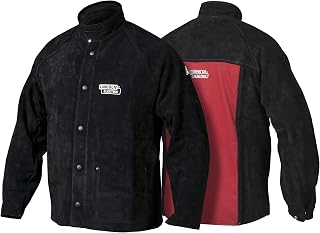
Lincoln Electric Heavy Duty Leather Welding Jacket
Check PriceWelding generates molten metal sparks, hot slag, and infrared radiation that can cause severe burns in seconds. Even a brief exposure to a stray spark can ignite regular clothing or injure your skin. Reliable protective clothing is not optional, it is mandated by OSHA PPE requirements and industry best practices. Without proper gear, you risk painful injuries and reduced productivity.
Beyond immediate burns, cumulative exposure to arc flash can cause long-term skin damage. A proper barrier also helps you stay comfortable, which means you can focus on the weld bead rather than the heat on your chest. Whether you are doing light tack welding or heavy overhead work, the right covering makes a noticeable difference.
What Is a Welding Jacket?
Lincoln Electric Heavy Duty Leather Welding Jacket
Check PriceA welding jacket is a full upper-body garment that covers your arms, shoulders, chest, and back. It typically fastens in the front with snaps or a zipper and is made from flame-resistant materials such as leather, treated cotton, or aramid blends. Leather jackets offer the highest heat resistance, while cotton jackets are lighter and more breathable for low-amp work.
These jackets are designed to protect you from spatter coming from all angles, especially when you are welding overhead or in tight positions. The long sleeves and high collar ensure that your neck, wrists, and torso remain shielded. Many come with adjustable cuffs, reinforced stitching, and pockets placed for ergonomic access.
Pros of Welding Jackets
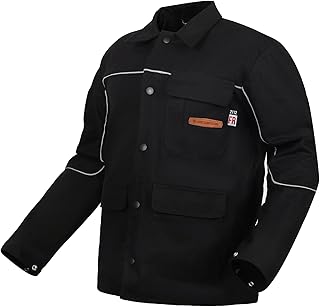
ARCCAPTAIN Welding Jacket, 11oz Flame Resistant Cotton Welding Jackets
Check Price- Provides full upper body coverage, including arms and neck
- Excellent for overhead welding and confined spaces
- Available in a wide range of materials for different heat levels
- Often comes with durable snaps and strong stitching
Cons of Welding Jackets
- Can trap heat, making them uncomfortable in hot environments
- Full sleeves may restrict movement during intricate tasks
- Higher cost compared to aprons, especially for quality leather
- Heavier and less portable for quick jobs
What Is a Welding Apron?

QeeLink Leather Welding Apron 6 Pockets Heat Flame Resistant for Blacksmith | Split Cowhide Work Tool Apron with Aramid Thread | Heavy duty | Adjustable M to XXXL for Men & Women
Check PriceA welding apron covers the front of your body from the chest down to the knees or mid-thigh, leaving the arms and back exposed. Aprons are made from split leather, cowhide, or flame-resistant fabrics and are secured with adjustable straps around the neck and waist. They are popular in fabrication shops, for light welding, and for those who prioritize mobility over maximum coverage.
The design focuses on protecting the torso and legs from sparks that fall directly downward, which is the most common spatter pattern when welding at a bench. Because they are open in the back, aprons offer excellent ventilation and are easy to put on and take off. This makes them a favorite for intermittent welding tasks and hot shop floors.
Pros of Welding Aprons

ecoZen Waxed Canvas Welding Apron with Kevlar Thread – Heat and Chemical Resistant, Fully Adjustable to Comfortably Fit Men and Women, 27 x 34 inches, Heavy Duty Tool Apron – Black, Size S to XXL
Check Price- Excellent ventilation and reduced heat buildup
- Greater freedom of movement for arms and shoulders
- Quick to put on and remove, ideal for short tasks
- Generally lighter and more affordable than jackets
Cons of Welding Aprons
- Leaves arms, shoulders, and back unprotected
- Not suitable for overhead welding or positions where spatter comes from above
- May shift during active movement, exposing gaps
- Lower overall coverage requires careful positioning
Key Differences Between a Welding Jacket and an Apron
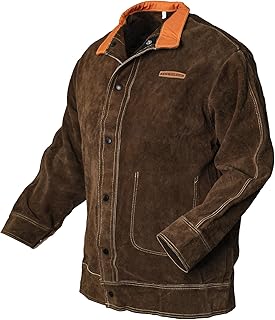
YESWELDER Leather Welding Jacket
Check PriceWhen you compare a welding jacket vs apron, the main distinction is the coverage area. A jacket protects your entire upper body, including your arms and back, while an apron focuses on the front torso and upper legs. This core difference drives every other factor, from heat management to suitability for specific welding processes.
Jackets are essential for MIG and flux-cored welding where spatter is aggressive and multidirectional. Aprons are often enough for TIG welding, where the arc is cleaner and spatter is minimal. The material choice also plays a role. Leather jackets and aprons both offer excellent heat resistance, but a cotton jacket may still provide more thermal protection than a leather apron simply because it covers more skin.
Durability and cost differ as well. A high-quality apron, like the ones featured in our guide to high-quality welding aprons, can last for years and costs less than a comparable jacket. On the other hand, a jacket is a more complete investment. If you need to upgrade your jacket, you can find the best options in our top-rated welding jackets roundup.
When to Choose a Welding Jacket

Lincoln Electric Premium Flame Resistant (FR) Cotton Welding Jacket
Check PriceYou should reach for a welding jacket whenever your work involves overhead welding, out-of-position welding, or heavy spatter. Jobs like structural welding, pipeline work, and shipbuilding often require you to be in awkward stances where sparks can rain down on your shoulders and back. In these environments, a jacket is not just a comfort item, it is a safety necessity.
If you are welding with flux-cored wire or stick electrodes, the spatter is more intense. A jacket with a high collar and snug cuffs prevents hot metal from finding its way into your sleeves or neck. Additionally, if you work in a confined space, a jacket can protect your arms from accidental contact with hot metal surfaces.
For those who weld for long hours, a lighter cotton jacket with flame-resistant treatment can be a good compromise. It still gives full coverage while allowing some breathability. Just remember that cotton is not as durable as leather when dealing with heavy spatter, so you may need to replace it more often.
When to Choose a Welding Apron
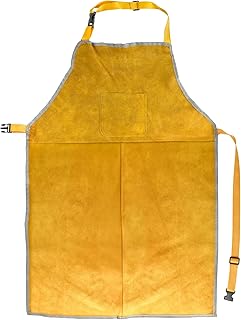
QWORK Leather Welding Work Apron – Flame and Welding Spatter Resistant – Adjustable Harness – Suitable for Welders, Blacksmiths
Check PriceAn apron is the right choice for bench welding, TIG welding, and light fabrication. When you are seated at a table and welding in the flat position, spatter mostly falls straight down onto your lap and legs. The apron covers exactly that area without weighing you down with sleeves. It also allows your arms to stay cool, which is a huge advantage in shops without air conditioning.
If you frequently switch between welding and other tasks, an apron is far more convenient. You can slip it off quickly and hang it nearby. Many welders keep an apron on a hook right next to their station for intermittent use. The quick on-and-off nature of an apron also means you are more likely to wear it consistently, which is a key factor in staying safe.
For students and hobbyists who are just learning the basics, an apron paired with a set of welding sleeves can be a cost-effective entry point. You get the core protection where it matters most, and you can add a jacket later when you move into more demanding projects.
Can You Wear Both?

Hobart 770686 Black Cotton Welding Apron | Flame-retardant cotton; adjustable elastic waist strap; 24 x 36 in, one size fits most
Check PriceYes, wearing both a welding jacket and an apron is a practical solution for certain scenarios. Many professional welders layer a leather apron over a light cotton jacket for extra front protection without overheating. This combination allows you to face the most intense spatter while keeping your arms covered and your back ventilated. It is a common setup in heavy fabrication where you need the durability of leather on your chest and lap but do not want the weight of a full leather jacket.
Another approach is to use an apron for most of the day and keep a jacket nearby for overhead work. This hybrid strategy gives you the best of both worlds. You stay cool during routine tasks and add full coverage when the job demands it. Just make sure both garments are flame-resistant and fit properly, so they do not interfere with each other or your welding helmet.
Material Considerations for Jackets and Aprons

Revco Black Stallion BSX 9 oz Contoured Flame-Resistant Cotton Welding Jacket
Check PriceLeather is the gold standard for both jackets and aprons because it naturally resists heat and spatter. Cowhide and split leather are the most common choices. Split leather is more affordable and still offers great protection, while top-grain leather is softer and more flexible. For heavy-duty welding, nothing beats the longevity of a thick leather jacket.
Flame-resistant cotton, or FR cotton, is a lightweight alternative. It is chemically treated to self-extinguish when exposed to flame. Cotton jackets are cooler and more comfortable for long shifts, but they wear out faster under heavy spatter. Aprons made from FR cotton are less common because the front of the body takes the brunt of the heat, and leather simply holds up better.
Some modern options use aramid blends like Kevlar. These materials are flame-resistant, lightweight, and extremely durable. They are often found in premium jackets and aprons designed for high-heat applications. While they cost more, they provide excellent all-day comfort and protection.
Comfort and Mobility in the Welding Jacket vs Apron Debate
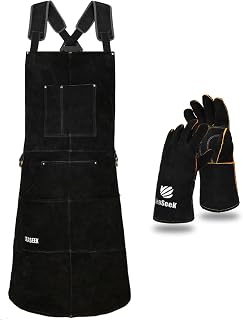
LeaSeek Leather Welding Apron, Heat & Flame-Resistant, 6 Pockets | Heavy-duty split cowhide apron, adjustable M-XXXL men & women, for blacksmithing, forging, and metalwork.
Check PriceComfort is a major factor in the welding jacket vs apron decision. A jacket wraps your entire upper body, which can feel restrictive if the fit is not right. Look for articulated sleeves, underarm gussets, and breathable back panels to improve mobility. If you often work with your arms above your head, a jacket with a bi-swing back design can make a huge difference.
Aprons, by design, provide unrestricted arm movement. You can reach, twist, and bend without any fabric pulling across your shoulders. This is a big advantage when you are doing intricate TIG welding or need to move around the shop. The trade-off, of course, is that your arms are exposed, so you must be mindful of where the sparks are flying.
Heat stress is another comfort factor. In a hot shop during summer, a leather jacket can become unbearable. An apron at least lets your back breathe. Some welders choose a jacket for the winter months and switch to an apron when the temperature rises. This seasonal rotation is a smart way to stay safe and comfortable year-round.
Frequently Asked Questions
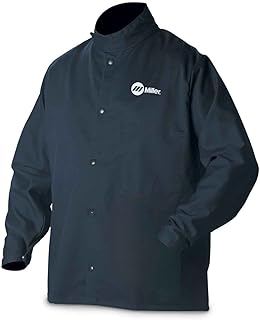
Welding Jacket, Navy, Cotton/Nylon, L
Check PriceIs a welding apron enough for MIG welding?
For light MIG welding in the flat position, a heavy leather apron can be sufficient. However, MIG welding often produces a lot of spatter, and if you are working in any position other than flat, a jacket is the safer choice. Evaluate your specific setup before deciding.
Can I wear a welding apron without sleeves?
Yes, but you must wear a long-sleeve flame-resistant shirt or consider adding welding sleeves for arm protection. The apron alone does not cover your arms, so you need an additional layer to prevent burns from stray sparks.
How do I clean a leather welding jacket or apron?
Never wash leather with water or harsh chemicals. Wipe it down with a damp cloth to remove soot and dirt, then apply a leather conditioner to keep it supple. For heavy buildup, use a specialty leather cleaner. Always follow the manufacturer’s care instructions.
Which is better for beginners, a jacket or an apron?
Beginners who are learning basic flat welding can start with a quality apron and flame-resistant sleeves. This combination is affordable and covers the most common burn zones. As you advance to out-of-position welding, investing in a good jacket becomes essential.
Conclusion
The welding jacket vs apron decision ultimately comes down to the type of welding you do, the positions you work in, and your comfort needs. A jacket offers comprehensive protection for overhead and heavy spatter applications, while an apron provides excellent ventilation and mobility for bench and TIG welding. Many welders find that owning both gives them the flexibility to adapt to any job.
Start by assessing your most common tasks. If you regularly face showers of sparks, invest in a durable leather jacket. If you are mostly at a bench, a thick leather apron will serve you well. Pair either option with proper gloves, sleeves, and a reliable welding helmet, and you will have a safe, efficient setup. The right gear not only protects you but also improves your confidence and the quality of your work.