When you start welding, you quickly learn that your hands are your most valuable tools. Protecting them with the right gear is not optional, it is essential. The many types of welding gloves available can feel overwhelming, but each is designed for a specific level of heat, dexterity, and durability. In this guide, you will learn the differences between the main types of welding gloves and how to pick the perfect pair for your projects.
Table of Contents
Why Wearing the Right Gloves Matters
Burns are the most common welding injury, and your hands are dangerously close to molten metal and intense arc heat. Wearing the wrong glove can lead to blisters, cuts, or even worse. Beyond safety, the right glove improves your control and comfort, letting you weld for hours without fatigue. When you match your gloves to the welding process and materials, you work more efficiently. Whether you are a beginner or an experienced welder, understanding glove types is as important as knowing how to lay a bead.
According to recognized welding safety equipment standards, proper hand protection is mandatory. The industry certifies gloves for heat resistance, spark deflection, and mechanical durability, so picking a certified pair keeps you safe and compliant. Once you understand the basics, you will never walk into a shop again without checking what is on your hands.
Main Types of Welding Gloves by Material
Leather dominates the welding glove market, but not all leather is created equal. Each animal hide brings unique strengths in heat handling, softness, and wear resistance. Knowing the material lets you choose a glove that feels like a natural extension of your hand. Below are the most common leather types you will encounter, along with critical grain information that affects performance.
Cowhide Welding Gloves
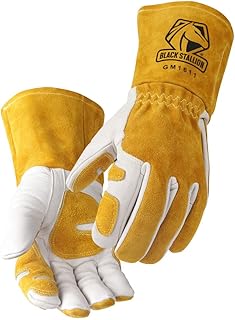
Black Stallion Top Grain Leather Cowhide MIG Welding Gloves
Check PriceCowhide is the most common and affordable material. It offers good heat resistance, durability, and a comfortable break-in period. These gloves are ideal for stick welding and general fabrication work where high temperatures are present. The thicker grain helps resist sparks and spatter, but cowhide can feel stiff until worn in. If you need a tough, all-purpose glove, cowhide is a smart starting point. Many welders keep a pair handy for heavy-duty tasks.
Goatskin Welding Gloves
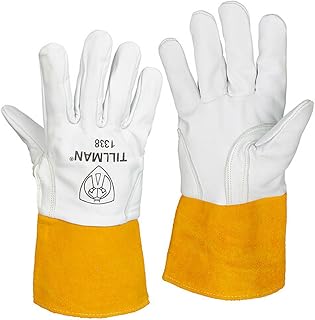
Tillman Goatskin TIG Welding Gloves
Check PriceGoatskin provides a softer, more flexible feel than cowhide. It naturally repels water, has high tensile strength, and gives excellent fingertip sensitivity. These gloves are a top choice for TIG welding where precision is everything. The thin, pliable leather lets you feed filler rod without losing the feel of the torch. Goatskin also resists hardening when exposed to heat, so it lasts a long time. If you value dexterity and tactile feedback, look for goatskin.
Pigskin Welding Gloves
Pigskin is a dense, extremely durable leather that stands up well to rough handling. It breathes better than cowhide and stays softer after repeated exposure to sweat and moisture. This makes it a favorite for hot, sweaty workshop conditions. Pigskin gloves resist stiffening after getting wet, which is a big advantage. They are often used for MIG welding and other applications that require a balance of strength and flexibility.
Deerskin Welding Gloves
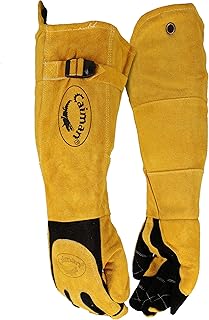
Caiman Premium Split Deerskin MIG/Stick Welding Gloves
Check PriceDeerskin is known for its incredible softness and natural stretch. It conforms to your hand almost like a second skin. The leather is thin but still offers surprising heat protection for light-duty applications. Deerskin welding gloves are typically used for fine, detailed TIG welding where maximum dexterity is non-negotiable. While not as rugged as cowhide, they give you unmatched control for precision joints.
Understanding Leather Grain and Linings
Full grain leather uses the outer skin layer and is the strongest and most heat resistant. Split leather comes from the inner layer and is more economical, often used on the back of the gloves to add protection without driving up cost. Many high-quality gloves combine full grain on the palm with split leather on the back for maximum benefit. Inside, cotton or foam liners add insulation, while fleece linings trap heat for heavy stick welding. Unlined gloves keep things cool and sensitive for TIG work.
Types by Welding Process
The welding method you use dictates the glove’s thickness, cuff length, and finger sensitivity. A glove perfect for delicate aluminum TIG will fail instantly under heavy MIG spatter. Matching the glove to the process is the simplest way to avoid burns and frustration. Below is how each common process drives your choice.
TIG Welding Gloves
Tillman Goatskin TIG Welding Gloves
Check PriceTIG welding demands the highest level of precision. You are constantly maneuvering a filler rod with one hand while controlling the torch with the other. TIG gloves must be thin, soft, and highly tactile. Goatskin and deerskin are the most popular materials. They typically feature unlined or lightly insulated interiors to maintain feel. Look for a snug fit that allows you to pick up small tungsten electrodes easily. While they offer less heat protection than heavy MIG gloves, they are perfect for low-amperage work and fine control.
MIG Welding Gloves
Black Stallion Top Grain Leather Cowhide MIG Welding Gloves
Check PriceMIG welding produces a lot of heat, heavy spatter, and flying sparks. Gloves for this process need to be thicker, heavily insulated, and often have a padded backhand. Cowhide or pigskin with full insulation layers are common choices. Cuffs are usually longer, sometimes going halfway up the forearm, to block sparks from entering the sleeve. These gloves prioritize heat resistance over extreme dexterity, but you still need enough flexibility to hold the gun comfortably. They are the gold standard for production welding and high-amperage work.
Stick Welding Gloves
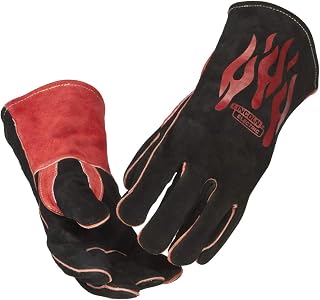
Lincoln Electric Traditional MIG/Stick Welding Gloves
Check PriceStick welding, or SMAW, creates intense heat, lots of smoke, and heavy spatter. Stick gloves are the heavyweights of the glove world. They are almost always made from thick cowhide or split leather with reinforced palms and gauntlet cuffs. Insulation is added to the backhand and fingers. While they can feel bulky, stick welding requires that level of protection. For overhead stick welding, extra reinforcement on the cuff and forearm is critical because gravity pulls molten metal straight down onto your hands. If you are burning 6010 or 7018 rods all day, do not even think about wearing lightweight gloves.
If you want to see a direct side-by-side breakdown, our guide on how MIG and TIG welding gloves differ goes deeper into the feature comparisons. Understanding these contrasts will help you avoid picking the wrong glove for your next project.
Specialty Welding Gloves
Beyond the standard categories, some jobs require highly specialized hand protection. These gloves are designed for extreme environments or specific hazards. From reflecting furnace heat to resisting cuts, specialty gloves fill gaps that standard leather cannot cover.
Aluminized Gloves
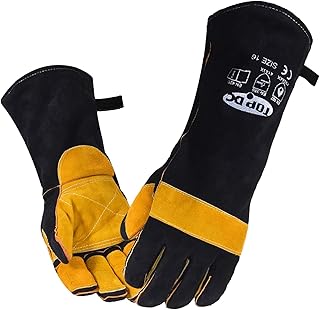
TOPDC 16-Inch Welding Gloves
Check PriceAluminized gloves reflect radiant heat away from the hand. They have a shiny outer layer of aluminum coating that can handle ambient heat up to 2,000 degrees Fahrenheit in radiant form. These are not meant for direct contact with molten metal but are essential for furnace work, foundry operations, and some high-temp welding preheat tasks. They are often worn as an outer shell over insulating liners. If your job involves standing near red-hot parts for long periods, aluminized gloves are a lifesaver.
Kevlar and Cut-Resistant Gloves
Lincoln Electric Traditional MIG/Stick Welding Gloves
Check PriceWhen you are handling sharp metal edges, sheet metal, or moving parts, cut resistance becomes a priority. Kevlar-lined welding gloves combine heat protection with high-level cut resistance. They are often used in fabrication shops where you weld and then handle materials with burrs. Some Kevlar gloves are thin enough for TIG work while offering extreme cut protection. They give you peace of mind without sacrificing mobility.
Waterproof Welding Gloves
Welders who work outdoors or in marine environments often face wet conditions. Waterproof welding gloves use a breathable membrane laminated between leather layers. This keeps water out while allowing sweat to escape. These gloves are ideal for pipeline welding in rainy climates or underwater welding support tasks. The waterproof layer does not compromise the glove’s thermal protection, making them a versatile choice for challenging job sites.
How to Choose the Right Type for Your Work
With so many types of welding gloves available, narrowing down your options can feel tricky. Focus on your daily workflow, the materials you weld, and the heat level you handle. Use these practical factors to guide your decision and you will end up with a pair that feels like it was made for you.
- Identify your primary welding process. TIG demands dexterity, MIG and stick require heavy heat protection.
- Assess the amperage range you use most often. Higher amps mean higher heat and the need for thicker insulation.
- Consider the fit. Gloves that are too large reduce control, while overly tight gloves cause hand fatigue.
- Check the cuff length. Gauntlet cuffs shield your forearms from sparks, but short cuffs work for clean TIG work.
- Look for quality stitching. Kevlar thread withstands high heat and prevents seams from blowing out.
- Factor in durability versus sensitivity. A glove that lasts six months may be useless if you cannot feel the filler rod.
To see our current recommendations for the top-rated welding gloves that match these criteria, check out our detailed buying guide. It covers real-world performance tests and user feedback to help you save time.
Frequently Asked Questions
Can I use TIG gloves for MIG welding?
You can, but it is not recommended. TIG gloves are thin and lack the heavy insulation needed for MIG spatter. You risk getting burned or the gloves wearing out quickly. In a pinch, they might work for a few short tacks, but for sustained MIG welding, stick to thick MIG or stick gloves.
What gauntlet length do I need?
For most overhead or heavy spatter work, a 4-inch or longer gauntlet works best. For bench welding and TIG, a shorter cuff provides more wrist mobility. Some stick welders prefer a full 7-inch gauntlet that covers the forearm completely. Think about whether sparks are likely to fall on your arm; if so, longer is safer.
How do I maintain and clean welding gloves?
Avoid soaking leather gloves in water. Wipe off dirt with a dry cloth and apply a leather conditioner to keep the material supple. Never wear gloves that are soaked in oil or grease because they can catch fire. Store them in a cool, dry place away from direct sunlight to prevent cracking. Inspect seams regularly and retire gloves with holes or deep burns.
Are welding gloves heat resistant enough for all metal temperatures?
Leather welding gloves protect against sparks and spatter and moderate contact heat, but they are not meant for prolonged direct contact with molten metal or objects over 600 degrees Fahrenheit. For extreme radiant heat, you need aluminized layers. Always let hot material cool before grabbing it, even with gloves on.
Conclusion
Understanding the many types of welding gloves gives you the power to work safer and smarter. Whether you are drawn to the softness of deerskin for TIG or the rugged protection of cowhide for stick, there is a glove made for your exact job. Investing in quality hand protection is a direct investment in your welding future. Take the time to assess your needs, try on different materials, and you will immediately feel the difference in your work.
Remember that no single pair does it all. Build a small collection of gloves for the processes you use most often, and always keep safety standards in mind. With the right knowledge and the right gear, you will weld with confidence hour after hour.