If you are stepping into the world of welding, hunting for a garage-friendly machine, or simply need a bulletproof tool for farm repairs, the Lincoln 110 stick welder often lands at the top of the shopping list. It is the gateway drug for many hobbyists, largely because it plugs into a standard household outlet, eliminating the need for expensive shop rewiring. You have probably seen it in countless garages with the characteristic red and black face.
But is it powerful enough for real metalwork, or will you find yourself frustrated by its limits the moment you try to burn a deep bead? The truth sits somewhere in the middle, driven entirely by understanding the machine’s sweet spot. We are going to strip away the marketing fluff and look at exactly what this little red box can do for you.
This guide dives deep into the hardware, the output, and the perfect scenarios where these compact arc welders truly shine. Whether you are repairing a lawnmower deck or building a custom smoker, mastering the quirks of 110-volt stick welding will massively upgrade your DIY skills.
Table of Contents
What Exactly is the Lincoln 110 Stick Welder?
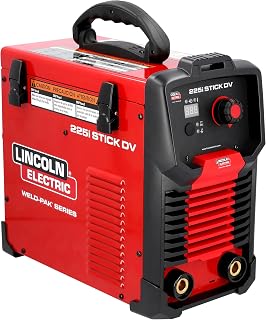
Lincoln Electric Weld-Pak 225i Stick Welder
Check PriceWhen people reference a Lincoln 110 stick welder, they are usually talking about the compact, entry-level inverter machines or the classic transformer units in the Lincoln Electric lineup designed to run on a 115-volt or 120-volt household circuit. The most iconic model that fits this description is the Lincoln Electric AC-225, though purists note the AC-225 requires a big 50-amp plug, pushing the true 110-volt spotlight onto the newer inverter series like the Lincoln Invertec series and specific dedicated hobby machines.
These are generally DC (Direct Current) inverter machines, which is a massive upgrade over the old-school AC buzz boxes. The inverter technology makes the unit lightweight, portable, and significantly more efficient when pulling power from your wall. You are not dealing with a giant, heavy transformer that sags your lights, you are using a smart power supply that offers a smooth, stable arc.
A true 110-volt unit limits its input draw to about 20 amps from the wall. This is the key trade-off. You get convenience and portability, but you sacrifice the raw heat output you would get from a 220-volt machine. Understanding that power ceiling is the secret to successful welds with this tool.
Power Capabilities and Material Limitations

YESWELDER 135A MIG Welder, 110V Flux Core
Check PriceThe number one question surrounding a 110-volt machine is about strength. You need to manage your expectations, because while these machines are incredible for their size, they are not pipeliner tools. The output range on a quality Lincoln 110 stick welder generally peaks between 70 and 90 amps, depending on the specific model and the demands of your home circuit breaker.
How Thick Can You Weld?
With a max output hovering around 80 to 90 amps, your realistic single-pass penetration on mild steel is generally capped at 1/8 inch (3.2mm). You can create a structurally sound joint on 1/8-inch plate without extensive beveling. If you need to weld thicker material, say 1/4 inch, you must physically bevel the edges to create a groove.
This grooved joint allows the puddle to sit deeper into the metal. After beveling, you run a root pass, clean the slag, and then run a second or even third pass to fill the groove. While a 110-volt machine can handle 1/4-inch metal this way, the duty cycle becomes a headache. You will spend more time waiting for the thermostat to reset than actually running beads, which brings us to the next critical weak point.
Duty Cycle Realities
Duty cycle measures how long you can weld continuously in a 10-minute period before the machine must cool down. Cheap imported 110-volt units often overheat within 90 seconds at maximum output. Lincoln machines generally offer a better industrial safety margin, but physics remains undefeated. If the manual states a 20% duty cycle at 80 amps, you get two minutes of arc time, followed by eight minutes of rest.
Pushing a 110-volt machine to its absolute limit on a hot day will trip the thermal overload fast. To maximize your arc time, you should select the correct welding electrode. Running a 1/8-inch 6011 rod, which requires higher amperage, will choke the machine faster than burning a smaller 3/32-inch 7018 rod.
Choosing the Right Electrodes for 110V
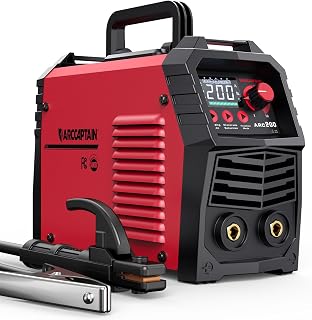
ARCCAPTAIN Stick Welder, 200A ARC/Lift TIG
Check PriceYour success with a Lincoln 110 stick welder hinges almost entirely on electrode selection. You cannot simply grab a thick farm rod and expect the machine to light it up. Because the open-circuit voltage (OCV) and amperage are limited, you need fast-freezing, easy-starting rods with high arc voltage stability.
- E6011 (3/32 inch): This is your best friend. The high cellulose flux drives a deep, digging arc that focuses the low amperage exactly where you need it. It works wonders on rusty or dirty farm metal, cutting through paint and scale that would defeat a solid wire machine. Run it on DC Electrode Positive (DCEP) for maximum bite.
- E6013 (3/32 inch): If you are welding thin sheet metal, like auto body panels, the 6013 is a must. It offers a soft, shallow arc that minimizes blow-through. The slag virtually peels itself off, leaving a pretty bead. However, do not use this rod on dirty metals because it lacks the cleaning power of the 6011.
- E7018 (3/32 inch): This low-hydrogen rod is the gold standard for structural welds because it deposits ductile, crack-resistant metal. Getting a 7018 to start on a 110-volt machine can be finicky. You will need a very clean surface, a tight arc gap, and often a scratch-start technique. Once lit, it runs smooth and strong.
Stick with these smaller diameter rods. Attempting to burn a 5/32-inch or 1/8-inch rod will likely result in electrode sticking or a drifting arc. Let the rod size match the machine’s voltage potential, not the other way around.
Best Uses for a 110V Stick Machine

HONE Stick Welder 140Amp ARC Welder Machine
Check PriceThis tool is not designed for building massive boat trailers out of 3/8-inch plate. It fills a specific role in the ecosystem of a home shop, excelling in tasks where mobility and simplicity trump raw power. Knowing where it outperforms larger, clunkier machines will help you decide if this is the right purchase.
Mobile Repair and Ranch Work
There is no better application for the compact Lincoln stick welder than fence repair. Dragging a generator and a small inverter stick unit out into the back forty is standard practice. The machine is lightweight, often under 15 pounds, making it easy to hang on a tractor fender. Since stick welding requires no external shielding gas canister, you never have to worry about wind blowing your gas away while fixing a gate hinge.
Sculpture and Artistic Metalwork
Artists love these small inverters because they offer DC output, which allows for crisp starts on thin materials. You can run specialized small-diameter rods to create detailed texture work on sculptures. The precise arc control available on Lincoln inverters, compared to old transformer machines, makes delicate tack welding much easier without vaporizing your base material.
Education and Skill Building
Learning on a 110-volt machine forces you to develop perfect arc length control. The window between a shorted electrode and a long, sputtering arc is very narrow. If a student can run a perfect butt weld with a 3/32-inch 7018 on a 110-volt machine, they can weld beautifully on virtually any industrial engine drive. It teaches discipline in travel speed and rod manipulation without the crutch of massive heat input.
Overcoming Common Frustrations
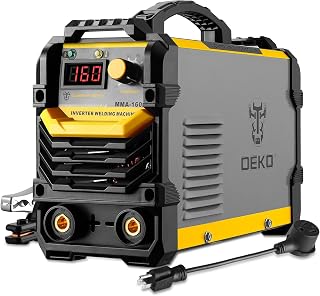
DEKOPRO 160A ARC Welder Machine IGBT
Check PriceIf you just unboxed the machine and stuck the plug in the nearest wall socket, you might be disappointed by weak starts or a constantly tripping breaker. The power triangle between your outlet, your extension cord, and the circuit box determines the performance of a 110-volt welder more than almost any other factor.
The Extension Cord Killer
A standard orange 50-foot extension cord is the mortal enemy of a 110-volt arc welder. When electrons travel a long distance over a thin gauge wire, the voltage at the machine drops significantly. The machine compensates by drawing more amps, which heats the cord and triggers the breaker.
You must use a minimum 12-gauge heavy-duty cord, and ideally a 10-gauge cord, for any run over 25 feet. Your best bet is to keep the cord as short as possible. If you must use a longer cord, ensure it is completely unwound, as a coiled extension cord creates electromagnetic resistance acting like a choke, killing your amperage.
Clean DCEP Steel
Stick welding carries a reputation for being tolerant of dirt, but a 110-volt machine lacks the ballistic heat to blast through heavy mill scale without consequence. You must clean the steel down to bright, shiny metal at the ground clamp connection point. A poor ground creates internal resistance that saps the limited voltage available, leading to an erratic, popping arc and instantly sticking rods.
Comparing the Lincoln 110V to Modern Alternatives

250A Stick Welder, 110V/220V Portable IGBT
Check PriceThe market has shifted, and multi-process machines are becoming cheaper. A modern 110-volt MIG (Metal Inert Gas) machine that utilizes flux-core wire is a direct competitor to the stick welder in the same voltage class. So, why choose stick over a self-shielded flux-core wire feeder? The answer often lies in the joint configuration and the environment.
A MIG flux-core machine excels at welding thin, long seams on clean metal, acting almost like a hot glue gun. But when you face vertical-up joints, a stick welder with a 6011 rod digs into the root far more aggressively than flux core can manage. Furthermore, stick welding electrode coatings are chemically formulated to handle contaminated metals that would cause severe wormhole porosity in a MIG bead. If you are fixing something caked in decades of oil and rust, a Lincoln 110 stick welder with the right rod selection remains superior to entry-level wire feeders.
However, for beginners intimidated by the difficulty of striking an arc and maintaining a consistent gap, a flux-core machine offers a gentler learning curve. It comes down to whether you prioritize the ability to weld dirty material (stick) or weld thin sheet metal without burn-through (flux-core). You can explore the foundational differences of these arc processes in our comparison of what is arc welding to see where stick fits into the bigger picture.
Accessories That Improve Your Setup
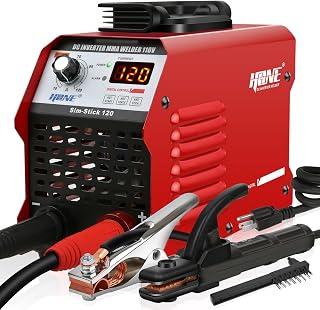
HONE Stick Welder 110V, Actual 120Amp
Check PriceBecause the margins are so thin on a 110-volt input, every accessory in your kit matters. You cannot afford to handicap the unit with cheap consumables. A few upgrades transform the user experience from frustrating to satisfying.
- A Heavy-Duty Ground Clamp: The flimsy stamped-steel ground clamp included with many entry-level units often fails to penetrate surface oxidation. A solid brass or copper jaw clamp with a strong spring creates a low-resistance connection that prevents arc blow and stuttering starts.
- A Rod Storage Canister: You will likely use low-hydrogen 7018 rods for critical repairs. These rods absorb moisture from the air within hours, causing hydrogen cracking in the weld. You need a sealed rod guard to keep them dry. Do not store them in a damp basement.
- Proper Protective Gear: Just because the machine is small does not mean the arc is safe. A quality auto-darkening helmet is non-negotiable. For 110-volt stick welding, a lens with a reaction time and shade range suitable for low-amp arcs is crucial, especially since the arc can snuff out frequently when you are learning. For those gearing up completely, our guide on the best welding helmet for beginners highlights tops choices that help new welders see the puddle clearly.
Frequently Asked Questions

TOOLIOM 195A Stick Welder, LCD Display
Check PriceCan a Lincoln 110 stick welder weld exhaust pipes?
It is possible but very difficult. Exhaust tubing is thin, usually 16-gauge or thinner. You must use a 1/16-inch or 3/32-inch rod at the lowest possible amperage. The technique requires extreme speed with little to no rod manipulation, a simple drag. A Lincoln 110 MIG with a shielding gas bottle handles this task far better, but a skilled stick welder with patience can patch a muffler hole successfully.
Why does my electrode constantly stick to the metal?
Sticking occurs when the circuit completes but the arc heat is insufficient to melt the rod tip promptly. Common causes include too low of an amperage setting, holding the rod too perpendicular to the work piece, or using large diameter rods. Tilt the rod angle to about 15 degrees, increase the heat slightly, and strike it like a match. Do not stab it straight down.
Does a 110v stick welder need a special outlet?
Generally, no. The standard NEMA 5-15 plug fits into a regular household outlet. But it is highly recommended to use a dedicated 20-amp circuit. If you weld on a shared circuit running a refrigerator or chest freezer, the initial compressor kick of the appliance combined with the welder’s draw will trip the breaker every time. Ensure nothing else major is running on that circuit.
Is the Lincoln AC-225 a 110-volt welder?
No. The iconic Lincoln AC-225 Tombstone welder is a 230-volt machine. It requires a 50-amp outlet like a dryer or range plug. Unfortunately, many beginners confuse the AC-225 with the 110-volt inverter units because they are both small entry-level Lincolns. If you only have standard household power, you must stick to the inverter line meant for 115-volt input.
The Verdict on This Welder
The Lincoln 110 stick welder remains a permanent fixture in the home welding landscape for a reason. It does not try to be a massive production tool, it masters the art of convenience. If you define your scope clearly to thin plate, rusty farm steel, and mobility, you will never feel limited by it. The moment you try to force it to compete with a 240-volt machine on thick structural material, you will blame the tool for a mismatch in expectations.
The secret is respecting the voltage ceiling. By feeding it thin diameter rods, maintaining a brutally short arc, and wiring it to a strong circuit, you can lay down ripples that look as good as any high-dollar engine drive rig. This is the tool that teaches the art of arc length control through necessity, making you a genuinely better craftsman. For a deeper dive into the fundamental electrical demands of your gear, you can explore how many amps does a welder use to better understand your home circuit layout. Additionally, the Occupational Safety and Health Administration (OSHA) provides crucial safety guidelines for welding practices that cover ventilation and fire prevention essential for any garage setup.