If you are preparing for a long day under the hood, you have probably wondered, how heavy is a welding helmet? The answer is not a single number. Depending on the type, materials, and features, a welding helmet can weigh anywhere from under 1 pound to over 5 pounds.
Understanding weight is critical for your comfort and health. A heavy helmet can cause severe neck fatigue, leading to poor weld quality and long-term injury. This guide breaks down the exact weights of different types, why the weight matters, and how to choose a model that protects you without breaking your neck.
Table of Contents
The Average Weight of a Welding Helmet
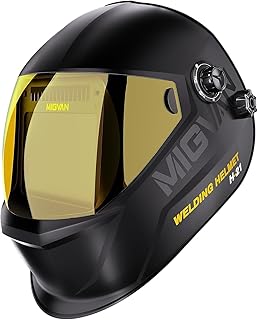
Welding Helmet Auto Darkening True Color Large Viewing, Welding Hood Solar/Rechargeable Battery Powered
Check PriceIn the modern market, the average weight falls between 1.5 pounds (680 grams) and 3 pounds (1.36 kilograms). Standard auto-darkening helmets generally sit right in the middle of this range. Passive helmets, which contain less electronics, often weigh less than advanced respiratory models.
It is important to distinguish between the shell weight and the total system weight. When manufacturers list a weight, they usually refer to the headgear and shell only. If you add a respirator, a grinding shield, or a neck protector, the load on your head increases significantly.
Weight Breakdown by Welding Helmet Type
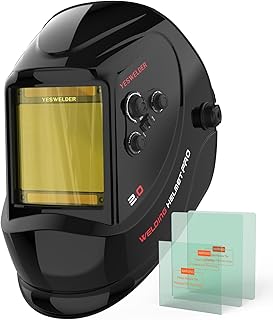
YESWELDER Auto Darkening Welding Helmet, Large View, LYG-M800H
Check PriceDifferent welding processes and job sites require different types of hoods. Here is how the numbers stack up across the various categories.
Passive Welding Helmets
Passive helmets, also known as fixed shade, are the traditional style. They use a dark, tinted glass lens that remains dark at all times. Because they lack electronics, solar panels, and batteries, they are structurally simple.
- Average Weight: 1 to 2 pounds (450 to 900 grams)
- Construction: Lightweight plastic or fiberglass shell with a simple lens holder.
- Best For: Beginners or professionals who prefer simplicity and reliability.
Auto-Darkening Welding Helmets
Auto-darkening helmets offer variable shade control and sensors that darken the lens instantly when the arc strikes. The added electronics, LCD panels, and power sources increase the overall weight.
- Average Weight: 1.5 to 2.5 pounds (680 to 1,134 grams)
- Construction: High-impact nylon or polyamide shell with an electronic filter cartridge.
- Best For: Production welders who need to flip the hood up and down less frequently.
Lightweight Welding Helmets
Manufacturers have begun using advanced polymers to reduce neck strain. A true lightweight helmet is designed to feel like you are wearing nothing at all.
- Average Weight: 0.8 to 1.2 pounds (363 to 544 grams)
- Construction: Reinforced nylon, often with a streamlined design and minimal moving parts.
- Best For: Welders with pre-existing neck pain or those working in overhead positions.
Pancake Welding Hoods
Pancake hoods are a specialized piece of equipment used primarily by pipeline welders. They fit very close to the face and use a balsa box to hold the lens. These are incredibly light.
- Average Weight: 0.5 to 1 pound (227 to 450 grams)
- Construction: Balsa wood, aluminum, or plastic. No standard headgear, usually attached to a hard hat or strap.
- Best For: Outdoor pipeline work where glare control is vital.
Powered Air Purifying Respirator Helmet
PAPR systems include a full helmet with a sealed visor, a hose, and a motorized filter unit worn on a belt. While the unit on the belt carries some weight, the headgear is also heavier due to the sealing mechanisms.
- Average Weight (Headgear only): 3 to 5 pounds (1.36 to 2.27 kilograms)
- Construction: Heavy-duty plastics with internal air ducts and baffles.
- Best For: Welders working in confined spaces or with hazardous fumes like stainless steel.
Why Helmet Weight Matters for Welders
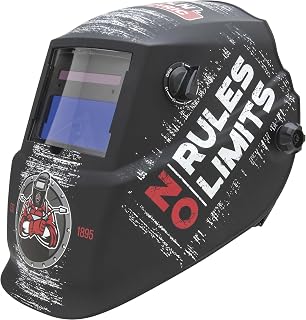
Lincoln Electric No Rules No Limits Welding Helmet K4983-1
Check PriceYou might think a few extra ounces do not matter. But when you are looking down at a weld for hours, gravity is working against you. The weight of a helmet multiplied by time leads to musculoskeletal disorders.
Neck and Spine Fatigue
The human head weighs about 11 pounds. Adding a 2-pound helmet increases the load your neck must support by nearly 20 percent. If you jerk your head down to drop the hood, this dynamic load can spike much higher. Over time, this causes compression in the cervical spine.
Weld Accuracy
If your neck is tired, you are more likely to rush a weld or get out of position. A heavy helmet can cause you to cheat by propping your head up with your free hand, leading to unstable travel speed. A balanced, lighter helmet allows for smoother torch manipulation.
Overhead Work
When welding overhead, gravity pulls the helmet away from your face. A heavy helmet requires tighter headgear adjustment to prevent it from falling off, which creates pressure points and headaches. A lighter helmet is almost always preferred for structural and shipyard work.
What Makes a Welding Helmet Heavy?

VILSIN Welding Helmet Auto Darkening Solar Powered Welding Hood
Check PriceSeveral components contribute to the final number on the scale. Understanding these helps you decide which features are worth the weight.
- Shell Material: Fiberglass is durable but heavy. Nylon and polyamide are lighter but can be more expensive.
- Lens Technology: Auto-darkening filters contain liquid crystal cells and circuit boards. Larger viewing areas usually mean heavier filters.
- Headgear: Ratcheting mechanisms and padded sweatbands add weight. Some premium headgears use aluminum components to save ounces.
- Accessories: Grind shields, flip-up adapters, and light mounts increase the load.
How to Reduce the Strain of a Heavy Helmet
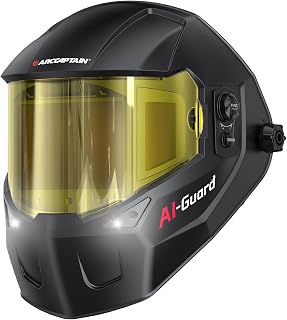
ARCCAPTAIN Intelligent Auto-Darkening Welding Helmet, 180° True Color Hood
Check PriceYou do not always have to buy a brand new hood to fix weight issues. Sometimes, proper adjustment and accessories make a massive difference.
Balance the Headgear
A helmet should sit level on your head. If the front is heavier than the back, it will pull your head forward. Look for helmets with adjustable crown straps that allow you to shift the pivot point. The closer the shell sits to your face, the less leverage the weight has on your neck.
Use a Comfort Cushion
While it adds a tiny bit of weight, a thick sweatband or gel pad distributes the pressure over a wider area. This prevents sharp pain that makes the helmet feel heavier than it is.
Upgrade to a Lightweight Shell
If you are struggling with a 3-pound helmet, consider investing in a model made from high-tech nylon. Many modern auto-darkening helmets now weigh less than 1.5 pounds without sacrificing safety ratings. You can check our guide to lightweight safety gear options for specific recommendations that prioritize neck comfort.
Safety Standards vs. Weight
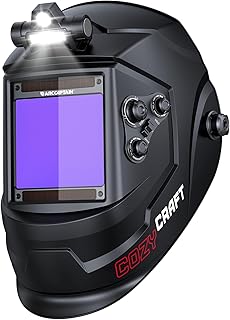
ARCCAPTAIN Auto Darkening Welding Helmet with Light, 3.94″X3.66″ Large View
Check PriceThere is a common misconception that a heavier helmet is safer. This is false. Weight is not an indicator of impact resistance. Safety comes from the material composition and heat treatment, not thickness.
Modern polymers used in lightweight hoods meet the same ANSI Z87.1 standards as heavy fiberglass models. In fact, lighter materials often have better shock absorption because they flex rather than crack. When choosing a helmet, verify the safety rating rather than assuming heavy means tough.
Comparing Weights: Popular Brands
Here is a rough comparison of how major brands stack up in terms of standard auto-darkening weights.
- Lincoln Electric: Typically ranges from 1.8 to 2.3 pounds.
- Miller Electric: Known for balancing weight well, usually 1.5 to 2.0 pounds.
- 3M Speedglas: Can range from 1.6 pounds for basic models to over 4 pounds for heavy-duty PAPR versions.
- Hobart: Budget-friendly options often weigh around 2.0 to 2.5 pounds.
Remember that marketing materials often list the lightest configuration. Always check if the weight includes the headgear.
Finding the Sweet Spot
Welding Helmet Auto Darkening True Color Large Viewing, Welding Hood Solar/Rechargeable Battery Powered
Check PriceHow heavy is a welding helmet that is right for you? The ideal weight is the lowest number that still provides the features you need for your specific job.
For a hobbyist doing small MIG projects in the garage, a 1.5-pound auto-darkening helmet offers the best mix of convenience and comfort. For a professional pipe welder on a right-of-way, a pancake hood weighing under a pound is the gold standard. For an industrial worker in a chemical plant, a 4-pound PAPR unit is non-negotiable for lung safety, regardless of neck strain.
If you are unsure where to start, look at broader resources on choosing equipment. You can review our guide on selecting the correct protective gear to ensure you balance safety, visibility, and weight effectively.
Frequently Asked Questions
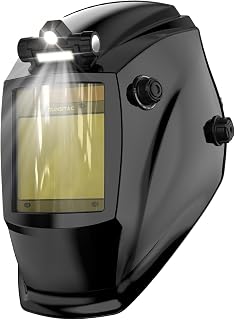
Sunstac Auto-Darkening Welding Helmet 3.94 x 3.27″ View with Light
Check PriceIs a 2 lb welding helmet heavy?
No, 2 pounds is average for a standard auto-darkening helmet. It only becomes a problem if you are welding out of position or wearing it for more than 8 hours a day without breaks.
How much does a Miller welding helmet weigh?
Most standard Miller auto-darkening helmets weigh between 1.5 and 2.0 pounds depending on the specific model and lens size. PAPR versions are much heavier.
Why does my neck hurt after welding?
Neck pain usually comes from a forward head posture caused by heavy helmets or poor headgear adjustment. Try loosening the top strap and tightening the back ratchet to shift the center of gravity.
Are cheap welding helmets heavier?
Not necessarily. Cheap helmets often use basic nylon and simple headgear, which can be quite light. However, they lack the comfort features needed to manage that weight over long periods.
Can I make my welding helmet lighter?
Yes. Remove unnecessary accessories like side magnifying lenses or external grind shields. You can also replace a heavy leather bib with a lightweight cloth alternative.
Conclusion: Welding Helmet Weight Guide
The question of how heavy is a welding helmet depends entirely on the type of work you do. Modern technology has allowed manufacturers to create hoods that offer massive viewing areas and safety ratings without the bulk of older fiberglass models.
If you value your long-term health, pay close attention to the weight specifications. Prioritize a balanced fit over raw protection numbers, and do not be afraid to spend a little more for a lighter shell. Your neck will thank you after the first ten years on the job.
One of the best resources for understanding how these shields stack up is the comprehensive guide provided by the American Welding Society (AWS), which discusses ergonomic safety standards in depth.