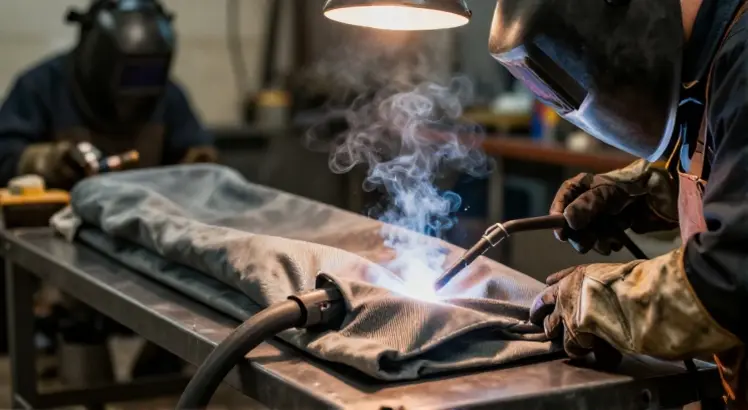
When you are searching for what fabric is best for welding, the answer is not just about staying cool or looking professional, it is about preventing serious burns. Every experienced welder knows that a single spark, a tiny droplet of molten metal, or a flash of radiant heat can set the wrong clothing on fire in seconds.
Whether you are a weekend hobbyist or a full time pipe welder, the material you put between your skin and the welding arc is your first line of defense. In this guide, we break down the safest fabrics for welding, explain why some everyday materials turn dangerous under spatter and slag, and give you practical advice to build a protective outfit that meets official safety standards.
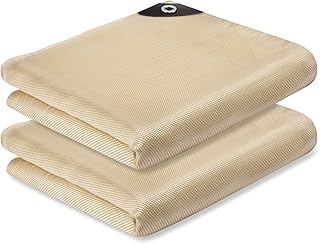
2 Pack 4×6 ft Heavy Duty Fiberglass Welding Blanket
Check PriceTable of Contents
Why Welding Fabric Choice Matters
Welding generates extreme heat, ultraviolet radiation, and showers of sparks that can reach over 3,000 degrees Fahrenheit. The fabric you wear must resist ignition, char, or melt. Even a brief encounter with a hot spark can start a flame on untreated cotton or cause synthetic materials to shrink and stick to your skin.
Beyond the immediate burn risk, choosing the correct fabric also affects your comfort, mobility, and how well you can maintain focus during long welding sessions. Welders who ignore fabric safety often end up with severe scars and lost work time, an outcome that is easily preventable by wearing materials engineered for the job.
Industry guidelines reinforce this. According to OSHA welding PPE guidelines, protective clothing must provide adequate coverage and be made of materials that will not increase the risk of injury if ignited. That means no polyester, no nylon, and no thin cotton blends that melt or burn rapidly. The right fabric works with you, not against you, and can literally be a lifesaver.
The Dangers of Wearing the Wrong Fabric
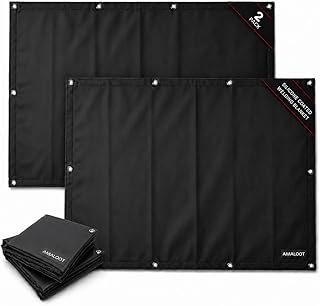
AMALOOT Heavy Duty Welding Blanket 2-Pack
Check PriceTo understand why certain fabrics shine for welding, it helps to see what happens when you wear the wrong one. Polyester, nylon, acrylic, and most synthetic performance wear are petroleum based. When they contact a spark or hot slag, they do not just burn, they melt and drip. The molten plastic fuses to skin, causing third degree burns that require surgical removal. Even worse, synthetics can ignite from radiant heat alone, before a spark ever touches them.
Thin, untreated cotton and denim also fail quickly. While 100 percent cotton does not melt, it catches fire easily and burns fast. Many welders have discovered that a frayed denim jacket can become a torch after just a few minutes of overhead stick welding. Similarly, fleece, down insulated jackets, and any material with exposed elastic cuffs should be kept far away from the welding area. The rule is simple: if you would not hold a lighter to the fabric for five seconds, do not wear it while welding.
The Best Fabrics for Welding
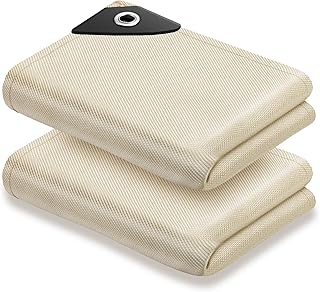
2 Pack 4x6ft Fiberglass Fire Resistant Blanket
Check PriceNow let’s get to the core of the question what fabric is best for welding. There is no single universal answer because different welding processes, positions, and working environments call for different materials. However, a shortlist of approved fabrics consistently rises to the top for safety, durability, and comfort.
Flame Resistant (FR) Cotton
FR cotton is one of the most popular choices for welding shops and on site work. The fabric is 100 percent cotton that has been chemically treated or engineered to self extinguish when the flame source is removed. FR cotton does not melt, does not drip, and chars in a way that protects the skin beneath. It is lightweight, breathable, and available in shirts, jackets, pants, and welding caps. Many welders prefer FR cotton for indoor MIG and TIG welding because it offers good mobility without the weight of leather.
Keep in mind that the flame resistance can slowly degrade over time with repeated industrial laundering or exposure to harsh detergents. Always follow the manufacturer’s washing instructions, avoid fabric softeners, and check for worn spots. If you see thinning or fraying, it is time to replace the garment.
Leather
When you need maximum protection, leather is hard to beat. Full grain cowhide, pigskin, and goatskin leather jackets, aprons, and sleeves stop sparks, spatter, and even brief contact with molten metal without burning. Leather does not catch fire easily, and when it does, it smolders rather than erupting into flame. This makes it the go to fabric for heavy stick welding, flux core welding, and out of position welding where slag falls directly onto the body.
The trade off is weight and breathability. A thick leather welding jacket can be stifling in a hot shop, which is why many welders turn to split leather sleeved bibs paired with FR cotton shirts for a compromise between coverage and ventilation. Still, if your work involves heavy sparks or overhead arc gouging, leather should be your first choice. For a full breakdown of materials, style, and fit, you can explore our protective welding jackets guide.
Kevlar and Nomex Blends
Aramid fibers such as Kevlar and Nomex offer inherent flame resistance that never washes out. These high performance fabrics are lightweight, cut resistant, and can withstand repeated high heat exposure. Welding sleeves, gloves, and even full jackets made from Kevlar blends are increasingly common in industrial settings. They provide excellent protection without the bulk of leather, and they perform especially well in automation and robotic welding cells where contact with hot parts is a concern.
The main downside is cost. Aramid garments can be two to three times more expensive than FR cotton alternatives. However, for professional welders who work in extreme conditions day after day, the investment pays off in longevity and safety.
Treated Wool
Wool may surprise you, but it is naturally flame resistant. Wool has a high ignition temperature, does not melt, and self extinguishes once the heat source is removed. Some welders, particularly in colder climates, use dense wool jackets or wool blend shirts as a base layer under leather.
The material is comfortable, wicks moisture, and offers good insulation. However, untreated wool can still char and shrink, so look for FR treated wool or tightly woven worsted wool for added protection. It is less common than cotton or leather but deserves a spot on the list for cold weather welding outfits.
Fabrics You Should Never Wear While Welding
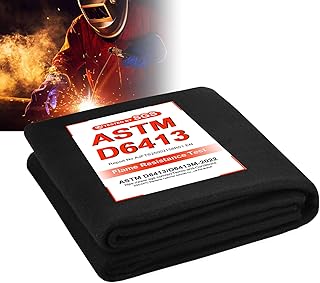
5mm 72×96 Large Carbon Felt Fireproof Blanket
Check PriceEqually important to knowing what fabric is best for welding is recognizing the materials that should never touch your skin near an arc. Some of the most dangerous fabrics are actually the ones people wear every day without thinking.
- Polyester and Poly Blends: Melts instantly, sticks to skin, causes severe burns.
- Nylon: Highly flammable, melts and drips, common in athletic wear.
- Acrylic: Burns rapidly and produces toxic fumes.
- Rayon and Viscose: Treated with chemicals that can make them flammable.
- Thin Untreated Denim: Catches fire faster than most welders expect.
- Fleece and Down: Very combustible, can ignite from ambient sparks.
If your clothing label shows any of these materials, keep it out of the welding area. The risk is never worth it, no matter how briefly you plan to weld.
How to Choose the Right Welding Attire
Fabric is only half the story. A garment designed for welding also needs proper coverage, fit, and the ability to stay in place while you move. Here is how to put a safe welding outfit together.
Welding Jackets and Aprons
A welding jacket should cover your torso, arms, and the back of your neck without gaps. Leather jackets with snaps, FR cotton jackets with high collars, and aprons worn over long sleeve FR shirts all work well. Make sure cuffs close tightly around your gloves to prevent sparks from entering. When you shop for a jacket, look for Kevlar stitching and reinforced stress points. For a detailed look at proven models, our protective welding jackets page compares top rated choices.
Pants and Leg Protection
Your legs are just as vulnerable as your upper body. Sparks and spatter roll down and settle in folds, cuffs, or around the tops of boots. Never wear shorts, and avoid synthetic trousers at all costs. The safest welding pants are made from heavy FR cotton or a cotton nylon blend that self extinguishes. They should extend over your boot tops without dragging on the ground. Cuffless straight leg designs eliminate spots where hot slag can collect. For more specific product recommendations, check the roundup of flame resistant welding pants we have tested.
Underlayers and Base Clothing
Even what you wear underneath your welding jacket matters. A cotton t shirt is better than a synthetic undershirt, but pure FR cotton base layers are even safer. In winter, a lightweight merino wool base layer offers warmth and natural flame resistance. Avoid polyester thermal underwear, which can melt against your skin if heat penetrates through the outer jacket. The entire layer system must be able to resist heat, not just the top shell.
Care and Maintenance of FR Fabrics
Buying the best fabric for welding is only half the battle. How you wash and store your gear determines how long it will protect you. FR cotton garments can lose their effectiveness if laundered incorrectly. Always wash them separately from non FR clothing, use mild detergent, and avoid bleach, fabric softeners, and dryer sheets. These products leave a flammable residue and can degrade the flame resistant chemistry.
Inspect your welding clothes before each shift. Look for tears, worn spots, heavy soiling, and areas where the fabric has thinned. Once the FR treatment is compromised, replace the garment immediately, do not try to restore it with a spray on product. Leather items should be conditioned periodically to prevent cracking, and any stitch damage needs immediate repair with Kevlar thread. Proper care keeps your protective gear reliable for hundreds of welding hours.
Frequently Asked Questions
Can I wear a regular cotton shirt while welding?
A regular pure cotton shirt is better than a synthetic one, but it is not safe. Untreated cotton will ignite and burn quickly. If you are only doing light tack welding with minimal spark risk, a thick, tightly woven cotton shirt might hold up briefly, but for any sustained arc work you should use FR cotton or leather. Considering the low cost of FR cotton shirts today, there is no reason to take the risk.
Is leather too hot for summer welding?
Leather can be hot, but many welders manage it with lightweight pigskin or split leather jackets that have underarm vents. You can also wear a leather apron or sleeves over an FR cotton shirt instead of a full jacket. Staying hydrated and using a fan or cooling vest helps. The extra heat is far better than the scars from a slag burn. Many pros switch to FR cotton for light indoor welding when the shop temperature climbs, but they never go without coverage.
How long does FR treatment last on cotton?
It depends on the fabric quality and laundry habits. High quality FR cotton can retain its flame resistance for the life of the garment, often 50 to 100 industrial wash cycles. Home laundering with mild detergent and air drying extends the life. Once the fabric becomes thin or shows signs of pilling, the protection is likely reduced. Always follow the label and retire clothing at the first sign of significant wear.
What about welding caps and head protection?
Welding caps protect your scalp from sparks that fly under the helmet, and they should also be made from FR cotton or treated cotton denim. Avoid baseball caps with plastic snaps or synthetic mesh, which can melt onto your head. A proper welding cap fits snugly, covers the ears, and has a brim turned to the side where the stinger is held. Head protection is an often overlooked part of the fabric equation, but burned hair and scalp injuries are painful reminders that every layer counts.
Conclusion
So what fabric is best for welding? The honest answer is a layered approach built on proven materials. FR cotton delivers everyday comfort and reliable self extinguishing behavior. Leather gives the highest protection for heavy spatter and overhead work. Aramid blends add durability for the toughest industrial jobs.
Treated wool finds its niche in cold weather. Whatever you choose, the non negotiable rule is to never wear synthetics and never weld without full coverage. Start with a quality FR cotton or leather jacket, pair it with flame resistant pants, and finish with a cotton welding cap and sturdy boots. Protect yourself every time you strike an arc. Your skin will thank you, and you will keep doing the work you love, safely.