You are staring at a wall of protective gear, unsure if you need thick leather, flame resistant cotton, or something in between. The question What jackets do welders wear is not a one size fits all answer, because the right jacket depends entirely on the welding process, the amperage, and your work environment. A high amperage stick welder throwing heavy molten slag needs far more protection than someone doing low current TIG welding on a clean bench.
Choosing correctly means protecting yourself from painful burns, UV radiation, and long term skin damage. This guide breaks down the different types of welding jackets, the materials that save your skin, and how to pick the perfect layer for your specific job. Whether you are a beginner in welding school or a seasoned pro looking to upgrade your kit, understanding the armor you wear is just as important as your helmet.
Table of Contents
Why Welding Jackets Are Non Negotiable
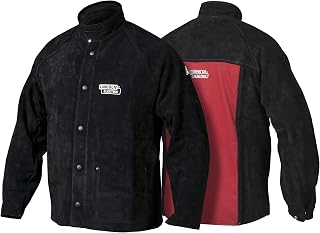
Lincoln Electric Heavy Duty Leather Welding Jacket
Check PriceA welding arc generates extreme heat, but the real danger to your clothing and skin often comes from sparks, spatter, and hot slag. A simple cotton t shirt can ignite instantly, and synthetic fabrics like polyester or nylon will melt directly into the skin, causing catastrophic burns. A proper welding jacket acts as a shield, resisting ignition and insulating your arms and torso from the radiant heat of the arc.
Beyond the immediate burn risk, the intense ultraviolet radiation from the arc can cause a severe sunburn like reaction on exposed skin, often called welder’s flash on the body. A durable, high quality jacket worn with the sleeves rolled down and collar up blocks that radiation completely. Safety standards from organizations like CCOHS protective clothing guidelines require flame resistant clothing for any welding task, and for good reason, comfort can never come before survival.
Main Types of Jackets Welders Wear
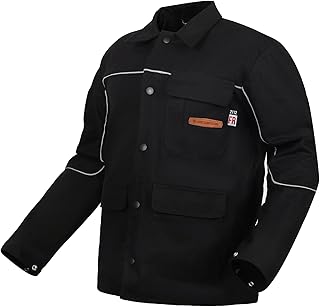
ARCCAPTAIN Welding Jacket, 11oz Flame Resistant Cotton Welding Jackets
Check PriceNot all welding is the same, and the jackets reflect that. The industry generally splits protective upper body wear into three primary categories: heavy leather, flame resistant treated cotton, and hybrid designs that blend performance fabrics. Each has a distinct set of pros, cons, and ideal use cases that you need to weigh against your daily work.
Leather Welding Jackets
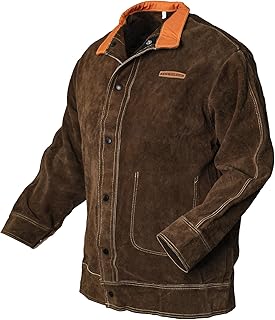
YESWELDER Leather Welding Jacket
Check PriceLeather is the gold standard for heavy duty protection. Typically made from split cowhide, pigskin, or goatskin, these jackets offer unmatched resistance to sparks and spatter. Split cowhide is the most common because it is tough, durable, and provides excellent heat insulation, making it the favorite of structural welders and pipefitters who run high amperage stick or flux cored arc welding.
You will find leather jackets in different weights. A heavy milled leather jacket can stop a fireball of molten metal, but it is also stiff, hot, and heavy. Softer leathers like goatskin offer a compromise, providing high tensile strength with better dexterity and a broken in feel right out of the box. Regardless of the animal hide, leather does not breathe well, which makes it brutal in hot weather, but it is the only material that truly resists a sustained spray of slag without charring through. If you are curious about which specific models offer the best value, you can explore our detailed buying guide for welding jackets.
Flame Resistant Cotton and Denim Jackets
ARCCAPTAIN Welding Jacket, 11oz Flame Resistant Cotton Welding Jackets
Check PriceFor light to medium duty fabrication, MIG welding at lower settings, or hot summer months, a flame resistant (FR) cotton jacket is often the smarter choice. These are not regular cotton shirts, they are chemically treated with flame retardant compounds that prevent the fabric from sustaining a flame after the ignition source is removed. The fibers char and self extinguish rather than continuing to burn.
The biggest advantage here is breathability. An FR cotton jacket allows air to circulate, keeping you significantly cooler than leather. However, the protection is limited. A heavy shower of spatter can burn straight through the lightweight fabric immediately, whereas leather would deflect it. These jackets are perfect for TIG welding, which produces almost no spatter, or for low power MIG welding on thin sheet metal. You need to understand the trade off clearly, to learn more about the science behind the materials, check out our guide to the best fabrics for welding clothing.
Hybrid and Specialty Welding Apparel
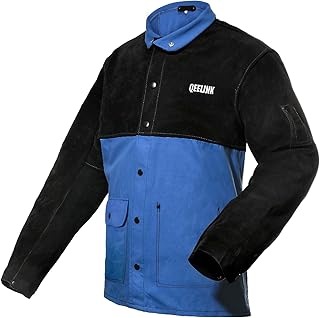
QeeLink Welding Jacket Split Leather Sleeves
Check PriceInnovation in personal protective equipment has given rise to hybrid jackets that combine the best of both worlds. You will often see jackets with a leather front and FR cloth sleeves and back. This design places the maximum protection on the chest and shoulders, where the majority of sparks fall during a flat position weld, while allowing your back and arms to breathe.
There are also high tech materials like carbon fiber blends or aluminized fabrics used for extreme heat applications, such as furnace work or heavy gouging, but these are rarely seen in a standard shop. For most everyday welders, the hybrid leather and FR cotton jacket is the ultimate solution, providing the safety of leather where it counts and the comfort of cloth everywhere else. Welding sleeves paired with a FR apron also fall into this category for those who only need intermittent protection.
How to Choose the Right Welding Jacket

Lincoln Electric Premium Flame Resistant (FR) Cotton Welding Jacket
Check PriceWalking into a store and buying the thickest leather vest is not a strategy, it is a recipe for heat stroke. Selection must be based on the hazard level of your daily work. By analyzing the process, the environment, and your personal mobility needs, you can narrow down the choice to the single safest and most productive option.
Match the Material to Your Welding Process
Stick and Flux Cored Welding: These processes generate heavy, large spatter and chunks of slag. Always choose leather. The cost of a burn through on an FR cotton jacket is too high, and the constant popping of the rod will destroy a lighter material within days.
MIG Welding: This is a spectrum. Heavy spray transfer MIG on thick plate acts a lot like stick welding and demands leather. Short circuit MIG on thin gauge steel produces much less spatter, making an FR cotton or hybrid jacket perfectly acceptable.
TIG Welding: This is a clean process with virtually no sparks. The primary hazard here is the radiant UV heat and the occasional touch of the hot filler rod. A lightweight FR cotton jacket or even a set of thick FR sleeves is the standard, as leather is overkill and restricts the fine motor dexterity needed for precision work.
Fit, Closure, and Mobility
A proper welding jacket is not a fashion item, it must be functional. The fit should be relaxed enough to allow you to reach over your head and stretch into awkward positions without tearing seams. Look for jackets with an action back or underarm gussets that release tension when you extend your arms. Sleeves must be long enough to stay tucked inside your gloves even when you are reaching, otherwise a spark will find that small gap of exposed wrist instantly.
Pay close attention to the closure system. Buttons are fine on FR cotton jackets, but they can melt under extreme heat if spatter lands directly on them. For leather jackets, heavy duty snaps or a Velcro storm flap covered by a leather welt are superior because they seal out sparks completely. Pocket configuration matters too, a closed pocket with a flap will not catch sparks, while an open patch pocket will act like a tiny spark trap.
Climate Control and Breathing
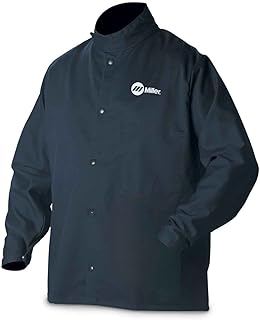
Welding Jacket, Navy, Cotton/Nylon, L
Check PriceHeat stress is a serious safety risk in welding. If you buy a heavy leather jacket for a summer construction site, you risk dehydration and fatigue just as dangerous as a burn. If you work outdoors in the heat, look for a leather jacket with perforated venting under the arms or a hybrid style. In cold climates, you can layer a FR hoodie under your leather, but never wear a synthetic insulating layer, if a spark catches, it will shrink wrap onto you.
Conversely, storing moisture is a problem with leather. If you sweat heavily through a leather jacket and do not let it dry properly, it will stiffen and eventually rot. FR cotton is washable and dries quickly, making it a more hygienic choice for daily hot work when the hazard level allows it.
Understanding Safety Certifications

Revco Black Stallion BSX 9 oz Contoured Flame-Resistant Cotton Welding Jacket
Check PriceYou cannot rely on a label that just says fire resistant. Look for tested standards. In North America, the critical certification is NFPA 2112, which is the standard for flame resistant garments for protection against flash fire. For welding specifically, you might see compliance with ASTM F1506, which relates to arc rating. The higher the arc thermal performance value (ATPV), the more protection the fabric provides before a second degree burn occurs.
A leather jacket typically does not have an arc rating in the same way cotton does because it does not ignite. Instead, you judge leather by its thickness, measured in ounces. For heavy welding, do not settle for anything less than a 1.2 mm thickness. If a jacket lacks a label with a recognized standard, treat it with suspicion, your employer’s safety officer will certainly see it that way.
Welding Jacket Care and Maintenance
QeeLink Welding Jacket Split Leather Sleeves
Check PriceProtective gear is useless if it falls apart. Leather jackets need to be cleaned with a damp cloth and saddle soap, never throw them in a washing machine or drench them with harsh chemicals. Applying a leather conditioner occasionally keeps the hide supple and prevents cracking, but avoid oils near the welding zone, as some conditioners can become flammable if they saturate the surface.
FR cotton jackets have a specific washing protocol. You must wash them with a mild detergent, but fabric softeners, starch, and hard water minerals can coat the fibers and mask the flame retardant chemistry. Over time, the treatment can wash out, especially if you use bleach or high alkalinity soaps, so follow the manufacturer’s care label religiously. If a FR jacket gets a hole burned through it, retire it immediately, a patch job alters the protective integrity of the garment.
Frequently Asked Questions About Welding Jackets
Can I wear a regular denim jacket for light welding?
No, standard denim or cotton is untreated. It can catch fire and will continue to burn even after you move away from the arc. Only jackets specifically labeled as FR treated or made of inherently flame resistant fibers like leather should be worn. Untreated cotton is a fuel source around sparks, regardless of how light the welding seems.
How do I know if a fabric is truly flame resistant?
Look for the tag sewn into the seam. It should list the compliance standard, such as NFPA 2112 or ASTM F1506, along with an arc rating. The tag also provides laundering instructions to maintain the protection. If the jacket has no safety rating label, it is not suitable for use as primary protective clothing.
Are leather jackets too hot for summer welding?
They can be, but you can mitigate the issue. Choose a lighter weight goat or pigskin hide with perforated panels. Welding outside in the summer often requires leather due to high amperage work, so managing your hydration and taking frequent breaks becomes part of the safety protocol. A hybrid leather front and FR cotton back jacket is the best compromise for hot weather.
Do I need a jacket for TIG welding?
Yes, you need full coverage from UV radiation. TIG creates a very intense arc light even though there is no spatter. A simple FR cotton welding jacket or tightly woven cotton sleeves will protect your skin from the severe “arc burn” that can occur after a few hours of exposure. Leather is not necessary, but bare skin must always be covered.
What thickness of leather is best for a welding jacket?
For any heavy industrial stick or flux core welding, a thickness between 1.2 mm and 1.5 mm is ideal. This translates roughly to 3 to 4 ounces in leather weight. Anything thinner, like garment weight leather at 0.8 mm, is fine for MIG tacking but will char and harden quickly if subjected to heavy overhead scrapes and constant spatter.
Final Thoughts on Picking the Right Protection
Figuring out what jackets do welders wear comes down to an honest assessment of your daily risks. Leather is the fortress you need when gravity is dragging molten metal down onto your chest, while flame resistant cotton is the smart, breathable shield for clean and controlled fabrication. There is no single jacket that rules them all, so many career welders end up with a heavy leather coat for the winter repair work and a lightweight FR shirt for the summer shop manufacturing.
Invest in quality stitching, reliable closures, and certified materials. Your jacket is not just a uniform requirement, it is the difference between a tiny spark that bounces off harmlessly and a burn that sidelines you for weeks. Suit up properly, respect the heat, and you will stay safe enough to focus on laying down a perfect bead.