If you have ever spent time in a welding shop or on a job site, you know that sparks fly in every direction. Without proper personal protective equipment, your feet are sitting ducks for hot slag, heavy falling metal, and sharp debris. That is exactly where welding boots come in. Understanding what are welding boots and how they differ from ordinary work boots is the first step to keeping your feet safe on the job.
Welding boots are not just heavy-duty footwear. They are engineered to protect against the unique hazards welders face every day. From extreme heat to electrical risks, these boots form a critical barrier between you and the dangers of the workshop floor. In this article, we will break down every feature, explain the safety standards, and help you decide if you need a pair.
Table of Contents
What Are Welding Boots?
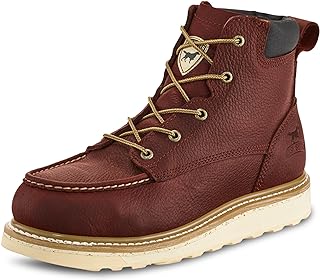
Irish Setter Ashby Aluminum Toe Work Boot, Water Resistant & Lightweight
Check PriceAt their core, welding boots are specialized safety boots designed to shield your feet from the intense heat, sparks, and molten metal splatter common in welding and cutting processes. They are constructed from fire-resistant materials, usually leather, and have unique design elements that you will not find on a standard pair of sneakers or even regular steel-toe boots. The primary goal is to create a protective shell that prevents burns, punctures, and crushing injuries.
Unlike generic work boots, welding boots often feature a metatarsal guard that protects the top of the foot from falling objects. They also have heat-resistant soles that will not melt or catch fire when stepping on hot metal. The stitching is typically made from Kevlar or a similar fire-resistant thread to prevent the seams from unraveling after exposure to sparks. In short, they are a fortress for your feet.
Why Are Welding Boots Important?
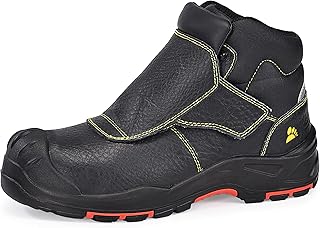
SAFETOE Welding Boots for Men, Composite Toe Safety Boot
Check PriceWalking into a welding bay without proper footwear is a gamble you do not want to take. The environment is filled with invisible and visible hazards. A single drop of molten metal can burn straight through a synthetic shoe upper and cause a third-degree burn. Heavy steel plates can shift and crush toes in an instant. Wearing the right boots is not just about comfort, it is about preventing life-altering injuries.
Many safety managers and experienced welders insist on welding-specific boots because they understand the risks. Even a brief moment of inattention can lead to a spark landing in the laces of a regular boot, setting them on fire. With a pair of purpose-built welding boots, you can focus on your bead instead of worrying about your feet. For a detailed look at the top-rated options, you can explore our best welding boots guide.
Protection from Heat and Sparks
The most obvious danger is heat. Welding arcs reach temperatures of several thousand degrees, and the sparks and spatter that fly off the workpiece are still blazing hot. Welding boots are made with full-grain leather that resists charring and melting. The tongue is often designed to be gusseted, meaning it is attached to the sides of the boot, so sparks cannot sneak in through the laces.
Additionally, the soles of these boots are rated for high heat contact. Standard rubber soles can soften and deform when you step on a hot piece of metal, which throws off your balance and exposes your foot to direct heat. A heat-resistant outsole, often rated to withstand temperatures up to 572°F (300°C), is a non-negotiable feature.
Protection from Falling Objects
In any fabrication shop, heavy materials are moved constantly. A dropped beam, a toppled gas cylinder, or a slipping clamp can cause devastating foot injuries. Welding boots address this with reinforced toe caps, either steel or composite, and often a metatarsal guard. The metatarsal guard covers the delicate bones on the top of your foot, offering an extra layer of protection that regular steel-toe boots usually lack.
This is a critical distinction. A standard boot might save your toes but leave the middle of your foot exposed. When you are working with heavy plate steel, that extra guard can be the difference between a bruise and a fracture.
Electrical Hazard Protection
Welders work with high-amperage electrical circuits every day. If a ground fault occurs, the electricity will try to find the quickest path to the earth. Your body can become part of that circuit. Welding boots with electrical hazard (EH) ratings are designed to provide a secondary source of protection against accidental contact with live electrical circuits. They are constructed with insulating soles and heels that help reduce the flow of electricity through your feet.
It is important to note that EH-rated boots are not meant to be the primary insulation in a high-voltage environment, but they add a vital layer of safety for the everyday welder who might encounter a stray current. Always check the safety markings on the boot to ensure it meets the appropriate standards.
Key Features of Welding Boots
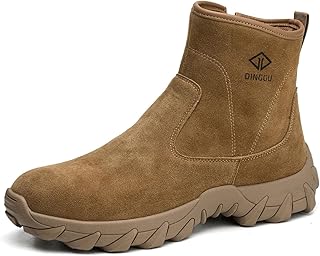
DINGGU Steel Toe Welding Work Boots, 100% Leather Slip-On
Check PriceNow that you know why they are essential, let us look at the specific components that make a boot suitable for welding. Not every boot labeled work is the same. When you are on the hunt for a new pair, you should be able to spot these characteristics. If you are still unsure about the differences, you can read more about what boots are good for welding in our dedicated guide.
Heat-Resistant Soles
The sole of a welding boot is its foundation. Look for outsoles made from materials like nitrile rubber or polyurethane that are specifically formulated to resist high temperatures. These soles will not melt or leave a sticky residue on the floor when they encounter hot metal. A good heat-resistant sole also has a deep tread pattern to grip oily or greasy surfaces.
Some premium boots use a dual-density sole that combines a hard, heat-resistant outer layer with a softer, shock-absorbing midsole. This gives you both protection and all-day comfort. Always check the temperature rating on the sole before buying.
Metatarsal Guards
Metatarsal guards come in two types: internal and external. External guards are a visible flap of material, often leather or a tough polymer, that sits on top of the laces. Internal guards are built into the boot’s structure. Both serve the same purpose, to shield the upper foot from impact and sparks. Many welders prefer external guards because they are easy to clean and can be replaced if damaged, but internal guards offer a more streamlined look and less snagging on tools.
When you are crouching or kneeling, that top-of-foot area becomes a prime target for falling spatter. A metatarsal guard acts like a roof for your foot, directing hot debris away from the vulnerable leather and laces.
Slip-Resistant Outsoles
Shop floors are often coated in a fine layer of dust, oil, and metal shavings. A slip-resistant sole is crucial for maintaining your footing while carrying heavy materials or maneuvering around a workpiece. The tread pattern should be self-cleaning, meaning it does not trap debris that reduces grip. A deep, wide heel also helps with stability when climbing ladders or scaffolding.
Slip resistance is often measured by a coefficient of friction rating. Look for boots that meet or exceed the ASTM F2913 standard for slip resistance. This gives you confidence that the boot will grip even on a wet or oily surface.
Leather Uppers and Kevlar Stitching
The upper material of a welding boot is almost always leather, specifically full-grain or top-grain cowhide. Leather is naturally flame-resistant and does not melt. It also provides durability and abrasion resistance. The stitching is what holds it all together. In a welding environment, standard nylon thread will burn away quickly. That is why quality welding boots use Kevlar or Nomex thread that can withstand high temperatures without breaking.
Check the seams for consistency. A double or triple stitch with fire-resistant thread adds years to the life of the boot. Some boots also have a leather patch over the toe area, known as a toe cap, to prevent premature wear from kneeling.
Steel Toe vs. Composite Toe
Both steel and composite toes can meet the same safety standards for impact and compression, but they have different pros and cons. Steel toes are incredibly strong and often more affordable, but they conduct heat and cold. In a hot welding environment, a steel toe can absorb heat and become uncomfortable. Composite toes, made from materials like carbon fiber or Kevlar, do not conduct heat, are lighter, and do not set off metal detectors. However, they are usually thicker and can make the boot feel bulkier.
For most welders, a composite toe is the preferred choice because it stays cooler and does not transfer heat to the foot. However, if you are on a tight budget, a quality steel toe boot with a proper insole can still serve you well. The choice ultimately comes down to your work environment and personal comfort.
How to Choose the Right Welding Boots
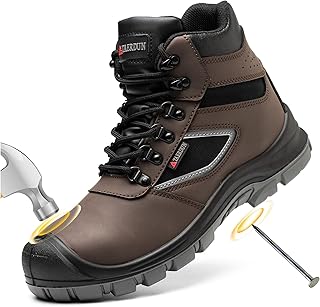
TAERDUN Steel Toe Lace-Up Work Boots, Waterproof Welding Shoes
Check PriceSelecting the right pair is a balance of safety, durability, and comfort. You can have the most protective boot in the world, but if it hurts your feet and you cannot wear it for a full shift, you will end up cutting corners. Here are the factors that should guide your decision.
Fit and Comfort
Welding often requires you to be on your feet for ten or twelve hours a day. Your boots should have a supportive footbed, adequate arch support, and a roomy toe box that does not pinch. Try on boots with the same socks you wear on the job. A common mistake is buying boots that are too tight, thinking they will break in. While leather does stretch a little, you should never rely on this to fix a poor fit.
Look for features like a padded collar, a moisture-wicking lining, and a shock-absorbing midsole. A comfortable boot reduces fatigue and keeps you more alert, which is a safety benefit in itself. Many welders also prefer a pull-on style, like a Wellington boot, because there are no laces to burn or snag.
Compliance with Safety Standards
Your boots should bear the markings of the relevant safety standards. In the United States, the ASTM F2413 standard is the benchmark for protective footwear. This standard covers impact resistance, compression resistance, metatarsal protection, electrical hazard protection, and puncture resistance. A boot that meets ASTM F2413-18 will have a code inside the tongue or on the side that tells you exactly which protections it offers.
For welding, look for the codes for heat resistance (HR) and electrical hazard (EH). You can find detailed information on these requirements from the OSHA foot protection standards. This ensures your employer’s safety compliance and, more importantly, your own well-being.
Welding Boots vs. Regular Work Boots
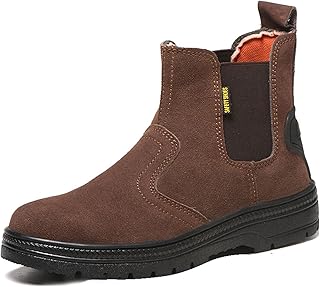
GUBANGDUN Slip-on Steel Toe Welding Work Shoes, Industrial Construction
Check PriceYou might wonder if you can get away with a heavy-duty pair of regular work boots. The short answer is that you can, but you are taking a risk. Regular work boots often have synthetic mesh panels, foam padding, and nylon stitching that are highly flammable. A single stray spark can melt through the mesh and burn your foot, or ignite the nylon thread, causing the entire boot to come apart at the seams.
Welding boots eliminate these vulnerabilities. They use fire-resistant materials throughout, including the laces, eyelets, and even the padding. The leather is often thicker and treated to resist heat. Additionally, the sole compound is different. A regular work boot sole might burn or melt at a much lower temperature, releasing toxic fumes and creating a slipping hazard. If you weld regularly, investing in dedicated welding boots is a smart move.
Care and Maintenance Tips
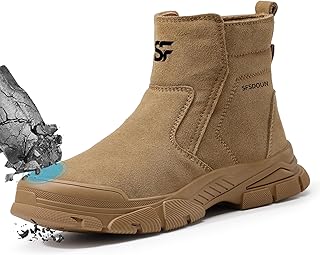
SFSDOUN Slip On Welding Boots, Fireproof Steel Toe Work Shoes
Check PriceTo get the most out of your investment, you need to maintain your welding boots. Start by cleaning them regularly. Knock off any heavy spatter with a wire brush and wipe the leather with a damp cloth. Avoid soaking the boots, as this can dry out the leather. Apply a leather conditioner designed for fire-resistant leather to keep the uppers supple and prevent cracking. Do not use oils or greases that can build up and become flammable.
Inspect the soles for signs of separation or melting. If the tread is worn smooth or the sole has started to delaminate, it is time for a replacement. Check the stitching after every heavy use. If you see broken threads, especially in the metatarsal guard area, have them repaired by a professional or retire the boots. A little maintenance can extend the life of your boots by months and keep them safe.
Frequently Asked Questions
- Can I wear regular leather boots for welding? Regular leather boots are better than sneakers, but they still lack the heat-resistant soles, fire-resistant stitching, and metatarsal guards that true welding boots offer. They are a stopgap, not a long-term solution.
- Are welding boots required by OSHA? OSHA requires employers to provide protective footwear when there is a risk of foot injury from falling objects, rolling objects, or electrical hazards. Welding environments typically trigger these requirements, so welding boots or equivalent safety boots are mandatory.
- How long do welding boots last? With proper care, a quality pair of welding boots can last between 12 and 24 months of daily use. The exact lifespan depends on the intensity of the work, the heat exposure, and how well you maintain them.
- Do I need metatarsal guards for MIG welding? While MIG welding produces less spatter than stick welding, it still generates hot metal drops. Metatarsal guards are recommended for all welding processes, especially if you are working in a position where debris can fall on your feet.
- What is the best material for welding boot laces? Kevlar laces are the industry standard. They are flame-resistant and strong. Many welders also prefer pull-on boots to avoid the lace problem entirely.
Conclusion
Understanding what are welding boots is the foundation of any welder’s safety setup. These boots are not a luxury item, they are a necessity. They protect your feet from extreme heat, heavy impacts, and electrical shocks in ways that no other footwear can. By choosing a pair with heat-resistant soles, fire-resistant stitching, and a metatarsal guard, you are making a long-term investment in your health and career.
Take the time to find a pair that fits properly, meets the required safety standards, and suits your specific welding environment. Whether you are a student just learning the trade or a seasoned professional, your feet are your foundation. Protect them well, and you will be able to stand strong for every weld to come.