Choosing between a passive vs auto darkening welding helmet is one of the most critical decisions you will make for your eye safety and weld quality. You might be a beginner just starting out, or a seasoned professional looking to upgrade your gear. The helmet you put on your head directly affects your comfort, your workflow, and most importantly, how well you protect your eyes from the intense light of the arc. In this guide, we break down everything you need to know about these two helmet types so you can pick the right one with confidence.
Many welders start with a simple passive hood and later wonder if an auto darkening model is worth the investment. Others jump straight into auto darkening and never look back. Both styles have a place in the shop, and the best choice depends on your specific projects, budget, and welding process. We will walk you through the technology, the real-world differences, and the practical pros and cons of each.
Before you make a decision, it helps to understand how each helmet works and what you are actually paying for. For a more detailed side-by-side look, check out our comprehensive comparison of auto darkening and passive helmets. Once you know the facts, you can match the helmet to your welding style and never risk your eyesight again.
Table of Contents
What Is a Passive Welding Helmet?
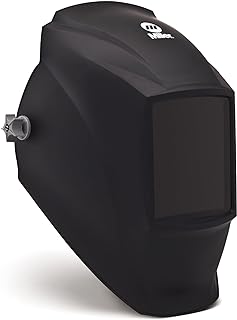
Miller 238497 MP-10™ Passive Welding Helmet, 4×4 in Viewing Area
Check PriceA passive welding helmet, often called a fixed shade helmet, uses a single dark-tinted lens that does not change. The shade number is constant, usually a 10, 11, or 12. When you are not welding, you look through the dark lens and see almost nothing. To inspect the joint or position the torch, you must flip the hood up or nod your head to drop it down just before striking the arc.
This type of helmet has been around for decades and is still widely used in stick welding, pipeline work, and fabrication shops. The design is incredibly simple. There are no sensors, no batteries, and no electronics to fail. The lens is just a piece of hardened glass with a protective cover plate that you can replace when it gets scratched or spattered.
Because passive helmets are so basic, they tend to be very lightweight and affordable. You can pick up a decent passive hood for a fraction of the cost of an auto darkening unit. But the tradeoff is that you need to master the head nod technique. This can be a real challenge for beginners who might accidentally strike the arc without the helmet in place, or move the electrode off the joint while flipping the hood down.
What Is an Auto Darkening Welding Helmet?

Jackson Safety® WH10 HSL 2 Passive Welding Helmet, SH10, Black, Fixed Front, 2 in x 4-1/4 in (138-14982) Each
Check PriceAn auto darkening welding helmet uses a liquid crystal display (LCD) lens that automatically changes from a light state to a dark shade in milliseconds. When you are setting up, the lens is clear or lightly tinted, usually around shade 3 or 4. The moment the arc sensors detect the bright flash, the electronics trigger the lens to darken to your preselected shade, typically between 9 and 13.
This means you can keep the helmet down at all times. You see your workpiece clearly before the weld, you strike the arc without any head movement, and the lens instantly protects your eyes. Once the arc stops, the lens returns to the light state, so you can inspect the weld and chip slag without ever lifting the hood. This seamless workflow is a huge advantage for production welding and for beginners who are still working on their coordination.
Modern auto darkening helmets come with a range of features. You can adjust the shade, delay, and sensitivity. Many include a grind mode that disables the darkening so you can use the helmet as a grinding shield. They are powered by solar cells, replaceable batteries, or a combination of both. If you want to dig deeper into the technology, read our article on how auto darkening welding helmets work.
Key Differences Between Passive and Auto Darkening Helmets

Jackson Safety HLX100 Passive Welding Helmet, Shade 10 Filter – ANSI Z87.1 | Welding Hood with Flexible & Lightweight Hydraflex Shell, 4.5″ x 5.25″ Window, 370 Speed Dial Ratchet Headgear, ADF Adaptable
Check PriceWhen you compare the two side by side, several key areas stand out. These differences will help you decide which helmet fits your welding environment and personal preferences.
Lens Shade Flexibility
Passive helmets have one fixed shade. If you switch between MIG, TIG, and stick welding, you might need to swap out the lens or own multiple hoods. Auto darkening helmets let you dial in the exact shade you need, from a low of 5 or 6 up to 13, often with a simple knob. This flexibility is especially valuable if you work with different amperages and materials.
Reaction Time and Eye Safety
An auto darkening lens reacts in fractions of a second, typically 1/25,000 second for high-end models and 1/3,600 second for budget ones. This fast switching protects your eyes from arc flash before you even perceive the brightness. A passive helmet always stays dark, so you never risk a slow reaction, but you do risk flash burn if you fail to get the hood down in time. The real safety difference, however, is that the auto darkening lens also blocks harmful UV and IR radiation even when it is in the light state, so you are always protected.
Weight and Comfort
Passive helmets are generally lighter because they have no electronics or battery packs. That can reduce neck fatigue during long shifts. Auto darkening helmets have added weight, but many modern designs use lightweight materials and balanced headgear to keep them comfortable. If you do a lot of overhead welding, every ounce matters, and you might prefer the simpler passive hood.
Cost and Value
A basic passive helmet can cost as little as $15 to $40. Even a high-quality passive hood with a leather cover is well under $100. Auto darkening helmets start around $50 for a basic model and can go above $500 for professional units with large viewing areas and advanced optics. For a hobbyist, the upfront savings with a passive helmet is tempting. For a professional, the time saved by not flipping the hood up and down can pay for the auto darkening helmet in a few weeks.
Power and Maintenance
Passive helmets require almost no maintenance aside from replacing scratched cover lenses. Auto darkening helmets rely on batteries or solar power. If the battery dies and you do not have a spare, you cannot weld. However, most quality helmets have a low-battery indicator and solar assist to keep them charged. The electronics are sealed and durable, but they can fail if the helmet is dropped or exposed to extreme heat for long periods.
Pros and Cons of Passive Welding Helmets
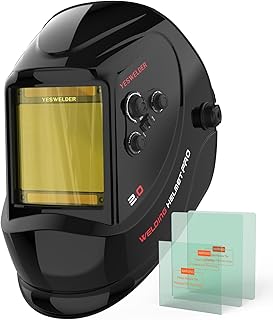
YESWELDER Auto Darkening Welding Helmet, Large View, LYG-M800H
Check Price- Lightweight and less strain on the neck
- Extremely affordable and easy to replace
- No batteries, no electronics, no downtime
- Excellent for outdoor use in bright sunlight
- Very durable and can take heavy abuse
- Requires a head nod to position the helmet, which can lead to arc flash if mistimed
- Fixed shade limits versatility across different welding processes
- Cannot see the workpiece before striking the arc, making precise starts harder
- Slower overall workflow, especially for tack welding and short stitches
For many pipeline welders and old-school fabricators, the simplicity of a passive hood is a feature, not a bug. It never fails and it teaches you to control your body positioning. If you want to explore the best passive options on the market, our guide to the best passive welding helmets can help you pick a reliable model.
Pros and Cons of Auto Darkening Welding Helmets
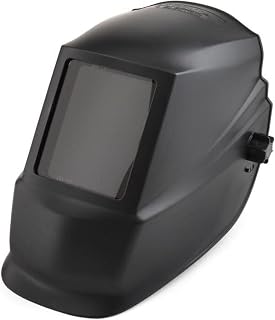
Lincoln Electric Passive Welding Helmet, K2800-1
Check Price- Always-on protection with UV/IR filtering even in light state
- Hands-free operation improves productivity and accuracy
- Adjustable shade, sensitivity, and delay for different welding processes
- Grind mode allows you to use the same helmet for grinding and cutting
- Great for beginners who struggle with the head nod
- Higher initial cost compared to passive helmets
- Added weight from electronics and batteries
- Potential for electronic failure or battery drain
- Can be less effective in very cold temperatures if the LCD slows down
If you spend hours under the hood every day, the benefits of auto darkening far outweigh the drawbacks. The ability to see your puddle start and stop without jerking your head leads to cleaner welds and less fatigue.
Which One Is Right for You?
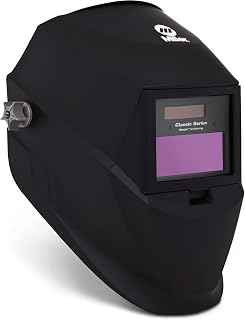
Miller Classic Series Welding Helmet, ClearLight™, Shade 8-13, Black
Check PriceYour welding style and work environment will point you toward the right helmet. Here are a few scenarios to help you decide.
You Are a Beginner Learning to Weld
An auto darkening helmet is almost always the better choice for a beginner. It removes the frustration of the head nod and lets you focus on your arc length, travel speed, and puddle control. When you are still developing muscle memory, the last thing you need is to miss the start point because you could not see it. A decent budget auto darkening helmet is a smart investment that will speed up your learning curve.
You Do Mostly Stick Welding Outdoors
Passive helmets shine in outdoor environments. The fixed shade is not affected by sunlight triggering the sensors, and you do not have to worry about battery life. Many pipeline welders swear by a simple passive hood with a gold lens. It is bulletproof, and the dark lens is always ready, even in the middle of a field with no spare batteries in sight.
You Switch Between MIG, TIG, and FCAW
Go with an auto darkening helmet with variable shade. TIG welding at low amperage requires a lighter shade than spray transfer MIG. A fixed shade passive helmet will either be too dark for TIG or too light for heavy MIG. The ability to dial in the exact shade makes a huge difference in weld quality and eye comfort.
You Work in Tight Spaces or Awkward Positions
When you cannot easily nod your head, an auto darkening helmet is a lifesaver. Overhead welding, inside boilers, or under vehicles, you need a helmet that stays down. The auto darkening lens lets you see what you are doing without having to lift the helmet, which can be impossible in a confined spot.
Frequently Asked Questions
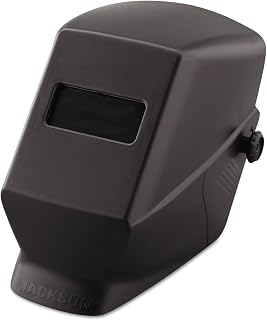
JAK14979 – Jackson Safety Brand W10 HSL 1 Passive Welding Helmet
Check PriceCan I use a passive helmet for MIG welding?
Yes, you can use a passive helmet for MIG welding. Many welders do it every day. You will need to master the nod to get the helmet down before the arc starts. For tack welding, where you strike quick arcs repeatedly, the constant flipping can slow you down and cause inconsistent starts. A passive helmet is workable, but an auto darkening helmet makes MIG welding much more fluid.
Do auto darkening helmets fail suddenly?
Quality auto darkening helmets are very reliable, but they can fail. The most common issue is a dead battery. Most helmets have a low-battery warning light, and solar-assisted models keep the charge topped up with ambient light. As long as you keep a spare battery on hand and store the helmet properly, sudden failures are rare. Always test your helmet before starting a weld by quickly exposing it to a bright light source.
Are auto darkening helmets safer than passive ones?
Both types meet the same ANSI Z87.1 safety standards for eye and face protection. The auto darkening lens provides continuous UV and IR protection even when the lens is not darkened, so you are always shielded from harmful radiation. The main safety advantage of auto darkening is that you never risk a flash from an accidental arc strike with the helmet up. However, a passive helmet that is always dark is impossible to forget to set. It comes down to proper use. According to the osha.gov, proper eye protection is non-negotiable, and both helmet types can meet that requirement when used correctly.
Can I weld with a passive helmet if I wear glasses?
Absolutely. You can wear prescription glasses or safety glasses under any welding helmet. Many passive helmets have enough room to accommodate glasses, and you can add a cheater lens for magnification. Just make sure the helmet fits comfortably and the glasses do not press against the lens.
Is a passive helmet good for TIG welding?
TIG welding requires precise starts and a clear view of the joint. An auto darkening helmet is definitely preferred for TIG because you can see the tungsten and filler rod without the head nod. A passive helmet makes low-amperage TIG very difficult, especially on thin materials. If you do a lot of TIG, invest in an auto darkening helmet with a high optical clarity rating.
Conclusion

JACKSON SAFETY W10 HSL 2 Passive Welding Helmet Black with 386 Cap Adapter
Check PriceYour choice between a passive vs auto darkening welding helmet ultimately comes down to how you weld and what you value most. If you want a no-fail, lightweight, and affordable hood that has worked for generations, a passive helmet is a solid option. If you prioritize productivity, versatility, and the ability to see your work at all times, an auto darkening helmet is worth every penny.
For beginners, we strongly recommend starting with a quality auto darkening helmet. It removes a major variable from the learning process and protects your eyes from the very first arc. For professionals, owning both types is not a bad idea. Keep a passive hood as a backup and for dirty, high-amperage stick work, and rely on your auto darkening helmet for the detailed fabrication and out-of-position welding that pays the bills.
No matter which you choose, never compromise on safety. Always check your helmet before each use, replace scratched cover lenses, and make sure the shade is appropriate for your process. Your eyes are your most valuable tool, and the right helmet keeps them safe for a lifetime of welding.