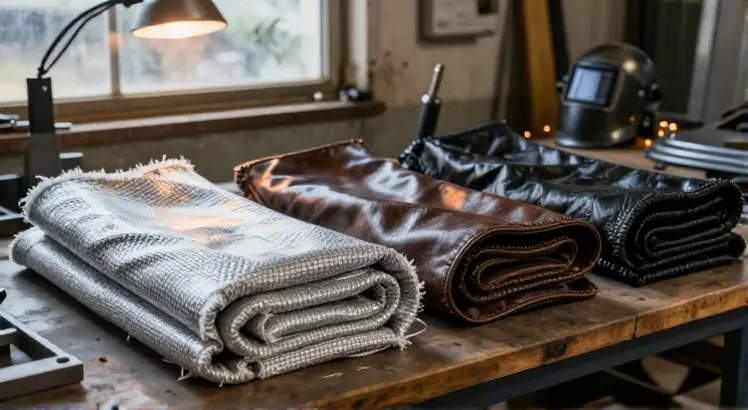
If you have ever sparked up a MIG torch or sliced metal with a plasma cutter, you know that molten spatter and hot slag can travel faster than you can blink. A dependable welding blanket acts as your first line of defense, protecting floors, equipment, and nearby combustibles from serious damage.
But not all welding blanket types are created equal, and picking the wrong material can leave you with melted fabric or a fire hazard. In this guide, we will walk you through the main types of welding blankets, their temperature tolerances, fabric choices, and how to match them to your workshop projects.
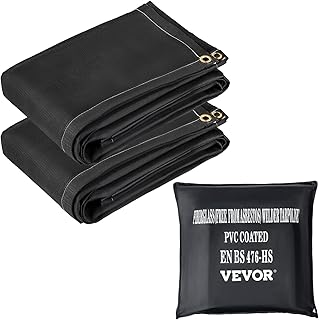
VEVOR Fire Blankets, 2 Pack 8′ x 10′
Check PriceTable of Contents
What Is a Welding Blanket?
A welding blanket is a heavy, heat-resistant shield designed to protect surfaces, equipment, and people from welding sparks, spatter, and slag. These blankets are not meant to extinguish fires like a standard fire blanket, although they can smother small flames in a pinch.
Their primary job is to create a durable barrier that can withstand repeated exposure to high-temperature debris without igniting or degrading. You will find welding blankets in fabrication shops, automotive garages, shipyards, and even home workshops where grinding and cutting happen near flammable materials.
How Welding Blankets Protect You
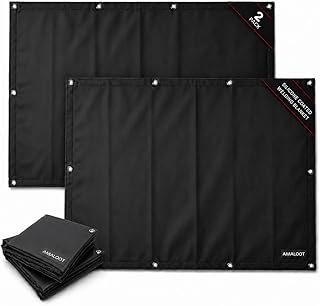
AMALOOT Heavy Duty Welding Blanket 2-Pack
Check PriceWhen you weld overhead or perform hot work near sensitive surfaces, a blanket becomes an essential safety layer. It stops hot metal droplets from reaching wood floors, rubber hoses, gas cylinders, or painted surfaces. Many welders also drape blankets over equipment to prevent slag from damaging cables and controls. In confined spaces, welding blankets act as flexible curtains, partitioning off the area and containing sparks. The right blanket not only prevents property damage but also reduces the risk of a shop fire, giving you peace of mind while you work.
Common Welding Blanket Fabrics and Their Ratings
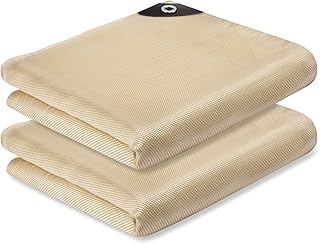
2 Pack Welding Blanket 4×6 ft
Check PriceThe performance and price of a welding blanket depend almost entirely on its fabric. Different materials handle heat, abrasion, and moisture in distinct ways. Understanding these differences is the first step to choosing a safe, long-lasting product. We have tested a wide range of blankets in real workshop conditions, and our guide to welding blanket fabrics breaks down every material in depth. Below are the most common welding blanket types you will encounter.
Fiberglass Welding Blankets
Fiberglass is the workhorse of welding blankets. Made from woven glass fibers, these blankets are affordable, flexible, and widely available. A standard fiberglass blanket can handle continuous temperatures up to 1000°F and intermittent spikes around 1500°F.
They work well for general MIG welding, stick welding, and light grinding. However, raw fiberglass sheds tiny glass filaments that can irritate skin, so you should wear gloves when handling them. Many fiberglass blankets come with a vermiculite coating that reduces fraying and improves flame resistance.
Silica Welding Blankets
Silica fabric pushes heat resistance much higher, with continuous ratings around 1800°F and peak tolerance near 2300°F. This makes silica blankets ideal for heavy plasma cutting, carbon arc gouging, and any process that generates intense spatter.
Silica cloth is also more chemically stable than standard fiberglass, so it resists degradation from repeated heating and cooling cycles. Although slightly more expensive, silica blankets repay that cost with better durability and a longer service life. They are a smart upgrade for anyone running high-amperage welding stations.
Carbon Felt Welding Blankets
Carbon felt stands out for its incredible thermal insulation and flexibility. This material can withstand temperatures of 1800°F and beyond while remaining soft to the touch. Unlike fiberglass, carbon felt does not produce irritating fibers, making it a favorite for welders who need to handle blankets frequently.
Its low thermal conductivity means the back side of the blanket stays cooler even when the front faces direct flame. Because of these properties, carbon felt blankets are popular for smoker construction, high-temperature gaskets, and specialized welding enclosures.
Ceramic Welding Blankets
Ceramic blankets deliver extreme heat protection, with continuous ratings above 2300°F and peak capabilities pushing 3000°F. These are the blankets used in foundries, aerospace applications, and heavy industrial settings. While ceramic welding blankets exist, they are less common in small shops due to their higher cost and stiffer handling.
If your work involves molten metal ladling or exceptionally hot cutting operations, a ceramic blanket might be worth the investment. For most welders, silica or carbon felt already covers the needed temperature range.
Vermiculite-Coated Fabrics
Vermiculite is a mineral that expands when heated, creating a fire-resistant shell. Many fiberglass and silica blankets receive a vermiculite coating to improve their resistance to sparks and slag penetration. The coating also reduces fabric fraying and gives the blanket a darker, thicker texture.
A vermiculite-coated fiberglass blanket can handle higher short-term temperatures than its uncoated counterpart and tends to last longer in harsh environments. If you frequently weld in a single location, a heavy coated blanket draped over the welding table area provides reliable, long-term protection.
Weight and Temperature Ratings Explained
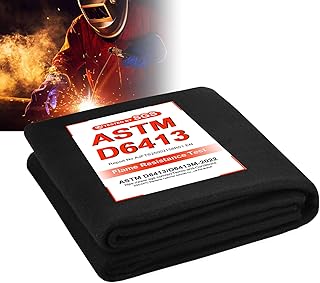
5mm 72″x96″ Large Fireproof Welding Blanket
Check PriceWelding blankets are sold by weight, measured in ounces per square yard. Common weights include 16 oz, 24 oz, and 36 oz. The heavier the weight, the thicker the material, and the better its insulating ability. A 16 oz fiberglass blanket is lightweight, easy to fold, and suitable for light-duty spatter, but it will not hold up to heavy slag. For plasma cutting or overhead welding where hot metal rains down, a 24 oz or 36 oz blanket offers the durability you need.
Always check both the continuous temperature rating and the intermittent spike rating. Continuous rating tells you the temperature the blanket can endure for long periods without breaking down, while the intermittent rating reflects short-term exposure, like a splash of molten steel. For official standards, you can consult industry safety guidelines for welding fire protection to verify that your blanket meets recognized performance thresholds.
Choosing the Right Welding Blanket Type by Application
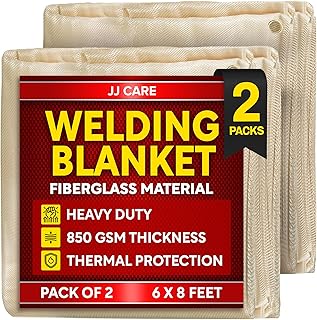
2 Pack Welding Blanket 6ft x 8ft, 850GSM
Check PriceMatching the blanket to the job prevents damage and saves money. Here is how experienced welders pair materials with specific tasks.
- Light-duty MIG and stick welding: A 16 oz to 24 oz fiberglass blanket works perfectly. Look for a vermiculite coat if you want less fiber shedding.
- Heavy plasma cutting or carbon arc gouging: Step up to a 24 oz or 36 oz silica blanket. Silica handles the intense heat without shrinking or charring.
- Overhead welding or vertical sparks: A carbon felt blanket drapes easily and resists punctures while offering a cooler back face to protect hoses and control panels.
- Protecting concrete or finished floors: Use a thick, vermiculite-coated fiberglass blanket. The coating gives it a tough skin that stops slag from burning through to the floor.
- Creating portable welding curtains: Lightweight fiberglass blankets with brass grommets hang quickly and block spatter from nearby workstations.
- Extreme heat environments: Ceramic blankets provide the highest safety margin. Reserve them for situations where other materials simply cannot keep up.
Welding Blanket vs. Fire Blanket: Key Differences
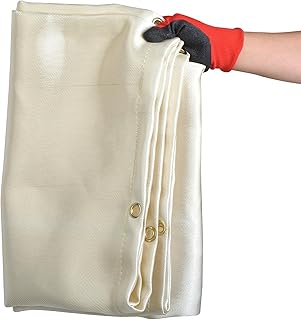
4 Feet x 6 Feet Welding Blanket with Grommets
Check PriceMany newcomers confuse welding blankets with fire blankets, but they serve different purposes. A fire blanket is designed primarily to smother small fires on people or cooking equipment, and it typically uses a lightweight, non-irritating fabric like woven fiberglass without heavy coatings.
A welding blanket, on the other hand, is built to withstand repeated impact from molten metal and slag. Its fabric is denser, often coated, and rated for much higher temperatures. Using a standard fire blanket under a welding bench can lead to rapid burn-through and a dangerous false sense of security. For a detailed side-by-side breakdown, read our comparison of welding blankets and fire blankets.
How Fabric Choice Affects Durability and Safety
6x8ft Silicone Coated Welding Blanket
Check PriceBeyond temperature ratings, the feel and behavior of the fabric matter a great deal. Fiberglass can release fine glass shards that irritate skin and lungs, so avoid shaking fiberglass blankets unnecessarily and always wash your hands after handling them. Silica cloth produces fewer airborne fibers but can still feel rough. Carbon felt is a different story; it is soft, pliable, and far less irritating, making it a top choice for welders who work in tight quarters and frequently reposition blankets.
Coated blankets, whether vermiculite or silicone-treated, seal in loose fibers and add a layer of slag resistance that dramatically extends blanket life. Whichever fabric you choose, inspect your blanket before every use. Small burns or tears can let spatter through and create a fire risk. Store blankets dry, because moisture trapped in the fibers can turn to steam under heat and damage the material or cause burns.
Maintenance and Care Tips
A well-maintained welding blanket lasts for years. After each use, shake the blanket gently outdoors to remove loose debris, then fold it neatly or roll it to avoid creases that weaken the fabric. Do not wash coated blankets with harsh detergents, as that can strip the protective layer.
If a blanket becomes heavily soiled with oil or grease, replace it, because oil-soaked fabric can ignite even at moderate temperatures. Store blankets away from direct sunlight and moisture, and hang them in a dedicated area so they remain clean and ready for the next job.
Frequently Asked Questions About Welding Blanket Types
What is the best fabric for a welding blanket?
There is no single best fabric, it depends on your application. Fiberglass works great for general welding, silica offers higher heat tolerance, and carbon felt gives you flexibility with low irritation. For most hobbyists, a 24 oz vermiculite-coated fiberglass blanket strikes the best balance between cost and protection.
What are the different types of welding blankets?
The main types are fiberglass, silica, carbon felt, ceramic, and vermiculite-coated blankets. Each type is designed for a specific heat range and working environment. Your choice will depend on the processes you run and the level of spatter you encounter.
Is carbon felt fireproof?
Carbon felt is highly heat resistant and will not support combustion under normal welding conditions. It can withstand sustained temperatures above 1800°F. While it is not completely immune to degradation over time, it offers excellent fire protection for welding and high-temperature insulation.
Can I use a welding blanket as a fire blanket?
Welding blankets can smother small flames in an emergency, but they are not certified as personal body fire blankets. Welding blankets are heavier, stiffer, and may shed irritating fibers. For kitchen or personnel safety, always use a dedicated fire blanket that meets appropriate safety standards.
How do I choose the right weight for my welding blanket?
Start by looking at your average spatter level. For light spatter from MIG or stick welding, a 16 oz to 24 oz blanket is sufficient. For heavy plasma cutting or overhead work where hot metal falls directly onto the blanket, pick a 24 oz to 36 oz weight or a silica/carbon felt option. Heavier blankets provide more durability and thermal insulation.
Are fiberglass welding blankets safe to handle?
Fiberglass blankets are safe when handled with care. The tiny glass fibers can poke and irritate skin, so wear work gloves and avoid rubbing your eyes during use. Coated fiberglass blankets greatly reduce fiber shedding and are easier to handle. Always wash your hands after touching any welding blanket.
Conclusion
Understanding welding blanket types before you buy saves you from failed blankets, ruined floors, and workshop fires. Start by identifying the highest heat your process generates, then match that to a fabric and weight that can handle it comfortably. Fiberglass blankets cover everyday needs with a friendly price tag, silica and carbon felt blankets step up for serious heat, and ceramic blankets tackle the extremes.
Pay attention to coatings and weight, and never mistake a general fire blanket for a dedicated welding shield. With the right blanket on hand, you can focus on laying down solid beads instead of worrying about the next stray spark.
Now that you know the types, take a moment to review our other safety guides and find the exact blanket that fits your shop setup perfectly.