If you have researched plasma cutters for your shop, you have probably noticed that the discussion often centers on amperage. People ask, Is it 40 amps or 50 amps? Yet there is another number that quietly controls everything, the voltage of a plasma cutter. Without the right voltage, the pilot arc will never fire, the cut will wander, and the machine simply will not perform. Understanding what this term actually means, both inside the machine and at the wall plug, puts you in full control of your cutting setup.
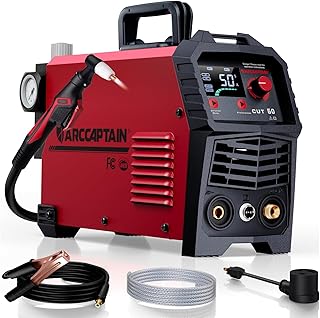
ARCCAPTAIN Plasma Cutter 50A Dual Voltage
Check PriceTable of Contents
What Do We Mean by Voltage of a Plasma Cutter?
Voltage, in any electrical system, is the pressure that pushes current through a circuit. In a plasma cutter, you have to think about two very different voltage values. The first is the input voltage your machine receives from the grid. The second is the output voltage that creates and sustains the plasma arc between the torch and the workpiece. Many beginners treat voltage as a fixed number, but on the cutting side it is constantly changing, driven by the length of the arc and the resistance of the metal.
Simply put, the phrase voltage of a plasma cutter rarely refers to one single reading. It is a family of values that includes open circuit voltage, load or cutting voltage, and the supply voltage stamped on the back of the machine. Once you separate these ideas, everything about plasma cutting power becomes clearer.
Input Voltage: 110V Versus 220V Plasma Cutters
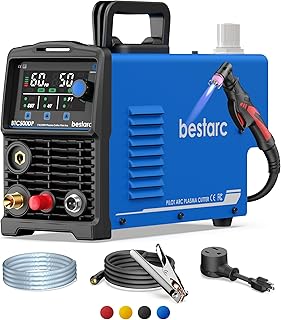
Bestarc Pilot Arc Plasma Cutter 50A
Check PriceThe most common number you will see on a spec sheet is the input voltage. A portable unit might say 110V, 120V, or 115V, while a heavy-duty shop machine will list 220V, 230V, or 240V. These labels are referring to the same thing, a standard household outlet or an industrial dryer plug. When a plasma cutter is built for dual voltage, it often contains an internal auto-sensing circuit or a manual switch. This lets you plug into a 110V outlet for thin sheet metal or move to 220V when you need full rated output.
Small 110V units usually cap their output around 20 to 30 amps of cutting current. That is enough for 1/8 inch to 1/4 inch steel depending on the brand. A 220V machine can deliver 40, 50, or even 80 amps, easily severing 3/4 inch plate. The voltage of a plasma cutter at the wall is not just a number, it directly limits how much work the machine can do. Before you buy, always match the plug to your available power, or invest in a properly sized circuit. You can learn more about what voltage a plasma cutter draws from your wall outlet in our dedicated guide.
Output Voltage: The Arc Voltage and Open Circuit Voltage
Inside the torch, the story shifts to DC voltage. Plasma cutters use direct current, almost always with the electrode negative and the workpiece positive. The output side of the power supply produces two important voltages. Open circuit voltage, often abbreviated OCV, is the voltage present between the torch and the ground clamp before the arc starts. It has to be high, typically 200 to 400 volts DC, to ionize the air or gas and establish the pilot arc. Once the arc transfers to the metal, the voltage drops to what is called load or cutting voltage, which usually runs between 100 and 200 volts DC depending on the torch design and the cut height.
This cutting voltage is not set by a dial. It rises and falls as you move the torch. If you pull the torch farther from the plate, the arc gets longer, the resistance increases, and the voltage climbs. A CNC height controller reads this exact change to keep the tip at the perfect standoff. That is why manufacturers often give a cutting voltage curve for mechanized setups, so the controller can maintain a target voltage for clean, dross‑free edges.
How Voltage Affects Cutting Performance
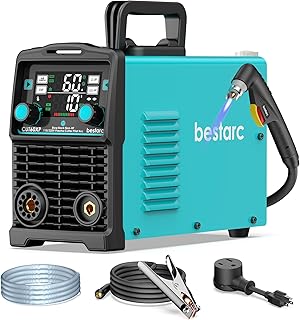
Bestarc 60A Plasma Cutter
Check PriceThe voltage of a plasma cutter directly influences the energy density of the arc, and that energy density controls the kerf width, the cut speed, and even the bevel angle. Higher arc voltage, at a given amperage, translates to more total power in watts. A typical 50‑amp air plasma torch may operate at around 130 cutting volts, delivering 6.5 kilowatts to the metal. When someone complains that a machine struggles to pierce, the fault is often not low amps alone. Low arc voltage, caused by a weak pilot arc or excessive torch distance, reduces the power available at the plate.
Another overlooked factor is voltage drop through the work lead and ground connection. A loose clamp or a corroded connection steals voltage before it ever reaches the arc. The result is a sluggish start, a wandering flame, and heavy bottom dross. Simply checking that your ground cable is tight can restore the cutting voltage the torch expects.
Voltage and Cutting Thickness: The Relationship
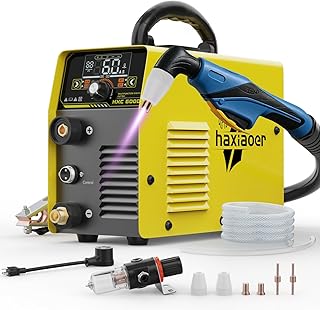
60A Plasma Cutter Dual Voltage
Check PriceThicker metals demand more power. Since most operators keep their machines running at maximum amps, the only way to deliver more heat is to sustain a higher arc voltage. That is why industrial units with 300 volts of cutting voltage can slice through 2‑inch steel while a small 120‑volt machine at 200 watts of arc power tops out around 3/16 inch.
If you check the manufacturer’s cut rate charts, you will notice that recommended speed drops as thickness increases. Behind those numbers, the arc voltage is adapting to the longer, hotter column needed to melt through the deeper kerf.
Remember that voltage and amperage work as a team. A 40‑amp plasma cutter running on 110V delivers a very different arc than a 40‑amp cutter on 220V because the latter can sustain a higher cutting voltage under load. To get the full picture, you might want to read our article on understanding plasma cutter amperage ratings and how they match your workload.
Voltage Drop and Torch Standoff
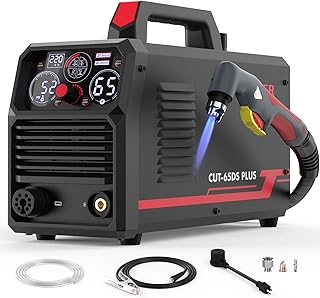
YESWELDER CUT-65DS PLUS 65A
Check PriceA plasma cutter relies on a constant stream of compressed gas to constrict the arc. The nozzle helps shape it, but the standoff, the gap between the nozzle and the plate, is what sets the final arc length. If the gap increases by even 1/16 inch, the arc voltage can jump 10 or 15 volts. That might sound minor, but on a sensitive system it creates beveled edges or slag that hardens inside the kerf. The takeaway is simple. For accurate, dross‑free cuts, keep the nozzle as close to the metal as the drag shield or standoff guide allows, and let the machine maintain its natural cutting voltage range.
Many hand‑held operators use a drag technique where the shield actually touches the plate. In that case, the standoff is fixed, and the voltage stays relatively stable. Mechanized tables, on the other hand, hold the torch above the plate and use arc voltage feedback to climb or dive. That is why you will see pierce height and cut height settings listed in volts on a CNC screen, not in thousandths of an inch.
Choosing the Right Voltage for Your Workspace
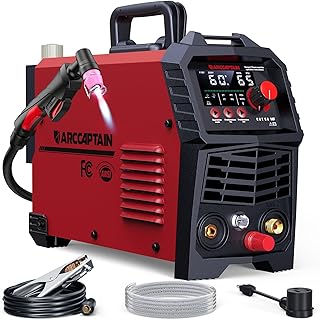
ARCCAPTAIN 60A Non-Touch Pilot Arc
Check PriceWalking through a home store or online catalog, you will see plasma cutters listed by their input voltage and maximum amperage. That makes it easy to match a machine to your electrical panel. The real question is what you intend to cut. Take stock of the thickest metal you will face, and then add a margin. A machine that only sees 16‑gauge sheet metal can live happily on 110V. A fabricator routinely cutting 1/2‑inch brackets needs 220V to keep the arc crisp and the travel speed reasonable.
If your work moves between a home garage and a jobsite, a dual‑voltage inverter unit is a smart pick. These machines weigh less than 40 pounds, sense the input automatically, and still provide a stable cutting voltage even when powered by a generator. Just be sure the generator supplies clean power with minimal voltage fluctuation. Spikes or dips can damage the control board or cause the arc to sputter.
Are Plasma Cutters AC or DC? Clearing Up the Voltage Confusion
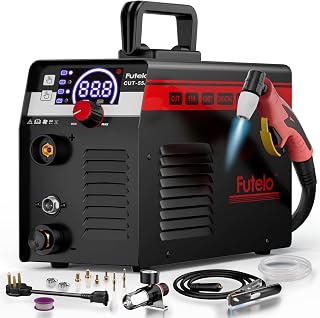
Futelo 55A Plasma Cutter
Check PricePlasma cutting torches universally run on direct current. The electrode is negative and the workpiece positive, a straight polarity that concentrates two-thirds of the heat on the metal. The voltage of a plasma cutter on the output side is always DC, which is why the arc is so stable and narrow. The input side, of course, is AC from the wall, but the machine’s internal transformer and rectifier convert it to DC. Some older or exotic systems do exist that use AC for gouging, but for hand‑held and CNC plasma cutting today, DC is the only game in town.
This distinction matters when you are troubleshooting. If you ever wonder why your plasma cutter works on a 220V AC line but the arc itself behaves like a DC welding rod, now you know. The conversion happens inside the power supply, and the final arc voltage is entirely separate from the utility’s sine wave.
Practical Tips for Setting Up Voltage on a Plasma Cutter
With most hobby and light‑industrial machines, there is no voltage adjustment knob. You simply plug it in, set the amperage dial, and pull the trigger. That simplicity hides a smart design. The power supply automatically produces the appropriate open circuit voltage to ignite the pilot and then adjusts under load. You can help the machine by keeping air pressure right on spec and the consumables clean.
If you do run a CNC system, monitor the arc voltage display during a test cut. Record the voltage that gives the straightest edge on a given material and thickness. Then enter that value as the setpoint in your height controller. After that, the machine will chase that voltage, holding the torch at a near‑constant height even if the plate warps. It is the simplest way to turn a sloppy, dross‑heavy cut into a part you barely have to grind.
Common Voltage Myths and Mistakes
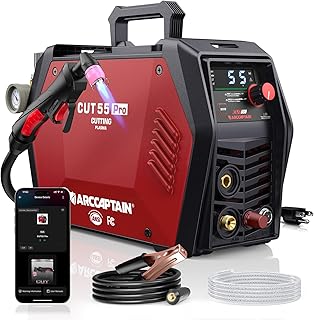
ARCCAPTAIN iControl CUT55 Pro
Check Price- Myth: All plasma cutters work on 110V and 220V with just an adapter. The truth is that voltage of a plasma cutter at the plug must match the machine’s design. A 220V‑only unit will not run on 110V without a heavy transformer, and using a simple plug adapter can destroy the power supply or trip a breaker.
- Mistake: Cranking the air pressure to fix a weak arc. Low cutting voltage often comes from poor ground or worn electrode, not from gas flow. Excessive air pressure just chills the arc and makes the cut worse.
- Myth: Higher open circuit voltage is always better. A high OCV helps starting, but it also increases the shock hazard. Modern inverter cutters balance OCV just enough for reliable pilot arc ignition while keeping the operator safe.
Frequently Asked Questions About Plasma Cutter Voltage
What is the typical cutting voltage for a 50‑amp air plasma cutter?
Most 50‑amp air plasma units operate in a cutting voltage window of 110 to 140 volts DC under load. The exact number varies with torch design and air pressure.
Can I measure the voltage of a plasma cutter with a standard multimeter?
You can safely measure input voltage at the wall with a multimeter. Output arc voltage, however, can exceed 300V DC in open circuit and is potentially dangerous. Leave those measurements to qualified technicians with high‑voltage probes.
Why does my plasma cutter need 220V if the output is only DC?
The input voltage determines how much total power the machine can draw. A 220V supply lets the power supply produce higher amperage and a sustained high arc voltage without tripping the breaker. A 110V circuit simply cannot deliver the same watts.
Does a plasma cutter use constant voltage like a MIG welder?
Not exactly. A MIG machine tries to hold a constant voltage. A plasma cutter has a drooping characteristic, voltage changes with arc length, allowing the current to stay relatively steady. This is why constant current is a better description for plasma cutting power supplies.
Conclusion
Voltage of a plasma cutter is not a single static label. It is a dynamic blend of the power you feed into the machine, the open circuit zap that starts the arc, and the working voltage that does the actual cutting. Knowing the difference between input voltage and arc voltage removes the guesswork when you are shopping for a new cutter or troubleshooting a poor cut. Match your machine to the correct plug, keep the standoff tight, and respect the simple rule that thicker metal demands more voltage delivered as a longer arc.
If you want to keep your machine running at its best, stick to the manufacturer’s input rating and check your ground connections first. For deeper reading on how power ratings affect performance, visit the plasma cutting fundamentals guide. A little understanding of voltage turns a good plasma cutter into a precise, predictable metal‑slicing tool that pays for itself on the very first big project.