If you have ever stared at a plasma cutter’s plug and wondered, What volts does a plasma cutter need? you are not alone. The answer is not a single number because the required voltage depends on the machine’s design, the thickness of metal you plan to cut, and the power available in your shop or garage.
Most home users run a 110-volt or 220-volt single-phase unit, while industrial shops often use 480-volt three-phase equipment. Understanding these voltage requirements is the first step toward clean cuts, safe operation, and avoiding a tripped breaker in the middle of a project.
In this guide, we will break down input voltage, arc voltage, and the real-world differences between 110V and 220V plasma cutters. We will also explain why a quality machine like the ones covered in our best 110V plasma cutters roundup can run on a standard household outlet while still delivering impressive results on thin steel.
![ARCCAPTAIN Plasma Cutter, [Large LED Display] 50Amps Cutter Machine with 110/220V Dual Voltage DC Inverter IGBT 1/2 Inch Clean Cut Post Flow and 2T/4T, for Beginners DIY](https://weldinghelmetreviews.com/wp-content/uploads/2026/06/71plrSt80qL._AC_UL320_6.jpg)
ARCCAPTAIN Plasma Cutter, [Large LED Display] 50Amps Cutter Machine with 110/220V Dual Voltage DC Inverter IGBT 1/2 Inch Clean Cut Post Flow and 2T/4T, for Beginners DIY
Check PriceTable of Contents
Understanding Plasma Cutter Voltage Requirements
Plasma cutters use electricity to create a superheated arc that slices through metal. The voltage you supply to the machine is called the input voltage. This is the standard wall power the cutter needs to operate its internal components and generate the arc. The voltage inside the arc itself, known as output or arc voltage, is a completely different number and usually much higher. Confusing the two can lead to costly mistakes when shopping for a cutter or wiring your workshop.
Input voltage is what you see on the machine’s nameplate: 110V, 220V, or 480V. It tells you which outlet and breaker you need. Output voltage, on the other hand, is the voltage between the electrode and the workpiece during cutting. A typical handheld plasma cutter might have an arc voltage of around 100 to 150 volts DC, while a large CNC plasma system can push arc voltage to 200 volts or more.
The key takeaway is that the input voltage is your concern for plugging in the machine, and the output voltage is managed automatically by the cutter’s internal circuitry.
Input Voltage: 110V vs 220V vs 480V
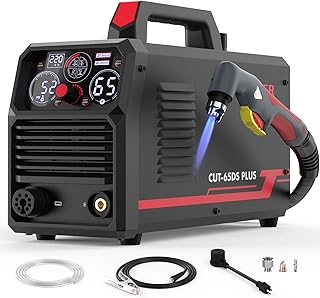
YESWELDER Plasma Cutter, 65Amp 110V/220V Non-High Frequency Non-Touch Pilot Arc 4-In-1 Plate Cutting/Grid Cutting/Gouging/Marking Multifunctional Plasma Cutting Machine CUT-65DS PLUS
Check PricePlasma cutter input voltage falls into three main categories. Each one dictates where you can use the machine and how much cutting power you get.
110V to 120V Plasma Cutters
These are the most portable and beginner-friendly units. They plug into a standard household outlet, making them a convenient choice for hobbyists, auto body repairs, and light fabrication. A 110V plasma cutter typically draws around 15 to 20 amps and can cleanly sever mild steel up to 1/4 inch thick, though the manufacturer’s rated cut speed is often on 1/8 inch material. Because they rely on a common wall circuit, you must ensure the outlet is on a dedicated breaker, otherwise you risk nuisance tripping when the arc starts.
Many dual-voltage machines can run on either 110V or 220V by swapping the plug or using an adapter. When you run a dual-voltage cutter on 110V, the output amperage is automatically reduced. For example, a machine rated for 50 amps on 220V might only deliver 25 to 30 amps on 110V. This is normal and protects the internal components from overloading the lower-voltage circuit. If you want to see the real-world performance of these adapters, look at the amperage draw of a plasma cutter explained in detail, which directly ties voltage to cutting capacity.
220V to 240V Plasma Cutters
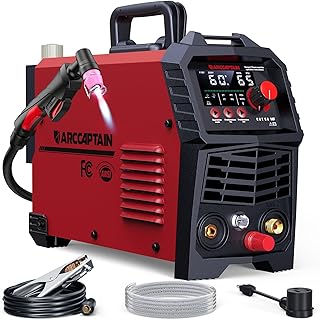
ARCCAPTAIN 60A Plasma Cutter, Non-Touch Pilot Arc Plasma Cutting Machine, 110V/220V, Upgraded Large LED Display, Plate Cutting, Expanded Metal Cutting, Rust Removal, Air Pressure Detection
Check PriceStepping up to 220 volts opens the door to serious cutting power. Most medium-duty and professional plasma cutters run on a 220V single-phase circuit, the same type used for electric dryers and welders. These machines can deliver 40 to 65 amps of cutting current, allowing you to slice through 1/2 inch, 3/4 inch, or even 1 inch steel with ease. The higher input voltage means the machine draws fewer amps for the same wattage, so it runs cooler and more efficiently.
If you are setting up a 220V plasma cutter, you will need a 50-amp breaker and a NEMA 6-50R receptacle in most cases. Always check the manufacturer’s recommendation because some high-output units demand a 60-amp or 70-amp circuit. The wiring must be sized correctly to avoid voltage drop, which can cause erratic arc starts and poor cut quality. For a step-by-step guide on getting your machine ready, our tutorial on how to set up a plasma cutter covers the electrical wiring, air connections, and safety checks.
480V Three-Phase Industrial Cutters
Large fabrication shops and CNC plasma tables often use 480-volt three-phase power. These machines are not found in home garages. They can deliver 100 amps or more of cutting current and handle thick steel plate all day without overheating. The three-phase input provides a smooth, constant power delivery that improves arc stability and cut edge quality. Unless you are running a full-scale production facility, you will never need to worry about 480V, but it is worth knowing that the same voltage principles apply: higher input voltage allows for higher output amperage and longer duty cycles.
How Voltage Affects Plasma Cutting Performance
![Bestarc Pilot Arc Plasma Cutter, [Large LED Display][Air Sensor] 50A Plasma Cutter Machine 110/220V Dual Voltage, 1/2'' Clean Cut 3/4 Inch Max Cut, Post Flow Mesh, 2T/4T for Beginners DIY](https://weldinghelmetreviews.com/wp-content/uploads/2026/06/712on9QfRfL._AC_UL320_5.jpg)
Bestarc Pilot Arc Plasma Cutter, [Large LED Display][Air Sensor] 50A Plasma Cutter Machine 110/220V Dual Voltage, 1/2” Clean Cut 3/4 Inch Max Cut, Post Flow Mesh, 2T/4T for Beginners DIY
Check PriceThe relationship between voltage and cutting performance is direct. The input voltage determines how much power the power supply can convert into cutting energy. A 110V plasma cutter on a 20-amp circuit has a maximum input wattage of about 2,400 watts. When you factor in efficiency losses, the actual cutting output is between 20 and 30 amps. A 220V machine on a 50-amp circuit can draw up to 11,000 watts, giving it the ability to push 50, 60, or even 80 amps of cutting current. More amps mean a hotter, faster arc that can melt through thicker metal.
Arc voltage, the output side, also plays a critical role. The plasma cutter’s internal electronics regulate the arc voltage to maintain a consistent cutting gap. If the torch is too far from the workpiece, the arc voltage rises and the arc can stretch out or extinguish. If the torch is too close, the voltage drops and the cut becomes sluggish. Advanced machines monitor arc voltage continuously and adjust the amperage to keep the cut smooth, which is why a stable input voltage is so important. Voltage fluctuations from a long extension cord or an overloaded circuit can cause the arc to flutter and leave a ragged edge.
Why Your Plasma Cutter Needs the Right Voltage
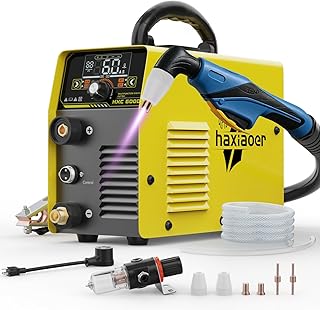
60A Plasma Cutter,110V/220V Dual Voltage High Frequency Contact Arc Cutting Machine,45-60PSI,LED Display,Portable Industrial Metal Cutter for Steel Aluminum Copper DIY & Fabrication
Check PricePlugging a 220V-rated plasma cutter into a 110V outlet will not work at all, the machine simply will not power up because the internal step-up transformer cannot overcome the deficit. More dangerous is the opposite scenario: running a 110V-only machine on a 220V circuit. The immediate overvoltage can fry the control board, capacitors, and the inverter, turning your cutter into an expensive paperweight. Always double-check the voltage rating on the machine and the receptacle before plugging in.
Even if you have a dual-voltage machine, using an undersized extension cord can cause voltage drop that mimics a low-voltage condition. The machine will struggle to start the pilot arc, the cut will be weak, and the duty cycle will drop. The rule of thumb is to use the shortest, heaviest-gauge cord possible. For a 110V cutter, a 12-gauge cord is the minimum for any length over 25 feet. For a 220V cutter, a 10-gauge or 8-gauge cord is a safe bet. The manual that comes with your cutter will list the recommended cord sizes, and it is worth following them to the letter.
Output Voltage and Arc Voltage Explained
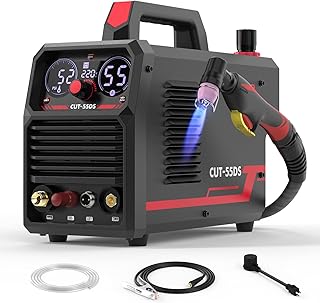
YESWELDER CUT-55DS Plasma Cutter, 55Amp Non-Touch Pilot Arc Air Power, Large Digital Display 110/220V Dual Voltage IGBT Inverter Plasma Cutting Machine with ETL Approved
Check PriceWhile the input voltage is the headline number people search for, the output voltage is the behind-the-scenes hero. Plasma cutting relies on a high-frequency, high-voltage start to ionize the air and create a conductive path. Once the pilot arc is established, the machine switches to a lower, high-amperage cutting arc. The open-circuit voltage of a plasma cutter, the voltage present before the arc strikes, typically ranges from 200 to 400 volts DC. This high voltage is necessary to bridge the gap between the electrode and the nozzle, then to the workpiece.
During cutting, the arc voltage settles into a range that depends on the torch design and the material thickness. Handheld torches usually operate between 100 and 150 volts. CNC machine torches, which often use longer leads and higher power levels, can run at 150 to 200 volts. This voltage is always DC, and the plasma arc is a direct current process. If you are curious about the electrical nature of the arc, our article is a plasma cutter AC or DC breaks down the science in plain language. The key point is that the high arc voltage is isolated from the input power by the inverter, so you are never exposed to it as long as the machine is properly grounded and the torch is in good condition.
Common Voltage Configurations for Home and Industrial Use
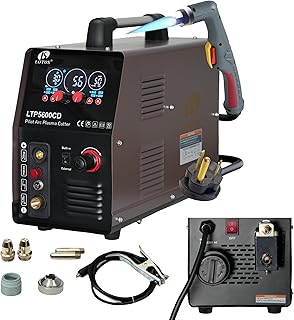
LTP5600CD 56A Drag-Cut Built-In Air Plasma Cutter 110V/220V | Touch-and-go tracking for HVAC or metal art | Slices 5/8″ cleanly through rusty sheets with zero tank hassle
Check Price- 110V/120V, 20-amp circuit: Entry-level cutters, up to 30 amps output, ideal for 1/8 inch to 1/4 inch steel, portable, runs on a standard outlet.
- 220V/240V, 50-amp circuit: Mid-range and prosumer cutters, 40 to 65 amps output, severs 1/2 inch to 1 inch steel, requires a dedicated outlet.
- 220V/240V, 60-amp to 80-amp circuit: Heavy-duty handheld cutters up to 80 amps, cuts 1 inch and thicker, often used in construction and shipbuilding.
- 480V three-phase: Industrial CNC plasma tables, 100+ amps output, continuous high-volume production, cuts up to 2 inches and beyond.
How to Determine Your Plasma Cutter Voltage Needs
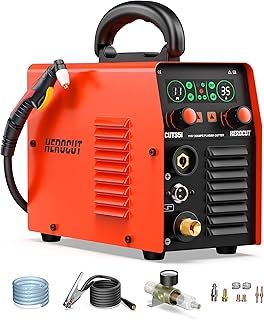
Plasma Cutter, 35Amps HEROCUT Plasma Cutter Machine CUT35i, Screen Display 110V High-Frequency IGBT Inverter Technology Post Flow and 2T/4T, Max Cutting Thickness 10mm for Beginners DIY
Check PriceStart by looking at the thickest metal you regularly cut. If you are mostly working with 16-gauge to 1/4 inch mild steel, a 110V dual-voltage machine will serve you well and keep your setup simple. For 3/8 inch to 1/2 inch plate, a 220V cutter is a must. The voltage requirement then flows from that decision. Once you know the machine’s voltage, check your electrical panel. A 110V circuit is almost always available, but a 220V outlet may need to be installed by an electrician. Factor in the cost of wiring when budgeting for a larger cutter.
Also consider the duty cycle. A 110V cutter running at maximum output may only have a 20% to 35% duty cycle, meaning it needs to rest for several minutes after a minute of cutting. A 220V machine with the same amperage rating often has a higher duty cycle because the power supply runs cooler. If you plan to cut for extended periods, the higher voltage machine will save you time and frustration. For a deeper look at matching machine specs to projects, the amperage draw of a plasma cutter guide will help you connect the dots between voltage, amperage, and cut quality.
Finally, always consult the manufacturer’s specifications. A reputable brand like Miller, Hypertherm, or Lincoln Electric provides clear input voltage requirements. Miller’s resource on plasma cutter power supply requirements is an excellent place to verify the electrical demands of different systems. Following those guidelines keeps your machine running safely and ensures you get the clean, fast cuts you expect.
Frequently Asked Questions
Can a plasma cutter run on 110V?
Yes, many compact and dual-voltage plasma cutters are designed to run on a standard 110V household outlet. They typically limit the output amperage to around 25 to 30 amps and are best for cutting metal up to 1/4 inch thick. You must use a dedicated 20-amp circuit to avoid tripping the breaker.
What happens if I plug a 110V plasma cutter into 220V?
Plugging a 110V-only machine into a 220V outlet will almost certainly damage the internal electronics. The sudden overvoltage can destroy the power board, capacitors, and inverter module. Unless the cutter is explicitly labeled as dual-voltage, never connect it to a higher voltage supply.
Does a plasma cutter need a special outlet?
It depends on the input voltage. A 110V plasma cutter uses a common NEMA 5-15 or 5-20 plug, which fits a standard outlet. A 220V cutter typically requires a NEMA 6-50R outlet, similar to a welder or kiln receptacle. Industrial 480V machines need a hardwired connection or a heavy-duty twist-lock plug.
Is plasma cutter voltage AC or DC?
The input voltage is AC, matching your wall power. The cutting arc itself is DC, with the electrode negative and the workpiece positive. Inverter-based plasma cutters convert the AC input to a high-voltage DC output for a stable, focused arc. You can learn more about this in our breakdown of is a plasma cutter AC or DC.
Can I use an extension cord with my plasma cutter?
Yes, but you must use a heavy-gauge cord to minimize voltage drop. For a 110V machine, a 12-gauge cord no longer than 25 feet is recommended. For a 220V machine, a 10-gauge or 8-gauge cord is safer. Always check the manufacturer’s guidelines, because an undersized cord can cause poor arc starts and damage the power supply over time.
Conclusion
The voltage a plasma cutter needs is not a one-size-fits-all answer. It starts with the input voltage your machine is built for, 110V for portability and light work, 220V for serious cutting power, or 480V for industrial production. Understanding that difference, and how it relates to the output arc voltage, puts you in control of your cuts. Always match the machine to a properly rated circuit, use the right cord, and consult reliable resources like the plasma cutter power supply requirements from Miller to stay safe and get the best performance.
If you are still on the fence, start with the electrical setup you already have. A well-chosen 110V plasma cutter can handle a surprising range of projects, and a 220V machine will grow with you as your skills advance. The right voltage is the one that fits your shop, your metal, and your ambitions. Now that you know the numbers, you can plug in, strike an arc, and cut with confidence.