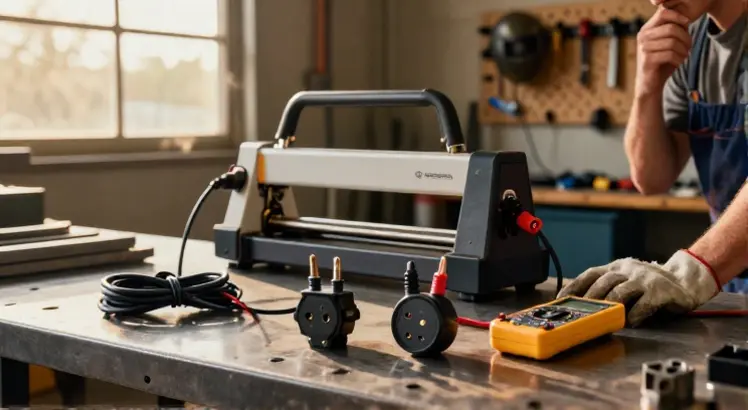
One of the most common questions new fabricators ask is, are plasma cutters 110 or 220? The short answer is they can be either, and many modern units handle both. The input voltage you choose directly affects cutting capacity, portability, and the kind of electrical work you need at your shop or garage. If you grab a 110V machine expecting to shave through half-inch steel like butter, you will be disappointed. On the other hand, dragging a 220V unit to a repair job without the right outlet just leads to frustration.
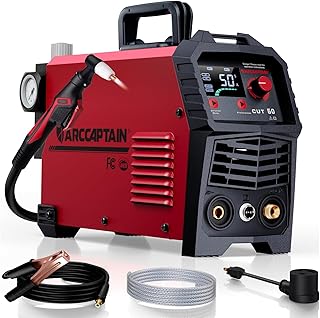
ARCCAPTAIN Plasma Cutter 50A Dual Voltage
Check PriceWe work with these tools every day and understand how confusing the voltage labels can be, especially when you see terms like dual-voltage, auto-sensing, or inverter technology. This guide clears up the fog. You will learn exactly how input voltage influences performance, when a standard wall outlet is enough, and when you absolutely need a 220V circuit. We also cover the hybrid machines that give you the flexibility to cut in the workshop and take the same unit on the road.
Table of Contents
Understanding Plasma Cutter Power Basics
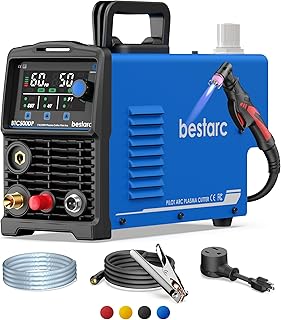
Bestarc Pilot Arc Plasma Cutter 50A
Check PriceHow Plasma Cutters Generate an Arc
A plasma cutter forces compressed air through a small nozzle while an electrical arc races through that airflow, superheating the gas into plasma. The power supply converts your wall voltage into a high-frequency, high-intensity DC current that sustains the arc. Whether you plug the machine into a 110V or 220V outlet decides how much raw power the inverter can pull. More input voltage means the circuit can deliver a higher amperage at the torch without tripping breakers or starving the arc.
It is a mistake to think only about the cutting amperage rating. A 40-amp plasma cutter on 110V behaves very differently than a 40-amp machine on 220V. The output may be capped when running on lower voltage, so you rarely get full advertised performance on a standard household outlet. Understanding this internal voltage-to-amperage relationship is the first step to matching a machine with your real world needs.
Input Voltage vs. Output Voltage
Many shoppers confuse the voltage that feeds the machine with the voltage the arc uses. Input voltage is your wall supply, 110-120V or 220-240V. Output voltage is what the plasma cutter sends to the torch, often between 100 and 400 volts DC depending on the cut and the unit. So when you ask, are plasma cutters 110 or 220, you are really asking about the input power requirements. The machine’s internal transformer or inverter handles the heavy lifting, but it can only multiply what it receives.
A robust 220V circuit feeds the machine with a thicker pipeline of electrons. That lets the cutter maintain a stable, high-density arc at higher amperages. A 110V outlet, limited to 15 or 20 amps, restricts total input wattage, which naturally throttles the maximum cutting amperage and duty cycle. That is why the external voltage number matters so much, it defines your ceiling.
If you want to see how these internal differences play out in real cut quality, plasma cutting fundamentals do a great job explaining arc density and power curves.
110V Plasma Cutters: When a Standard Outlet is Enough
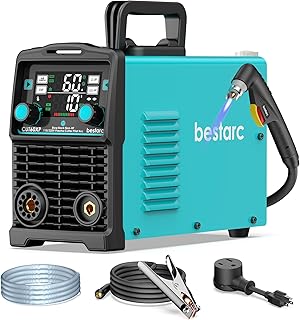
Bestarc 60A Plasma Cutter
Check PriceTypical Amperage and Cutting Capacity
Most 110V plasma cutters top out between 20 and 35 amps of output. That range comfortably severs mild steel up to about 3/8 inch and can handle a quality cut on material around 1/4 inch thick. You can push some dedicated 110V machines to sever 1/2 inch, but the cut speed will be slow, the kerf will widen, and the edge will need cleanup. For sheet metal, auto body panels, art projects, and HVAC ductwork, 110V is more than sufficient.
The main limitation is the household breaker. A 120V outlet on a 20-amp circuit supplies roughly 2400 watts peak, but continuous draw must stay lower. Plasma cutters often list a maximum input amperage at 110V, and that number will tell you if you need a dedicated circuit. Plugging a 30-amp-output machine into a crowded garage outlet will trip the breaker almost instantly.
Pros and Cons of 110V Machines
The biggest advantage is portability. You can load a compact 110V unit in a truck, drive to a repair site, and plug into any standard outlet. No generator needed for small jobs. These machines also tend to be lighter, more affordable, and easier for beginners to learn on without upgrading home wiring. For hobbyists and light fabrication, the plug-and-play nature is hard to beat.
On the downside, you sacrifice throat depth and speed on thicker stock. Duty cycle is often lower because the internal components work harder to convert limited input into usable arc energy. If you regularly cut 3/8 inch steel plate or thicker stainless, a 110V unit will frustrate you. Still, for the right application, a good 110V model outperforms a grinder or oxy-fuel torch in speed and precision. Our roundup of the best 110-volt plasma cutters shows what these smart little machines can really do.
220V Plasma Cutters: Powering Heavy-Duty Cutting
Why Higher Voltage Handles Thicker Metal
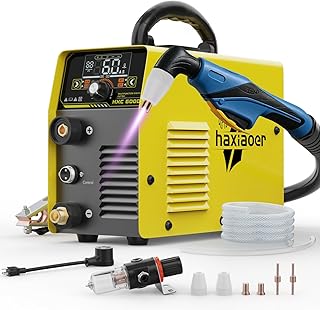
60A Plasma Cutter Dual Voltage
Check PriceWhen you step up to a 220V or 240V plasma cutter, you unlock 40 amps, 50 amps, 60 amps, and beyond. That extra current translates directly into the ability to sever steel plates 3/4 inch, 1 inch, and even thicker with ease. The arc stays tight and penetrating because the power supply isn’t struggling against input starvation. A 50-amp 220V machine can produce a clean, fast cut on 1/2 inch mild steel that would choke a 110V unit.
Higher voltage also dramatically improves the duty cycle. Instead of running for two minutes and resting for eight, a well-built 220V plasma cutter can run at 60% duty cycle or better at full output. That matters when you are cutting long fenders, slicing up plate for a welding table, or prepping production parts. You spend time cutting, not waiting for the machine to cool down.
Pros and Cons of 220V Models
The obvious plus is muscle. If your shop has a 50-amp 220V circuit, you can run large plasma cutters that make fast work of thick steel, aluminum, and stainless. These machines also produce a smoother, more vertical cut face on heavy plate because the arc cone is more concentrated. For repetitive production work, the time saved pays for the electrical upgrade quickly.
The trade-off is that 220V units are heavier, often require a NEMA 6-50 or similar plug, and cannot be used just anywhere. You also need to install the right breaker and receptacle if your shop does not already have the power. For a mobile welder doing on-site farm repair or construction, carrying a generator that supplies clean 220V becomes necessary. That said, if your work involves thick metal and serious duty cycles, a dedicated 220V cutter is the only sensible choice. Browse best 220-volt plasma cutters to see how modern units combine raw cutting power with inverter efficiency.
Dual Voltage Plasma Cutters: The Best of Both Worlds
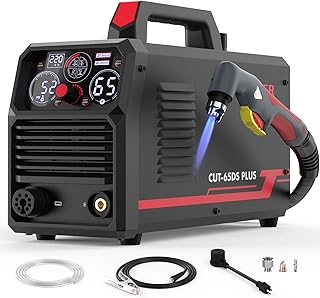
YESWELDER CUT-65DS PLUS 65A
Check PriceHow Dual Voltage Auto-Sensing Works
Many of today’s most popular plasma cutters are dual voltage, meaning they accept either 110V or 220V input without you having to flip a switch. Advanced inverter technology senses the incoming voltage and adjusts the internal circuitry automatically. This allows a 40-amp rated machine to deliver full 40 amps on 220V while limiting output to around 25 amps when plugged into 110V. It is like having two tools in one.
The auto-sensing feature protects the machine from damage if someone accidentally plugs into the wrong outlet with an adapter. Some units do require swapping the power cord or using a pigtail adapter, but the internal detection handles the rest. For a small shop that occasionally takes a cutter into the field, dual voltage flexibility eliminates the need to own two separate machines.
Adapters and Plug Considerations
If your dual-voltage unit includes a 220V plug, you will need a dedicated adapter to connect to a standard 110V outlet. These adapters are often included in the box or available as an accessory. Pay attention to the amperage rating of the adapter cord, a thin extension cord will choke voltage and starve the arc. When running on 220V, invest in a heavy-gauge extension cord rated for the full amperage draw at distance.
Also verify if your machine needs a neutral wire or just two hots and a ground. Most modern plasma cutters use a three-prong 220V plug, but older shops may have older receptacles. A quick visit to an electrician saves tripped breakers and scorched outlets, especially when you push a machine near its maximum safe draw.
Key Factors That Determine Voltage Requirements
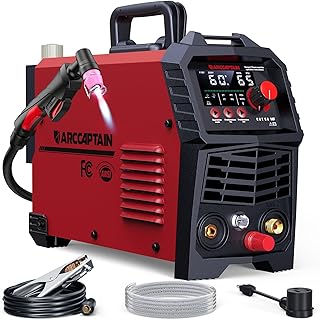
ARCCAPTAIN 60A Non-Touch Pilot Arc
Check PriceMaterial Thickness and Cut Speed
Your metal thickness dictates the amperage you need, and amperage dictates input voltage. For material up to 3/16 inch, even a 110V machine will zip through at decent travel speeds. Between 1/4 inch and 3/8 inch, a 110V cutter will work but you will appreciate the faster travel and cleaner edge of a 220V or a dual-voltage unit running on 240V. Past 1/2 inch, a 220V machine is not a luxury, it is a requirement.
Remember that the rated severance thickness is not the same as a clean cut. A machine rated to sever 5/8 inch may leave a ragged, beveled edge on that thickness but produce a near-perfect cut on 3/8 inch. Choosing voltage based on your clean-cut target thickness, not the maximum severance claim, leads to happier results.
Duty Cycle and Continuous Use
Duty cycle is the percentage of a ten-minute period the cutter can run before it needs to cool. A small 110V unit might offer 35% at 25 amps, meaning about three and a half minutes of arc-on time. A 220V machine at 50 amps could sit at 60% duty cycle, giving you six minutes of uninterrupted cutting. If you are doing cnc table work or cutting long, sweeping arcs, that extra runtime keeps your project moving.
Even within the same amperage rating, the input voltage pulls the duty cycle lever. A dual-voltage machine running on 110V will have a lower duty cycle than the identical unit running on 220V, simply because it has less electrical headroom. Factor that into your decision when you anticipate production-style use.
Job Site vs. Home Workshop
A mobile repair trailer with a 10,000-watt generator can power a 220V plasma cutter comfortably. A home garage with a single 15-amp receptacle limits you to 110V unless you run a subpanel. Evaluate where you will use the cutter 80% of the time. If the answer is in my driveway on the side of a tractor, a portable 110V unit or a dual-voltage machine with an adapter may be smarter than hauling a heavy generator just for the cutter.
If your workshop is already wired for 220V with a NEMA 6-50 outlet, skipping a dedicated 220V machine leaves performance on the table. Match the plasma cutter’s voltage to the infrastructure you already have, or budget for the electrical upgrade as part of the purchase.
Frequently Asked Questions
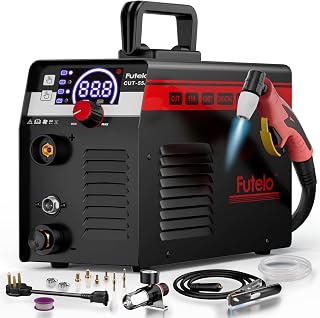
Futelo 55A Plasma Cutter
Check PriceCan a 110V plasma cutter cut 1/2 inch steel?
Some high-output 110V models with advanced inverters can sever 1/2 inch mild steel, but the cut will be slow and the edge may need grinding. Realistically, if you regularly work at that thickness, a 220V or dual-voltage machine on 240V is a far better tool.
Is it hard to add a 220V outlet for a plasma cutter?
Adding a dedicated 220V circuit is straightforward for a licensed electrician, especially if your panel has room for a double-pole breaker. Plan on a NEMA 6-50 receptacle wired with 6-gauge or 8-gauge wire depending on distance and amperage. Never attempt electrical work you are not qualified to perform, improper installation is a fire and shock hazard.
Are most homeowner plasma cutters dual voltage?
Yes, the market has shifted heavily toward dual-voltage inverters. Machines from respected budget and mid-tier brands often arrive with auto-sensing capability. This gives the casual user freedom to learn on 110V and upgrade to 220V later without buying a new machine.
Do I need a special generator to run a 220V plasma cutter?
You need a generator that can supply clean, stable power with at least 8,000 to 10,000 running watts and a 220V outlet. Inverter generators are ideal because they produce consistent sine waves that protect the plasma cutter’s sensitive electronics. Generator sizing depends on the cutter’s input amperage rating at 220V, so check the spec plate.
Which voltage is better for CNC plasma tables?
CNC work favors 220V because the machine often runs for extended periods at high amperage. Consistent arc density and high duty cycle produce smoother cuts with less dross, and the table controller stays happier without voltage sag. Most CNC plasma setups are permanently installed in shops with 220V power already present.
Conclusion
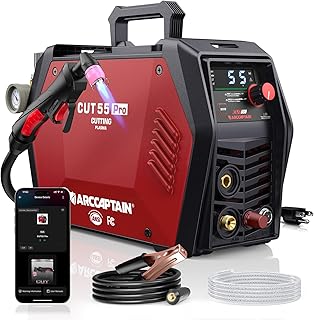
ARCCAPTAIN iControl CUT55 Pro
Check PriceSo, are plasma cutters 110 or 220? They can be either, and thanks to dual-voltage technology, you rarely have to pick just one. The right voltage for you depends on the material you cut most often, where you work, and the electrical infrastructure you can access. For thin sheet metal and grab-and-go portability, a dedicated 110V plasma cutter is a fantastic tool. When thickness climbs past 3/8 inch and duty cycle matters, 220V is non-negotiable.
Many beginners and home users find the sweet spot with a dual-voltage machine that plugs into any outlet and grows with their skills. Before you buy, honestly assess your thickest regular job and your available power. Then pick a quality unit, install the right circuit if needed, and always follow safe electrical practices. With the voltage question settled, you can focus on making clean, precise cuts and building the projects you care about.