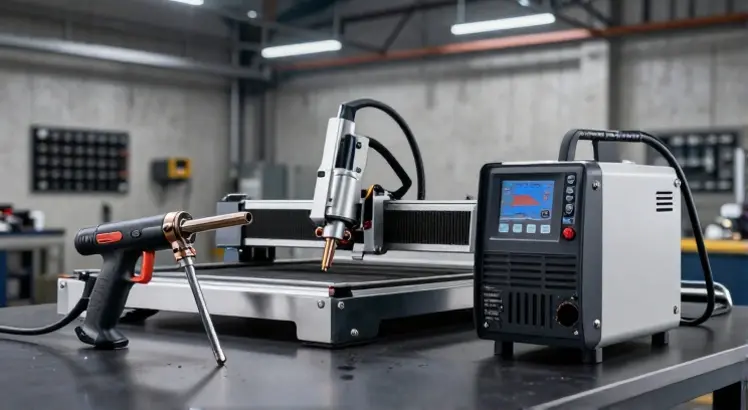
When you step into a modern fabrication shop, one of the first big decisions is choosing between plasma cutting vs laser cutting. Both processes turn sheets of steel, aluminum, and stainless into precise parts, but they travel completely different paths to get there. You might be asking which one delivers sharper edges on thin gauge material, or which can plow through inch‑thick plate without burning a hole in your wallet.
This guide breaks down how plasma and laser cutting actually work, compares their precision, speed, operating costs, and material limits, and helps you match the right technology to your workflow. Whether you run a small job shop or just need to make sense of the specs before your next purchase, you will find clear, practical answers here.
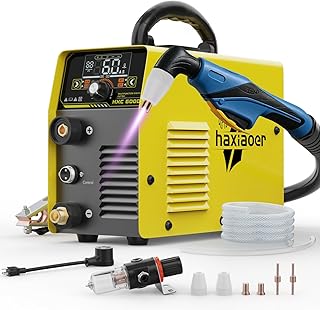
60A Plasma Cutter,110V/220V Dual Voltage High Frequency Contact Arc Cutting Machine,45-60PSI,LED Display,Portable Industrial Metal Cutter for Steel Aluminum Copper DIY & Fabrication
Check PriceTable of Contents
Understanding Plasma Cutting
Plasma cutting sends a superheated jet of ionized gas (plasma) through a constricted nozzle to melt metal and blow it away. A pilot arc first creates a spark between the electrode and nozzle, then transfers to the workpiece when you bring the torch close. Once the circuit closes, the gas, usually compressed air, nitrogen, or oxygen, tears through the material at temperatures that can exceed 40,000°F. The process is straightforward: you need a power supply, a plasma torch, and a constant flow of clean, dry compressed air. Many entry‑level and prosumer units plug into a standard 110‑ or 220‑volt outlet, making plasma accessible for home garages and small fabricators.
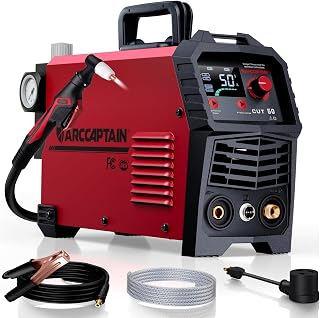
ARCCAPTAIN Plasma Cutter, [Large LED Display] 50Amps Cutter Machine with 110/220V Dual Voltage DC Inverter IGBT 1/2 Inch Clean Cut Post Flow and 2T/4T, for Beginners DIY
Check PriceBecause plasma relies on an electrical arc and conductive material, it cuts any metal that will carry current. Mild steel, stainless steel, aluminum, copper, and brass all fall under the plasma umbrella. Handheld plasma torches let you make quick cuts on a welding table or even out in the field, while CNC plasma tables can churn out complex shapes with decent repeatability. If you need to slice through thick plate (up to 2 inches or more) without a fuss, plasma is tough to beat. For a deeper look on how to match machine specs to your shop, choosing the right plasma cutter can walk you through amperage, duty cycle, and air requirements.
Understanding Laser Cutting
Laser cutting focuses a highly concentrated beam of light through a lens, raising the material’s temperature until it melts, burns, or vaporizes. A jet of assist gas (often nitrogen, oxygen, or compressed air) then sweeps the molten material out of the kerf. Two main types dominate the sheet metal world: CO₂ lasers and fiber lasers. CO₂ lasers have a longer wavelength and were the industry workhorse for decades.
Fiber lasers, which generate the beam inside a solid‑state resonator, have surged in popularity because they produce a smaller focal spot, cut reflective metals like copper and brass safely, and cost less to run per part over time.
Laser systems rely on complex optics, drives, and a stable gantry to move the cutting head at blistering speeds. A typical fiber laser can dance through 20‑gauge stainless steel at over 1,000 inches per minute, leaving a barely visible kerf and an edge that often needs no secondary finishing. The beam is non‑contact, so there is no physical drag on the material, which helps when cutting thin foils or delicate shapes.
While fiber lasers can now cut up to 1 inch of mild steel with high power (6‑10 kW), they shine brightest on thicknesses below ½ inch. The capital investment is significantly higher than plasma, but the return comes through speed, accuracy, and the ability to automate lights‑out production.
Head‑to‑Head Comparison: Plasma Cutting vs Laser Cutting
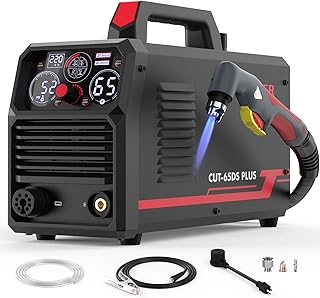
YESWELDER Plasma Cutter, 65Amp 110V/220V Non-High Frequency Non-Touch Pilot Arc 4-In-1 Plate Cutting/Grid Cutting/Gouging/Marking Multifunctional Plasma Cutting Machine CUT-65DS PLUS
Check PriceNo two shops are identical, so the decision comes down to which factors matter most to your bottom line. Below, we compare plasma and laser cutting across the dimensions that fabricators talk about on the floor every day.
Precision and Edge Quality
Laser cutting produces a smaller kerf (often 0.006 to 0.015 inch), sharper corners, and a smoother finish right off the table. Tolerances routinely hold within ±0.003 inch, and the heat‑affected zone stays tiny. This makes lasers the go‑to choice for parts that must fit together without grinding, or for decorative sheet metal where appearance matters. Plasma, even on a good CNC table, yields a wider kerf (0.030 to 0.060 inch or more), a noticeable bevel angle on one side, and a rougher edge that may need light grinding or sanding. You can improve finish quality by using high‑definition plasma and optimizing gas blends, but plasma will rarely match a fiber laser’s smoothness.
Material Compatibility and Thickness Range
- Plasma excels at thick conductive metals. Handheld torches cut up to 2 inches of mild steel, and high‑amp CNC plasma can sever plate over 3 inches. It handles all common metals, including painted or rusty surfaces, as long as the arc can establish.
- Laser dominates thin to medium gauges. Fiber lasers zip through anything under ½ inch, and high‑power units can now reach 1 inch in steel. Reflective metals like aluminum, copper, and brass are completely safe for fiber, whereas older CO₂ lasers struggled with back‑reflection damage.
- Plasma requires conductive material. You cannot plasma cut plastic, wood, or glass. Lasers, especially CO₂, can process non‑metals, though in the metal fabrication context this is rarely the deciding factor.
Cut Speed and Productivity
On thin sheet (16 gauge and lighter), a fiber laser runs circles around plasma. It can hit traversal rates above 2,000 inches per minute during rapid moves and cut complex profiles in seconds. Plasma speeds are respectable but slower on thin material because the torch must linger to pierce and maintain a stable arc.
When you move into ½‑inch plate and above, the speed gap narrows considerably. A 100‑amp plasma table can race through ¾‑inch steel at 30 to 40 inches per minute, while a moderate fiber laser may need to slow down or use multiple passes. For heavy structural fabrication, plasma often delivers a lower cycle time per part and can be more productive on a dollars‑per‑foot basis.
Operating Costs and Consumables
Plasma consumables (electrodes, nozzles, swirl rings, shields) are inexpensive and considered a normal wear item. You replace them frequently, sometimes after a few hours of cutting, but each swap costs only a few dollars. The biggest ongoing expense for plasma is compressed air, which demands a capable compressor and dry air system. Laser cutting, by contrast, has almost no consumables in the traditional sense.
A fiber laser’s optical chain and resonator require minimal maintenance, and protective lens covers cost pennies. However, electricity consumption can be higher, and unexpected downtime for a fiber laser service call costs far more than swapping a nozzle. According to a detailed guide from Hypertherm comparing plasma and laser, the consumable cost per plate may favor plasma for thick work, while fiber laser yields a lower cost per part on high‑volume thin sheet runs.
Safety and Fume Management
Both processes generate fumes, bright light, and heat. Plasma arcs produce intense ultraviolet and infrared radiation, requiring welding curtains, shaded face protection, and proper ventilation. Protective helmets designed for plasma cutting often use a lighter shade (shade 5 or 8) than typical welding helmets, plus a clear grinding mode for slag removal.
Laser enclosures automatically block the beam but you must remain aware of Class 4 laser hazards during maintenance when the door interlocks are bypassed. Fume extraction is equally critical; laser vaporizes material, creating fine particulates that demand HEPA filtration, while plasma fumes contain more metallic dust and require dedicated downdraft or water tables.
How to Decide Which Cutting Process to Use
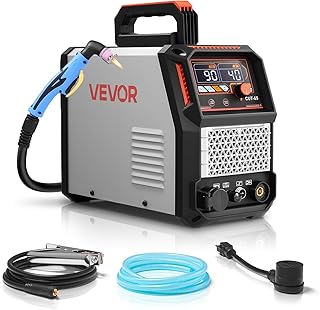
VEVOR Plasma Cutter, 65A Non-Touch Pilot Arc Plasma Cutting Machine, 110V/220V Dual Voltage Digital Display IGBT Inverter – with 2T/4T Function & Adjustable PA/PT Time for Home Repairs, Workshops
Check PriceStart by looking at the thickness range you process most often. If your bread‑and‑butter is ¼‑inch mild steel or thinner and you need high cosmetic quality, a fiber laser will pay for itself through speed, accuracy, and a near elimination of secondary grinding. If your plates regularly measure ½ inch and above, or you cut a mix of heavy structural shapes, plasma offers proven dependability at a fraction of the upfront cost.
Think about your shop environment and skill level. Plasma tables and handheld torches are forgiving; a weekend fabricator can produce functional parts with minimal training. Laser systems demand a more controlled atmosphere, stable power, and a steeper learning curve for setup and nesting software. Maintenance on a laser means calling a certified technician, while most plasma repairs, like swapping a torch lead or a solenoid, can be done in‑house.
Budget often becomes the final filter. A capable 4‑ by 4‑foot CNC plasma table with a Hypertherm Powermax unit might set you back $5,000 to $15,000 depending on features. Entry‑level fiber lasers now start around $20,000 to $30,000 for a basic 1 kW machine, but serious production units climb past $100,000 quickly. If your workload does not justify the capital outlay, plasma remains a highly valuable option. If your margins are tight and you lose jobs because of edge finish, the laser’s speed and quality can quickly swing the calculation.
Lastly, consider future flexibility. Many growing shops start with a plasma table for heavy work and add a laser later for the high‑volume light gauge orders. Owning both technologies lets you route each job to the machine that does it best, improving overall throughput.
Plasma Cutting vs Laser Cutting FAQs
Can a plasma cutter cut as clean as a laser?
In most cases, no. A high‑definition plasma torch with optimized gas can produce near‑laser‑quality edges on mild steel between ⅛ and ⅜ inch, but it will still show a slight bevel and a wider heat‑affected zone. For applications that demand a dross‑free, square edge with tight tolerances, laser remains superior.
Is laser cutting cheaper than plasma?
Upfront machine cost is much higher for laser. Operating cost per foot on thin material often favors laser due to speed and reduced secondary work. For thick plate, plasma becomes more economical because the machine cost per amp is lower and consumables are cheap. The crossover point varies, but many shops find laser cheaper for sheet metal and plasma cheaper for plate work.
Can a laser cutter cut thicker than 1 inch of steel?
Yes, high‑power fiber lasers (12 kW and above) can sever mild steel up to 1.5 inches, but edge quality begins to degrade compared to plasma at those extremes. For material beyond 1 inch where finish is less critical, plasma remains the more practical and affordable choice.
Do I need special training to run a laser cutter?
Operating a laser cutter requires understanding CAM nesting software, laser parameters, assist gas pressures, and safety interlocks. Most manufacturers offer training, and operators typically come from a CNC machining or sheet metal background. It is less hands‑on forgiving than plasma, but the fundamentals are learnable within a few weeks of consistent practice.
Which process is safer for a home workshop?
Plasma cutting is more common in home shops because it uses compressed air and produces less reflective light (though still very bright). With proper ventilation, a sturdy table, and a shaded helmet, the risks are manageable. Laser cutters, particularly fiber, demand more sophisticated enclosures and fume extraction to handle fine particulate safely; they are less DIY‑friendly.
Final Thoughts on Choosing Between Plasma and Laser Cutting
Plasma cutting vs laser cutting is not about one technology being globally better, it is about matching the tool to the task. If you punch holes in heavy plate all day, a plasma table makes sense. If you cut thousands of intricate brackets from thin stainless, a fiber laser becomes a money printer.
Evaluate your typical material grade, thickness, tolerance requirements, and available floor space. Factor in the total cost of ownership, from the air compressor to the fume extraction. Many progressive shops run both, letting the plasma chew through the thick stuff while the laser handles the detail work. Whichever route you choose, understanding how the process fits your production goals will help you cut smarter and grow your business.