Understanding your gear is the first step toward mastering the trade. If you are diving into welding, you will hear a lot about auto-darkening technology. But before the digital age, there was a simpler, robust standard. This brings us to the passive lens meaning in welding. It is not just an old piece of dark glass. It is a fixed-shade filter that protects your eyes the same way it has for decades. Knowing how it works can save you money and even improve your weld quality in certain situations.
Table of Contents
What Is the Passive Lens Meaning in Welding?
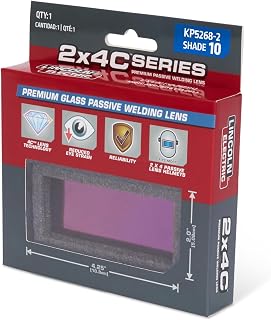
Lincoln Electric 2x4C Premium Glass Lens
Check PriceA passive welding lens is a piece of tinted glass or polycarbonate that stays dark at all times. Unlike high-tech auto-darkening filters, it does not rely on sensors, batteries, or electronics. The shade level is permanent and fixed. When you hold it up, the world looks dark, usually in a shade ranging from #8 to #14.
The core function relies on basic physics rather than circuitry. The lens filters out harmful ultraviolet (UV) and infrared (IR) radiation before it hits your retina. It absorbs the intense brightness of the arc plasma. Because they have no moving parts or electronics, they are almost indestructible. Experienced pipeline welders often prefer them for their reliability and optical clarity.
How a Fixed-Shade Lens Actually Works
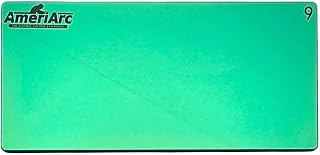
AMERIARC True Color Single Replacement Lens
Check PriceTo truly grasp the passive lens meaning in welding, you need to understand what is happening to the light. When an arc is struck, it emits a massive spectrum of dangerous radiation. A passive lens is coated with metallic layers that reflect infrared heat. These layers also absorb ultraviolet light completely.
The dark tint is created by adding iron oxide or cobalt to the glass during manufacturing. This green tint, common in classic welding lenses, offers superior contrast. The welder looks through a dark window that dims the visible light while blocking the invisible dangers. You are essentially staring through a permanent eclipse filter that never fails, as long as it is not cracked.
The Nod-and-Drop Technique
Using a passive shield requires a specific physical technique. You cannot see through the dark lens until the arc is live. Welders position the electrode, then give a sharp head nod to flip the hood down. This is called the helmet flick. It takes practice to keep the torch tip exactly where you want it while dropping the hood.
This technique forces you to learn perfect positioning. It builds muscle memory faster than modern auto-darkening helmets. Many instructors prefer students to start on passive lenses. If you can weld well with a fixed shade, switching to an auto-darkening unit will feel like a luxury, not a crutch.
Passive Lenses vs. Auto-Darkening Lenses
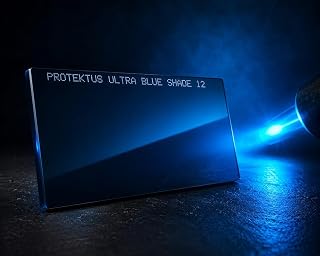
Protektus Ultra Blue Lens Shade 12
Check PriceTo clarify the passive lens meaning further, you must compare it to its modern counterpart. The battle between auto-darkening welding helmet vs passive setups is ongoing in workshops globally. Each has a distinct place in a welder’s toolkit.
- Reaction Time: Auto-darkening lenses switch in 1/10,000 to 1/25,000 of a second. Passive lenses are always dark. There is zero lag time, ever.
- Weight: Passive hoods are significantly lighter. They have no battery pack or electronics, reducing neck fatigue over a 12-hour shift.
- Battery Life: An auto-darkening helmet dies. When the battery runs out, it is just a passive screen, usually at shade #4, which is not safe for welding. A passive lens works forever without power.
- Optical Clarity: A high-quality gold-coated passive lens offers an optical rating of 1/1/1/1. It eliminates the slight green hue distortion found in some cheap electronics.
Cost Analysis and Longevity
Passive lenses are dramatically cheaper than auto-darkening welding lenses. You can buy a dozen passive glass filters for the price of one mid-range electronic cartridge. If you work overhead, molten metal spatter will ruin lenses fast. It hurts less financially to throw away a $5.00 glass lens than a $150.00 electronic one.
Furthermore, passive lenses do not suffer from angry pixilation. Auto-darkening lenses can sometimes darken accidentally due to bright ambient light, or sensor blockage occurs in tight corners. A passive lens never cuts out. When welding pipe in a steam plant with steam diffracting the light, a sensor-based lens might flicker, but a passive one remains completely stable.
Choosing the Correct Shade Number
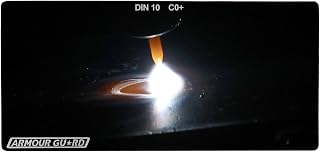
Armour Guard Golden Eye True Color Lens Shade 11
Check PriceBecause the passive lens meaning in welding implies a fixed state, picking the right number is critical. You cannot dial it darker on the fly. The shade number indicates the darkness level, with higher numbers blocking more light. The selection depends entirely on the amperage and process you plan to use.
- Shade #5 to #8: Suitable for low-amperage plasma cutting or oxy-fuel torch work. Not recommended for arc welding.
- Shade #9 & #10: Low amperage TIG welding or thin-gauge MIG welding. These are comfortable for below 100 amps.
- Shade #10 & #11: The bread-and-butter shades for general MIG and Stick welding. Excellent for amperages between 100 and 200 amps.
- Shade #12, #13 & #14: Heavy structural welding, high-amperage 6010 rods, and arc gouging. Use these when your arc is intensely bright, pushing 300 amps or more.
If you are unsure, start darker. You think #10 is right, try #11. A shade that is too light causes eye strain, sunburn-like arc flash, and gritty eyes. A shade too dark makes you lean in too close to the puddle, straining your back. The goal is to see the puddle and surrounding joint clearly without squinting.
Why Professionals Prefer Gold and Blue Lenses
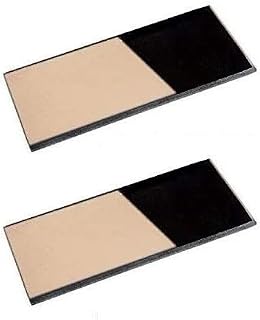
Gold Plated Shade 10 Lens 2-Pack
Check PriceWithin the passive category, not all glass is the same. The standard green lens is classic, but colored interference lenses, specifically gold and cobalt blue, elevate the experience. These are sometimes referred to as enhanced clarity lenses.
A gold passive lens uses a fine layer of gold to reflect heat radiation away from the eye. It creates a warmer color spectrum. Instead of a green haze, you see a yellowish-orange arc. This makes the boundary of the molten puddle sharper and more distinct. Similarly, a cobalt blue lens filters out the yellow sodium flare common with some fluxes. These premium lenses align with OSHA safety standards while providing unmatched definition.
Practical Scenarios for Passive Lenses
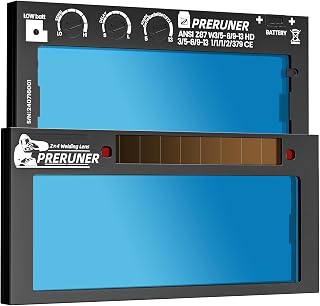
Flex Series HD Auto-Darkening Lens
Check PricA passive welding helmet setup shines in specific environments. If you are learning in school, a passive hood forces you to focus on torch angle and E-Stop (electrode stick-out). It removes the variable of changing settings. It is pure hand-eye coordination.
Outdoors, in direct sunlight, passive lenses win. UV interference can fool an auto-darkening sensor. If a cloud moves and the sun hits your sensor, the electronic lens might lighten for a split second. A fixed shade does not care about weather. Field pipe welders, also known as pipeliners, often use pancake hoods with a very small, focused passive square lens. This niche setup proves that passive technology is still top-tier for specific trades.
Maintenance and Care Tips
Passive lenses require maintenance to keep the optical quality high. Glass scratches easily. Plastic laminate cover plates must sit on both sides of the lens. Never weld without a clear cover lens protecting the dark shade. When you clean the lens, remove the cover plate first. Wash it with mild soap and water, then pat it dry.
Do not rub a dry cloth over a dusty glass lens. The dust particles are abrasive and will create micro-scratches. Over time, these scratches create a hazy view of the arc. If your view looks like driving through fog, it is time to replace the lens. Always store spare glass shades in a flat, dry pouch to prevent chipping. This approach ensures your field of vision remains safe and crisp.
Safety Standards and ANSI Compliance
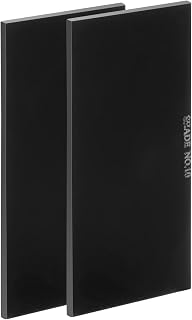
HARFINGTON Shade 10 Glass Lens 2-Pack
Check PriceAny lens you buy must meet ANSI Z87.1 standards. This specification covers impact resistance and radiation filtration. A true welding filter is not just dark sunglasses. Sunglasses block visible light but can dilate your pupil, allowing a massive dose of UV radiation in. This burns the cornea instantly.
A certified passive filter has a specific shade designation for the job. Counterfeit lenses look dark but lack the metallic coatings necessary to stop UV light. Your eyes will not feel the burn immediately. The damage manifests hours later as a painful, gritty feeling called photokeratitis. Always check the engraving on the corner of the lens. It confirms the lens is rated to block specific radiation percentages.
Frequently Asked Questions
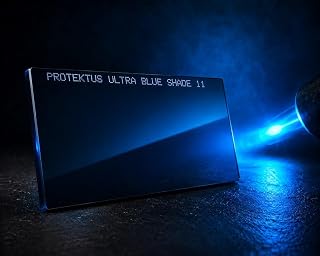
Protektus Ultra Blue Lens Shade 11
Check PriceWhat is the main advantage of a passive welding lens?
The primary advantage is absolute reliability. There are no batteries to die, no sensors to fail, and no flickering in low light. It provides a constant optical rating that is highly durable and shock-resistant. It is also the most affordable option, making it perfect for students or harsh environments.
Can you do TIG welding with a passive lens?
Yes, and many experts prefer it. TIG welding requires extreme visibility. A high-end gold or blue passive glass lens can provide up to 4C optical clarity, which means Class 1, the highest rating for clarity, in all four categories. The lack of electronics eliminates the green tint, offering a natural view of the tungsten and filler rod.
Is a passive lens safe for MIG welding?
Absolutely. You just need to match the shade to the output. High-amperage spray transfer MIG creates an intense, hot arc. A shade #12 or #13 passive glass is required. If you use a lighter shade, you risk arc flash. Always refer to the manufacturer’s guide for amperage-to-shade ratios.
Why do pipeline welders still use passive hoods?
Pipeline welders face mud, rain, and extreme cold. Electronics fog up and fail in these conditions. A pancake hood with a small passive brazing lens eliminates the bulk. It also allows the welder to use a magnifying cheater lens easily. The setup is utterly failproof, which is vital when you are crawling through a muddy ditch.
The Verdict
Understanding the passive lens meaning in welding gives you a massive advantage. It connects you to the fundamental roots of the trade. You do not need complicated electronics to lay a good bead. You just need dark glass, a steady hand, and the neck muscles to drop the hood at the right moment.
If you are a beginner, a fixed-shade hood is the cheapest entry ticket to learning correct technique. If you are a professional working in harsh outdoor elements, passive glass is a safety net that never powers down. Keep a passive hood in your shop, even if you love your digital screen. For more expert reviews on protective gear, check out the detailed resources at Lincoln Electric’s education hub. When the circuitry breaks, you will be glad you know how to go dark the old-school way.