If you are researching miller welding helmet reviews, you likely want honest guidance before spending money. Miller Electric is one of the most recognized names in welding safety, and their helmets appear in shops, garages, and industrial sites around the world. This guide breaks down the top Miller models, compares features, and explains what matters for MIG, TIG, and stick welding.
We focus on real world performance, not just spec sheets. You will learn about lens clarity, arc sensors, headgear comfort, and battery life. If you want a broader look at the lineup, check our detailed guide to Miller welding helmet models.
Table of Contents
Why Trust Miller Welding Helmets?
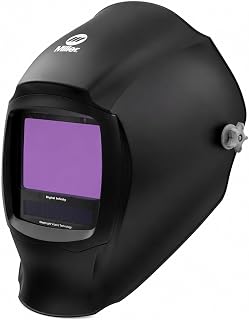
Digital Infinity™ Welding Helmet, ClearLight™
Check PriceMiller Electric has been a leader in welding equipment for decades. Their helmets are built to meet ANSI Z87.1 impact standards and include auto-darkening filters that protect your eyes from arc flash. The company also invests heavily in lens technology, which improves visibility and reduces eye strain.
Many professional welders choose Miller because the helmets hold up under daily use. The headgear is adjustable, the controls are simple, and replacement parts are widely available. You can find cover lenses and batteries at most welding supply stores.
Check the Miller Electric official helmet catalog for current specifications and model updates.
- ClearLight lens technology for a true color view
- X-Mode electromagnetic arc detection on premium models
- Multiple sensors for better coverage in out of position work
- Durable shells designed for grinding and welding
Top Miller Welding Helmet Models Reviewed
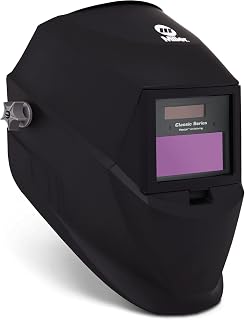
Classic Series Welding Helmet, ClearLight™, Shade 8-13, Black
Check PriceThis section reviews the most popular Miller helmet lines: Digital Elite, Classic, and Infinity. Each has strengths for different users and welding processes. Understanding these differences helps you avoid paying for features you do not need.
Miller Digital Elite Series
The Miller Digital Elite is a top tier auto-darkening helmet built for professional welders. It uses a ClearLight lens that provides a bright, true color view of the weld puddle. The shade range runs from 3 to 13, which handles low amperage TIG welding and heavy stick work.
Four arc sensors and X-Mode electromagnetic sensing reduce flicker and blocked sensor problems. In practice, the Digital Elite stays dark even when you weld out of position or near sunlight. The headgear is comfortable for long shifts, and the controls adjust quickly with gloved hands.
- Excellent optical clarity and wide shade range
- X-Mode works well outdoors and in tight spaces
- Four sensors prevent false lightening
- Sturdy design for daily professional use
The main downside is the higher price point, and the settings can feel complex for a beginner. But if you need one helmet that handles most jobs, the Digital Elite is hard to beat. It is especially popular for TIG work because it performs well at low amperage without flashing.
Miller Classic Series
The Classic Series is Miller’s entry level auto-darkening line. It is a solid option for hobbyists, students, and light fabrication. The Classic VSi offers variable shade from 8 to 12, which covers most MIG and stick welding tasks. It has two arc sensors and a response time fast enough for general use.
The lens is not as optically clear as the Digital Elite, and the shade range does not go as low. But for the price, the Classic Series provides reliable eye protection and a lightweight shell. Replacement cover lenses and batteries are easy to find.
- Affordable and simple to operate
- Lightweight shell and adjustable headgear
- Good for MIG and stick welding
- Meets ANSI Z87.1 safety standards
The tradeoffs are fewer sensors and less advanced lens technology. Beginners who weld mostly with MIG or stick will get plenty of value from the Classic Series. It is a practical first auto-darkening helmet without a steep learning curve.
Miller Infinity Series
The Infinity Series focuses on a large viewing area and all day comfort. It features a ClearLight lens with a high definition viewing area, often cited around 13.4 square inches. That extra visibility helps when you need to see the joint, the arc, and the surrounding workspace.
Four sensors and X-Mode provide reliable darkening in awkward positions. The Infinity also has a comfortable headgear with pivot points, which reduces pressure on the crown. Many welders prefer the Infinity for fabrication, pipe work, and long production runs.
- Large viewing area for better spatial awareness
- ClearLight lens with true color view
- Four sensors and X-Mode for out of position work
- Comfortable headgear for long sessions
The larger shell can feel bulky in tight spaces, and the price is premium compared to entry level options. If you value field of view and spend hours under the hood, the Infinity Series is worth a close look.
How to Choose the Right Miller Welding Helmet
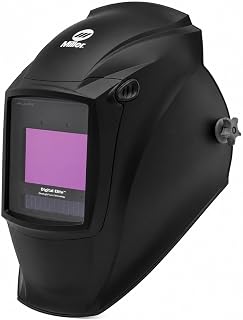
Digital Elite™ Welding Helmet, ClearLight™ 4X Lens, Black (QR)
Check PriceFinding the right Miller helmet depends on your welding process, work environment, and budget. Start with lens clarity because a clear view reduces eye strain and improves weld quality. Then look at shade range, sensors, and headgear comfort.
Lens Clarity and Optical Class
Optical clarity is rated by four numbers, such as 1/1/1/1. The first three numbers measure clarity, distortion, and uniformity, while the fourth measures light transmission. A 1/1/1/1 rating is best. Miller ClearLight lenses aim for a bright, true color view that helps you see the weld puddle and surrounding metal.
Shade Range and Welding Process
Shade range matters because TIG welding at 20 amps needs a lighter shade than stick welding at 150 amps. Variable shade helmets like the Digital Elite cover 3 to 13, which handles almost any process. Fixed shade or narrower variable helmets work fine for MIG and stick but limit low amp TIG use.
- MIG welding: shade 10 to 13 works for most wire sizes
- Stick welding: shade 10 to 14 depending on amperage
- TIG welding: shade 3 to 8 for low amp, shade 9 to 13 for high amp
- Plasma cutting: shade 5 to 8 often works with a proper helmet
Consider how auto darkening welding helmet technology affects your reaction time. A fast response protects your eyes and reduces the flash effect you may notice with older lenses.
Sensors and Response Time
More sensors means better detection when you block one sensor with a pipe or your arm. Premium Miller helmets use four sensors and X-Mode, which detects the arc electromagnetically. X-Mode is useful outdoors because sunlight will not false trigger the lens.
Comfort and Weight
Helmet weight and headgear matter during long sessions. Miller headgear often includes multiple pivot points and a sweat absorbing band. A lighter helmet reduces neck fatigue, while balanced weight distribution helps when you flip the hood up and down.
Real World Miller Helmet Testing Notes
Digital Infinity™ Welding Helmet, ClearLight™
Check PriceDuring practical evaluations, the Digital Elite and Infinity both impressed with their optical clarity. The arc appeared sharply defined, and the weld puddle was easy to read on MIG and TIG. The Classic Series had a slight green tint, but it was still clear enough for hobby projects.
Response times felt fast on all three models. We did not experience eye strain or arc flash during standard welding. The X-Mode on the Digital Elite and Infinity worked well when sensors were partially blocked. The headgear adjustments held position without slipping.
For long production sessions, the Infinity large view and comfortable headgear stood out. For detail focused TIG work, the Digital Elite was the preferred choice. The Classic Series won on price and simplicity for occasional welding jobs.
Miller Helmet Maintenance Tips
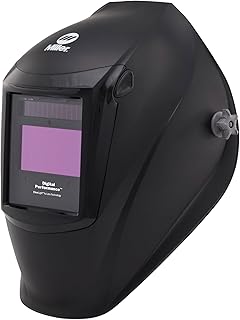
Digital Performance™ Welding Helmet, ClearLight™ 4x, Black
Check PriceKeep your Miller helmet in good shape by cleaning the lens with a microfiber cloth and mild cleaner. Replace scratched cover lenses promptly, because scratches reduce visibility and can strain your eyes. Store the helmet in a bag away from moisture and direct sunlight.
Check batteries and solar assist function every few months. If the lens does not darken consistently, replace the battery before relying on the helmet. Use only manufacturer approved cover lenses to maintain optical clarity.
Miller Welding Helmet FAQ
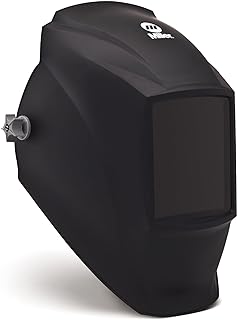
238497 MP-10™ Passive Welding Helmet, 4×4 in Viewing Area
Check PriceAre Miller welding helmets worth the money?
Yes, for most welders Miller helmets are a solid investment. They offer good optical clarity, fast sensors, and durable shells. Entry level models are affordable, and professional models hold up under heavy use.
What is the best Miller welding helmet for TIG?
The Digital Elite is often the best Miller TIG helmet because of its 3 to 13 shade range and X-Mode. It handles low amperage arc start without flashing your eyes. The Infinity is also good if you prefer a larger viewing area.
How long do Miller helmet batteries last?
Battery life depends on the model and whether you use solar assist. Many Miller auto-darkening helmets run for roughly 2,000 to 3,000 hours on a replaceable battery. Solar assist helps extend battery life when you weld outdoors.
Can you replace Miller helmet cover lenses?
Yes, cover lenses are replaceable and widely available. Miller sells standard cover lenses for most models. Replacing a scratched cover lens is cheap and improves visibility instantly.
Is Miller better than Lincoln for welding helmets?
Both brands make excellent helmets, and the best choice depends on fit and feature needs. Miller is known for ClearLight lens clarity and X-Mode. Lincoln offers strong models like the Viking series. Trying both in person is ideal.
Conclusion
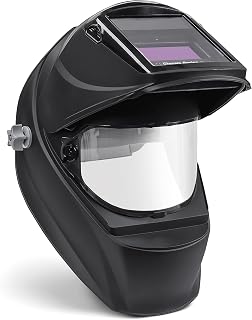
Genuine Classic Series VSi Variable Shade Welding Helmet – 260938
Check PriceMiller welding helmets offer a range of options for beginners, hobbyists, and full time professionals. The Digital Elite stands out for TIG and all around work, the Infinity offers the largest view, and the Classic Series provides dependable entry level protection. Match the shade range, lens clarity, and headgear to your specific welding process.
Before buying, check current prices and replacement part availability. A good helmet is one of the most important investments you can make in welding safety. If you need more comparisons, use the detailed guides linked in this article to narrow your choices.