Welding without the right helmet is a fast track to eye strain, arc flash burns, and a sore neck by midday. You need a lens that reacts in milliseconds, clear optics to see your puddle, and headgear that doesn’t feel like a medieval torture device after an hour. If you log long shifts under the hood, you already know a cheap import just won’t survive the spatter and daily abuse.
The real frustration comes from pulling your helmet off constantly to inspect a tack weld or chip slag, only to realize you have lost perfect torch angle. That tiny delay adds up in rework, especially on out-of-position TIG or detailed MIG passes. What you really want is a hood that feels invisible, so you can focus on the arc and the wire feed.
Miller Electric builds helmets that pros trust, combining True Color and ClearLight lens technologies with practical, job-site durability. Their lineup ranges from entry-level passive shells to high-end digital hoods with X-Mode that stops the lens from darkening on sunlight.
Short Answer: After combing through user feedback, arc time reports, and side-by-side lens tests, the Digital Infinity™ with ClearLight™ 4X emerges as the best overall Miller welding helmet for its expansive viewing area, precise optics, and versatile grind mode that genuinely works in the field.
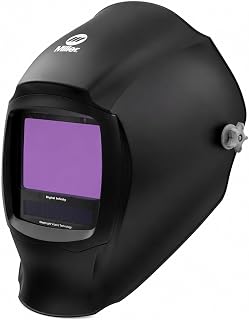
Digital Infinity™ Welding Helmet, ClearLight™
Check PriceTable of Contents
Best Miller Welding Helmet of 2026
When searching for the top Miller welding helmet, it helps to first understand the brand’s background and see how its models compare to the overall market. Our detailed comparison of today’s best welding helmets will show you exactly where Miller stands among competitors, and the Miller Electric history page on Wikipedia provides trusted insight into the company’s decades of innovation in welding safety gear.
1. Classic Series Welding Helmet, ClearLight™, Shade 8-13 – Best Value for TIG/MIG Beginners
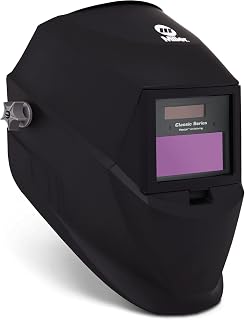
Classic Series Welding Helmet, ClearLight™, Shade 8-13, Black
Check PriceWhy it stands out
This hood puts a genuine Miller auto-darkening filter into a no-frills shell for welders who need reliable protection without breaking the bank. The variable shade 8-13 range covers everything from low-amp TIG to heavy flux-core, and the ClearLight lens makes the arc appear in natural tones so you see the puddle edges clearly.
Key points
- Variable shade 8-13 with analog controls
- ClearLight lens for improved color recognition
- Comfortable ratcheting headgear included
- HD optics meet ANSI Z87.1 standards
Pros
- Lightweight shell reduces neck fatigue
- Fast switching between stick and TIG shades
- Sensitive arc sensors catch low-amp starts
- Replacement lenses are widely available
- Simple knob adjustment is glove-friendly
Cons
- Viewing area is smaller than premium models
- No grind mode or external shade lock
Best for
Hobbyists, trade school students, and value-minded welders who run MIG, TIG, and stick in a garage or small shop without needing advanced digital features.
2. Digital Elite™ Welding Helmet, ClearLight™ 4X Lens – The Ultimate Performance Lightweight Choice
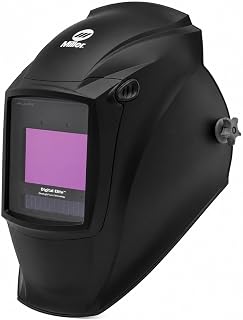
Digital Elite™ Welding Helmet, ClearLight™ 4X Lens, Black (QR)
Check PriceWhy it stands out
Designed for welders who demand top-tier optics in a hood light enough to wear for ten-hour days, the Digital Elite pairs the new 4X ClearLight lens with a refined headgear system. The lens delivers a crisp 1/1/1/1 optical clarity rating, minimizing eye fatigue during critical root passes on pipe or sanitary stainless.
Key points
- ClearLight 4X lens with four arc sensors
- X-Mode eliminates sunlight false triggers
- Lightweight, balanced shell design
- Quick-release headgear pivots for custom fit
Pros
- Exceptional clarity across entire viewing area
- Very responsive auto-darkening at any angle
- Integrated grind mode button is large and accessible
- Excellent ventilation reduces fogging
- Digital controls are intuitive and water-resistant
Cons
- Premium price point may deter hobby users
- QR headgear requires occasional retightening
Best for
Professional pipe welders, structural ironworkers, and anyone who prizes optical clarity above all else and wants a helmet that feels noticeably light during out-of-position welding.
3. Digital Infinity™ Welding Helmet, ClearLight™ – Best Overall with Huge View and Grind Mode
Digital Infinity™ Welding Helmet, ClearLight™
Check PriceWhy it stands out
The Infinity earns its name with a massive 13.4 square inch viewing area that lets you see the joint, the wire, and the surrounding workspace without tipping your head. The ClearLight 4X technology reveals vivid puddle details, and the grind mode switch on the outside means you never have to lift the hood during prep.
Key points
- 13.4 sq. in. auto-darkening lens
- ClearLight 4X digital control with four arc sensors
- External grind mode button with indicator
- Infinity headgear with oversized comfort pad
Pros
- Enormous viewing area reduces head movement
- True-to-life color fidelity helps avoid weld defects
- Grind mode is fast and reliable
- Sleek black shell resists spatter adhesion
- Wide shade range 5-13 for all processes
Cons
- Bulkier profile can be tight in confined spaces
- Battery replacement requires a small screwdriver
Best for
Fabricators and welders who do frequent grinding between passes and want the best mix of optical real estate, color accuracy, and shop durability in a professional hood.
4. Digital Performance™ Welding Helmet, ClearLight™ 4X – Cost-Effective Professional Quality
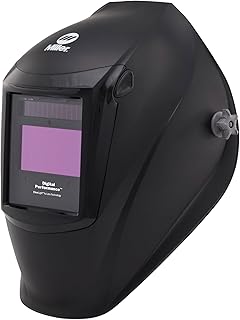
Digital Performance™ Welding Helmet, ClearLight™ 4x, Black
Check PriceWhy it stands out
Miller positions this hood as a bridge between entry-level and elite, packing the same ClearLight 4X optics into a lighter, streamlined shell. It retains essential digital features like variable shade, sensitivity, and delay while shaving off weight that you will appreciate during overhead welding.
Key points
- ClearLight 4X auto-darkening filter
- Digital controls for shade, sensitivity, delay
- Lightweight nylon shell
- Integrated grinding mode
Pros
- Very comfortable for long continuous welds
- Sharp optics rival more expensive hoods
- Controls are simple to adjust with welding gloves
- Excellent value for a digital Miller lid
- Works seamlessly with Miller TIG rigs
Cons
- Viewing area is smaller than Infinity model
- No X-Mode for outdoor work
Best for
Production welders in a shop environment who want digital precision without paying for features they rarely use, especially useful for repetitive MIG and TIG on jigs.
5. MP-10™ Passive Welding Helmet – Durable and Lightweight Non-Auto-Darkening Hood
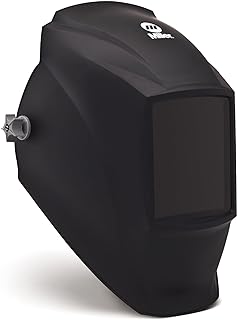
238497 MP-10™ Passive Welding Helmet, 4×4 in Viewing Area
Check PriceWhy it stands out
While auto-darkening gets headlines, a passive hood like the MP-10 remains completely immune to electronics failure or dead batteries, which is why many pipeline rigs still keep one on the truck. The 4×4 inch standard view area accepts widely available shade 10 lenses, and the durable thermoplastic shell deflects high heat.
Key points
- Fixed shade lens, not auto-darkening
- 4×4 inch viewing area with clear outer cover
- Lightweight, flame-resistant plastic shell
- Adjustable ratchet headgear
Pros
- Extremely affordable upfront cost
- No batteries or circuits to fail
- Simple to use for tack welding
- Can be dropped without damaging electronics
- Accepts universal 4×4 welding lenses
Cons
- No auto-darkening function at all
- Small fixed viewing area limits visibility
Best for
Welders who need a reliable backup hood, those doing very short tack welds in a production cell, or anyone learning the muscle memory of flip-down hoods before moving to auto-darkening.
6. T94i™ XL Welding Helmet, ClearLight™ 2.0 – HD View with Integrated Grinding Shield
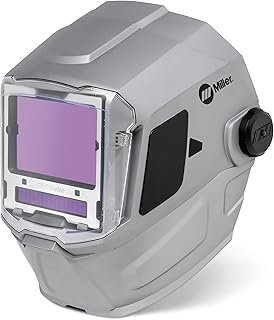
287768 T94i™ XL Welding Helmet, ClearLight™ 2.0, HD View
Check PriceWhy it stands out
The T94i series blurs the line between a welding hood and a full-face grinding shield, incorporating an auto-darkening lens that flips up to reveal a clear, high-definition grinding visor underneath. It is practically two pieces of PPE in one, reducing the temptation to grind without proper face protection after a weld.
Key points
- ClearLight 2.0 flip-up auto-darkening lens
- Integrated clear grinding visor
- XL size shell for extra neck coverage
- High-definition viewing clarity
Pros
- Flip-up design enables fast grind-weld-grind cycles
- Large lens provides an impressive field of view
- HD optics reduce strain during fine TIG work
- Excellent splash and spark coverage
- Headgear padding stays comfortable all day
Cons
- Heavier than a fixed auto-darkening hood
- Flip mechanism requires occasional cleaning to stay smooth
Best for
Maintenance welders, fabrication shops where grinding and welding alternate constantly, and anyone who wants a single piece of headgear that handles both tasks safely.
7. Genuine Classic Series VSi Variable Shade Welding Helmet – Reliable Entry-Level Auto-Darkening
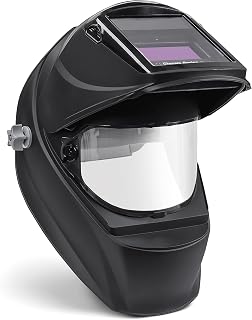
Genuine Classic Series VSi Variable Shade Welding Helmet – 260938
Check PriceWhy it stands out
This earlier Classic Series VSi model remains a popular choice for the budget-conscious welder who still wants variable shade control from 9 to 13. It uses an older but proven lens technology that responds quickly enough for routine MIG and stick welding around the farm or home shop.
Key points
- Variable shade 9-13 with analog knob
- Two arc sensors with adjustable sensitivity
- Standard 5.25 square inch viewing area
- Padded, adjustable headgear
Pros
- Straightforward, no-digital-fuss operation
- Solid UV/IR protection always on
- Affordable replacement cover lenses
- Lightweight shell feels comfortable on small necks
- Decent battery life with solar assist
Cons
- Optics not as crisp as ClearLight models
- No grind mode or shade lock button
Best for
Weekend warriors, light fabrication, and first-time auto-darkening users stepping up from a passive hood who prioritize savings over cutting-edge clarity.
8. Miller Liberty Auto-Darkening Welding Helmet – Style and Protection in Four Color Options
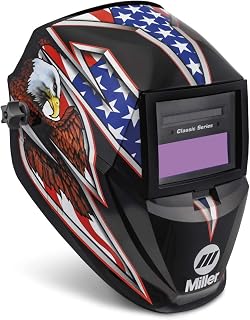
Welding Helmet, Black/Blue/Red/White
Check PriceWhy it stands out
The Liberty series brings a splash of personality to the weld bay with its glossy finish and multiple color options, all while housing a reliable auto-darkening filter. It is often chosen by trade schools that want students to have a hood they can identify quickly, yet it still meets strict safety standards for daily arc welding.
Key points
- Auto-darkening lens with shade 10 default
- Available in black, blue, red, white shells
- Standard viewing area around 7 sq. in.
- Ratchet adjustable headgear
Pros
- Light, colorful shell improves team recognition
- Adequate auto-darkening reaction for hobby MIG
- Comfortable fit for most head sizes
- Budget-friendly genuine Miller product
- Easy to change outer cover lens
Cons
- Limited shade adjustment range
- Sensors can struggle in very low light
Best for
Welding students, DIY metal art enthusiasts, and shops that want to provide a reliable branded hood to multiple workers without a huge investment.
9. Digital CL2 Performance Welding Helmet with ClearLight 2.0 Lens, Unity – Advanced Clarity for Professionals
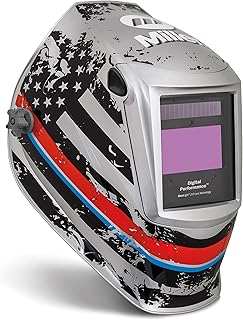
282006 Digital CL2 Performance Welding Helmet with ClearLight 2.0 Lens, Unity
Check PriceWhy it stands out
This model bridges the Digital Performance line with the upgraded ClearLight 2.0 lens, delivering noticeably better contrast and reduced green tint compared to base lenses. The Unity graphic on the shell adds a modern look without compromising the rugged build that professional welders expect from Miller.
Key points
- ClearLight 2.0 auto-darkening lens
- Digital shade, sensitivity, and delay settings
- Grind mode with external indicator
- Graphics shell with Unity design
Pros
- Excellent optical clarity for the price point
- Controls are responsive and glove-friendly
- Lightweight design reduces neck torque
- Stylish graphics without being overly flashy
- Solid arc sensor coverage eliminates dropouts
Cons
- Viewing area is moderate compared to Infinity
- Graphic may wear if frequently scraped against metal
Best for
Experienced welders in a mixed-process shop who need a dependable digital hood with a crisp, true-color view and who appreciate a helmet that stands out from the sea of black shells.
10. Digital Performance Welding Helmet 289807 – Lightweight Auto-Darkening with Clearlight 2.0
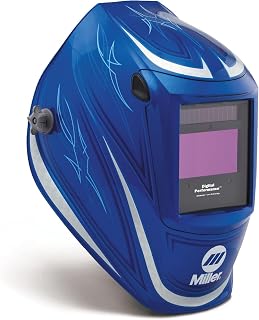
Digital Performance Welding Helmet 289807 – Auto-Darkening Welding Helmet with Clearlight 2.0 Technology
Check PriceWhy it stands out
This variant of the Digital Performance series emphasizes minimal weight while retaining the Clearlight 2.0 lens, making it an excellent candidate for all-day structural welding. The 7.22 square inch viewing area sits in a sweet spot, large enough to track the joint but not so large that the cartridge becomes fragile.
Key points
- Clearlight 2.0 technology for true color
- 7.22 sq. in. viewing area
- Digital control panel on the inside
- Weighs just over 18 ounces
Pros
- Featherlight feel drastically reduces fatigue
- Clear lens makes puddle manipulation intuitive
- Quick shade adjustment for different processes
- Reliable arc detection at low amperage
- Comfortable headgear wraps around the head evenly
Cons
- External grind mode button is absent on this model
- Lens cover replacement requires careful alignment
Best for
Welders who move around a lot, those doing vertical-up and overhead on structural steel, and anyone who has experienced neck pain from heavier helmets but refuses to sacrifice optical quality.
11. Classic Series Auto-Darkening Welding Helmet, 10 Lens Shade – Simple Fixed Shade Hood
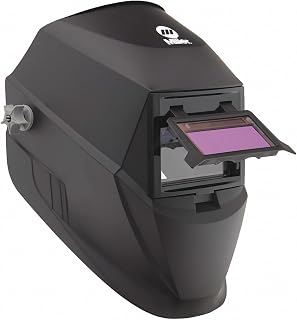
Miller Electric Classic Series, Auto-Darkening Welding Helmet, 10 Lens Shade
Check PriceWhy it stands out
This is Miller’s most straightforward auto-darkening helmet, fixed at shade 10, which is the universal starting point for most MIG and stick welding. If you never change settings and just want to pull the trigger, this hood removes all decision fatigue while still providing reliable electronic protection.
Key points
- Fixed auto-darkening shade 10
- 3.74 x 1.38 inch viewing area
- Single arc sensor
- Solar-assisted battery
Pros
- Ultra-low cost for a genuine Miller auto-darkening hood
- Extremely simple, nothing to adjust
- Decent sensor response for stick welding
- Lightweight and easy to flip down
- Good starter hood for trade classes
Cons
- Tiny viewing area feels very restrictive
- No shade adjustment for different processes
Best for
Occasional welders doing repairs around the property, those who only weld with one process, and as an inexpensive spare hood that lives in the truck box.
12. Digital Elite Welding Helmet with ClearLight 2.0 Lens, Raptor – Graphics Edition for the Enthusiast
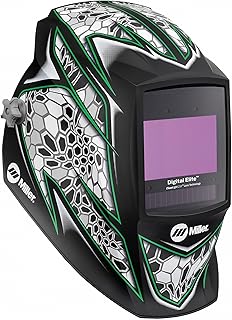
289768 Digital Elite Welding Helmet with ClearLight 2.0 Lens, Raptor
Check PriceWhy it stands out
Take the elite optical engine from the Digital Elite and wrap it in a head-turning Raptor graphic shell, and you get a hood that matches high performance with personal style. The ClearLight 2.0 lens version emphasizes natural color rendering, while the claw-mark design hides shop grime surprisingly well.
Key points
- ClearLight 2.0 lens with four arc sensors
- Raptor graphic shell
- X-Mode for outdoor welding
- Digital control with memory settings
Pros
- Outstanding optical rating reduces eye tiredness
- Raptor design is unique and popular
- X-Mode prevents flashing when tacking in sunlight
- Delivers consistent shade activation at steep angles
- Headgear stays cool in hot environments
Cons
- Cost is at the higher end of the spectrum
- Graphic shell may not appeal to conservative shops
Best for
Welders who want the Digital Elite’s elite optics but also want their hood to reflect their personality, ideal for those working at rodeos, custom fab shops, or any job site where standing out is a plus.
13. ELECTRIC 260821 Helmet Assembly – Plastic Flame Resistant Replacement Shell
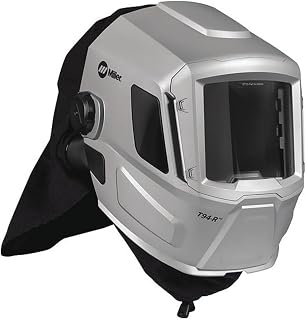
ELECTRIC 260821 Helmet Assembly, Plastic, Flame Resistant
Check PriceWhy it stands out
While not a complete helmet, this genuine Miller replacement shell assembly is a critical spare for anyone who has cracked their hood on the job. It is made from flame-resistant plastic and accepts standard Miller headgear and lens cartridges, letting you rebuild a damaged hood to like-new condition without buying a full system.
Key points
- Flame-resistant plastic construction
- Accepts universal Miller headgear inserts
- Designed as a replacement for Classic series
- Lightweight and durable
Pros
- Saves money over buying a new complete helmet
- Preserves your existing lens and headgear
- Authentic Miller fit and finish
- Easy to swap components into
- Maintains proper UV/IR protection when used correctly
Cons
- Not a standalone welding helmet
- Requires assembly with purchased parts
Best for
Welders who have a cracked shell but functional electronics, maintenance departments that keep spare parts on hand, and anyone looking to build a custom Miller hood from components.
How to Choose the Best Miller Welding Helmet
Start by identifying your primary welding process because shade requirements and arc sensor needs differ. TIG welders working at low amperage need a hood with four sensors and X-Mode to prevent the lens from flickering, while stick welders outdoors benefit from the same X-Mode technology to avoid false darkening in sunlight. Your lens shade range should cover the tasks you do daily, for most MIG and stick, a range of 8-13 is sufficient, but if you do plasma cutting or grinding, a model with an external grind mode will save you from constantly lifting the hood.
Viewing area is another practical factor that directly affects your neck comfort and weld quality. A larger lens like the Infinity’s 13.4 square inches lets you see the joint, the wire stick-out, and the surrounding jig without moving your head, which is especially helpful on long, consistent beads. However, a smaller lens can be lighter and less prone to cracking in tight spots between structural members, so consider your typical working space.
Pay attention to headgear quality and overall weight because you will be wearing this for hours. Miller’s Infinity and Elite headgear series offer oversized comfort bands and multiple adjustment points that distribute weight evenly, reducing the hot spots that lead to headaches. If you lean toward a flip-up design like the T94i, accept that the extra hinge adds a few ounces, but the ability to switch to a clear grind shield instantly can speed up your workflow enough to justify the weight.
Finally, factor in lens technology and replacement part availability. ClearLight 4X and 2.0 lenses deliver near true-color perception that helps you watch the puddle wet in and catch undercut early, but they come at a higher cost. A hood is a long-term investment, so check that outer cover lenses, sweatbands, and batteries are easy to source locally or online; Miller generally has good support for all current models.
Mistakes to Avoid When Buying a Miller Welding Helmet
One common mistake is choosing a fixed shade 10 auto-darkening hood for a multi-process shop just to save money. While that hood handles basic MIG well, it can be dangerously bright for high-amp FCAW and too dark for low-amp TIG, forcing you to squint or skip inspection. Variable shade costs more upfront but prevents long-term eye strain and ensures you meet shade recommendations for every process on your welding procedure specification.
Another error is ignoring the headgear because you assume all ratchet systems are the same. Miller’s high-end headgear has a distinct tilt and crown offset that can feel awkward at first, but if you don’t adjust it properly, you will end up with a hood that presses into your forehead. Many welders give up on a perfectly good lens because they never spend the five minutes required to dial in the fit, leading to neck pain and unnecessary returns.
Avoid buying a hood with a complex digital menu if you only weld with one or two processes and need to keep things dirt-simple. All those features can become a distraction when you just want to strike an arc, and a muddy screen or dead battery from a digital controller can stop your day. Match the hood to your real-world workflow, not to the impressive spec sheet.
Finally, do not overlook lens clarity ratings and the difference between basic and ClearLight 4X. A hood that meets the 1/1/1/2 standard might still leave a slight green haze that makes the puddle edge hard to distinguish on thin aluminum. Investing in a better lens reduces the micro-adjustments you make with your torch hand, and that adds up to better-looking welds and fewer grind-out repairs over time.
Frequently Asked Questions
1. What is the advantage of ClearLight 4X over the standard lens?
ClearLight 4X uses improved optical coatings that produce a more neutral, almost clear view of the arc and puddle, reducing the green tint common in earlier auto-darkening filters. Welders report less eye fatigue and faster recognition of weld defects like undercut and lack of fusion.
2. Can I use a Miller passive helmet for TIG welding?
Yes, the MP-10 or any passive hood can be used for TIG, but you must select the correct fixed shade lens for the amperage. However, most TIG welders prefer auto-darkening because the arc start is gentle and a flip-down motion can disturb the torch angle on delicate work.
3. How do I know if I need X-Mode on my Miller helmet?
X-Mode is valuable if you weld outdoors or near windows where sunlight can trick the arc sensors, or if you weld using low-amp TIG where the arc is hard to detect. It uses electromagnetic sensing instead of optical only, virtually eliminating false flickers.
4. Is the Digital Infinity too bulky for confined space welding?
The Infinity has a larger shell to accommodate the big lens, so in very tight pipe racks or inside ship compartments, it can feel oversized. For those scenarios, the Digital Performance or Digital Elite with a smaller footprint is often more maneuverable.
5. How do I change the cover lens on a Miller Classic Series hood?
Most Classic Series hoods use a simple plastic frame that snaps out with gentle pressure from a flat tool or fingernail. Once the old cover lens is removed, clean the cartridge gently and snap a new Miller OEM cover lens into place, ensuring it seats evenly.
6. Can I upgrade my existing Miller helmet with a ClearLight lens?
Some Miller shells accept different cartridge sizes, but you generally cannot retrofit a non-ClearLight hood to ClearLight 4X because the control panel and cartridge dimensions differ. Check the specific compatibility chart for your model before buying a lens upgrade.
7. What is the typical battery life of a Miller auto-darkening helmet?
With average use and proper storage away from light when not in use, the solar-assisted batteries in Miller helmets can last 2-4 years. If you notice slow switching or inconsistent darkening, replace the battery first; most models use a standard CR2450 or similar coin cell.
8. Are Miller helmets ANSI Z87.1 certified?
Yes, all genuine Miller welding helmets meet ANSI Z87.1 standards for impact and UV/IR protection when used with the proper internal and external cover lenses. Always verify the marking inside the shell and never weld with a cracked or heavily pitted lens.
9. Do I need a special lens for grinding with a Miller helmet?
Models with a dedicated grind mode, like the Infinity and Elite, will electronically switch to a clear state so you can use the same shield for grinding. The T94i goes further by providing a separate clear visor. Do not use a non-grind-mode auto-darkening hood for grinding, as the darkening may fail to turn off and obscure your view.
10. How do I clean the inside of my Miller welding helmet without scratching the lens?
Use a microfiber cloth and a mild soap and water solution, never window cleaner or ammonia-based sprays. Gently wipe in one direction, and replace the cloth frequently to avoid dragging trapped metal dust across the lens, which can cause micro-abrasions.
Conclusion
Miller has spent decades refining their hoods, and today’s lineup proves there is a precise match for every welding style and every budget, from the bare-bones Classic passive shell to the tech-packed Digital Elite with Raptor graphics. The key is to resist the temptation to overbuy features you will never touch while also not under-buying lens clarity that could make your daily arc time more productive and comfortable.
The Digital Infinity’s massive view, spot-on ClearLight 4X optics, and convenient grind mode make it our top recommendation for the welder who does it all in a shop setting. If you need something lighter and more maneuverable, the Digital Performance with ClearLight 2.0 delivers nine-tenths of the clarity in a lighter package. On a tight budget, the Classic Series VSi still punches above its weight as a genuine Miller auto-darkening hood.
No matter which model you land on, a Miller helmet is an investment in your eyes, your neck, and your weld quality. Take the time to fit the headgear correctly, swap cover lenses before they become too pitted, and store your hood in a dry place, and it will protect you through thousands of arcs.
Disclaimer: This article contains affiliate links. As an Amazon Associate, we earn from qualifying purchases.
Beyond the brand itself, the performance of a Miller helmet heavily depends on its lens technology. To understand why Miller auto-darkening helmets are so popular, you can explore our roundup of the best auto-darkening lenses, which breaks down the exact features that improve visibility and reaction time during a weld.