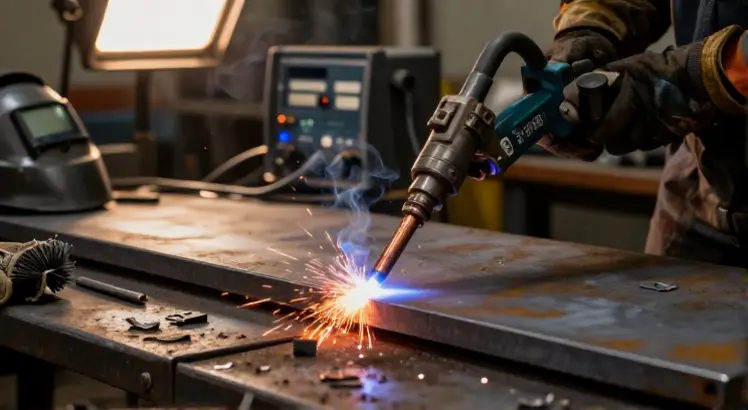
If you are shopping for your first cutting machine or just curious about how these tools work, you have probably asked yourself, is a plasma cutter AC or DC. The answer is not a simple one-word reply, but understanding the electrical side of plasma cutting will save you from buying the wrong equipment and help you get cleaner cuts. Most plasma cutters you see in home garages and fabrication shops run on direct current, but alternating current has its own small, specialized role in the industry.
Before you dive into the electrical specifics, it helps to understand how the plasma arc is actually created. The machine sends a high-velocity stream of ionized gas through a small nozzle, and an electric arc forms between the electrode inside the torch and the workpiece. That arc turns the gas into plasma, which is hot enough to melt metal and blow it away. The type of current that powers that arc determines cut quality, consumable life, and the kinds of metal you can slice.
![ARCCAPTAIN Plasma Cutter, [Large LED Display] 50Amps Cutter Machine with 110/220V Dual Voltage DC Inverter IGBT 1/2 Inch Clean Cut Post Flow and 2T/4T, for Beginners DIY](https://weldinghelmetreviews.com/wp-content/uploads/2026/06/71plrSt80qL._AC_UL320_6.jpg)
ARCCAPTAIN Plasma Cutter, [Large LED Display] 50Amps Cutter Machine with 110/220V Dual Voltage DC Inverter IGBT 1/2 Inch Clean Cut Post Flow and 2T/4T, for Beginners DIY
Check PriceTable of Contents
The Short Answer: Are Plasma Cutters AC or DC?
The vast majority of plasma cutters use DC (direct current) with a straight polarity. The electrode inside the torch is negative, and the workpiece is positive. This setup concentrates the heat exactly where you need it, making DC the standard for cutting steel, stainless steel, aluminum, and other conductive metals. You will find DC output on almost every portable unit, CNC plasma table, and entry-level machine sold today.
AC (alternating current) plasma cutting exists, but it is rare and typically reserved for niche industrial applications. If you walk into a welding supply store and pick up a machine rated for home use or light fabrication, it runs on DC. The power source itself may plug into an AC wall outlet, but the actual cutting arc the torch produces is DC, and that distinction is where many beginners get confused.
Why DC Plasma Cutters Dominate the Market
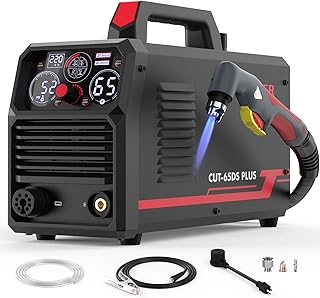
YESWELDER Plasma Cutter, 65Amp 110V/220V Non-High Frequency Non-Touch Pilot Arc 4-In-1 Plate Cutting/Grid Cutting/Gouging/Marking Multifunctional Plasma Cutting Machine CUT-65DS PLUS
Check PriceThe overwhelming preference for DC comes down to physics, efficiency, and cut quality. When you set up a DC plasma cutter with electrode negative and work positive, roughly two-thirds of the arc’s heat concentrates on the workpiece. This high energy density melts the metal quickly and produces a narrow, clean kerf with a smooth edge. The remaining heat stays on the electrode, which is designed with a hafnium or tungsten insert to handle it.
Switching to AC would create a thermal balance where the electrode and the workpiece each receive about half the heat. That pulls energy away from the cut, widens the kerf, and accelerates wear on the consumables. For most metals, a DC straight polarity arc simply works better, lasts longer, and costs less to operate. You can see why the industry settled on this design when you compare cut speeds and electrode life between the two currents.
Another factor is the stability of the arc. DC current flows in one constant direction, which produces a steady plasma jet. AC current alternates polarity many times per second, often at 60 hertz, which causes the arc to flicker and restart with every cycle. That instability can result in rough, beveled edges and more dross formation. Modern inverter technology has made DC even more compact and reliable, so virtually every manufacturer builds their consumer and prosumer machines around solid-state DC power. For a deeper dive into the technology, check out this plasma cutting technology overview from Lincoln Electric.
When Would You Use an AC Plasma Cutter?
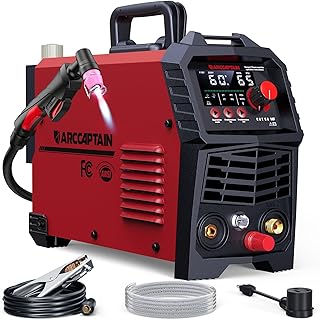
ARCCAPTAIN 60A Plasma Cutter, Non-Touch Pilot Arc Plasma Cutting Machine, 110V/220V, Upgraded Large LED Display, Plate Cutting, Expanded Metal Cutting, Rust Removal, Air Pressure Detection
Check PriceAC plasma cutting does have a purpose in specialized heavy industry, specifically when cutting thick, non-ferrous metals like aluminum and copper under water or in large-scale plate processing. The alternating current helps clean the oxide layer off materials like aluminum during the positive half of the cycle, similar to the cleaning action in AC TIG welding. This can be useful on thick sections where an oxide film might interfere with arc stability.
However, these AC plasma systems are enormous, water-cooled, and often integrated into dedicated cutting tables that fill a factory floor. They are not found in a small repair shop or on the back of a service truck. If your work involves cutting aluminum plate thicker than a couple of inches every day, an AC system might be justified, but for everyone else, a modern DC machine with the right gas mix handles aluminum just fine. Understanding the different types of plasma cutters available can help you see why DC is the norm.
AC Input vs. DC Output: Clearing Up the Confusion
![Bestarc Pilot Arc Plasma Cutter, [Large LED Display][Air Sensor] 50A Plasma Cutter Machine 110/220V Dual Voltage, 1/2'' Clean Cut 3/4 Inch Max Cut, Post Flow Mesh, 2T/4T for Beginners DIY](https://weldinghelmetreviews.com/wp-content/uploads/2026/06/712on9QfRfL._AC_UL320_5.jpg)
Bestarc Pilot Arc Plasma Cutter, [Large LED Display][Air Sensor] 50A Plasma Cutter Machine 110/220V Dual Voltage, 1/2” Clean Cut 3/4 Inch Max Cut, Post Flow Mesh, 2T/4T for Beginners DIY
Check PriceOne of the biggest sources of confusion is the difference between the power input and the cutting output. Many plasma cutters plug into a standard 120-volt or 240-volt AC wall receptacle. In fact, most 110-volt portable units run on AC input. But inside the machine, a transformer and a rectifier circuit convert that AC wall power into the smooth DC current the torch needs. So the machine uses AC from your outlet, but the arc it produces is always DC.
Inverter plasma cutters take this a step further by first converting AC to DC, then switching it to high-frequency AC, stepping it down through a transformer, and finally rectifying it back to ultra-smooth DC. This process allows the machine to be lightweight and energy-efficient while still delivering a powerful DC cutting arc. The dual conversion is a hallmark of modern inverter technology and reinforces why the answer to is a plasma cutter AC or DC is always DC at the arc.
Key Differences Between AC and DC Plasma Cutting
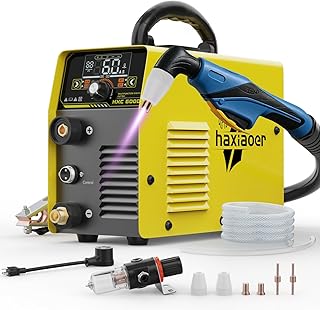
60A Plasma Cutter,110V/220V Dual Voltage High Frequency Contact Arc Cutting Machine,45-60PSI,LED Display,Portable Industrial Metal Cutter for Steel Aluminum Copper DIY & Fabrication
Check Price- Heat Distribution: DC concentrates about 60-70% of the heat on the work, while AC splits it roughly 50/50, making DC much faster on thinner materials.
- Electrode Life: DC electrodes last significantly longer because the steady negative polarity minimizes erosion; the constant heat cycling of AC shortens consumable lifespan.
- Arc Stability: DC provides a smooth, non-fluctuating arc that is easier to control manually and on CNC tables. AC arcs extinguish and reignite 120 times per second, which reduces precision.
- Material Compatibility: DC cuts nearly all conductive metals efficiently. AC offers marginal benefits on thick aluminum but is overkill for steel and stainless.
- Equipment Cost and Size: DC plasma cutters range from affordable handheld units to large industrial machines. AC systems are invariably industrial, expensive, and require heavy infrastructure.
Pilot Arc Technology: High-Frequency Start vs. Blowback
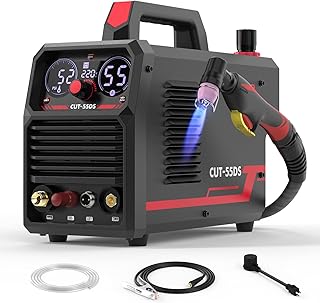
YESWELDER CUT-55DS Plasma Cutter, 55Amp Non-Touch Pilot Arc Air Power, Large Digital Display 110/220V Dual Voltage IGBT Inverter Plasma Cutting Machine with ETL Approved
Check PriceYou will hear terms like high-frequency start and pilot arc when researching plasma cutters, and these relate directly to the DC power circuit. A high-frequency start uses a brief AC spark to ionize the gas and establish the pilot arc, but once the main cutting arc transfers to the metal, the machine switches instantly to steady DC. This method is common on larger industrial units and can interfere with sensitive electronics nearby.
Blowback start, also called contact start, eliminates the AC high-frequency circuit. Inside the torch, a spring-loaded electrode physically moves to create a small spark that ignites the pilot arc, all within a DC-only environment. Blowback systems are quieter from an electrical interference standpoint and are standard on most modern portable inverters. Both methods still produce a DC cutting arc, proving again that AC only plays a tiny supporting role, if any.
What About Dual Voltage and Inverter Technology?
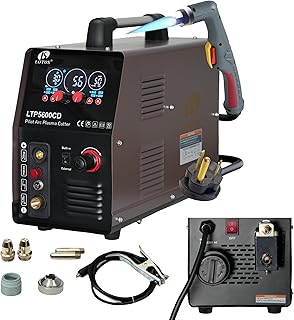
LTP5600CD 56A Drag-Cut Built-In Air Plasma Cutter 110V/220V | Touch-and-go tracking for HVAC or metal art | Slices 5/8″ cleanly through rusty sheets with zero tank hassle
Check PriceDual-voltage plasma cutters that run on both 120V and 240V AC input are incredibly popular, but they do not change the output. They still produce a DC cutting arc. The dual-voltage feature simply means the internal circuitry adjusts to the available wall power, delivering lower amperage on a 120V circuit and full output on 240V. If portability matters, an inverter-based machine that weighs under 25 pounds can still deliver 30 to 50 amps of DC cutting power.
Inverter technology is responsible for making DC plasma cutters so accessible. Instead of a massive copper transformer, inverters use high-speed switching to control current, which yields a very stable arc even on a long extension cord. You get precise, low-amp cutting for thin sheet metal and enough punch to sever thick plate, all from a machine that runs on the same DC output principle that has dominated the market for decades.
Choosing the Right Plasma Cutter for Your Needs
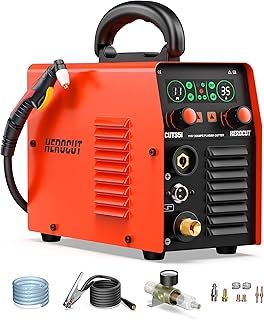
Plasma Cutter, 35Amps HEROCUT Plasma Cutter Machine CUT35i, Screen Display 110V High-Frequency IGBT Inverter Technology Post Flow and 2T/4T, Max Cutting Thickness 10mm for Beginners DIY
Check PriceSince you now know that a modern plasma cutter produces a DC arc, your next step is to match the machine to your projects. Focus on the rated cutting thickness for steel, the duty cycle at the amperage you will use most, and the availability of consumables. A unit that plugs into a standard 120V outlet can handle up to 1/8 inch steel with ease, while a 240V machine with 50 amps will sever half-inch plate and make clean cuts on 3/8 inch.
If you need to cut aluminum, remember that a good DC machine with a nitrogen or air-nitrogen mix will work beautifully on sheet metal and plate up to a quarter inch thick. You do not need an exotic AC system. When you are ready to buy, knowing the key factors in how to select a plasma cutter will steer you toward a machine with the right power input and cutting capacity. Always verify the machine’s output current type in the manual, but you can be confident it will say DC.
Frequently Asked Questions
Can you run a plasma cutter on AC power?
Yes, almost all plasma cutters run on AC input from a wall outlet, but the cutting arc itself is DC. The machine’s internal rectifier converts AC to the direct current the torch needs. So you are always using AC at the plug and DC at the tip.
Why is DC more common than AC for plasma cutting?
DC directs most of the arc’s heat into the workpiece, giving you faster cut speeds, narrower kerfs, and longer electrode life. AC splits the heat evenly between the electrode and the workpiece, which reduces efficiency and increases consumable wear. That is why DC is the industry standard.
Is there any benefit to an AC plasma cutter?
AC plasma cutting can be helpful when cutting very thick aluminum underwater or in heavy industrial settings because the alternating current cleans the oxide layer. For typical workshop applications, DC plasma cutting is more practical and delivers superior results on all materials.
What does DC straight polarity mean?
DC straight polarity, or DCEN (direct current electrode negative), means the electrode inside the torch connects to the negative terminal and the workpiece to the positive. This is the standard setup for plasma cutting because it focuses heat on the metal being cut.
Does a plasma cutter use AC to strike the arc?
Some plasma cutters use a high-frequency AC spark to ignite the pilot arc, but the main cutting arc instantly switches to DC once the circuit is established. Many modern machines use a blowback start that eliminates AC entirely, making the entire ignition process DC-based.
Can I cut aluminum with a DC plasma cutter?
Absolutely. A standard DC plasma cutter with compressed air cuts aluminum quite well, especially on gauges and sheet metal. For thicker aluminum plate, using a nitrogen or nitrogen-air mix improves edge quality, but DC remains fully capable and widely used for aluminum fabrication.
Conclusion
When someone asks is a plasma cutter AC or DC, the accurate answer is that the cutting arc is DC, even if the wall outlet delivers AC. Direct current’s ability to push heat into the workpiece, maintain a stable arc, and extend consumable life has made it the universal choice for handheld, mechanized, and CNC plasma cutting. AC plasma cutting exists only in a narrow slice of heavy industry and is not something you need to consider for a home shop or truck rig.
Armed with this knowledge, you can confidently pick a machine based on rated cut thickness, duty cycle, and input voltage without worrying that you are missing some secret AC advantage. Always check the specifications to confirm straight DC output, invest in quality consumables, and you will enjoy clean, precise cuts for years. Whether you are cutting rusty sheet metal or new aluminum diamond plate, a good DC plasma cutter belongs right next to your welder and grinder.