If you have ever browsed welding helmets online, you quickly notice the massive price range. Some basic hoods cost less than a tank of gas, while professional auto-darkening helmets can set you back several hundred dollars. The question every welder eventually asks is simple. What are you really getting when you compare a cheap vs expensive welding helmet? The answer goes far beyond branding. It comes down to how well the helmet protects your eyes, how comfortably it fits during long shifts, and how long it will last before the headgear falls apart.
Choosing the wrong helmet does not just waste money. A poorly performing lens can cause eye strain, fatigue, and even long-term vision problems. On the other hand, not every hobby welder needs a top-tier industrial hood. This article breaks down the real differences in safety, optics, comfort, durability, and extra features. You will learn exactly when a budget helmet makes sense and when it is smarter to invest in a premium model.
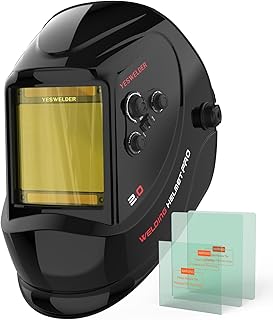
YESWELDER Auto Darkening Welding Helmet, Large View, LYG-M800H
Check PriceTable of Contents
What Separates a Cheap Welding Helmet from an Expensive One?
Welding helmets may look similar at a glance, but what sits inside the shell and in freance of your eyes varies dramatically between price points. The biggest differences fall into a handful of categories. Once you understand them, you can make a confident buying decision without getting lost in marketing hype.
1. Lens Technology and Optical Clarity
The single most important component of any welding helmet is the lens. In cheap auto-darkening helmets, you often get a single sensor and a basic LCD filter with limited arc detection. The optical clarity rating may be as low as 1/11/2, which means you will see a slight greenish or blurry tint, especially at the edges. Istortion increases the longer you work, leading to headaches and slower weld accuracy.
Expensive helmets typically use high-end auto-darkening filters rated 1/1/11, the clearest possible classification. Premium brands like Miller, Lincoln Electric, and Optrel use multiple arc sensors that react in as little as 1/20,000 of a second. The view is crisp and true-color, which helps you see the weld puddle and joint without straining. If you do precision TIG welding at low amperages, a superior lens is not a luxury, it is a necessity.
Cheap hoods also tend to have a narrow viewing area. Larger, optically ground lenses found in pricier models dramatically improve peripheral vision and situational awareness. You spend less time flippign the hood up to see your surroundings.
2. Safety Standards and Impact Proptection
Higher-priced helmets are tested rigorously to meet ANSI Z87.1 and often carry additional certifications for high-velocity impact. The shell material on cheap hoods is usually a thinner nylon or polyamide blend that can crack if dropped on concrete. Premium helmets use reinforced polyamide composite or glass-filled nylon that survives daily abuse in a shop environment.
Additionally, the headgear plays a safety role. A flimsy headgear can let the helmet shift during a weld flash. All helmets sold in the United States must comply with welding helmet safety standards set by OSHA, but consistent performance over time is what separates the cheap from the expensive.
3. Comfort and Weight
Weight is often the first thing a welder notices after a full day under the hood. Budget helmets frequently weigh over 20 ounces and use poorly balanced headgear with limited padding. The result is neck fatigue, pressure points, and a constant urge to adjust the tilt. Over weeks of employment, that strain can lead to real discomfort.
Expensive welding helmets pay close attention to ergonomics. They use lightweight materials, contoured sweatbands, and multi-point adjustable headgear that distributes weight evenly. Some high-end auto-darkening hoods weigh as little as 16 ounces. A balanced helmet also has a smooth downward pivot that does not slap against your chest or slam backward.
Cheap helmets tend to feature a single knob adjustment and a fixed pivot point. Mid-range and premium helmets offer variable tilt, distance from face, and even replaceable sweat-wicking liners. When you weld for eight hours a day, those small comforts compound into a massive difference in work quality.
4. Durability and Build Quality
You can sometimes feel the difference as soon as you pick up the helmet. Entry-level models often have rough mold edges, weak battery compartments, and plasticky control dials that feel like they will strip after a few weeks. Internal wiring and sensors may not be sealed against dust and moisture, which leads to erratic dimming in humid environments.
Professional-grade helmets are built to survive drops, sparks, and daily wear. The shell resists warping under high heat. The lens cartridge is replaceable and often backed by a multi-year warranty. Spare parts like headbands and side covers are readily available. With a cheap helmet, you usually replace the entire unit when one small part fails.
This throwaway nature of budget hoods may seem fine for occasional DIY jobs, but it quickly adds up. A well-maintained premium helmet can easily last five to ten years, while a cheap model might not survive its first serious accidental fall from a welding table.
5. Extra Features and Versatility
Auto-darkening helmets in the lower price bracket typically offer only two adjustments: shade level and sensitivity. Sometimes you get a delay control, but the range is limited. True-color technology, grind mode, and external shade knobs are absent. If you need to switch between welding processes or occasionally grind, a cheap hood forces you to switch to a separate faceshield.
Expensive helmets come with multiple modes, digital controls, and memory settings for different welding processes. Many include an external button that instantly switches to grind mode without removing the helmet. Features like X-Mode or electromagnetic detection prevent the lens from being tricked by sunlight, something cheap sensors struggle with outdoors. These additions save time and reduce the risk of accidental arc flash.
Some premium helmets also support PAPR (powered air-purifying respirator) integration, Bluetooth connectivity for welding data, and enhanced headgear for hard hat attachment. While not everyone needs these, they illustrate how the investment opens up more professional capabilities.
When a Budget Welding Helmet Is All You Need

ARCCAPTAIN Auto Darkening Welding Helmet with Light, 3.94″X3.66″ Large View
Check PriceSpending less is not always a mistake. For many beginners and hobbyists, a cheap auto-darkening helmet provides adequate protection and functionality. If you only weld a few times a month on thin mild steel with a MIG or stick machine, an entry-level hood can get the job done.
Hobbyists who work in a garage with controlled lighting and little overhead movement may not miss the extra sensors or true-color lenses. Many affordable helmets today come with a basic solar-powered auto-darkening filter that meets ANSI standards. As long as you replace it at the first sign of inconsistent dimming, the risk is manageable.
Students in welding school who are learning basic techniques also benefit from a reliable but inexpensive hood. They can focus on arc manipulation without worrying about damaging a high-end lens. Later, as they specialize, upgrading becomes a natural step. If you are just getting started, learn how to choose a welding helmet that matches your current skill level and goals.
When It Is Worth Spending More
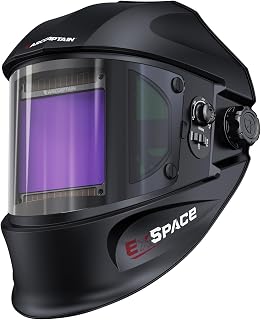
ARCCAPTAIN Welding Hood, 180° Panoramic View Auto Darkening Welding Helmet (LY800Js-BK)
Check PriceProfessionals who weld every day, run high-amperage procedures, or work in demanding outdoor conditions gain the most from an expensive helmet. If your livelihood depends on clear vision and neck comfort, the upfront cost pays for itself in productivity and reduced fatigue.
TIG welders, in particular, need the optical clarity of a high-end lens. Low amperage arcs require a precise view of the tiny weld pool and filler rod. A blurry or distorted view leads to underfill, contamination, and wasted material. The same goes for pipe welders who contort into awkward positions. A lightweight, perfectly balanced hood becomes an extension of your body, not a burden.
Anyone welding aluminum, stainless steel, or exotic alloys that require meticulous heat control will also benefit from the true-color technology found in premium helmets. Recognizing subtle color changes in the puddle is essential for avoiding burn-through or lack of fusion. In these scenarios, a cheap lens can literally hold back your skill progression.
Breaking Down the Price Ranges

ARCCAPTAIN Intelligent Auto-Darkening Welding Helmet, 180° True Color Hood
Check PriceTo make the choice clearer, here is what you can expect at different budget levels.
- Under $50: Basic passive helmets or entry-level auto-darkening hoods with fixed shade, one sensor, and plastic headgear. Suitable only for very occasional stick or flux-core welding. Durability is minimal.
- $50 to $100: Better auto-darkening with adjustable shade, two sensors, and a slightly wider viewing area. Solar-assisted battery life. Acceptable for DIY and light farm work.
- $100 to $250: Mid-range helmets from reputable brands like Lincoln, Viking, or Hobart. True-color or near true-color vision, 4 sensors, grind mode, and comfortable headgear. Great for regular hobbyists and trade school students.
- $250 to $500: Professional-grade auto-darkening with large viewing areas, digital controls, memory settings, and replaceable batteries. Excellent comfort and impact resistance. Suitable for daily commercial welding.
- Above $500: Top-tier helmets from Optrel, Speedglas, and Miller with advanced optics, PAPR readiness, and smart features. Built for continuous industrial use and specialty processes.
Frequently Asked Questions

Welding Helmet Auto Darkening True Color Large Viewing, MIGVAN Solar/Rechargeable
Check PriceCan a cheap welding helmet still protect my eyes?
Yes, any helmet that carries the ANSI Z87.1 marking blocks 100% of UV and IR radiation. The risk with cheapies is inconsistent auto-darkening due to sluggish sensors or battery drain. A flickering lens can cause arc flash, leading to painful burner-like eye injuries. Always test the reaction time before each use and replace the battery or helmet at the first sign of trouble.
Is it true that all auto-darkening lenses are the same?
No, lens quality varies widely. The optical class is rated in three categories for angular distortion, light diffusion, and shade homogeneity. A 1/11/1 lens is optically perfect, while 1/11/2 shows minor variation. Cheap helmets often use lower-grade filters that cause eye fatigue during prolonged use.
How long will a budget welding helmet last?
In a hobby shop with careful handling, a budget auto-darkening helmet might last two to three years. In a busy fab shop, the headgear may break within months, and sensors can become unreliable after a year. Professional helmets are serviced and often last a decade with proper care.
Do I need true-color technology?
Not for basic stick welding on structural steel. But if you do TIG welding, especially on aluminum or stainless, true-color makes an enormous difference. It reduces the bluish-green tint and lets you see oxidation colors clearly. This helps you dial in the perfect heat input much faster.
Conclusion
The difference between a cheap vs expensive welding helmet is not just about price. It is a careful trade-off between safety consistency, optical clarity, daily comfort, and how long the helmet holds up to real work. A budget hood can serve a casual welder well if inspected and replaced regularly. However, anyone who welds frequently or depends on precision should view a premium helmet as an investment in their health and craftsmanship.
Start by honestly assessing your welding hours per week, the processes you use, and your working environment. Try to handle a few helmets in person if possible before making a decision. Once you experience the weight difference and the crisp view through a high-end lens, you will understand why so many pros refuse to go back to a cheap shield.