
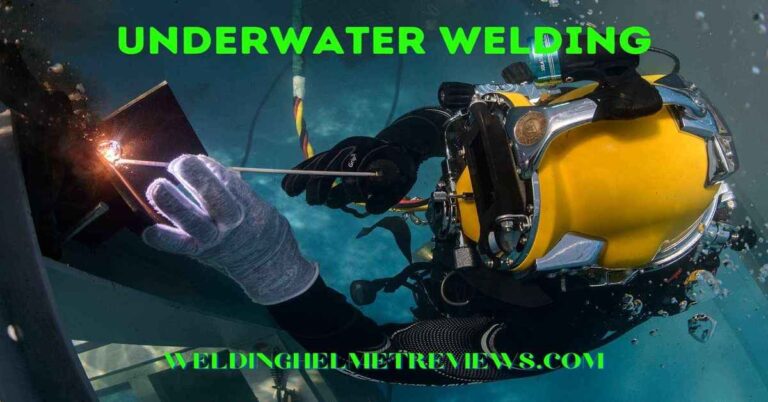
Underwater welding has a dramatic reputation. Many articles call it the deadliest job in the world and repeat a death rate of 15% as if it were a simple, fixed fact. If you are thinking about this career, working alongside underwater welders, or are researching the risks, you need more than headlines. You need to understand where those numbers come from, what they actually mean, and which factors make the job more or less dangerous in real life.
This in‑depth guide explains the death rate for underwater welders in clear, practical terms. It looks at how the statistics are built, what really causes fatalities, how safety practices change the risk, and what long‑term health outcomes you should expect from a career in this field. The goal is not to scare you or to downplay the dangers, but to give a balanced view so you can make informed decisions.
Table of Contents
What Does Death Rate for Underwater Welders Actually Mean?
When people search for death rate for underwater welders, they are usually trying to answer one basic question: If I do this job, how likely am I to die from it? That sounds simple, but statistically it is not.
Most websites repeat one of two types of figures:
- A lifetime fatality estimate around 15% for underwater welders
- An annual fatality rate for commercial divers and underwater welders in the range of 40–50 deaths per 100,000 workers per year
These are very different ways of expressing risk. One looks at the chance that a person will die from the job at some point over an entire career. The other looks at how many workers die in a given year out of every 100,000 employed.
Where the 15% Death Rate Comes From
The 15% death rate is not a precise number from a single large, recent study. It is a rough estimate that appears again and again in legal and industry articles. Many of those articles rely on:
- Older commercial diving fatality data
- Small samples from specific time periods
- Comparisons between underwater welding and other high‑risk occupations
In many cases, the 15% figure is better understood as a rule‑of‑thumb lifetime risk than a scientifically pinned‑down statistic. Still, even as a rough estimate, it underlines that this job has much higher fatality risk than typical industrial work.
Limits of the Available Data
Underwater welding is a niche specialization within commercial diving, so it is not tracked as a separate category in many official statistics. Several problems affect the accuracy of any death rate figure:
- Underreporting: Fatal incidents in international waters and some offshore operations may not appear in public databases.
- Small population: The number of full‑time underwater welders is limited, so a few deaths can make the rate look very high or very low from year to year.
- Mixed roles: Many underwater welders also do inspection, cutting, or non‑welding tasks, and deaths may be logged under general diving accidents rather than welding.
Because of this, serious estimates usually give ranges or relative comparisons rather than exact numbers. Even with these uncertainties, all lines of evidence agree on one point: underwater welding is among the most hazardous jobs available.
How Underwater Welding Works and Why That Matters for Risk
To understand why the death rate is so high, it helps to know what underwater welders actually do and how they work.
Wet Welding vs Dry (Hyperbaric) Welding
Most underwater welding falls into two broad methods, each with its own risk profile.
Wet welding is performed directly in the water. The diver uses waterproof electrodes and creates a small gas bubble around the arc while submerged. This method is:
- Faster to set up
- Cheaper for many repairs
- More exposed to water, currents, and electrical conduction
Because the diver is working directly in the water column, almost all environmental hazards, drowning, loss of visibility, entanglement, hypothermia, are present at full strength.
Dry or hyperbaric welding is performed inside a sealed, pressurized habitat that keeps water out. The welder works in a dry, gas‑filled chamber at the same pressure as the surrounding water. This method:
- Offers better control of the weld quality
- Reduces direct exposure to water and marine hazards
- Introduces its own risks from pressure, gas mixtures, and complex systems
Dry welding tends to be safer in terms of drowning and electrocution, but it increases reliance on life‑support systems, pressure control, and precise decompression procedures.
Combining Diving Risks with Welding Risks
An underwater welder faces two full sets of danger at once:
- Diving risks: Drowning, decompression sickness, lung overexpansion, gas toxicity, hypothermia, equipment failure, and marine hazards.
- Welding risks: Electric shock, arc burns, explosions, fumes, and fire.
Even when each side is carefully managed, their interaction increases the chance that one error or failure will have fatal consequences. This is the core reason the death rate is much higher than for surface‑based welders or recreational divers.
Main Causes of Death for Underwater Welders
Statistics about underwater welding accidents show that a few categories account for most fatalities. Understanding these is key if you want to evaluate or reduce risk in real scenarios.
Read More: Why Underwater Welding is so Dangerous
Read More: Guide To Underwater Welding Helmet
Drowning
Drowning is consistently reported as the leading cause of death for underwater welders. In some analyses, it accounts for around 70% of fatalities.
Drowning does not only mean ran out of air. It can result from:
- Entanglement: Hoses or umbilicals caught on structures, debris, or rigging.
- Differential pressure: Water forced through openings can pin or trap a diver, making escape impossible.
- Loss of orientation: Poor visibility and strong currents can cause a diver to become lost or disoriented.
- Equipment failure: Regulator, mask, or umbilical damage can interrupt breathing gas supply.
- Inadequate rescue: If surface teams miss distress signs or respond slowly, small problems escalate.
Because underwater welders often work in confined spaces around structures like piers, ships, and pipelines, the potential for entrapment and differential pressure incidents is unusually high.
Decompression Sickness and Barotrauma
Decompression sickness (the bends) and barotrauma (damage from pressure changes) are another significant contributor to underwater welding deaths. Risk factors include:
- Deep dives with long bottom times
- Rapid or uncontrolled ascents
- Complex dive profiles with multiple ups and downs in a single day
- Poor adherence to decompression schedules or malfunctioning decompression systems
Severe cases can cause spinal cord damage, brain injury, or death. Even non‑fatal episodes often leave lasting health problems that can shorten a welder’s career.
Electrocution and Electric Shock
Electric shock is one of the most immediate threats in underwater welding. Water drastically improves electrical conduction, so any failure in insulation, grounding, or equipment design can be lethal.
Common risk points include:
- Damaged cables or connectors
- Incorrectly set or poorly maintained power sources
- Using equipment not rated for submersion or hyperbaric conditions
- Inadequate separation between live parts and the diver’s body
Modern equipment and strict procedures can reduce this risk, but they cannot completely remove it.
Explosions and Gas Pockets
Underwater welding produces hydrogen and oxygen gases, which can accumulate in cavities or under structures. If these pockets ignite from the welding arc or another spark, the resulting explosion can:
- Cause fatal blast injuries
- Damage life‑support lines or helmets
- Trigger structural collapses that trap the diver
In dry habitats, poor ventilation or gas management can create similar hazards, though they are easier to monitor than open‑water gas pockets.
Hypothermia and Environmental Stress
Depending on the location, water temperature can quickly sap body heat, even through a wetsuit or drysuit. Hypothermia slows reaction times and impairs judgment, making divers more likely to make mistakes or miss warning signs. Combined with heavy workload and stress, this condition can contribute indirectly to fatal incidents.
Long‑Term Health and Life Expectancy
The intense focus on deaths can hide another dimension of risk: long‑term health damage. Even underwater welders who avoid fatal accidents often pay a price over time.
Reported Life Expectancy
Many articles state that the average life expectancy for underwater welders is only 35–40 years, far below the general population. This figure should be treated with caution, as it is based on limited data and may blend:
- Actual early deaths from accidents
- People leaving the trade due to injury or chronic illness
- Historical conditions before current safety standards
Whether or not the number is exact, it reflects a real pattern: many underwater welders do not remain in high‑risk fieldwork for a full working lifetime. They either move into supervisory roles, less hazardous diving work, or entirely different careers as their bodies age or after near‑miss events.
Chronic Health Problems
Common long‑term issues reported among career underwater welders include:
- Joint pain and arthritis from decompression stresses
- Neurological symptoms from repeated mild decompression incidents
- Chronic respiratory problems from welding fumes and contaminated water
- Hearing loss from constant noise and pressure shifts
- Persistent fatigue, anxiety, or PTSD‑like symptoms after near‑fatal incidents
These conditions may not show up in fatality statistics, but they affect quality of life and the realistic duration of a career in the field.
Why Risk Varies So Much Between Welders
Not every underwater welder faces the same death rate. Several factors shape an individual’s risk profile.
Type of Work and Environment
Shallow, in‑harbor maintenance work in calm conditions is less risky than deep, offshore repairs in strong currents. Work around dams or intakes with complex water flows brings more differential‑pressure hazards than simple hull inspections.
Employer Culture and Safety Investment
Companies that:
- Maintain equipment rigorously
- Follow diving and welding standards closely
- Train teams thoroughly
- Staff adequate surface support and emergency response
will tend to have much lower accident and death rates than those that cut corners to save money or time. For someone choosing an employer, this may be as important as the raw statistics for the industry.
Experience and Training
A new underwater welder is more vulnerable to:
- Misjudging currents and visibility
- Underestimating fatigue
- Missing subtle signs of decompression issues
However, experience can also breed complacency. The safest workers tend to be those who maintain a disciplined approach even after many incident‑free dives.
Safety Practices That Reduce the Death Rate
The nature of underwater welding means it will probably never be safe in an everyday sense. Still, there are concrete practices that, when rigorously followed, meaningfully reduce risk.
Robust Planning and Risk Assessment
Before each job, the team should carry out detailed planning that covers:
- Depth and duration of dives
- Decompression schedule and contingencies
- Environmental conditions (currents, visibility, temperature)
- Structural hazards (confined spaces, differential pressure zones, entanglement risks)
- Escape routes and emergency procedures
This planning is not just a paperwork exercise; it has to translate into real‑time decisions underwater.
Reliable Equipment and Maintenance
High‑quality, purpose‑built diving and welding equipment is essential. Regular inspection and maintenance programs aim to catch problems before they cause accidents. This includes:
- Umbilicals and hoses
- Helmets, regulators, and breathing systems
- Welding power sources, leads, and electrodes
- Communication and monitoring systems
Many serious incidents trace back to equipment that was not properly tested, repaired, or replaced in time.
Clear Communication and Supervision
Continuous, clear communication between the diver and surface support allows:
- Early detection of distress
- Quick response to equipment or environmental changes
- Better control of decompression procedures
Experienced supervisors are critical in making decisions about when to abort a dive, change plans, or call in rescue procedures.
Practical Real‑World Scenarios
To make the statistics more concrete, consider three simplified scenarios that show how the same job title can mask very different risk levels.
Scenario 1: Shallow Harbor Maintenance
A welder works at depths of 6–10 meters in a sheltered harbor, repairing pilings and small structures. The dives are relatively short, with straightforward decompression requirements. Here, the main dangers are entanglement and equipment failure, but access to quick rescue is better, and environmental stress is lower.
Scenario 2: Offshore Pipeline Repair
Another welder works on pipelines at 40 meters depth in the open ocean. Each job involves long bottom times, complex decompression schedules, and changing currents. Equipment and life‑support reliability become absolutely critical. The margin for error is small, and a single failure may be fatal before help can arrive.
Scenario 3: Hyperbaric Habitat Welding
A team operates in a pressurized dry chamber at depth, performing long welds on critical offshore structures. Drowning risk is lower, but any problem with pressure, gas mixtures, or chamber integrity could quickly become life‑threatening. The team must follow procedures exactly for both entry and exit to avoid decompression injuries.
All three workers are underwater welders, yet their daily risk and long‑term death rates are not identical.
FAQ: Common Questions About the Death Rate for Underwater Welders
What is the real death rate for underwater welders?
There is no single precise number, but most serious estimates suggest that underwater welders have a much higher fatality rate than the general workforce. Lifetime risk figures around 15% and annual rates of 40–50 deaths per 100,000 workers give a rough sense of how dangerous the job is compared to typical industrial work.
Is underwater welding really the most dangerous job in the world?
It is often described that way, but this depends on how you measure risk and which jobs you compare. Underwater welding is certainly among the very highest‑risk occupations, but some subsets of logging, commercial fishing, and other extreme work can show similar or higher annual death rates.
Why do people still choose this job if the death rate is so high?
Many welders are drawn by a combination of high pay, technical challenge, and the appeal of working in a unique environment. Some plan to do it for a limited part of their career before moving into supervisory or topside roles. Others accept the risk in exchange for shorter‑term financial goals.
Do all underwater welders face the same risk level?
No. Risk varies with depth, environment, employer safety culture, equipment quality, and the specific tasks performed. A shallow‑water harbor welder for a safety‑conscious company may face lower risk than an offshore contractor working deep in rough conditions with outdated equipment.
How long is a typical career in underwater welding?
Actual career length varies widely. Some divers work in the field for only a few years before moving into inspection, training, or management roles. Others may continue for a decade or more but often step away from the most hazardous assignments as age and accumulated stress take their toll.
What qualifications are needed to become an underwater welder?
Most underwater welders first become certified commercial divers, which includes training in diving physics, physiology, equipment, and emergency procedures. They also need welding qualifications, usually both topside and underwater. Specialized underwater welding courses combine these skills with practical practice in real conditions.
Can good safety practices significantly lower the death rate?
Yes. Companies that invest in high‑quality equipment, thorough training, strong supervision, and a genuine safety culture tend to experience fewer fatalities and serious injuries. While the nature of the work will always involve risk, disciplined safety practices can make a real difference.
What long‑term health problems should underwater welders expect?
Common long‑term issues include joint and spine problems, chronic pain, respiratory issues from fumes, hearing loss, and psychological stress. The extent of these problems depends on how long a person stays in the field, how often they dive deep, and how well their health is monitored during their career.
Is underwater welding a good long‑term career choice?
That depends on individual priorities. For those who value high short‑term earnings and unique work experiences and who are prepared to manage serious risks, it can be rewarding. For someone seeking a safe, stable, decades‑long career, the combination of high fatality risk and long‑term health impacts makes it a challenging choice.
Conclusion: Weighing Risk, Reward, and Reality
The death rate for underwater welders is undeniably high compared with most other jobs. Even allowing for gaps and uncertainties in the data, the combination of diving and welding hazards produces a level of risk that demands respect. At the same time, the situation is not as simple as a single number like 15%.
Risk depends on where you work, how you work, who you work for, and how long you stay in the field. Strong training, modern equipment, and a serious safety culture can lower the odds of fatal accidents. Technological developments and greater use of robotics may gradually shift the most hazardous tasks away from human divers, but that transition is still incomplete.
If you are considering underwater welding, take the time to understand not only the statistics but also the day‑to‑day realities: the working conditions, the employer’s safety record, and the long‑term health implications. Only with that complete picture can you make an informed decision about whether the potential rewards are worth the risks for you.

James is a welding expert, accomplished author, and trusted guide with over 8 years of experience in the industry. With his in-depth knowledge and engaging writing style, James has become a true authority in the field, offering readers and clients invaluable expertise and insights to take their welding skills to new heights.