You are staring at a wall of safety gear, and the gloves all look different. Some are thick and fuzzy, while others are smooth and flexible. If you have ever wondered why your hands still get hot even with gloves on, the answer lies in the fabric. Knowing exactly what material is welding gloves is not just trivia, it is the difference between a secure grip and a nasty burn.
Welding gloves are not made from a single mystery fabric. They combine different types of leather and high-tech synthetics. The materials protect you from extreme heat, sparks, and molten metal splatter. If you choose the wrong material for the process, you risk reduced dexterity or insufficient thermal protection.
This guide breaks down the anatomy of your hand protection. We will look at the outer shells, the inner linings, and why specific materials work best for MIG, TIG, and Stick welding. By the end, you will know exactly which material to trust for your next project.
Table of Contents
The Core Outer Shell: Why Leather Dominates
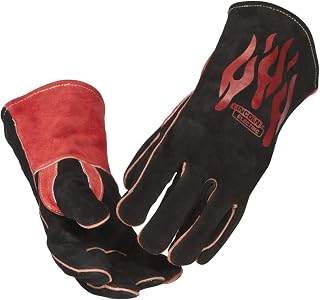
Lincoln Electric Traditional MIG/Stick Welding Gloves
Check PriceWhen asking what material is welding gloves, the first answer is always leather. Leather is the gold standard because it resists heat and sparks without melting. Synthetics like polyester trap heat and melt into your skin, but leather chars slowly. This gives you precious seconds to shake off a hot spark before it burns through.
Not all animal hides are equal. Different leather types offer varying levels of heat resistance, flexibility, and durability. The most common options you will find are cowhide, pigskin, goatskin, and deerskin. Each serves a distinct purpose in the welding bay.
Cowhide: The Heavy-Duty Protector
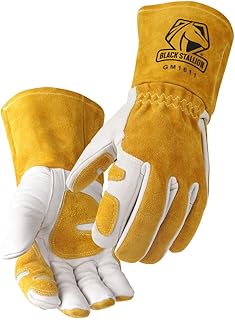
Black Stallion Top Grain Leather Cowhide MIG Welding Gloves
Check PriceCowhide is the most widely used material for welding gloves. It is thick, durable, and offers excellent thermal protection. The density of the grain structure makes it naturally resistant to punctures and abrasions. If you are dragging cables or handling rough steel, cowhide stands up to the abuse.
This is the go-to material for Stick welding and heavy MIG welding. It handles high heat and heavy spatter without shrinking. The trade-off is stiffness. Cowhide requires a break-in period before it feels comfortable on your hand.
Pigskin: The Breathable Option
Pigskin behaves differently than cowhide. It is naturally porous, which allows airflow to cool your hands. Unlike cowhide, pigskin actually becomes softer and more pliable when exposed to heat. It releases moisture quickly, keeping your hands drier as sweat evaporates.
This material works well for medium-duty MIG welding and workshops in humid climates. The main drawback is that it absorbs oil and water faster, so regular maintenance is required to keep the leather from stiffening after drying out.
Goatskin: The King of Dexterity
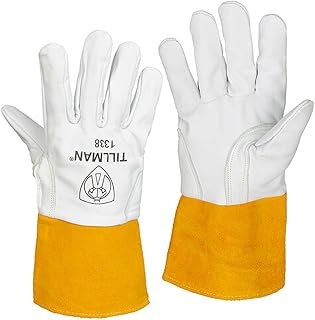
Tillman Goatskin TIG Welding Gloves
Check PriceIf precision matters, goatskin is the superior material. It contains lanolin, a natural oil that makes the leather exceptionally soft and water-resistant right out of the package. Goatskin has a high tensile strength, meaning it resists tearing even when cut into thin layers.
You find goatskin primarily in TIG welding gloves. TIG welding requires pinpoint finger control to feed the filler rod. A thick cowhide glove would make this impossible, but a thin goatskin palm allows you to feel the rod while still blocking radiant heat.
Deerskin: The Ultimate Comfort Fit
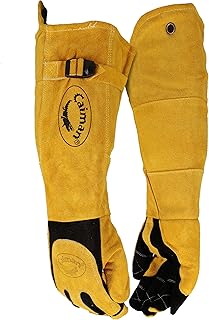
Caiman Premium Split Deerskin MIG/Stick Welding Gloves
Check PriceDeerskin is the most luxurious option. The fibers in deerskin are multidirectional, which gives the material a unique ability to conform to your hand shape. It stretches without losing its shape and insulates well against moderate heat.
Deerskin works best for occasional welding or driving rods in comfortable positions. It lacks the extreme heat tolerance of cowhide, so it may shrink if exposed to constant heavy spatter. It is an excellent choice for instructional settings or light fabrication.
Evaluating Heat Protection and Safety Ratings
Black Stallion Top Grain Leather Cowhide MIG Welding Gloves
Check PriceThe material is only half the story. You must also look at the weight of the material, usually measured in ounces. A 4-ounce leather glove is thin and dexterous, while a 9-ounce leather glove is rigid and armor-like. Matching the weight to the amperage prevents heat-related fatigue.
Higher amperage welding generates intense radiant energy. Without proper insulation, the heat penetrates the back of the hand. Many gloves include an aluminized back, which reflects up to 95% of radiant heat away from the skin. This is a crucial feature for out-of-position welding where your hand is close to the arc.
Make sure you understand the different types of welding gloves available. A stick welding glove is too bulky for TIG, and a TIG glove will burn up instantly under heavy spatter. Selecting the right heat rating ensures you do not get injured on the job.
Interior Linings and Advanced Composites
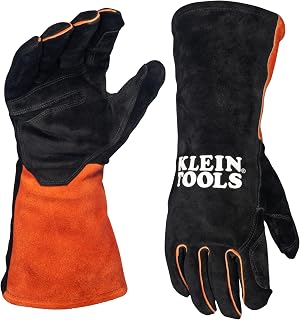
KLEIN TOOLS MIG Welding Gloves
Check PriceLeather protects against spatter, but you need a secondary barrier against conducted heat. This is where the internal lining materials become critical. The lining determines how quickly the glove heats up and how much steam builds up inside.
Cheap gloves skip the lining, which leads to instant burns when you grab a hot piece of scrap. Quality gloves use carefully selected insulators. These materials must resist charring and wick moisture.
Cotton and Fleece Liners
Cotton liners provide basic comfort and insulation. They absorb sweat and add a soft layer between the rough leather and your skin. Thermal cotton fleece enhances this protection by creating an air gap.
However, cotton has low charring tolerances. If the leather fails, cotton can ignite. It is sufficient for general fabrication but risky for prolonged, arc-on time at high currents.
Wool and Foam Insulators
Wool liners are naturally flame-resistant. Wool chars rather than burns and is an excellent thermal barrier. You often see wool in premium Stick welding gloves. It regulates temperature well, keeping hands warm in winter and cooler in summer due to its breathability.
Foam liners trap dead air space, creating a physical barrier against heat transfer. This keeps the outer heat from reaching your fingers. The combination of a leather shell and a foam-and-cotton sandwich liner covers most heavy industrial needs.
Kevlar and Para-Aramid Threads
High-end gloves incorporate para-aramid synthetic fibers, commonly known as Kevlar. Unlike cotton, Kevlar is cut-resistant and heat-resistant up to extreme temperatures. It will not melt, drip, or ignite.
Manufacturers often sew the gloves together using Kevlar thread. Cotton thread burns away, causing the seams to burst open at the worst possible moment. A glove with Kevlar stitching maintains its structural integrity even in high-heat scenarios.
For rigorous information on specific way to handle your gear, check this guide on how to maintain your workspace tools. Clean tools and properly stored gloves reduce the risk of contamination and early material breakdown.
Specialty Materials for Extreme Conditions
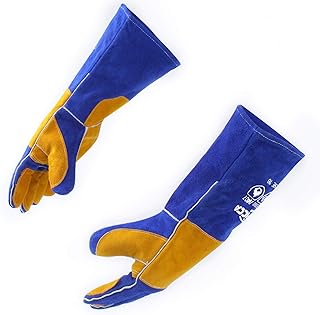
RAPICCA 16-Inch Fireproof Welding Gloves
Check PriceStandard leather fails in specific extreme applications. When welding near extremely hot preheated metals or handling sharp objects, you need materials beyond animal hides. Composite fabrics bridge the gap where leather charring is not acceptable.
Aluminized Fiberglass Backings
Aluminized gloves feature a reflective surface laminated to a fiberglass fabric. Fiberglass is non-flammable and maintains its strength at high temperatures. The aluminum layer reflects radiant energy.
These gloves are essential for high-amperage pipe welding or working with a carbon arc. The back of the hand faces the arc continuously. Without the reflective barrier, the hand cooks inside a standard glove.
Carbon Fiber and Silicone Strips
Mechanical welding involves repetitive stress and vibration. Some modern gloves embed carbon fiber patches on the palm to dampen vibration without adding weight. Silicone strips provide a non-slip grip when hands are dry, greasy, or wet.
While silicone will melt under direct arc heat, it is placed on the palm where contact heat is the main enemy. These materials make gloves more versatile for fitters who weld, grind, and fit up all day.
Matching Material to the Welding Process
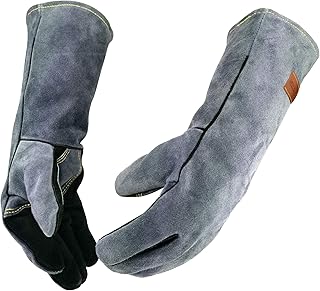
WZQH 16-Inch Welding Gloves
Check PriceSelecting material is logical when you analyze the main threats. MIG welding produces flying spatter that bounces off leather. Stick welding generates massive radiant heat and heavy chunks of slag. TIG welding creates an intense arc but almost no spatter.
Here is a quick breakdown of what material is welding gloves best for different processes:
- Stick Welding (SMAW): Thick cowhide or split leather with a wool liner. Aluminized backs are preferred.
- MIG Welding (GMAW): Grain pigskin or top-grain cowhide with cotton fleece lining.
- TIG Welding (GTAW): Soft goatskin, deerskin, or thin pigskin with an unlined back for ventilated dexterity.
- Oxy-Fuel Cutting: Heavy split cowhide. Spatter from cutting torches is large and sticky.
Investing in process-specific materials prevents the one-glove-fits-all trap. A heavy stick glove kills your feel for a TIG torch. A thin TIG glove disintegrates during overhead stick welding.
Common Questions About Welding Glove Materials
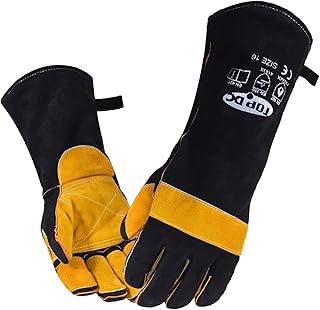
TOPDC 16-Inch Welding Gloves
Check PriceWhy is leather the primary material used in welding gloves?
Leather provides a natural combination of heat resistance, flexibility, and durability. It chars rather than melts, protecting the user from hot spatter. Different animal hides offer varying levels of protection and dexterity without synthetic melting risks.
Can welding gloves contain synthetic materials?
Yes, but they are typically internal. Kevlar is a synthetic para-aramid fiber used for linings and stitching due to its cut resistance and fireproof qualities. External synthetics like nylon are avoided because they instantly melt upon contact with hot slag.
What material offers the best grip for welding?
Goatskin naturally provides the best dry grip due to its organic lanolin content. For oily conditions, reinforced palms with silicone strips or carbon fiber patterns enhance the friction coefficient, preventing the loss of control of the torch or rod.
How does insulation material affect glove performance?
Insulation acts as a thermal time barrier. Wool insulates well, remains fire-resistant, and wicks moisture. Foam composites slow down heat transfer via dead air space. The thickness of this insulating material dictates how long you can hold a hot item before feeling the burn.
Conclusion
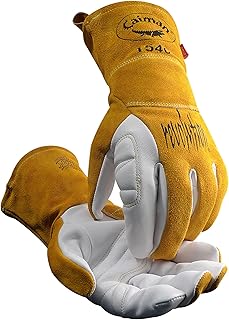
Caiman Premium Goat Grain TIG Welding Gloves
Check PriceUnderstanding what material is welding gloves transforms your approach to safety. The fight against heat is won through intelligent material layering, from the outer leather shell to the Kevlar stitching. You do not need to memorize every fabric, but you must match the material to the arc.
Pay attention to the thickness, the lining, and the hide type. Keep goatskin for TIG, aluminized cowhide for Stick, and reinforced pigskin for general MIG work. The right material puts a solid barrier between you and 6,000 degrees of molten metal, keeping your hands safe during every bead you lay down.