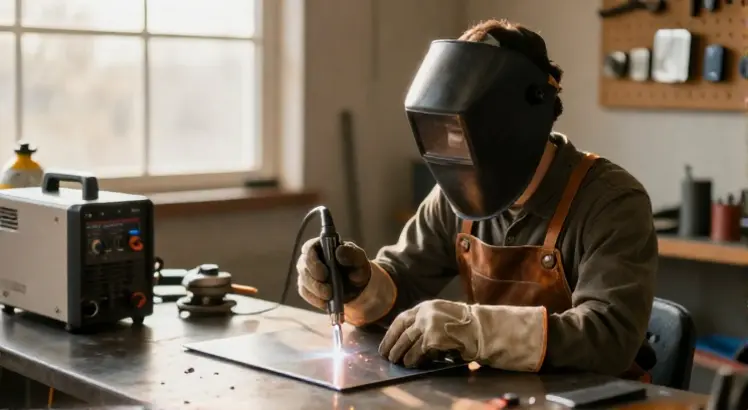
Is MIG welding easy for beginners? The short answer is yes. Many welding instructors and experienced welders agree that MIG, also known as Gas Metal Arc Welding or GMAW, is the most beginner friendly arc welding process. It uses a continuous wire electrode and a shielding gas, so you do not have to stop and replace rods or manually feed filler metal. That single feature removes a large part of the coordination burden facing new welders.
At the same time, easy does not mean automatic. You still need to learn how to set voltage and wire feed speed, maintain the correct stickout, and read the weld puddle. This guide explains why MIG welding is easy for beginners, where the common difficulties appear, and how to shorten your learning curve with safe practice.
Table of Contents
What Makes MIG Welding Beginner Friendly?
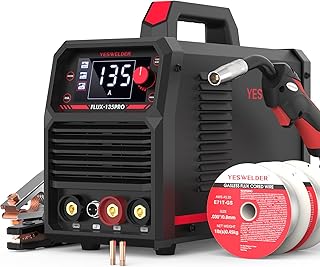
YESWELDER 135A MIG Welder, 110V Flux Core Gasless MIG/Lift TIG/Stick 3-in-1
Check PriceMIG welding removes several variables that make other arc welding processes harder. You pull the trigger and the machine feeds the wire and activates the gas flow automatically. There is no rod to hold at a precise angle, no separate filler metal to dip, and no slag to chip after welding. That simplicity is a major reason MIG welding is easy for beginners.
The process is also visually forgiving. With a proper auto darkening helmet, the bright arc gives you a clear view of the joint and the weld pool. You can watch the puddle form and move, which builds muscle memory faster. According to Miller Electric’s welding education library, GMAW is often the first process taught in vocational programs because of this gentle learning curve.
Semi Automatic Wire Feed
The machine pushes wire through the torch at a steady speed. This removes the need to feed filler rod by hand. You only control travel speed, gun angle, and contact tip to work distance. For most beginners, that is easier to learn than TIG, where both hands and a foot pedal must work together.
Simple Trigger and Visible Arc
On most MIG machines, you set voltage and wire speed, then pull the trigger. Once those settings are close, the machine does a lot of the work. Many beginner machines have a chart inside the door that suggests settings for common metal thicknesses. That chart removes a lot of early guesswork.
How Hard Is MIG Welding to Learn?
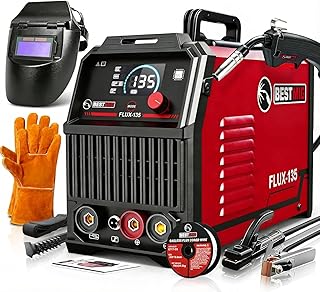
BESTMIG 135A MIG Welder – 3-in-1 Flux Core Welder, MIG/Lift TIG/Stick Welding Machine
Check PriceThe basics of MIG welding can be learned in a single weekend. Most beginners can run short beads on clean mild steel after a few hours of guided practice. However, learning to produce strong, consistent welds in different positions takes longer. The difference between a rough first bead and a clean fillet weld comes down to steady hands, correct settings, and good joint preparation.
MIG Welding vs Stick and TIG for Beginners
- MIG is easier than stick welding for most beginners because there is no slag chipping and the wire feed is continuous.
- MIG is easier than TIG welding because it does not require separate hand-fed filler rod or foot pedal control.
- Stick welding is more portable and can handle dirty or rusty metal better, but the arc starts and rod control are harder for new welders.
- TIG welding gives more precision and cleaner welds, but the learning curve is steeper.
Understanding MIG Welding Settings
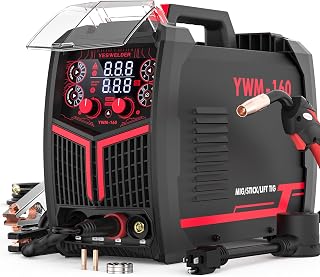
YESWELDER 160A MIG Welder, 110V/220V MIG/Flux Core/Lift TIG/Stick
Check PriceTwo main controls affect most beginner MIG machines. Voltage sets the arc length and heat. Wire feed speed controls how fast filler metal enters the weld pool. The relationship between these settings changes the sound, feel, and appearance of the weld.
A good MIG arc sounds like steady frying bacon, not aggressive popping or loud machine gun noise. If the wire stubs into the metal, increase voltage or slightly reduce wire speed. If the arc is long and the puddle is difficult to control, lower voltage or increase wire speed. Always make one small change at a time and test on scrap.
Polarity Basics for Solid Wire and Flux Core
For gas shielded MIG with solid wire, the torch is usually positive and the work clamp is negative. This is called direct current electrode positive, or DCEP. For flux cored wire without gas, many machines need the opposite polarity. Always check the machine manual before switching wire types.
Setting Up Your Practice Area
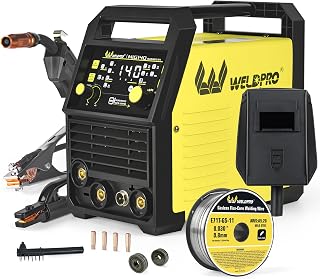
WELDPRO 140A MIG Welder 110/220V, 2026 Newest 5-in-1 Flux Core Welder
Check PriceA dedicated practice area makes learning faster. Use a non flammable table or a steel welding bench. Clamp your work pieces so they do not move while you weld. Good lighting helps you see the joint before the arc starts, and a comfortable gun cable position prevents awkward dragging.
Position your body so you can brace your elbows against your sides or the table. This reduces shaking and gives you better control of the gun. A tight clean joint is easier than a wide gap, so cut and fit your scrap metal carefully before tacking.
- Secure the workpiece with welding clamps or magnets.
- Use a steel or non flammable work surface.
- Keep the welding machine close enough to adjust settings without walking away.
- Place your gas cylinder in a stable, upright location.
Common Beginner Mistakes
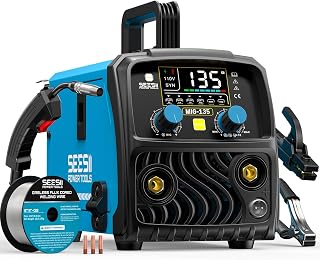
SEESII 135A MIG Welder 110V – 3-in-1 Gasless Flux Core/Lift TIG/Stick Welding Machine
Check PriceTravel Speed Problems
Moving too slowly creates excessive buildup and can cause burn through on thin metal. Moving too fast makes a narrow, weak weld with poor penetration. Practice watching the puddle width and keep the gun moving at a steady pace.
Incorrect Settings
Voltage and wire feed speed control the arc length and weld profile. Too little voltage gives a harsh, stubbing arc. Too much voltage can create excessive spatter and undercut. Start with the machine chart, then make small adjustments.
Poor Metal Preparation
MIG welding is less forgiving than stick when it comes to rust, paint, oil, and mill scale. Clean the base metal with a grinder or wire brush until it is shiny. A clean surface makes the arc start easier and produces fewer porosity defects.
Practical Tips to Make MIG Welding Easier
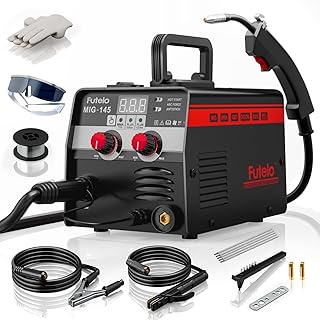
Futelo 145A MIG Welder, 110V 3-in-1 Flux Core Stick Lift TIG
Check Price- Use both hands when possible. One hand controls the trigger, the other braces the torch for stability.
- Keep contact tip to work distance around 3/8 inch to 1/2 inch.
- Set your gas flow between 20 and 25 cubic feet per hour for most indoor work.
- Push the gun with a slight 10 to 15 degree travel angle for most solid wire MIG on clean steel.
- Practice on scrap metal before starting a real project. Run flat beads and overlap them.
- Watch the top edge of the puddle, not just the bright arc.
For a deeper dive into these habits, read this beginner MIG technique walkthrough.
Equipment Needed to Start MIG Welding
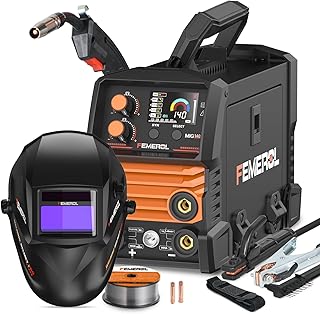
FEMEROL 140A 3 in 1 MIG Welder,Flux Core, MIG/Lift TIG/Stick Welding Machine 110V
Check PriceYou do not need a massive machine to learn MIG welding. A 110 volt or 120 volt MIG welder is enough for home practice on sheet metal and light angle iron. Many beginners start with a compact MIG machine, a gas bottle, and a basic auto darkening helmet. Reviewing a dedicated starter MIG welder guide can help you choose a reliable machine for practice.
- MIG welder with adjustable voltage and wire speed
- Shielding gas cylinder, usually 75% argon and 25% CO2 for mild steel
- Welding helmet with auto darkening lens
- Leather welding gloves and long sleeve cotton clothing
- Wire brush or angle grinder for metal cleaning
- Welding pliers or heavy clamps
Safety Basics for New MIG Welders

ANDELI 110V/220V MIG Welder 135A, PULSE Flux Core/Lift TIG/Stick 4-in-1
Check PriceSafety is not optional, even for a beginner. The arc produces intense ultraviolet and infrared light that can burn your eyes and skin. Always wear a properly shaded welding helmet, gloves, and flame resistant clothing. Work in a ventilated area to avoid breathing welding fumes, and keep a fire extinguisher close to your practice area.
- Wear an auto darkening helmet rated shade 10 to 12 for MIG welding.
- Cover all exposed skin to prevent rapid sunburn from arc flash.
- Use safety glasses under your welding helmet when chipping or grinding.
- Keep paper, rags, and solvents away from the welding area.
- If welding indoors, use a fume extractor or open doors and windows.
How Long Does It Take to Learn Basic MIG Welding?
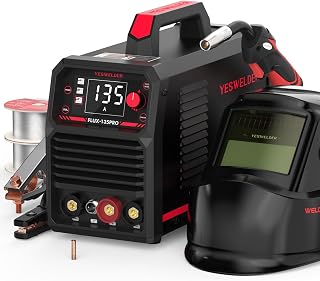
YESWELDER 135A Flux Core MIG Welder FLUX-135PRO with LYG-L600A Helmet
Check PriceA motivated beginner can set up the machine and run an acceptable bead within one weekend. After about 10 to 20 hours of practice, most learners can weld simple joints in the flat position. Building confidence for overhead or vertical welding takes longer, often several months of regular practice. The key is deliberate practice with clean metal and consistent settings.
Frequently Asked Questions
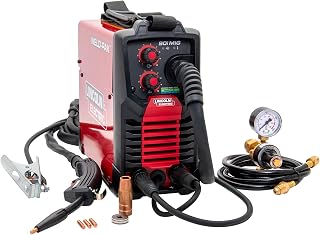
Lincoln Electric 90i MIG and Flux Core Wire Feed Weld-PAK Welder, 120V
Check PriceIs MIG welding easier than stick welding for a beginner?
Yes. MIG welding is generally easier than stick welding for beginners because the wire feed is continuous, arc starts are simple, and there is no slag to chip. Stick welding has a place in field work and dirty conditions, but it requires more rod control and arc starts are harder to learn.
Can I teach myself MIG welding?
Many people do teach themselves MIG welding with a quality machine, a safe workspace, and good instruction. However, one lesson with a local instructor or an experienced welder can correct bad habits early. If you practice at home, always follow the machine manual and wear full safety gear.
What type of MIG welder is best for a beginner?
A 110 volt or 120 volt MIG welder with adjustable voltage and wire feed speed is a solid choice for most new welders. It runs on a standard household outlet and handles thin mild steel well. You can start with thinner material like 16 gauge to 1/8 inch before moving to thicker sections.
Do I need gas for MIG welding?
Solid MIG wire requires shielding gas. Many beginners start with a 75% argon and 25% CO2 mix for mild steel because it gives a smooth arc and low spatter. You can also use flux cored wire without gas, but that produces more smoke and requires a different polarity. Gas shielded MIG is usually the cleaner and easier path for learning.
What is the hardest part of MIG welding for beginners?
The hardest part is usually maintaining a steady travel speed and consistent gun angle. Beginners often move too slowly or too quickly, which changes the bead shape and penetration. Setting voltage and wire speed also takes practice, but machine charts and test welds on scrap make it manageable.
Conclusion
Is MIG welding easy for beginners? Yes, MIG welding is the most accessible arc welding process for new welders. The semi automatic wire feed, simple trigger, and visible weld pool let you focus on steady movement and joint setup. You will still need practice, proper settings, clean metal, and safety discipline.
Start with a compact MIG welder that matches your home power supply and a good auto darkening helmet. Practice flat beads on scrap mild steel until your travel speed feels natural. Then move to fillet and butt joints. With consistent practice, most beginners can make strong, clean MIG welds sooner than they expect.