Staring at a shiny new welder online only to get stuck on the voltage specification is a classic garage dilemma. You are ready to fix that cracked mower deck or build a custom smoker, but your home electrical system dictates a major choice. Choosing between a 110v and a 220v welder for home garage setup is not just about raw power, it is about matching the machine to your actual outlets and your realistic ambitions.
Grabbing the wrong voltage can leave you with a machine that constantly trips breakers or, worse, a welder that cannot penetrate the metal you planned to use. This breakdown clears up the confusion. We will look at the physical limitations of your breaker panel, the thickness of metal you can actually fuse, and how portability plays into your weekend warrior projects.
Table of Contents
Understanding the Core Electrical Reality
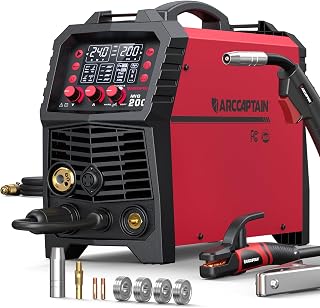
ARCCAPTAIN 200A MIG Welder 110V 220V 6 in 1 Aluminum Welding Machine MIG200
Check PriceBefore discussing arc quality, you need to face the physics of your home. The fundamental difference lies in how electricity is delivered to the machine. A 110v welder relies on a standard household outlet, while a 220v unit needs a dedicated circuit similar to what powers your electric dryer or oven. This single factor influences every aspect of performance from duty cycle to running cost.
Most garages come with a few 15-amp or 20-amp 110v breakers. These circuits often share load with lights or garage door openers. A 220v line requires a thicker gauge wire and a unique two-pole breaker installed by an electrician, which might cost between $150 and $400 depending on your panel’s location. If you rent your home, a plug-and-play 110v machine often becomes the only practical path forward.
How Amperage Draw Affects Your Breaker Panel
A common mistake involves looking only at volts without calculating amps. A 110v machine pulling 20 amps at maximum output might hover right at the limit of a standard breaker. In an older home with 14-gauge wiring connected to a 15-amp breaker, that welder will snap the switch off repeatedly, even on medium settings.
A 220v machine achieves higher power while drawing lower amperage through each hot leg. This is why a 50-amp 220v circuit delivers monstrous heat without melting wires. If you plan to weld thick steel, like 1/4-inch plate for a trailer repair, the 220v platform gives you headroom that prevents nuisance tripping and saves the motor from starving for current.
Performance: Material Thickness and Penetration
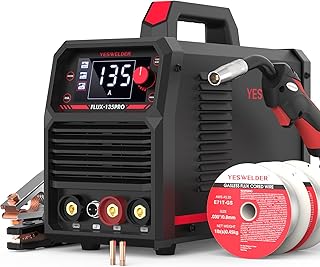
YESWELDER 135A MIG Welder, 110V Flux Core Gasless MIG/Lift TIG/Stick 3-in-1
Check PriceHeat is the product you buy, and voltage is the pipeline delivering it. The choice between a 110v vs 220v welder for home garage projects often boils down to the classic 3/16-inch rule. A high-end 110v MIG can fuse 3/16-inch steel in a single pass if you hustle and preheat the joint. Push it to 1/4-inch without proper preparation, and you risk a cold lap defect where the bead sits on top of the metal rather than biting into the root.
A 220v machine chews through 1/4-inch and 3/8-inch material with authority. The puddle wets out instantly, and the arc sounds crisp and aggressive, not like bacon sizzling in a pan. For structural projects like roll cages, hitches, or heavy equipment repairs, 220v input provides a necessary safety margin. You cannot afford a brittle bond on lifting points or suspension components.
Flux-core and stick welding amplify the voltage gap. A 110v stick welder struggles with 6011 rods larger than 3/32-inch. You end up fighting the arc with erratic sticking and spatter resembling bird droppings. A 220v stick machine allows you to run a 1/8-inch 7018 rod smoothly, laying down a professional bead with deep penetration. This matters a lot if you repair farm gates or excavator buckets.
Duty Cycle: The Hidden Productivity Metric
Duty cycle measures how long you can actually pull the trigger in a ten-minute window before the machine overheats. A 110v welder often lists a 20% duty cycle at max output, meaning two minutes of welding and eight minutes of cooling. In a garage environment, this pause disrupts flow. You constantly wait for the thermal overload light to go dark.
On a 220v machine, the same amperage might run at a 60% or 100% duty cycle. This allows continuous welding passes on long seams. If you want to practice MIG welding pattern techniques without interruption, the higher voltage platform prevents the machine from symbolically tapping you on the shoulder to stop.
Practical Installation: Plug, Power, and Cost
ARCCAPTAIN 200A MIG Welder 110V 220V 6 in 1 Aluminum Welding Machine MIG200
Check PriceThe garage floor often dictates the voltage war. One corner might have a single GFCI outlet, while the breaker box sits on the opposite wall. 110v welders win the convenience battle immediately. You unbox the machine, plug it into a dedicated 20-amp outlet, and spark up within minutes. No electrician, no drywall cutting, no permit pulls.
- 110V Installation: Locate a 20-amp circuit, avoid light fixtures on the same line, and use a heavy 12-gauge extension cord if necessary (never longer than 25 feet).
- 220V Installation: Hire a licensed electrician, install a NEMA 6-50R or 14-50R receptacle, and pull 6-gauge wire if your run exceeds 50 feet to combat voltage drop.
Machine cost also shifts. A capable 110v MIG welder from a reputable brand costs $300 to $700. A 220v multi-process machine with high amperage and AC/DC TIG capability easily crosses the $1,200 to $2,500 barrier. Budgeting for the electrical infrastructure alongside the machine purchase narrows the choices quickly.
The Inverter Revolution and Dual-Voltage Machines
Technology has blurred the battle lines. Modern inverter welders often accept dual-voltage input (110v and 220v) through a simple plug adapter. These machines auto-sense the input and adjusting the output ceiling accordingly. You get a portable 110v unit today and a high-power 220v beast tomorrow by simply wiring a new outlet. This approach provides the ultimate career growth path for a hobbyist.
However, dual-voltage machines running on 110v still face the wall of limited input wattage. An inverter rated for 200 amps on 220v might cap at 140 amps on a 110v outlet. You gain flexibility but not magic. The physics of a 20-amp breaker remain unmovable.
Portability: Garage Confinement vs. Mobile Repairs
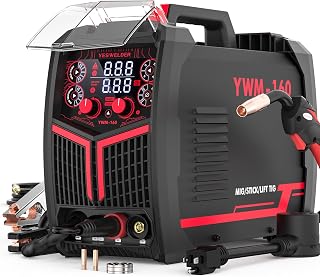
YESWELDER 160A MIG Welder, 110V/220V MIG/Flux Core/Lift TIG/Stick
Check PriceIf your garage doubles as a wood shop and a parking spot, a fixed 220v outlet might chain you to one corner. A 110v machine with a gas-shielded MIG setup can move to the driveway, the backyard, or a buddy’s fence line. You toss it in the trunk and run it off a generator with stable sine wave output. This portability factor heavily favors 110v for light repair work away from home base.
That said, heavy mobile work like fixing dozer blades in a field usually requires engine-driven welders anyway. For the pure home garage enthusiast, a 220v stationary workstation often becomes the focal point of the shop. You build a beefy welding table around it, install a fume extractor, and treat it like permanent industrial infrastructure.
Wire Feed and Process Compatibility
Your voltage choice dictates which processes you can run efficiently. 110v machines dominate the flux-core and small MIG market. They struggle with stick and TIG because constant low voltage and dipping amperage cause frustrating arc instability. You can learn to TIG thin stainless with 110v, but the sweet spot remains razor thin.
A 220v welder unlocks aluminum MIG spool gun work and solid stick welding. If you dream of fabricating aluminum boat decks or welding thick cast iron repairs using specialized electrodes, the 220v platform provides the arc force necessary. It is the difference between struggling and actually enjoying the learning curve of how hard welding is to learn.
Safety and Electrical Noise
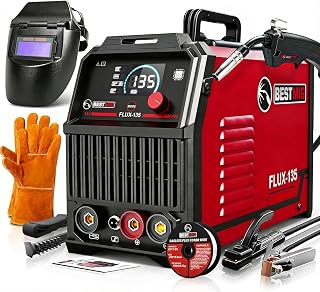
BESTMIG 135A MIG Welder – 3-in-1 Flux Core Welder, MIG/Lift TIG/Stick
Check PriceVoltage selection directly impacts the safety of your home wiring. A 110v machine pushed to maximum output on a marginal circuit creates heat inside the walls. Loose connections in old receptacles arc and degrade under sustained load. If the outlet feels warm to the touch during welding, you have a serious fire hazard brewing behind the drywall.
A properly installed 220v 50-amp circuit runs cool and efficient. The larger conductor cross-section handles the load without drama. You also separate the welder from sensitive electronics. The high-frequency start on a 220v TIG machine can interfere with Wi-Fi routers or garage computers, but the dedicated circuit isolates this noise better than a shared 110v branch.
Always ensure your panel has available capacity. Older 100-amp service panels in vintage homes might groan under the addition of a 50-amp 220v device. Load calculation matters. A home with a 200-amp service accepts the upgrade without hesitation.
Who Should Choose a 110V Welder?
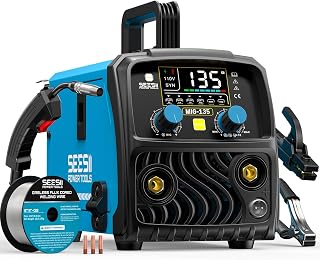
SEESII 135A MIG Welder 110V – 3-in-1 Gasless Flux Core/Lift TIG/Stick
Check Price- The DIY Auto Hobbyist: You weld patch panels on classic car fenders. Sheet metal up to 1/8-inch is your daily diet. A 110v MIG with 0.023 wire excels here without burning through.
- The Apartment or Rental Garage User: You cannot modify the electrical system. The machine must run on existing outlets, and portability trumps raw power.
- The Small Artwork and Sculpture Fabricator: You join thin-gauge steel, copper, or decorative panels. Low amperage control is more critical than max output.
For these users, pairing a top-tier 110v machine with the right accessories, like a quality auto-darkening helmet recommended in our guide on the best welder for beginners, creates a satisfying and safe garage setup.
Who Should Step Up to 220V?

ANDELI 110V/220V MIG Welder 135A, PULSE Flux Core/Lift TIG/Stick 4-in-1
Check Price- The Farm and Ranch Repair Enthusiast: Gate hinges, plow shares, and thick tractor brackets demand 7018 stick rods burning at 120 amps or higher.
- The Off-Road Fabricator: Building rock sliders, bumpers, and trailer frames from 3/16-inch or 1/4-inch structural tube requires a puddle that flows deep into the joint.
- The Aspiring Professional: You plan to monetize your garage hobby. A 220v machine allows you to take on thicker, structural jobs that pay higher rates without turning them away.
The jump to 220v represents a commitment. You move from a casual tinkerer to a serious fabricator. The electrical investment pays off every time you bury a heavy tack without whipping the whip to compensate for low heat input.
Frequently Asked Questions
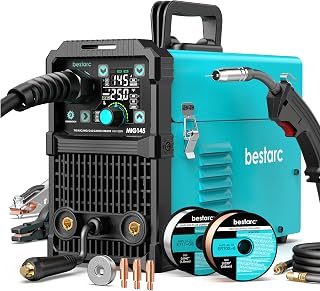
Bestarc 145A MIG Welder, Flux Core/Gas MIG Stick Lift TIG Welding, 110/220V
Check PriceCan I run a 220v welder on a generator in my garage?
Yes, but only with a generator rated for 8,000 running watts or higher and featuring clean sine wave output. Inverter welders are particularly sensitive to dirty power. Calculate peak surge watts carefully, and never operate a generator inside a closed garage due to carbon monoxide risks.
Will a 110v welder weld 1/4-inch steel if I bevel the joint?
You can multi-pass it. Grind a V-groove, run a root pass hot, clean the slag, and follow with hot overlapping stringers. It is slow work and tests the duty cycle, but a quality 110v flux-core machine can pass destructive tests on 1/4-inch plate with proper technique.
Why does my 110v welder trip the breaker but never blows the internal fuse?
The machine draws amperage that the circuit cannot sustain. A breaker trips to protect the building wire. The internal fuse only blows if the machine itself malfunctions. Swap to a dedicated 20-amp circuit, unplug other devices, and shorten your extension cord to solve this.
Do I need a 220v welder for aluminum MIG in a home garage?
Generally, yes. Aluminum requires a surge of heat to melt the oxide layer quickly. A 220v machine with a spool gun provides the amperage needed for materials thicker than 1/8-inch. Small 110v spool guns exist but struggle with cold starts and sooty beads.
Is it worth converting a 110v stick welder to 220v with a transformer?
No. Buying a step-up transformer large enough to handle the load costs more than a new dual-voltage inverter machine. The transformer is heavy, inefficient, and introduces potential arc stability issues.
The Final Verdict on Voltage
The choice between a 110v vs 220v welder for home garage work hinges entirely on your electrical infrastructure and project ambitions. Do not let the marketing numbers on the box trick you into ignoring the outlet on your wall. If the heaviest metal you touch is 1/8-inch angle iron for a shelf bracket, a high-quality 110v machine with a good return policy serves you perfectly.
If you find yourself squinting at a hitch receiver, wanting to pile heavy tack welds without pause, and staring at a dusty spot on the wall perfect for a new outlet, then bite the bullet on 220v. The sound of a powerful arc, the smooth flowing puddle, and the complete lack of tripped breakers make the installation effort worth every weekend you spend walking around your garage, looking for something to fix. For further deep dives into welding setup, check the detailed breakdowns offered by experts at Lincoln Electric’s knowledge resource.