
Cold welding is a fascinating solid-state bonding process that joins metals without applying heat. If you have ever wondered how two pieces of metal can stick together just by pressing them hard enough, you are about to discover the science behind it. In this guide, we break down what cold welding is, how it works, and where it shows up in real-world applications.
Table of Contents
What Is Cold Welding?
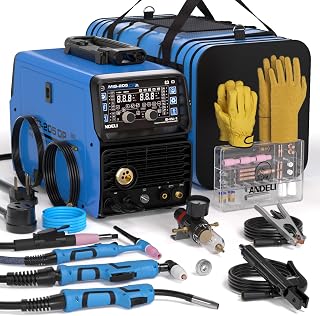
ANDELI Multiprocess MIG Welder, Plasma Cutter Welder Combo MIG-205DP
Check PriceCold welding, also known as contact welding or solid-state bonding, is a process that joins two clean metal surfaces by applying high pressure at room temperature. Unlike arc welding or MIG welding, no heat, filler metal, or flux is used. The atoms on each surface form metallic bonds when forced into intimate contact, creating a permanent joint.
This phenomenon relies on the fact that when two perfectly flat, oxide-free metal surfaces are pressed together, the atoms cannot tell which piece they belong to. The result is a continuous metallic structure at the interface. However, in everyday environments, metals quickly develop oxide layers and contaminants that prevent cold welding from occurring naturally.
A Quick Look at the History of Cold Welding
Scientists first observed cold welding in the 1940s while testing metal contacts in vacuum conditions. The discovery gained major attention during the early space programs, when engineers noticed that metal parts stuck together spontaneously in the vacuum of space. According to scientific studies, this accidental bonding forced a redesign of satellite and spacecraft components to prevent unwanted adhesion.
How Does Cold Welding Work?
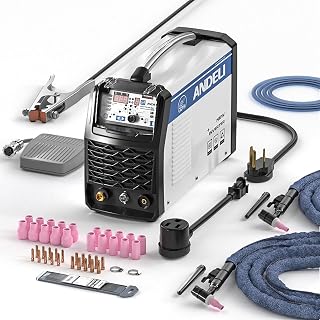
ANDELI TIG Welder Multifunctional Cold Welding Machine TIG-250MPL
Check PriceThe secret behind cold welding lies in the nature of metallic bonding. In a solid metal, atoms share a cloud of free electrons that holds the structure together. When two clean metallic surfaces are pushed close enough, typically within a few atomic diameters, that electron sharing occurs across the gap, essentially merging the two pieces into one.
For cold welding to succeed, three conditions must be met. First, the surfaces must be free of oxides, oils, and other contaminants. Second, the metal must be ductile enough to deform under pressure and increase the true contact area. Third, enough force must be applied to break up residual surface layers and bring atoms into direct contact.
The Role of Oxide Layers and Surface Preparation
Almost all metals form a thin oxide layer instantly when exposed to air. This layer, often just a few nanometers thick, acts like a barrier that keeps atoms from bonding. In a normal workshop atmosphere, cold welding is nearly impossible unless the oxide is removed by wire brushing, scraping, or chemical cleaning, and the pieces are pressed together immediately.
Industrial cold welding machines use specially designed dies and high clamping forces to break through oxides during the compression step. Some processes also operate inside a vacuum chamber to prevent reoxidation. This careful preparation mimics the conditions found in outer space, where a lack of oxygen allows spontaneous cold welding.
Why It Occurs in Space
In the vacuum of space, metals do not form new oxide layers once the existing ones are broken. Even minor vibrations or movements can scrub surfaces clean, creating ideal conditions for cold welding. This caused serious problems on early satellites, where moving parts like antennas and deployment mechanisms would fuse together unexpectedly. Engineers now coat or lubricate space hardware to prevent unintended solid-state bonding.
Key Advantages of Cold Welding

AWT LED Display 180A Cold TIG Welder with DC Pulse
Check PriceCold welding offers several benefits that set it apart from traditional fusion welding. These advantages make it the go-to method for certain high-tech and specialty applications where heat would cause serious problems.
- No heat affected zone (HAZ) around the joint, so the metal retains its original mechanical properties.
- No filler metals, fluxes, or shielding gases are needed, which simplifies the process and reduces contamination.
- The bond can be as strong as the parent metal when conditions are right, sometimes reaching 100% joint efficiency.
- Dissimilar metals like aluminum and copper can be joined, creating reliable electrical connections.
- No thermal distortion or residual stresses, which is crucial for precision components.
Limitations and Challenges
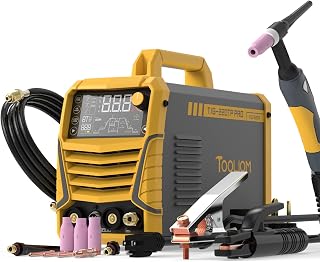
TOOLIOM 220A 7-in-1 Cold TIG Welder 110/220V Dual Voltage
Check PriceDespite its attractive features, cold welding is not a universal solution. Several practical hurdles restrict its use to specific scenarios and carefully controlled environments.
- Surface preparation must be extreme. Any trace of oxide, grease, or moisture will prevent bonding.
- At least one of the metals needs to be highly ductile. Hard, brittle materials do not cold weld easily.
- High clamping forces and specialized equipment are required, which limits portability and increases cost.
- Joint geometry is usually limited to lap joints, butt joints in wires, or shapes where large flat areas can be pressed together.
- Ambient moisture and air can ruin the bond within seconds, so timing and cleanliness are critical.
Cold Welding vs. Traditional Fusion Welding

AZZUNO Cold TIG Welder With Pulse 180A
Check PriceCold welding and fusion welding sit on opposite ends of the joining spectrum. In arc welding or MIG welding, metals are melted and a filler rod is often added, creating a cast-like structure as it cools. Cold welding, by contrast, is a solid-state process where atoms bond without any liquid phase. This fundamental difference leads to distinct performance traits.
Fusion welds can suffer from cracking, porosity, and a heat-affected zone that weakens the surrounding metal. Cold welded joints avoid these issues entirely because heat never enters the equation. However, fusion welding can join thick, dirty, or irregular parts more easily, while cold welding demands pristine surfaces and significant pressure. For a broader look at various joining methods, take a look at our comparison of welding, brazing, and soldering.
Real-World Applications of Cold Welding
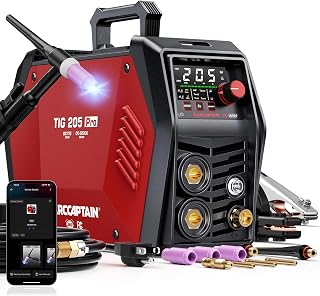
ARCCAPTAIN TIG 205 Pro 5 In 1 Welding Machine
Check PriceEven though you may not see it on a construction site, cold welding is at work in many critical industries. Its ability to create clean, strong, and heat-free bonds makes it the perfect choice where traditional welding simply cannot go.
Aerospace and Satellite Engineering
Modern spacecraft use cold welding deliberately to join electrical connectors and heat sinks. The vacuum environment eliminates oxidation worries, and the absence of heat protects sensitive electronics. At the same time, engineers carefully avoid accidental cold welding in moving joints by using dry lubricants or gold plating.
Electronics and Wire Bonding
Ultrasonic wedge bonding, a close relative of cold welding, is used to attach fine gold or aluminum wires to semiconductor chips. A combination of pressure and high-frequency vibration scrubs away oxide, creating a solid-state bond without melting the wire. This technique is standard inside nearly every integrated circuit package.
Cryogenics and Nuclear Applications
Cold welding excels in environments where heat would cause dangerous reactions or material degradation. In cryogenic plumbing and certain nuclear fuel encapsulation processes, cold welded seals ensure leak-tight joints without adding thermal stress. The technique also sees use when joining aluminum to copper in heat exchangers for specialized lab equipment.
Industrial Cold Welding Machines
Purpose-built cold welding presses are used to join wires, rods, and small tubing in manufacturing lines. These machines apply calibrated pressure through precision dies, often inside an inert atmosphere. For anyone exploring this technology, our review of the best cold welding machines covers top models, key features, and what to look for in an entry-level unit.
Frequently Asked Questions About Cold Welding

ANDELI 8 in 1 AC/DC Cold Aluminum TIG Welder 200Amp
Check PriceCan cold welding be done at home?
While a true cold welding setup is difficult to replicate in a home garage, hobbyists sometimes demonstrate it by stacking two extremely clean, soft aluminum sheets and hammering them together. However, achieving a reliable industrial-strength bond requires a controlled press, clean environment, and careful surface preparation that is hard to achieve without specialized tools.
What metals can be cold welded?
Soft, ductile metals work best. Aluminum, copper, gold, silver, and nickel are commonly cold welded. Aluminum and copper are the most popular pair for electrical connections. Harder metals like steel and titanium can be cold welded, but they require much higher forces and often a vacuum environment to prevent immediate reoxidation.
Is cold welding as strong as regular welding?
Under ideal conditions, a cold welded joint can approach the strength of the base metal. Because there is no melting or heat-affected zone, the microstructure remains unchanged. The bond is often stronger than soldered or brazed connections, and in micro-scale wire bonds, it equals or exceeds the strength of the wire itself.
Why don’t we use cold welding for everything?
The extreme surface cleanliness requirement and the need for high pressure make cold welding impractical for large structural steel or field repairs. Traditional fusion welding is far more forgiving of surface conditions and can join thick, awkward shapes that cold welding cannot handle. Cold welding fills a niche where heat is unacceptable and precision is paramount.
How does cold welding differ from ultrasonic welding?
Ultrasonic welding is a type of solid-state bonding that uses high-frequency vibrations along with pressure to scrub away oxides and create a bond. While pure cold welding relies only on static pressure, ultrasonic welding adds mechanical scrubbing to enhance the bond. Many wire bonding processes in electronics are essentially a hybrid of cold welding and ultrasonic vibration.
Conclusion
Cold welding may sound like a laboratory curiosity, but it stands as one of the purest forms of metallic joining. By skipping heat entirely, it opens doors in space exploration, microelectronics, and precision manufacturing that traditional welding cannot touch. While it requires pristine surfaces and heavy-duty equipment, the resulting bond is clean, strong, and free of thermal distortion.
If you are exploring advanced joining methods or simply curious about how metal can bond without melting, understanding cold welding gives you a deeper appreciation for the physics of materials. Whether you choose to experiment on a small scale or invest in a dedicated cold welding machine, the principles remain the same: cleanliness, pressure, and the right choice of metals are everything. For more insights on different welding processes and gear, browse our library of in-depth guides and reviews.

James is a welding expert, accomplished author, and trusted guide with over 8 years of experience in the industry. With his in-depth knowledge and engaging writing style, James has become a true authority in the field, offering readers and clients invaluable expertise and insights to take their welding skills to new heights.