If you are just starting your journey into welding or researching protective gear, you have likely come across the term welding shield. But what is a welding shield exactly? A welding shield, commonly called a welding helmet or welding hood, is a critical piece of personal protective equipment (PPE) designed to guard your eyes, face, and neck from the intense light, heat, and flying debris produced during welding. In this article, we will dive deep into the purpose of a welding shield, explore the different types available, and help you understand what makes this gear so essential for every welder.
Many people assume a welding shield is just a dark piece of plastic, but it is actually a sophisticated safety device. Modern shields combine special optical filters, lightweight materials, and adjustable mechanics to provide both protection and comfort. Whether you are a hobbyist working on a weekend project or a professional fabricator on a construction site, your welding shield is your first line of defense against arc eye, skin burns, and long-term vision problems. Let us take a closer look at how this simple yet powerful tool keeps you safe.
Table of Contents
What Exactly Is a Welding Shield?
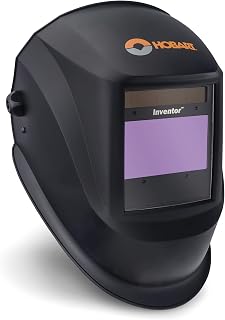
Hobart 770890 Auto-Darkening Welding Helmet
Check PriceThe term welding shield can refer to any headgear that covers the wearer’s face and neck during welding operations. In everyday welding language, the words shield, helmet, and hood are used interchangeably. At its core, a welding shield consists of a hard outer shell, a viewing lens, and an adjustable head suspension system. The shell acts as a physical barrier against sparks and spatter, while the lens filters out harmful ultraviolet (UV) and infrared (IR) radiation. Some shields also feature a flip-up visor or a fixed design that covers the entire face from chin to forehead.
Welding shields have evolved significantly over the past century. Early models were simple handheld masks with a single dark glass filter. Welders had to hold the shield in front of their face while working, which limited their dexterity. Eventually, head-mounted designs became the norm, allowing hands-free operation. Today, you can find a wide variety of shields, including solar-powered auto-darkening models that adjust lens shade in milliseconds. This evolution has made welding safer, more comfortable, and more efficient than ever before. For a broader look at the history and technology, you can read the detailed history of welding helmets on Wikipedia.
Why Is a Welding Shield So Important for Safety?
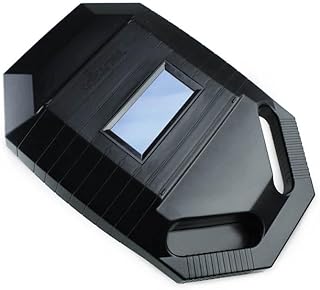
Sellstrom S25000 Hand Held Welding Shield
Check PriceWelding produces an electric arc that emits intense light across the ultraviolet, visible, and infrared spectrum. Without proper eye protection, staring at this arc for even a fraction of a second can cause photokeratitis, a painful condition often called arc eye or welder’s flash. This is essentially a sunburn on the cornea and can lead to temporary blindness, extreme discomfort, and long-term sensitivity. A welding shield blocks 99.9% of harmful UV and IR radiation, preventing these injuries. It also shields the skin from the radiant heat and microscopic molten metal droplets that fly off the weld pool.
Beyond immediate injuries, regular exposure to welding light without adequate shielding can contribute to cataracts and permanent retinal damage. Quality welding shields are tested to meet strict safety standards like ANSI Z87.1 in North America or EN 175 in Europe, ensuring they deliver the protection they promise. The physical barrier also prevents burns from sparks and slag that can catch on clothing or unprotected skin. Simply put, wearing a welding shield is not optional, it is a mandatory step that every responsible welder takes before striking an arc.
- Blocks 99% to 100% of harmful ultraviolet and infrared rays
- Prevents painful arc eye and long-term vision damage
- Guards against flying sparks, spatter, and slag
- Reduces exposure to radiant heat that can burn facial skin
The Different Types of Welding Shields Explained

MIGVAN Auto Darkening Welding Helmet
Check PriceNot all welding shields are built the same way. Broadly speaking, you will encounter two main categories: passive welding shields and auto-darkening welding shields. There are also specialized hoods like pancake shields and leather-faced models for specific applications. Understanding the differences will help you pick the right type for your welding style, budget, and work environment.
Passive Welding Shields
A passive welding shield uses a fixed-shade lens, typically a dark green or gold-tinted piece of glass, that remains dark at all times. The shade number, usually between 9 and 13, determines how much light reaches your eyes. To use a passive shield, you position your torch or electrode while the shield is lifted, then you nod or flip the hood down right before you strike the arc. This technique can be tricky for beginners but many veteran welders prefer passive shields for their simplicity, durability, and lower cost. There are no batteries, no electronics, and very little that can go wrong.
If you want to learn more about how welding helmets work on a technical level, particularly the differences between lens technologies, check out our deep dive on how modern welding helmets function. It covers everything from sensors and LCDs to the optical coatings that make passive lenses so reliable.
- Pros: Simple design, no batteries or electronics, more affordable, extremely durable
- Cons: Requires a head nod to drop the hood, can be awkward for tight spaces, no adaptability to changing arc brightness
Auto-Darkening Welding Shields
Auto-darkening welding shields, often called ADF (auto-darkening filter) helmets, incorporate an electronic lens that changes from a light state (around shade 3 or 4) to a darker welding shade in a fraction of a second. Sensors on the front detect the arc’s flash and trigger an LCD panel to darken instantly, usually within 0.1 to 0.4 milliseconds. This means you can see your workpiece clearly before welding, which improves accuracy and reduces setup time. The shade can also be adjusted with a knob or digital controls, making these shields versatile for various processes from MIG to TIG to plasma cutting.
Most modern auto-darkening shields are powered by a combination of solar cells and a small lithium battery. They often include additional features like a grinding mode, which disables the auto-darkening function for clear visibility during metal grinding. While they cost more than passive models, the convenience and safety they offer have made them the preferred choice for many welders today. If you are ready to purchase one, we have tested and reviewed the top options in our guide to the best welding shields on the market.
- Pros: No need to lift the hood, adjustable shade range, better visibility before welding, often includes grind mode
- Cons: More expensive, requires batteries or charging, can be sensitive to extreme heat or shock
Specialty Welding Shields and Hoods
Beyond the standard passive and auto-darkening models, there are niche welding shields designed for unique environments. Pancake welding hoods, for example, are round, lightweight shields popular among pipeline welders because they hug the face closely and reduce the risk of the hood catching on low ceilings or obstacles. Leather welding hoods provide extra heat and spatter resistance in foundry or heavy fabrication work. Some shields are built to integrate with powered air-purifying respirators (PAPR) for welders working in confined or fume-heavy spaces. While these specialty options are not for everyone, they show how the concept of a welding shield can be adapted to meet specific safety demands.
Key Features of a High-Quality Welding Shield
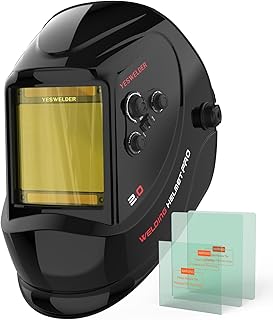
YESWELDER LYG-M800H Welding Helmet
Check PriceWhen shopping for a welding shield, it is easy to feel overwhelmed by technical specifications. However, a few key features will determine how well the shield protects you and how comfortable it feels during long work sessions. Pay attention to the following aspects before you make a decision.
- Optical Clarity Class: Look for a rating of 1/1/1/1, which indicates top-tier clarity, minimal distortion, and uniform shade across the lens
- Shade Range: For auto-darkening shields, a range of 5 to 13 covers most welding and cutting tasks
- Switching Speed: The best auto-darkening lenses switch in 0.1 ms or faster to prevent eye strain
- Viewing Area: A larger lens (e.g., 3.8 x 1.4 inches or more) improves visibility and situational awareness
- Weight and Balance: A lightweight shell under 20 ounces reduces neck fatigue, especially when welding overhead or for hours
- Adjustable Headgear: Ratcheting headbands with sweat-wicking padding make a big difference in all-day comfort
- ANSI Z87.1 Certification: This marking confirms the shield meets rigorous impact and radiation protection standards
- Grinding Mode: Useful if you switch between welding and grinding without changing helmets
How to Choose the Right Welding Shield for Your Welding Process
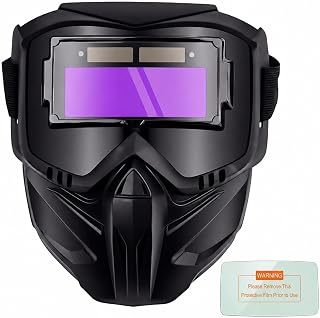
Auto-Darkening Welding Helmet with Vent System
Check PriceThe type of welding you do most often should influence which shield you buy. Different processes have different arc brightness and characteristics. MIG welding generally produces a bright, steady arc that works well with auto-darkening shields set between shade 10 and 13. TIG welding requires a clear view of the delicate puddle and often benefits from a high-optical-clarity lens with a lower shade setting, sometimes as low as 8 for low-amperage work. Stick welding generates a lot of spatter, so a durable lens cover and a wide viewing area can be helpful. Plasma cutting uses a less intense arc, often requiring only shade 5 to 8.
Beginners frequently ask whether they should start with a passive or an auto-darkening shield. An auto-darkening model reduces the learning curve because you do not have to master the head-nod technique while trying to maintain electrode position. It also allows you to see your workpiece layout clearly before the arc starts. On the other hand, if you are on a tight budget and only welding occasionally, a quality passive shield from a reputable brand will still offer excellent protection. Whatever you choose, always prioritize safety certifications over price alone.
Caring for Your Welding Shield: Maintenance Tips
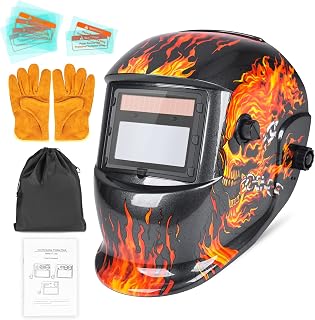
NDUUN True Color Auto Darkening Welding Helmet
Check PriceYour welding shield is an investment, and with simple maintenance, it can last for years. The outside lens cover, which takes the brunt of spatter and dirt, is a consumable item. Replace it as soon as pitting or scratches obscure your view. Never use harsh chemicals like acetone on the lens. A mild soap and water solution or a dedicated lens cleaning wipe is safer and will not damage coatings. For auto-darkening shields, check the battery level periodically and keep the solar panel surface clean so it charges properly. Store the helmet in a bag or hang it in a dry, dust-free area to avoid accidental damage to the sensors and headgear.
Frequently Asked Questions About Welding Shields
Hobart 770890 Auto-Darkening Welding Helmet
Check PriceWhat is the difference between a welding shield and a welding helmet?
In practical terms, there is no difference. Both descriptions refer to the same class of protective headgear used during welding, cutting, and grinding. Some people say shield to emphasize the face protection aspect, while helmet is the more common term used in product catalogs. You can use either term and expect to find the same piece of equipment.
Can a welding shield protect my eyes without being dark?
Yes, even in its light state, a quality auto-darkening lens or a clear passive lens cover blocks harmful UV and IR radiation. This means that if you glance at an arc without the darkening feature active, your eyes are still shielded from the most dangerous invisible wavelengths. However, visible light will still be blindingly bright, so the dark state is needed for comfort and to see the weld pool clearly.
How do I know what shade number to use?
Shade numbers correlate with the intensity of the arc. Higher numbers mean darker lenses that block more visible light. For general MIG and stick welding, shades 10 to 13 are typical. For TIG welding at lower amperages, 8 to 10 may be enough. Plasma cutting often requires 5 to 8. Most manufacturers provide a shade chart, and many auto-darkening shields let you dial in the exact shade you need.
Are cheap welding shields safe?
Price does not always determine safety, but you should only buy shields that carry recognized certifications like ANSI Z87.1. Some low-cost, unbranded import shields may lack proper UV/IR filtering or have slow switching speeds that can cause eye strain over time. It is better to invest in a certified budget model from a known brand than to risk your eyesight with an uncertified product.
How long does an auto-darkening welding shield battery last?
Battery life varies by model and usage, but most auto-darkening shields can operate for hundreds to thousands of hours on a single replaceable lithium battery. Many helmets also have solar-assisted power, which extends battery life almost indefinitely as long as the solar panel receives occasional light exposure. It is wise to keep a spare battery on hand if your shield relies solely on a non-rechargeable cell.
Conclusion
A welding shield is far more than a dark visor, it is a meticulously engineered guard that stands between you and some of the most intense hazards in metal fabrication. Whether you call it a shield, a helmet, or a hood, understanding what it does and how to choose the right one empowers you to weld safely and with confidence. Take the time to evaluate your welding style, the environments you work in, and the features that matter most to you. Remember that certifications, optical clarity, and comfort should never be compromised for a lower price tag. If you are ready to see the latest and greatest models, browse our selection of top-rated welding shields and start your next project with the protection you deserve.