When you step into a welding shop, safety gear is non-negotiable. A welding apron leather is one of the simplest yet most effective pieces of personal protective equipment you can own. It shields your torso and legs from intense heat, flying sparks, and molten metal spatter better than most synthetic fabrics. Whether you are a beginner learning MIG welding or a seasoned professional working on heavy fabrication, the right apron saves your clothes and your skin. In this guide, we break down everything you need to know about leather welding aprons so you can make a confident choice.
Table of Contents
Why Leather Is the Preferred Material for Welding Aprons

QeeLink Leather Welding Apron 6 Pockets Heat Flame Resistant for Blacksmith | Split Cowhide Work Tool Apron with Aramid Thread | Heavy duty | Adjustable M to XXXL for Men & Women
Check PriceLeather has been the go-to protective layer for welders for generations, and for good reason. Unlike cotton, denim, or synthetic blends, leather naturally resists ignition and does not melt. It creates a reliable barrier against the three biggest threats in welding: heat, sparks, and spatter. If you have ever had a hot spark burn through a fabric shirt, you understand why a thick leather apron feels like armor.
Modern workplaces must follow strict safety rules, and personal protective equipment plays a major role. According to welding safety regulations from OSHA, employers need to assess hazards and provide appropriate protection. A high-quality leather apron helps you meet those requirements while keeping you comfortable through a long shift.
There is a reason welders have stuck with leather even as high-tech fabrics entered the market. The material stops hot projectiles without catching fire, wears in rather than wearing out, and molds to your body over time. To understand why this tradition persists, you can read more about why welders traditionally wear leather and how it stacks up against modern alternatives.
Superior Heat and Flame Resistance
Leather does not burn easily. Even when a hot metal fragment lands on the surface, it typically chars rather than ignites. That buys you precious seconds to shake off the debris before any harm reaches your skin. Most leather welding aprons are rated for high-temperature exposure, and they outperform flame-treated cotton by a wide margin.
Outstanding Durability and Long-Term Value
A leather apron is an investment. Unlike disposable protective gear, a well-made cowhide or split leather apron can last for years. The fibers are tough and flexible, so repeated flexing does not cause cracking, and minor scratches only add character. With basic care, your apron will outlive several pairs of welding gloves.
Types of Leather Used in Welding Aprons

LeaSeek Leather Welding Apron, Heat & Flame-Resistant Heavy Duty for Men | 24″x36″ cowhide leather apron, adjustable M-XXXL, for blacksmithing, forging, BBQ, grilling, workshop, woodworking
Check PriceNot all leather is created equal. The performance, weight, and price of a welding apron depend heavily on the type of hide and the way it is processed. Knowing the differences helps you match the apron to your work environment.
Split Leather (Side Split Cowhide)
Split leather is the most common material for welding aprons. It comes from the inner layer of the cowhide after the top grain is separated. Split leather is noticeably thicker, heavier, and more resistant to abrasion, which makes it ideal for grinding, stick welding, and high-spatter applications. The rough suede-like surface catches sparks effectively, preventing them from rolling off and reaching your clothes.
Top Grain Leather
Top grain leather comes from the outer surface of the hide and offers a smoother, more polished look. It is typically a bit thinner and lighter than split leather. While it still provides solid heat protection, it works best for TIG welding or light fabrication where precision movement and comfort matter more than maximum thickness. Top grain aprons often feature a more tailored fit and can double as a shop coat for non-welding tasks.
Pigskin and Other Leathers
Pigskin leather is softer and lighter, often used for budget-friendly aprons or light-duty applications. It breathes a bit better but does not offer the same extreme heat resistance as cowhide. Some aprons combine pigskin with cowhide inserts in high-wear areas for a balance of comfort and protection.
Key Features to Look For in a Leather Welding Apron
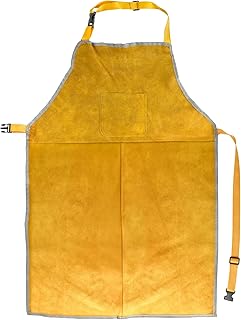
QWORK Leather Welding Work Apron – Flame and Welding Spatter Resistant – Adjustable Harness – Suitable for Welders, Blacksmiths
Check PriceNot every apron will fit your body or your workflow. Paying attention to design details makes the difference between an apron you tolerate and one you actually enjoy wearing. Before you buy, run through this checklist of must-have features.
- Thickness and Weight: Most quality leather welding aprons use hides between 1.2 mm and 1.5 mm thick (around 3 to 5 ounces). Heavier 6-ounce split leather offers maximum protection for heavy MIG or stick welding, while a lighter 3-ounce top grain apron reduces fatigue during all-day TIG work.
- Coverage Style: You can choose between a bib apron that covers the chest and thighs, a split-leg apron that wraps each leg separately for mobility, or a waist-only apron for light grinding. Bib aprons with a split leg design are the most versatile.
- Adjustable Straps: Look for quick-release buckles on the neck and back straps. Cross-back leather straps that go over the shoulders distribute weight evenly and take pressure off your neck. Avoid thin fabric ties that can burn or loosen quickly.
- Reinforced Stress Points: Rivets or double stitching at the pocket corners, strap connections, and lower hem prevent premature failure. Kevlar thread adds extra flame resistance in critical seams.
- Tool Pockets: A chest pocket for a soapstone or a lower patch pocket for small tools can save you trips to the bench. Make sure pockets are positioned so they do not collect sparks.
- Flame-Resistant Thread: Even the best leather is useless if the stitching melts. Confirm the apron uses Kevlar or Nomex thread, especially on models designed for overhead welding.
If you want to see how these features play out in real products, our review of the best welding aprons walks through several top-rated models and highlights what makes each one stand out.
Leather Apron vs. Welding Jacket: Which One Do You Need?
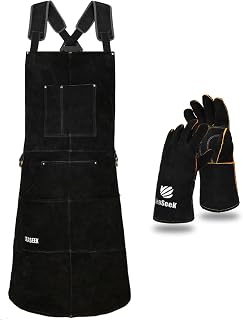
LeaSeek Leather Welding Apron, Heat & Flame-Resistant, 6 Pockets | Heavy-duty split cowhide apron, adjustable M-XXXL men & women, for blacksmithing, forging, and metalwork.
Check PriceNew welders often ask whether an apron is enough or if they should invest in a full leather jacket. The answer depends on the type of welding, the positions you work in, and the environment.
An apron excels at protecting the front of your body while leaving your arms and back uncovered. This works well for bench welding, short welding beads, and jobs where you face the arc directly. It is also far cooler in the summer months because it allows airflow around your torso. For overhead welding or tasks that require you to reach above shoulder level, a leather jacket with sleeves becomes necessary. Spatter can fall onto your shoulders and neck, areas an apron simply cannot cover.
Many professionals keep both options in their gear bag. They use an apron for 80% of the work day and pull on a jacket when the situation demands it. For a deeper dive into this decision, read our detailed guide on comparing an apron with a full jacket. It covers pros, cons, and scenarios where each piece of gear shines.
How to Find the Perfect Fit and Size
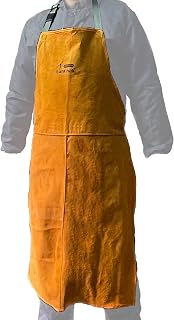
Leather Work Shop Apron, Buckle straps, Heat & Flame Resistant Heavy Duty Welding Apron
Check PriceAn ill-fitting apron is more than a nuisance, it becomes a safety hazard. If the apron is too long, you might trip. If it gaps at the sides, sparks can sneak in. Take a few measurements before ordering.
- Measure from your collarbone to just above your knees. This is your ideal bib length. Most standard aprons fall between 35 and 40 inches long, but tall welders may need an extra-long version.
- Check the width across the chest. A wider apron wraps further around your sides, giving more protection when you turn.
- Look for an adjustable neck strap that can change the bib height. Some aprons let you slide the strap through a O-ring to raise or lower the chest piece. This simple feature drastically improves comfort.
- Consider your layering. If you weld in a cold shop and wear a thick hoodie underneath, size up. In hot climates, a closer fit with just a t-shirt underneath keeps you cooler.
Caring for Your Leather Welding Apron
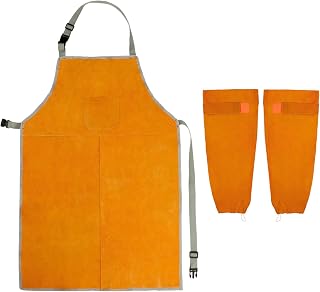
QWORK Welding Apron& Sleeves, Welding Work Protectors Set, Heat and Flame Resistant Leather Work Shop, Blacksmith Protective or Safety Clothing, Welders, Fireplace, Gardening, BBQ Apron, Bib Apron
Check PriceA leather apron that smells like a campfire and feels stiff as cardboard is often the result of neglect. Simple maintenance keeps the leather supple, clean, and effective for years.
Daily Cleaning Routine
After each shift, shake the apron out to remove loose dirt and metal dust. Wipe the surface with a dry cotton cloth. Avoid using water unless absolutely necessary, because moisture can dry out the leather fibers and cause cracking. If you must clean a stain, use a damp rag with a tiny amount of saddle soap, then let the apron air dry away from direct heat.
Conditioning and Storage
Every few months, apply a leather conditioner or a light coat of mink oil. This restores the natural oils that high heat and dry shop air strip away. Rub a small amount into the surface with a soft cloth and wipe off any excess. Never use petroleum-based products, as they can degrade the stitching over time.
Hang your apron by the neck loop or shoulder straps when storing it. Folding it tightly can create permanent creases that weaken the leather. Keep it away from welding fume extractor vents or areas where chemicals are stored, as fumes can accelerate leather deterioration.
Frequently Asked Questions About Leather Welding Aprons

DURATECH 23″ × 36″ Leather Welding Apron for Heavy Duty Work | 6 Tool Pockets, Heat and Flame Resistant, Cowhide Construction, Adjustable Straps
Check PriceWhat thickness of leather is best for a welding apron?
For general MIG and stick welding, a 4 to 5 ounce split cowhide apron is the sweet spot. It offers excellent heat resistance without being unbearably heavy. Lighter 3 ounce top grain can work for TIG welding, while heavy 6 ounce split leather is best for high-amperage gouging or foundry work.
Can I wash a leather welding apron in a washing machine?
No. Machine washing will strip the leather’s natural oils and likely shrink the apron. Spot clean with a damp cloth and saddle soap only. Let it dry naturally away from direct sunlight or heaters.
Is split leather better than top grain for welding aprons?
Split leather is more durable and spark-resistant, making it the top pick for heavy fabrication. Top grain leather is smoother, softer, and lighter, often chosen for precision TIG work where spatter is minimal and dexterity matters. The better choice depends on your primary welding process.
How do I prevent my leather apron from become stiff?
Regular conditioning with a leather balm or mink oil keeps the fibers flexible. Avoid storing the apron in extremely dry areas, and never use harsh chemical cleaners. If the apron does stiffen, a gentle application of conditioner and hand massaging the leather can often restore flexibility.
Can I use a leather apron for grinding and other metal work?
Yes. Split leather aprons in particular are excellent for grinding because they resist abrasion and stop a cascade of hot sparks. The dense suede-like surface prevents sparks from bouncing, which reduces the risk of burns. Just make sure the apron covers your upper chest and you pair it with safety glasses and a face shield.
Final Thoughts on Choosing Your Leather Welding Apron

Leather Welding Apron with Sleeves,Heavy Duty Welding Jacket,Heat Flame Resistant Welder Apron for Men
Check PriceA welding apron leather is more than a simple piece of gear, it is your primary shield against the daily hazards of the trade. The right apron saves your skin, your clothes, and your focus. Spend a few extra dollars on a well-constructed split or top grain apron with Kevlar stitching and adjustable cross-back straps. Inspect it regularly for damaged rivets or frayed thread, and condition it a few times a year to keep the hide soft.
Match the leather thickness and coverage style to your most common welding process. Keep a lighter apron for short TIG projects and a heavy split leather bib for long stick welding sessions. When the job demands overhead work, switch to a full leather jacket. With a bit of care and the right fit, your leather apron will become one of most reliable tools in your shop, not just another piece of safety equipment.