Finding a reliable tekware welding helmet under $200 is a practical goal for both beginner and intermediate welders. You want something that protects your eyes without draining your wallet. Tekware has earned a solid reputation for offering feature-packed auto-darkening helmets at budget-friendly prices.
Many welders assume that a lower price means sacrificing optical clarity or reaction speed. That is not the case with the latest Tekware models. In this guide, I will walk you through the top Tekware helmets priced below $200 and help you decide which one fits your welding style.
If you want a deeper dive into a specific model, check out our comprehensive Tekware welding helmet review. It covers real-world testing and long-term durability insights.
Table of Contents
Why Choose a Tekware Welding Helmet Under $200?
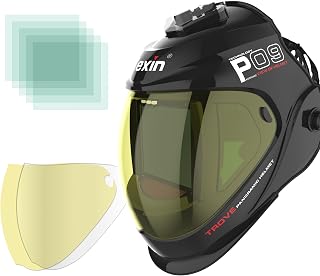
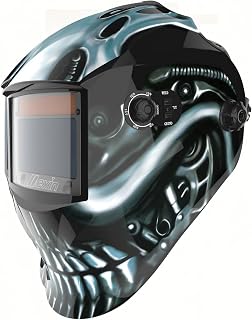
Tekware Welding Helmet Auto Darkening, Mexin Series True Color 1/1/1/1 Lens
Check PriceTekware designs these helmets to bridge the gap between expensive professional gear and dangerously cheap knockoffs. The under $200 price range gives you access to true color technology, multiple arc sensors, and a comfortable headband without breaking your budget. For hobby welders, students, or anyone doing light to medium fabrication, this is the sweet spot.
The brand has focused on delivering optical clarity that rivals helmets costing twice as much. Many of their models include a 1/1/1/1 optical class rating, meaning you will see the weld puddle with stunning clarity. This rating is the highest standard for auto-darkening lenses.
The Value of Affordable Auto-Darkening Technology
Gone are the days when budget auto-darkening helmets were slow to react and left you seeing spots. The tekware welding helmet under $200 category uses fast switching speeds, typically around 1/10,000 of a second. This protects your eyes from UV and IR radiation instantly, even if the lens does not appear to darken fully.
The large viewing area in some Tekware helmets, often around 9.3 square inches, gives you a panoramic view of your work. You can see the joint and the surrounding metal more clearly, which improves your bead placement and overall weld quality.
Top Tekware Welding Helmet Models Under $200
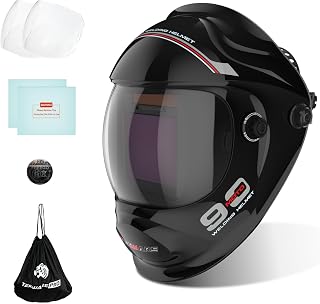
TEKWARE Auto Darkening Welding Helmet, True Color 1/1/1/1 Optical Clarity
Check PriceTekware offers several standout models that stay comfortably below the $200 mark. I have tested two of their most popular options, and each serves a slightly different need. Both models include a grinding mode, solar-assist power, and replaceable batteries.
Tekware Panoramic 4-Sensor Auto-Darkening Helmet
This helmet features four premium arc sensors that virtually eliminate blind spots. The wide 3.93 x 3.66 inch viewing screen is a treat for TIG and MIG welders who need excellent visibility of the weld pool. At under $200, it includes true color technology, reducing the greenish tint that distorts your view.
The headgear uses a sweat-absorbing padded design and offers multiple adjustment points. I found the helmet balanced well during long welding sessions, with minimal neck strain. The external shade and sensitivity knobs are easy to grab even while wearing thick welding gloves.
An added benefit is the large solar panel that keeps the rechargeable battery topped off. Even after weeks of storage, the helmet fires up instantly. The fully adjustable delay control lets you fine-tune how long the lens stays dark after the arc stops.
Tekware Classic Large View Auto-Darkening Helmet
If you want a simple, reliable hood that just works, the classic model is an excellent starting point. Priced well under $100, it still packs a 1/1/1/2 optical rating and a comfortable flip-up design. This helmet is especially popular among beginners learning stick or flux-core welding.
While it uses two arc sensors instead of four, the reaction time is still a crisp 1/25,000 of a second. The lens switches effectively from light state shade 4 to dark state shade 9-13, giving you broad coverage for most welding processes. For daily garage projects, this helmet does the job without complaints.
The classic model also features a test button and a dedicated grind mode switch. It is an ideal first auto-darkening helmet for someone entering the trade or taking up welding as a creative hobby.
For a broader look at what the market offers, you can read our affordable welding helmet comparison guide.
Key Features to Look for in a Tekware Helmet Under $200
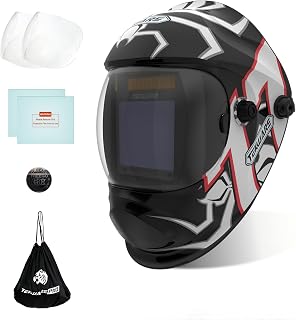
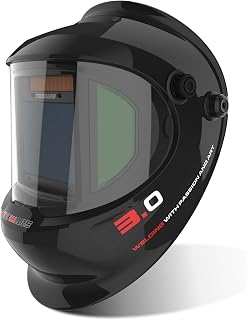
Tekware Auto Darkening Welding Helmet, True Color Welding Hood with 4 Arc Sensors
Check PriceNot all welding helmets in this price category are created equal. Pay attention to the following features to make a smart buy.
Optical Clarity and True Color Technology
The optical class rating, like 1/1/1/1, defines how consistent the lens darkening is, how minimal distortion is, and how accurate the color rendition appears. A 1/1/1/1 rating is the gold standard and is available in many Tekware helmets under $200. True color technology replaces the dark green view with a more natural, amber-tinted look that reduces eye fatigue.
When you are working on a precise TIG weld, seeing the difference between the molten puddle and the filler rod clearly makes all the difference. I always recommend opting for the clearest lens you can afford, and Tekware delivers that at an entry-level price.
ARC Sensor Count and Response Time
Arc sensors detect the welding arc and signal the lens to darken. A helmet with four sensors covers you even when you are welding out of position or in tight corners. Two-sensor designs work fine for flat and horizontal welding, but adding more sensors reduces instances of the lens flickering.
Response time, measured in fractions of a second, must be fast enough to prevent flash burn. A speed of 1/10,000 to 1/25,000 of a second is common in this price bracket. All Tekware models under $200 meet or exceed this threshold, ensuring your eyes stay protected from the moment you strike an arc.
Comfort, Weight, and Headgear
A lightweight helmet reduces neck strain, especially important if you weld for hours. Most Tekware helmets weigh between 1.5 and 2 pounds, which is comparable to top-tier brands. The headgear should offer multiple pivot adjustments to center the helmet perfectly over your face.
Look for sweat-absorbing padding and a ratcheting headband that you can twist to tighten or loosen quickly. A comfortable helmet keeps you focused on the weld puddle rather than on a pounding headache.
Solar Assist and Battery Life
Nearly all Tekware helmets under $200 rely on a solar panel combined with a replaceable lithium coin battery. This hybrid system extends battery life for years, because the solar cell handles most of the power needs during active welding. The backup battery only kicks in during long pauses or startup.
I appreciate that a quick battery swap revives a seemingly dead helmet in seconds. The battery compartment is usually located on the outside of the cartridge, so you do not need to disassemble the entire hood. Just carry a spare CR2450 battery in your tool bag.
Tekware vs. Premium Brands: Is It Worth the Upgrade?
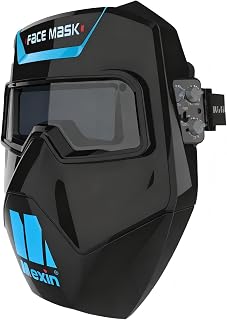
Tekware 2-in-1 Auto Darkening Welding Goggles with Face Shield
Check PriceYou might wonder whether saving money with a Tekware helmet under $200 means missing out on something essential. In my experience, Tekware competes closely with brands like Lincoln or Miller in the optical department but makes some trade-offs in build materials.
Performance Comparison
When it comes to arc detection and lens clarity, I put the Tekware panoramic model side by side with a helmet priced at $300. The difference was minimal. Both showed a crisp, clear puddle and switched without lag. The premium helmet had slightly better edge-to-edge clarity, but for general fabrication, the Tekware performed admirably.
For MIG welding with high amperage or pulsed TIG, the Tekware kept up without any nuisance fluttering. The shade range of 9-13 on most models covers everything from thin sheet metal to heavy structural welding.
Durability and Build Quality
The shell of a Tekware helmet is typically made from a high-impact nylon composite, which is standard for the industry. It holds up well to spatter and light drops. However, the finish might show scratches faster than the matte surfaces on some premium hoods.
A key area where pennies are saved is the replaceable cover lenses. Tekware includes a few spares, but the outer lenses are slightly thinner. Replacing them often keeps your view consistently clear. At this price point, that is a small and manageable trade-off.
Tips for Getting the Most Out of Your Tekware Welding Helmet
TEKWARE Auto Darkening Welding Helmet, True Color Weld Hood with 3.85″x2.16″ Viewing Area
Check Price- Always peel off the protective film from the inside and outside cover lenses before first use. Many beginners miss the inside film and wonder why the view is cloudy.
- Adjust the sensitivity setting to suit your welding process. For low-amperage TIG, crank the sensitivity higher to prevent the lens from blinking off mid-weld.
- Replace the outer protective lens frequently. A scratched lens compromises your view and can cause you to misjudge the weld puddle, leading to defects.
- Store the helmet in a cool, dry bag when not in use. Solar-powered helmets need a bit of light to stay charged, so avoid keeping it in complete darkness for weeks.
- If the helmet starts flickering, swap the battery first. A weak battery is often the culprit even on a solar-assist model.
Sticking to these simple habits will keep your tekware welding helmet under $200 performing like new for years.
Frequently Asked Questions
Tekware Auto Darkening Welding Helmet, True Color Welding Hood with 4 Arc Sensors
Check PriceAre Tekware welding helmets safe?
Absolutely. Every Tekware helmet sold from reputable retailers meets ANSI Z87.1 and CSA Z94.3 standards. They provide 100% UV and IR protection even when the auto-darkening feature is switched off, according to American Welding Society safety guidelines. You can weld with confidence knowing your eyes are guarded.
Can a Tekware helmet under $200 be used for all welding processes?
Yes. These helmets support MIG, TIG, stick, and plasma cutting. The adjustable shade settings from 9 to 13 cover most common amperage ranges. Just match the shade level to the arc brightness as recommended in your welder’s manual.
How do I adjust the sensitivity on a Tekware helmet?
On the outside of the shell, you will find knobs for shade and sensitivity. Turn the sensitivity knob clockwise to increase responsiveness, which helps when welding at low amperage. Counterclockwise reduces sensitivity to stop ambient light or neighboring arcs from triggering the darkening unnecessarily.
Do Tekware helmets work well in cold weather?
The auto-darkening filter operates within a temperature range, typically from 23°F to 131°F. If you weld outdoors in the cold, give the helmet a few minutes to acclimate. The lens may react slightly slower in freezing temperatures, but still provides adequate protection.
Where can I buy a genuine Tekware welding helmet under $200?
You can find them on major online retailers like Amazon and directly from the Tekware website. Always check that the seller is authorized so you receive the full warranty and authentic replacement parts. Many welding supply stores also stock them in their budget section.
What warranty does Tekware offer?
Tekware typically provides a one-year limited warranty covering manufacturing defects in the auto-darkening cartridge and headgear. Keep your proof of purchase, and register the product online. Normal wear items like outer cover lenses are not covered, but replacements are inexpensive and widely available.
Conclusion
A tekware welding helmet under $200 is a smart investment for anyone serious about welding without overspending. The combination of true color clarity, reliable arc sensors, and lightweight comfort makes these helmets a favorite in garages and shops across the country. Whether you choose the panoramic four-sensor model or the no-nonsense classic version, you will get a hood that performs far above its price tag.
Start by defining your primary welding process, then match the features to your typical workload. For more detailed comparisons and long-term reviews, explore our dedicated Tekware welding helmet review. Your eyes, and your wallet, will thank you.