
Welding without a proper auto-darkening helmet is a dangerous gamble. You risk eye strain, arc flash, and inconsistent welds because you’re constantly flipping a passive hood or squinting through fixed shades. You want clear vision, fast response, and all-day comfort without spending a fortune. A helmet that combines true color optics, multiple arc sensors, and reliable battery life transforms your work, letting you see the puddle, position perfectly, and move from task to task without interruption.
Short Answer: The best overall welding helmet for most fabricators is the TEKWARE Auto Darkening Welding Helmet with True Color 1/1/1/1 Optical Clarity and 4 Arc Sensors (model B0GQSXGQ65). It strikes a rare balance of optical clarity, large viewing area, lightning-fast 1/10,000s switching, and a wide shade range suitable for TIG, MIG, ARC, and grinding, all at a price that leaves room in your budget for quality consumables. If you need a panoramic view or intelligent features, the ARCCAPTAIN and YESWELDER options later in this list raise the ceiling even higher.
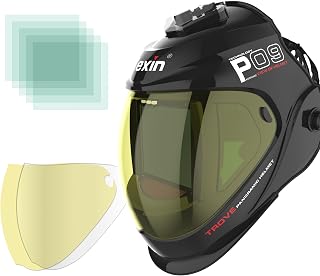
Tekware Welding Helmet Auto Darkening, Mexin Series True Color 1/1/1/1 Lens
Check PriceTable of Contents
Tekware Welding Helmet Review of 2026
Before choosing a Tekware welding helmet, it helps to compare it against broader market options and understand the core safety equipment. You can start by reviewing top rated welding helmet models for different budgets to see where this hood fits among popular choices. For a reliable background on how these protective devices work and their standard features, the Wikipedia overview of welding helmets is a useful reference point.
1. TEKWARE Auto Darkening Welding Helmet – True Color Mastery
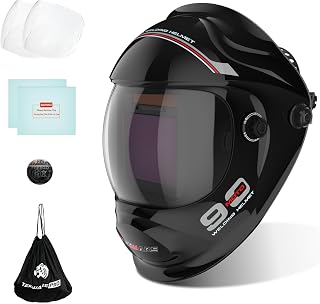
TEKWARE Auto Darkening Welding Helmet, True Color 1/1/1/1 Optical Clarity
Check PriceWhy it stands out
This helmet delivers professional-grade 1/1/1/1 optical clarity, meaning virtually zero distortion, uniform shading, and consistent darkness across the entire lens. Four arc sensors catch the arc from multiple angles, drastically reducing the chance of flickering or missed triggers. The 3.94″x3.27″ viewing area is generous for the class, and the shade dials from 4/5-9/9-13 let you cover everything from delicate low-amp TIG to heavy arc gouging.
Key points
- True Color 1/1/1/1 lens reduces eye fatigue and reveals the weld puddle clearly
- 1/10,000s auto-darkening switching prevents flash burn even at high speeds
- Large viewing size 3.94″x3.27″ improves peripheral awareness
- Shade range 4/5-9/9-13 with grind mode included
Pros
- Exceptional clarity at a competitive price
- Four sensors ensure quick, reliable activation
- Smooth adjustment knobs for shade and sensitivity
- Comfortable headgear for extended use
- Solar assist extends battery life significantly
Cons
- Stock headband can loosen with heavy sweat
- No dedicated grind button, shade must be dialed down
Best for
Welders who need a dependable everyday helmet with top-tier optical performance without the premium price tag. It’s ideal for mixed-process shops where TIG, MIG, and stick all happen in the same day.
2. Tekware Welding Helmet Replacement Headgear – Upgrade Your Comfort
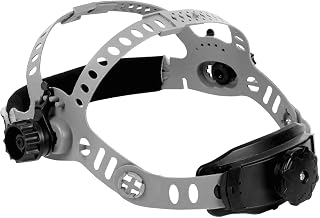
Tekware Welding Helmet Replacement Headgear, Adjustable Head band
Check PriceWhy it stands out
Factory headgear often fails after months of daily use, but this replacement band breathes new life into any Tekware shell. The multi-point adjustability lets you dial in a snug, wobble-free fit that drastically reduces neck strain. Swapping it out takes minutes and transforms a fatigued helmet into one that feels brand new.
Key points
- Designed to fit most Tekware welding helmet models
- Forehead pad absorbs sweat and adds cushion
- Quick-turn rear knob for exact tension
- Lightweight yet durable composite construction
Pros
- Restores helmet stability instantly
- Easy installation, no special tools
- Wide range of tilt and height settings
- Replacement pads available separately
- Much cheaper than a new helmet
Cons
- Only compatible with Tekware shells, not universal
- Plastic adjuster threads may wear over time
Best for
Anyone who owns a Tekware helmet and struggles with slipping, uneven weight distribution, or a cracked original headband. It’s a quick, affordable comfort fix.
3. Tekware Mexin Series Welding Helmet – Panoramic Clarity
Tekware Welding Helmet Auto Darkening, Mexin Series True Color 1/1/1/1 Lens
Check PriceWhy it stands out
The Mexin Series pushes the viewing area to a massive 4.31 x 3.82 inches, one of the largest in the Tekware lineup. That extra real estate dramatically improves spatial awareness when out-of-position welding. It retains the 1/1/1/1 true color rating and uses four sensors to maintain flawless arc detection even if you partially obstruct the lens.
Key points
- Jumbo 4.31″x3.82″ clear viewing window
- DIN 5-9/9-13 shade range covers light to heavy fabrication
- Four arc sensors positioned for full coverage
- Solar cell with replaceable battery backup
Pros
- Field of view feels more like a passive hood
- Crisp color rendition for fine TIG work
- Headgear has memory settings for repeatable fit
- Glow-in-the-dark accents for locating in dim shops
- External shade knob is easy to operate with gloves
Cons
- Slightly heavier than standard Tekware models
- Premium price compared to entry-level auto-darkening
Best for
Welders who feel cramped behind smaller lenses and frequently work in awkward positions like overhead or pipe welding, where a wide view prevents unnecessary head tilt.
4. Tekware True Color Welding Hood with Glow Design – All-Day Reliability
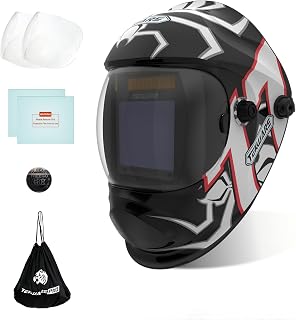
Tekware Auto Darkening Welding Helmet, True Color Welding Hood with 4 Arc Sensors
Check PriceWhy it stands out
This version adds a glow-in-the-dark shell pattern that makes it easy to find on a cluttered bench or dark job site. Beyond the fun factor, it packs a 1/10,000s switching speed and a wide viewing window in a lightweight package. The grind mode is integrated smoothly so you can go from welding to surface prep without swapping shields.
Key points
- Glow-in-the-dark graphics for quick location
- True color lens with 1/1/1/1 rating
- Shade 4/5-9/9-13 plus dedicated grind setting
- Four arc sensors prevent missed triggers
Pros
- Visible in low light, reduces fumbling
- Quick switching protects eyes during tacking
- Balanced weight reduces neck fatigue
- External controls are intuitive
- Solar power extends battery intervals
Cons
- Glow effect fades over time, needs light exposure
- Not as wide a view as the Mexin series
Best for
Mobile welders and hobbyists who work in varied lighting conditions and appreciate a helmet that’s both practical and slightly unique. Excellent for garage-based MIG and stick projects.
5. ARCCAPTAIN Intelligent Auto-Darkening Helmet – 180° Panoramic Leader
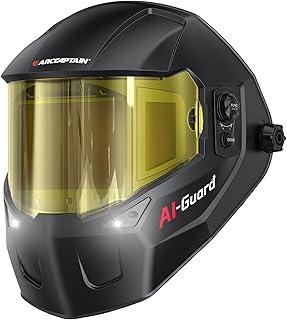
ARCCAPTAIN Intelligent Auto-Darkening Welding Helmet, 180° True Color Hood
Check PriceWhy it stands out
ARCCAPTAIN breaks new ground with a full 180° panoramic viewing angle, essentially giving you peripheral vision while you weld. An LED light built into the shell illuminates the workpiece before striking an arc, and the one-touch grind mode simplifies transitions. With memory and gradient shade modes, it adapts to your exact process and preference.
Key points
- 180° panoramic view reduces blind spots
- 1/30,000s response time exceeds industry norms
- Built-in LED light for pre-weld setup visibility
- Memory modes save shade, sensitivity, delay
Pros
- Unmatched situational awareness
- Super-fast switching for pulse TIG
- LED light is a genuine productivity booster
- Gradient mode automatically adjusts shade smoothly
- Comfortable headgear with even weight distribution
Cons
- Heavier than standard helmets
- Premium investment, may be overkill for occasional users
Best for
Professional TIG welders and fabricators who work in tight spaces or need to maintain awareness of their surroundings. The panoramic view and LED light make it a top pick for complex assemblies.
6. ARCCAPTAIN Large Viewing Auto-Darkening Helmet – Solar Powered Workhorse
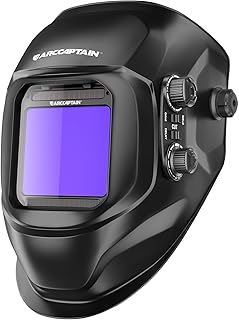
ARCCAPTAIN Auto Darkening Welding Helmet, 3.94″X3.66″ Large Viewing Screen
Check PriceWhy it stands out
This model runs almost indefinitely on solar power backed by a replaceable battery, eliminating the anxiety of a dead ADF mid-project. A large 3.94″x3.66″ screen with true color 1/1/1/1 optics ensures a crisp, natural view. Four sensors and a rapid 1/25,000s auto-darkening time make it responsive even in low-light stick welding scenarios.
Key points
- Solar cell primary power with replaceable CR2450 battery
- 1/25,000s switching speed
- Wide shade range 4/5-9/9-13 covers nearly all processes
- Four arc sensors with interference filtering
Pros
- Virtually zero battery worries
- Clear, high-contrast view of the arc
- Sturdy housing withstands drops
- Large screen for the price segment
- Good helmet balance
Cons
- No built-in LED light like the intelligent series
- External controls can be accidentally bumped
Best for
Welders who prioritize maintenance-free operation and want a large viewing area without breaking the bank. Ideal for outdoor field repairs where charging or battery swaps are inconvenient.
7. TEKWARE Clear Magnifying Welding Lens – Sharper Details Up Close
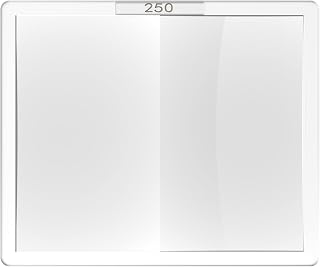
TEKWARE 3.54″ X 4.25″ Clear Magnifying Welding Lens, 2.50
Check PriceWhy it stands out
A 2.50 diopter magnification lens slips right into many standard helmet frames, giving you a closer look at the weld seam without an external cheater. The 3.54″x4.25″ dimensions cover a good portion of the viewing area while staying optically clear. It helps older welders or anyone doing fine TIG filigree maintain proper posture instead of hunching forward.
Key points
- 2.50 diopter magnification for close work
- Large 3.54″x4.25″ lens plate
- Clear, distortion-free polymer
- Compatible with most standard welding helmets
Pros
- Reduces eye strain during precise work
- Easy to swap in and out
- Affordable upgrade to any helmet
- Scratch-resistant coating
- No distortion at edges
Cons
- Only one diopter strength available in this listing
- May reduce the effective viewing area slightly
Best for
Welders with presbyopia or those who demand razor-sharp visibility on tiny TIG joints. It’s a simple, cost-effective way to improve weld quality through better vision.
8. Tekware 2-in-1 Welding Goggles with Face Shield – Lightweight Versatility
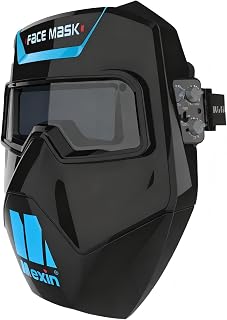
Tekware 2-in-1 Auto Darkening Welding Goggles with Face Shield
Check PriceWhy it stands out
This compact setup combines auto-darkening goggles with a flip-up face shield, giving you full face protection without the bulk of a full helmet. The 1/1/1/2 true color lens and DIN 5-9/9-13 solar-powered filter handle TIG, MIG, ARC, and grinding. It’s a game-changer for tight spaces like under vehicles or inside ductwork.
Key points
- 2-in-1 goggle and face shield combo
- Auto-darkening 1/1/1/2 lens with solar power
- Shade range 5-9/9-13 plus grind mode
- Adjustable elastic strap fits over hard hats
Pros
- Extremely lightweight, no neck strain
- Excellent for confined space welding
- Face shield protects from spatter and UV
- Affordable entry into auto-darkening technology
- Wraparound design seals out grinding dust
Cons
- Limited viewing area compared to full helmets
- Goggle straps may interfere with respirators
Best for
Maintenance welders, auto body technicians, and hobbyists who often weld in awkward, narrow spots where a traditional helmet simply won’t fit. Also great as a backup on the truck.
9. TEKWARE Auto Darkening Helmet with Lithium Battery – Cordless Freedom
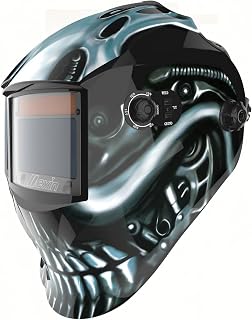
TEKWARE Auto Darkening Welding Helmet, True Color Weld Hood with 3.85″x2.16″ Viewing Area
Check PriceWhy it stands out
Unlike many solar-only helmets, this unit packs a 1200mAh lithium battery that delivers consistent power even after weeks in a dark locker. The 3.85″x2.16″ viewing area is compact but surprisingly clear with the 1/1/1/1 true color lens. It’s a grab-and-go workhorse that always turns on and responds within 1/10,000s.
Key points
- 1200mAh lithium battery plus solar panel backup
- Shade 5-9/9-13 for standard welding tasks
- 4 arc sensors and 1/10,000s switching
- True color optics reduce the green tint
Pros
- Reliable wake-up every time
- Long battery life, USB rechargeable
- Comfortable for all-day wear
- Budget-friendly price point
- Simple, intuitive controls
Cons
- Viewing area is smaller than premium models
- Not ideal for heavy industrial overhead work
Best for
Weekend warriors and farm users who need a helmet that’s always ready, even after long idle periods. The lithium battery ensures it’s not dependent on solar charge alone.
10. Tekware Fast Switching Welding Helmet – Light and Responsive
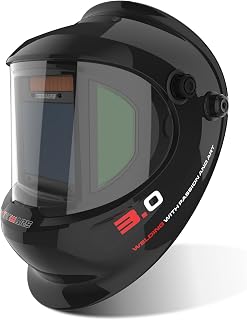
Tekware Auto Darkening Welding Helmet, True Color Welding Hood with 4 Arc Sensors
Check PriceWhy it stands out
This is the streamlined version of the Tekware true color platform, focusing on weight reduction and pure speed. At 1/10,000s dark to light switching and four-sensor coverage, it keeps up with rapid tacking and restarts. The grind mode is a simple dial turn away, making it a versatile shop companion.
Key points
- DIN 5-9/9-13 shade with external adjustment
- 1/10,000s auto-darkening response
- 4 arc sensors for wide detection angle
- Grind mode included
Pros
- Very lightweight, reduces fatigue
- True color rendering improves weld quality
- Fast switching ideal for spot welding
- Affordable mid-range option
- Comfortable headband with long adjustment range
Cons
- Shell material feels slightly less rugged
- No user memory functions
Best for
Beginners upgrading from a passive hood and pros who want a lightweight secondary helmet for quick jobs. It’s a solid daily driver for MIG and stick welding.
11. ARCCAPTAIN Welding Helmet with Light – Illuminated Precision
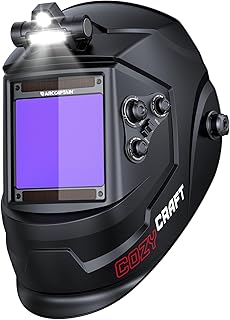
ARCCAPTAIN Auto Darkening Welding Helmet with Light, 3.94″X3.66″ Large View
Check PriceWhy it stands out
This ARCCAPTAIN model integrates a work light directly into the helmet shell, automatically illuminating the joint before the arc strikes. The large 3.94″x3.66″ true color screen, 1/25,000s response, and solar power with replaceable battery make it a self-sustaining, high-performance hood. It’s a bridge between the basic solar models and the full intelligent series.
Key points
- Built-in LED work light for shadowed areas
- 1/25,000s auto-darkening speed
- Shade 4/5-8/9-13, broad coverage
- Solar powered with replaceable battery backup
Pros
- Work light is a game-changer in dim shops
- Crisp, vivid optics
- Reliable ignition from four sensors
- Helmet balance feels natural
- No need to carry a flashlight
Cons
- Light adds minimal weight and bulk
- No internal display or gradient mode
Best for
Welders who frequently operate in poorly lit environments like construction sites, shipyards, or old barns. The integrated light simplifies setup and improves safety.
12. ARCCAPTAIN Intelligent Helmet with Internal Display – High-Tech Control Center
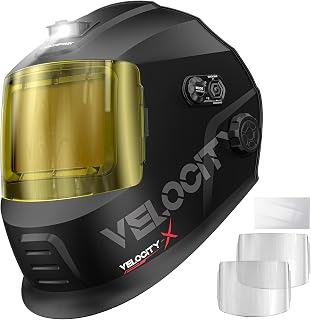
ARCCAPTAIN Intelligent Auto-Darkening Welding Helmet, 4.6″x3.2″ Screen
Check PriceWhy it stands out
An internal display gives you real-time information on shade, mode, and battery status without ever lifting the hood. The 4.6″x3.2″ screen is huge, and the 1/30,000s response ensures no flash. Memory and gradient modes let you tailor the shade transition curve, while the LED light and one-touch grind add convenience. It’s a tech-packed helmet for data-driven welders.
Key points
- Internal digital display for parameters
- Extra-large 4.6″x3.2″ true color lens
- Memory presets for up to 4 settings
- Gradient mode for smooth shade transition
Pros
- Unprecedented control over welding settings
- Massive viewing area reveals more of the joint
- Internal display is easy to read even in bright light
- Very fast switching for advanced processes
- Build quality matches the premium price
Cons
- Highest cost in the lineup
- May be overwhelming for simple stick welding
Best for
Certified welding inspectors, pipe welders, and fabrication artists who demand absolute precision and want to capture process data visually. The internal display reduces guesswork.
13. YESWELDER LYG-M800H – The Versatile All-Rounder
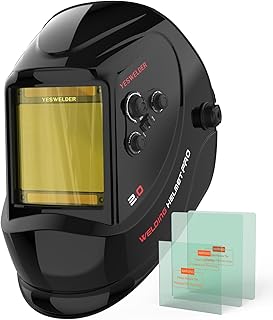
YESWELDER Auto Darkening Welding Helmet, Large View, LYG-M800H
Check PriceWhy it stands out
YESWELDER’s LYG-M800H remains a fan-favorite for its one-button grind mode, huge viewing panel, and true color 1/1/1/1 clarity. Four sensors and a blistering 1/30,000s response put it on par with helmets double the price. The blue light blocking lens adds an extra layer of eye protection, and the shade range from 3/5-9/9-13 accommodates everything from plasma cutting to heavy arc welding.
Key points
- 1/1/1/1 true color with blue light blocking
- 1/30,000s auto-darkening speed
- Large viewing area with 4 arc sensors
- Dedicated weld/cut/grind mode selector
Pros
- Outstanding value for money
- True color rivals far more expensive brands
- Extremely fast switching eliminates flash
- Easy to navigate grind and cut modes
- Widely praised for comfort and adjustability
Cons
- Graphics may not appeal to everyone
- External battery tray can be misplaced
Best for
Hobbyists, trade school students, and professional welders who want high-end performance without the high-end price ticket. It’s arguably the best bang-for-buck helmet on the market today.
How to Choose the Right Welding Helmet
Start by matching the lens clarity to your process. If you do a lot of TIG or fine fabrication, a 1/1/1/1 true color lens is non-negotiable, it reveals the puddle and surrounding metal in natural tones so you can read the weld. For general stick or flux-core welding, a 1/1/1/2 is usually acceptable and saves money. The number of arc sensors directly affects reliability, four sensors are now the standard for preventing flicker when tilting your head or working behind obstacles.
Viewing size matters more than you think. A larger screen, around 3.9 inches and above, reduces the urge to nod your head and keeps your neck neutral. Adjustable shade range from at least DIN 9 to 13 covers the majority of amperages, but if you also cut and grind, look for a helmet with dedicated modes or a shade that goes down to 4 or 5. Response time should be 1/10,000s or faster, anything slower can cause eye strain over a long shift.
Consider the power source. Solar-assist with a replaceable battery is the most hassle-free, while rechargeable lithium gives you certainty that the helmet will work even after months in storage. Comfort features like adjustable headgear, sweatbands, and balanced weight distribution turn a good helmet into one you forget you’re wearing. Finally, think about extra features like LED lights or internal displays only if they genuinely improve your workflow, otherwise stick to the basics to keep cost down.
Common Mistakes to Avoid When Buying a Welding Helmet
One frequent error is prioritizing a flashy design over optical clarity. You might love a graphic, but if the lens has a greenish cast or poor uniformity in darkness, your weld quality and eye comfort will suffer. Always verify the EN379 or ANSI rating, ideally 1/1/1/1, and read reviews that mention color fidelity. Another mistake is assuming all auto-darkening helmets are equally fast. Cheap sensors can lag, leaving you with annoying after-image or tension headaches after hours of tacking.
Welders also forget to check the helmet’s fit with other PPE. If you wear a half-mask respirator or safety glasses, make sure the shell clears them without pushing the hood forward. A helmet that feels fine empty may become painful once you add a respirator. Ignoring the importance of headgear is another downfall. Even a premium lens feels awful if the headgear slips or digs in. Budget for a replacement headband if the stock one doesn’t suit your head shape.
Dismissing the shade range can lock you out of certain tasks. If you only MIG weld, a shade 9-13 works, but if you decide to try lower amperage TIG or plasma cutting, you’ll need shade 5 or below. Lastly, don’t buy a helmet with no replaceable battery. A sealed unit that dies means you have to replace the entire ADF, which is far more expensive than swapping a coin cell.
Frequently Asked Questions
1. What does true color 1/1/1/1 mean on a welding helmet?
The four digits refer to optical classification: uniformity, angular dependence, and luminous transmittance, plus a fourth parameter for consistency. A 1/1/1/1 rating means minimal distortion, consistent shading from all viewing angles, and true-to-life color reproduction, giving you the clearest possible view of the weld puddle.
2. Can I use a Tekware welding helmet for TIG welding?
Absolutely. Tekware helmets with a shade range down to 4 or 5 are excellent for low-amp TIG. The true color lens helps you see the fine details of the tungsten and filler rod. Ensure you set the sensitivity high enough to catch the smaller arc, and choose a shade that matches your current range, typically 8 to 12 for TIG.
3. How long does the battery last in a Tekware auto-darkening helmet?
Most Tekware models use solar energy as the primary power with a coin cell or lithium backup. Under normal daily use, the replaceable battery can last a year or more. The lithium-powered models can go several weeks on a single charge, depending on arc time, and recharge via USB.
4. Is the Tekware replacement headgear compatible with other brands?
No, the Tekware replacement headgear is specifically designed to fit Tekware helmet shells. While some generic headbands may interchange, the mounting points and geometry are matched to Tekware’s design, so it’s best to stick with the brand for a secure fit.
5. What is the advantage of four arc sensors?
Multiple sensors ensure the auto-darkening filter activates reliably even if you partially block the lens with a pipe, your hand, or when welding out of position. Four sensors provide overlapping coverage that reduces false darkening or failure to detect the arc, particularly important for low-amperage TIG.
6. Can I wear glasses under a welding helmet?
Yes, most welding helmets, including all the Tekware and ARCCAPTAIN models listed, have enough clearance for prescription glasses. If you need extra magnification, you can also install a cheater lens like the Tekware 2.50 diopter magnifier inside the helmet frame.
7. What is a gradient mode in a welding helmet?
Gradient mode, found on some ARCCAPTAIN intelligent helmets, smooths the transition between light and dark states rather than snapping instantly. This can reduce the perception of flicker and is more comfortable for some users during rapid restart welding or when moving between tack welds.
8. Are the Tekware welding goggles as protective as a full helmet?
The 2-in-1 goggles with face shield provide UV and spatter protection equivalent to a standard helmet for the face and eyes, but they do not cover the neck and throat area. They are ideal for tight spaces, but for prolonged overhead or heavy spray arc welding, a full helmet with bib is recommended.
9. How do I clean and maintain my auto-darkening helmet?
Use a soft microfiber cloth and mild soap or dedicated lens cleaner on the outside cover lens. Replace the scratch-prone external cover lens periodically to maintain clarity. Keep the solar panels and sensors free of dust and spatter. Store the helmet in a dry, dark place to extend the battery and electronics lifespan.
10. Which helmet on this list is best for a beginner?
The YESWELDER LYG-M800H and the Tekware Fast Switching Welding Helmet (model B0GT8ZFP91) both offer an excellent entry point. They combine true color, fast response, and a wide shade range at a beginner-friendly price, with simple controls that don’t overwhelm someone just learning welding techniques.
Conclusion
Choosing a welding helmet from this Tekware, ARCCAPTAIN, and YESWELDER lineup means you’re tapping into some of the most innovative optical and comfort technologies available to welders today. The all-around champion remains the TEKWARE Auto Darkening model with 1/1/1/1 clarity and four sensors, it’s the sweet spot where performance meets value. But as you’ve seen, there are compelling reasons to consider a larger panoramic view, an integrated light, or advanced intelligent modes if your work demands them.
Remember that your eyes are irreplaceable, so never compromise on optical rating or switching speed just to save a few dollars. Comfort matters too, because a heavy or poorly balanced hood will punish you over an eight-hour shift. Whether you go with the glow-in-the-dark Tekware, the feature-stuffed ARCCAPTAIN internal display model, or the budget-friendly YESWELDER, the right helmet will make every weld feel more controlled and less fatiguing.
Take stock of your typical welding processes, the lighting conditions you face, and any accessories like respirators you pair with your hood. Then pick the helmet that aligns with those needs and your budget. With any of these 13 options, you’ll be stepping into a clearer, safer, and more productive welding future. Click through to check current prices and pick up the helmet that’s going to elevate your craft.
Once you know how it stacks up, the next step is to examine the lens technology that affects performance and eye safety. The guide to auto-darkening welding helmet technology explains how light sensors and shade adjustments work, which helps you understand whether the Tekware lens will respond well during different welding processes.

James is a welding expert, accomplished author, and trusted guide with over 8 years of experience in the industry. With his in-depth knowledge and engaging writing style, James has become a true authority in the field, offering readers and clients invaluable expertise and insights to take their welding skills to new heights.