Nailing plasma cutter air compressor requirements is the single most overlooked step when setting up a cutting system. You can buy the best plasma cutter on the market, but if the air supply is dirty, wet, or undersized, your cut quality will suffer instantly. This guide walks you through exactly how much air you need, the right pressure and flow rates, and how to build a clean air system that keeps your torch consumables alive longer.
We will break down CFM, PSI, duty cycle, and tank sizing in plain English. You will also learn how to filter out moisture and oil before they wreck your torch. Whether you are a weekend hobbyist cutting 1/8-inch steel or a fabricator pushing a 60-amp machine on a CNC table, matching the air compressor to the plasma cutter is not optional, it is the foundation of a reliable cut.
Table of Contents
Why Air Quality Matters for Plasma Cutting

Hobart 500564 Airforce Plasma Compressor
Check PricePlasma arc cutting relies on a superheated jet of ionized gas. The air stream does two jobs: it pinches the arc for energy density and it blows molten metal out of the kerf. Any contamination in that air stream, moisture, oil vapor, or particulate, disrupts the arc and erodes the electrode and nozzle. Poor air quality is the number one cause of premature consumable failure and beveled, dross-heavy cuts.
Think of your compressor as the lungs of your plasma cutter. Just like you would not run a marathon breathing through a dirty straw, you cannot expect a high-frequency inverter plasma torch to perform with slugged, wet air. Even brand new shop compressors produce water vapor as they compress ambient air. In a plasma cutter, that water turns into steam inside the torch head, instantly oxidizing the hafnium electrode. A dedicated air filtration and drying setup pays for itself in fewer nozzle swaps and far less wasted material.
If you are still unsure whether a plasma cutter even needs compressed air, take a quick look at how plasma cutters actually use compressed air. Understanding that relationship makes it clear why meeting the right pressure and flow specs is non-negotiable.
Understanding Plasma Cutter Air Requirements
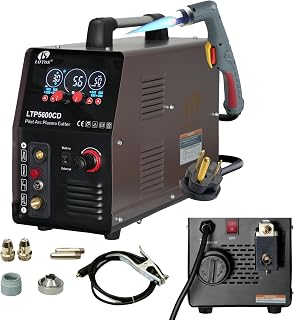
LOTOS LTP5600CD Compressor Non-Touch App-Style
Check PriceEvery plasma cutter manufacturer publishes two critical numbers: required airflow in cubic feet per minute (CFM) and required pressure in pounds per square inch (PSI). These numbers are typically measured at the inlet of the machine, after any onboard regulator. You must supply air that meets these values continuously while cutting, with a safety margin on the compressor output.
Most portable and light industrial plasma cutters operate in a sweet spot of 4.0 to 6.0 CFM at 70 to 90 PSI. Larger machines, especially 40-amp, 50-amp, and 60-amp units, can demand up to 7.5 CFM at 85 PSI. A common mistake is looking only at PSI. A small pancake compressor can deliver 90 PSI, but it may only push 2.5 CFM at that pressure, and the plasma cutter will starve almost immediately.
Typical Air Requirements by Plasma Cutter Amperage
- 30-amp plasma cutters: 3.5 – 4.5 CFM at 70 – 80 PSI
- 40-amp plasma cutters: 4.5 – 5.5 CFM at 75 – 85 PSI
- 50-amp plasma cutters: 5.0 – 6.5 CFM at 80 – 90 PSI
- 60-amp to 80-amp plasma cutters: 5.5 – 7.5 CFM at 85 – 95 PSI
- Industrial 100-amp+ cutters: 8.0+ CFM at 90 – 120 PSI
Always check the specific spec in your plasma cutter manual. Some machines have smaller internal orifices and need higher pressure, while others work best at a precise 72 PSI with a tight flow window. Setting the regulator at the compressor to 120 PSI and letting the machine’s internal regulator knock it down is standard practice, but you still need the CFM at that intermediate pressure.
Minimum CFM and PSI Ratings: How to Read Them Correctly
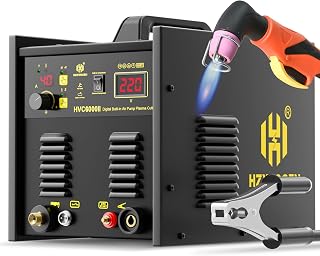
HZXVOGEN Machine Compressor Inverter Technology
Check PriceCompressor ratings can be misleading. A big box store may sell a 6 gallon, 150 PSI compressor and call it a 4.0 CFM at 90 PSI unit. But that 4.0 CFM is often the average delivery, not the sustained flow. For a plasma cutter that runs continuously for longer than a few seconds, you need a compressor that delivers that CFM at the required pressure with the pump running, not just the stored air in the tank.
Here is a simple rule: find the plasma cutter’s required CFM, then add 30 to 50 percent buffer to determine the compressor’s rated CFM at that PSI. If your plasma cutter asks for 5.0 CFM at 90 PSI, you want a compressor that puts out at least 6.5 to 7.5 CFM at 90 PSI. This margin accounts for pressure drops through hoses, filters, couplers, and the air dryer. It also prevents the compressor from running continuously and overheating.
Do not underestimate the role of the tank size. A larger tank acts as a buffer, smoothing out the demand spikes and giving the pump time to rest. For a 40-amp plasma cutter, a 20-gallon tank is the practical minimum for anything beyond brief tack-and-cut use. A 30-gallon or 60-gallon vertical compressor puts you in a comfortable zone where the pump cycles normally and air cools down between compressions.
Choosing the Right Air Compressor for Your Plasma Cutter
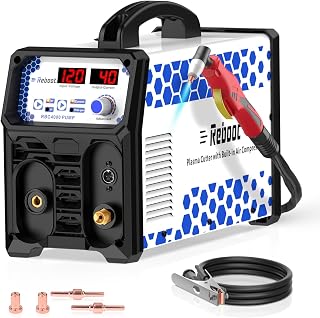
Reboot Compressor Inverter Digital Frequency
Check PricePicking a compressor comes down to three factors: delivered CFM, maximum pressure, and tank volume. But you also need to decide between a single-stage and two-stage pump. For most plasma cutting applications up to 60 amps, a single-stage, oil-lubricated compressor with a 60-gallon tank is the gold standard. It provides enough flow, runs cooler than oil-free units, and typically lasts for decades in a home shop.
If space or budget is tight, a portable oil-free compressor with a 20 to 30-gallon tank can work for short cuts on thinner material. But you must pair it with excellent filtration because oil-free pumps run hotter, shed more moisture into the air stream, and often have a lower duty cycle. For anyone considering a machine with an integrated air source, we have a detailed look at plasma cutters that include a built-in air compressor. These are convenient for portability but still need to be evaluated against standalone systems.
Compressor Comparison: Oil-Free vs. Oil-Lubricated
- Oil-free: lightweight, low maintenance, portable. They run hot, produce more water vapor, and have shorter service life. Fine for intermittent hobby use with strong downstream drying.
- Oil-lubricated: heavier, require oil changes, but run much cooler. Deliver stable CFM and introduce less thermal moisture. Preferred for any production or CNC plasma table setup.
If you go oil-lubricated, you must add a coalescing filter to catch oil aerosols. Even a tiny amount of oil mist inside a plasma torch will carbonize on the electrode and cause erratic arc starts. A general-purpose water separator alone is not enough.
Plumbing, Filtration, and Air Drying
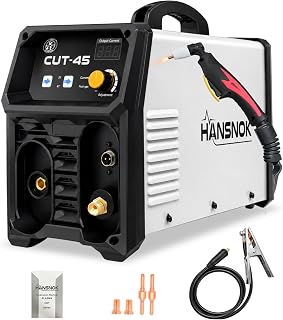
HANSNOK Compressor Inverter Portable Frequency
Check PriceThe air leaves your compressor hot and wet. Cooling it down and stripping moisture is a three-stage process. First, run at least 25 feet of metal pipe, iron or copper, between the compressor tank and the first filter. This acts as a heat exchanger, letting the water vapor condense on the pipe walls so you can drain it out. Then you want a water separator or a refrigerated air dryer, followed by a high-grade coalescing filter and a desiccant dryer just before the plasma cutter inlet.
Do not use PVC pipe for compressed air. It can shatter and is a serious safety hazard. Stick with black iron, copper, or a properly rated aluminum compressed air piping system. A simple vertical drip leg before the plasma cutter catches any last slugs of water that make it past the filters. Draining the compressor tank daily and the drip leg frequently becomes a habit that saves you $15 in consumables every single week.
One budget-friendly but effective drying method is a desiccant cartridge filter mounted on the back of your plasma cutter. Replace the desiccant beads when they change color. For CNC plasma tables, a refrigerated air dryer is almost mandatory because long continuous cuts demand a dew point well below the shop ambient temperature. You can learn more about the broader filtration chain from industry resources like the Miller Electric guide on compressed air requirements for plasma cutting.
Installing a Dedicated Air System
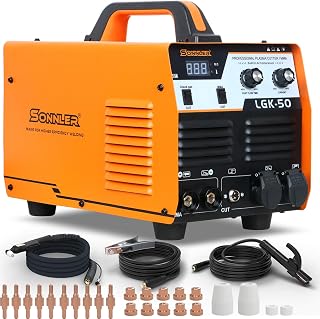
SONNLER Digital Inverter Machine Compressor
Check PriceIf you are serious about plasma cutting, running a dedicated air line just for the cutter eliminates contamination from other tools. Install a tee off the main header with a ball valve, then step down to a regulator, a coalescing filter, and a desiccant dryer in that exact order. Set the regulator to 100-110 PSI static so the machine always sees a stable inlet pressure even during a cut when the compressor pump is running.
Use a three-eighths inch minimum inner diameter hose from the wall to the plasma cutter. Smaller hoses create a Venturi effect and pressure drop, robbing the arc of its punch. Quick-connect fittings are convenient but they must be high-flow type. Standard industrial M-style couplers often choke the flow at higher CFM demands. Many fabricators switch to V-style or T-series couplers for plasma air lines to maintain a steady 5 to 6 CFM flow without restriction.
Troubleshooting Common Air-Related Plasma Problems
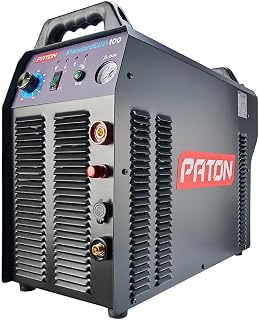
PATON Standard CUT-100-400V Plasma Compressor
Check PricePoor cut quality often traces back to the air compressor setup. If you see excessive bottom dross, a wide kerf, or erratic torch flickering, suspect low air flow or unstable pressure first. A misleading symptom is that the machine powers on and the pilot arc fires, but the cut wanders or fails to penetrate. That almost always points to enough pressure but insufficient CFM volume.
Check your regulator gauge while an assistant cuts. If the needle dips more than 5 PSI below the set pressure during a cut, your compressor cannot keep up, or your hose and fittings are too restrictive. Another telltale is rapid electrode wear. A swirl ring full of black carbon or a nozzle that looks pitted after only a few cuts screams oil or moisture in the air. Installing a point-of-use filter with a desiccant right at the plasma machine inlet corrects that almost overnight.
Also, watch for the compressor cycling too frequently. A properly sized tank and pump should maintain a duty cycle where the compressor runs about 60 percent of the time during aggressive cutting. If it runs continuously without shutting off, it is undersized and will overheat, delivering even hotter and wetter air.
FAQ Section
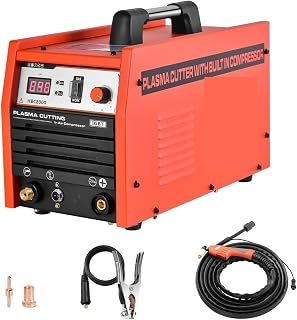
Compressor Welders Inverter aluminum Beginners
Check PriceWhat PSI should I set my compressor at for a plasma cutter?
Set your compressor’s output regulator to 100 to 120 PSI, and let the plasma cutter’s internal regulator dial the exact requirement, typically between 70 and 90 PSI. Always check the manual. Providing too low of an inlet pressure starves the machine, while too high can damage internal seals.
Can I use a small pancake compressor for a plasma cutter?
No. Pancake compressors usually deliver around 2.0 to 2.6 CFM at 90 PSI, which is far below the 4.0+ CFM needed. You might be able to make a one-inch cut before the air tank drains and pressure drops, but sustained cutting is impossible.
Do I need a refrigerated air dryer for plasma cutting?
For hobby use on thin metal, a good desiccant filter at the torch is often enough. For CNC cutting, long production runs, or any work in humid environments, a refrigerated dryer is strongly recommended. It prevents moisture slugs that destroy consumables.
How far should the air dryer be from the compressor?
At least 25 feet of metal piping downstream. This allows compressed air to cool, so water condenses out before it hits the dryer or filter. Placing a dryer right at the compressor outlet sends hot, saturated air into the unit and reduces its lifespan and efficiency.
Conclusion
Meeting plasma cutter air compressor requirements is a numbers game, but one you can win with the right knowledge. Start by knowing your machine’s exact CFM and PSI specs. Add a comfortable buffer, pick an oil-lubricated compressor with a tank of at least 30 gallons, and invest in real filtration, a water separator, a coalescing filter, and a desiccant dryer. These steps will transform your plasma cutting experience from frustrating to flawless.
Double-check your quick-connect fittings and hose diameter. Monitor your regulator pressure while cutting. If the needle stays rock steady, you know the air system is dialed in. When you treat your air supply as an integral part of the plasma cutter, not an afterthought, you get cleaner cuts, longer consumable life, and a machine that works as hard as you do.