Walking into a fabrication shop, you will immediately notice every welder pulling down a dark visor before striking an arc. That protective barrier, often called a welding shield or helmet, is not just a fashion statement. It is the single most critical piece of safety equipment a welder owns. Understanding why welders wear shields reveals the intense, invisible dangers present in that bright spark of an electric arc.
The light produced during welding is not ordinary brightness. It emits ultraviolet (UV) and infrared (IR) radiation at levels that can destroy unprotected eyes in seconds. A proper shield acts as a filter, blocking these harmful rays while still allowing the welder to see the molten puddle. Without it, permanent eye damage or even blindness is a real risk every time an arc is lit.
Beyond radiation, the welding process throws a storm of sparks, molten metal spatter, and chipping slag directly at the worker’s face. The shield provides a physical barrier that prevents painful burns and lacerations. It also serves as a guard against toxic fumes and intense heat, keeping the welder’s breathing zone safer and more comfortable during long hours of work.
Table of Contents
The Hidden Hazards of Welding Arc Light
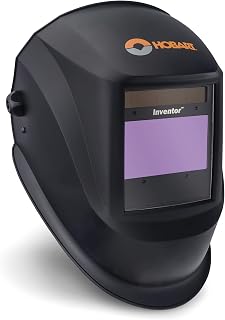
Hobart 770890 Auto-Darkening Welding Helmet
Check PriceIt is easy to underestimate the power of a tiny bright arc. Many beginners assume sunglasses are enough to block the glare. This dangerous misconception leads to thousands of painful injuries every year. The arc created by a welder reaches temperatures hot enough to melt steel, and the light it emits contains the full spectrum of harmful radiation.
The intense UV rays are the primary culprit behind arc eye, a condition formally known as photokeratitis. It is essentially a sunburn on the cornea of the eye. Symptoms often do not appear until hours after exposure, which means you can damage your eyes during the day and wake up in the middle of the night feeling like sand has been poured into them.
Infrared radiation poses a different threat. It does not always cause immediate pain, but it generates heat that can slowly cook the retina and the lens of the eye. Long-term exposure without a proper shield can lead to cataracts and permanent retinal scarring. Wearing a shield is the only way to neutralize these invisible threats before they cause common safety risks in welding that can be life-altering.
What Exactly Is a Welding Shield?
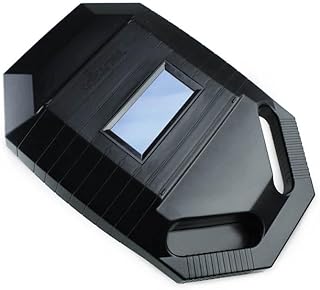
Sellstrom S25000 Hand Held Welding Shield
Check PriceMany people use the terms welding helmet and welding shield interchangeably, and they are essentially the same. The shield is the protective face covering that holds a dark lens in front of the welder’s eyes. While some are handheld, the vast majority of modern shields are mounted to a headgear system, leaving the welder’s hands free to manipulate the torch and filler rod.
The lens inside the shield is not just a piece of smoked glass. It is a precision optical filter scientifically designed to block 99.9 percent of harmful UV and IR radiation. Learning the basics of a welding shield helps you appreciate why even a cracked or pitted lens must be replaced immediately to avoid radiation leaks.
The Science Behind Eye and Face Injuries

MIGVAN Auto Darkening Welding Helmet
Check PricePhotokeratitis and UV Burns
Ultraviolet radiation is the swiftest attacker during welding. It can cause flash burns after just a few seconds of direct exposure. The cornea absorbs this UV energy, leading to cell death and inflammation. The pain is excruciating, often described as having crushed glass in the eye, and medical treatment is required to prevent infection while the eye heals.
The damage is cumulative. A welder who flips their hood up too early or backups someone else’s arc without darkening their lens will accumulate micro-injuries over time. Eventually, this leads to chronic dry eye, light sensitivity, and pterygium, a growth on the eye’s surface that requires surgery to remove. A good shield makes these conditions entirely non-existent for a career welder.
Infrared Radiation and Retinal Damage
Infrared radiation is a stealthier enemy. You do not feel a burn when you look at an arc without proper protection because the retina has no pain receptors. However, the focused heat can cause thermal lesions on the retina. Over years of repeated exposure, this accelerates the formation of cataracts, a clouding of the eye’s natural lens that requires implant surgery to fix.
Welding shields use specialized gold, green, or auto-darkening filter technology to reflect or absorb these infrared wavelengths. This is why buying a cheap, unrated shield is so dangerous. You might see a dark tint and think you are safe, but if the lens lacks the proper metallurgical coating, the infrared radiation passes right through and silently damages your sight.
Beyond the Eyes: Why Full-Face Coverage Matters
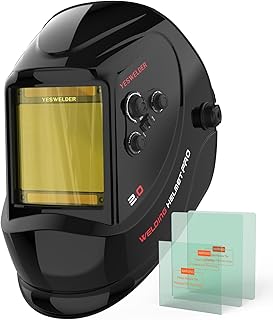
YESWELDER LYG-M800H Welding Helmet
Check PriceProtection from Sparks, Slag, and Spatter
Welding is a violent physical process. As the electrode melts, tiny droplets of molten steel at temperatures above 2,500 degrees Fahrenheit fly off in all directions. These hot berries of metal can land in the ear canal, stick to the neck, or burn deeply into the skin. A shield acts as a solid wall, deflecting these projectiles harmlessly away.
The shield also protects during the chipping phase. After a stick weld, a layer of slag covers the joint to protect it as it cools. Welders use a chipping hammer to break this glass-like waste away. Sharp shards fly off at high speed, and without a shield, they would inevitably hit the face and eyes. Even with safety glasses underneath, a full shield is the trusted front-line defense.
Respiratory and Heat Protection
While a shield is not a respirator, its face coverage creates dead air space that diverts a significant amount of fumes away from the welder’s immediate breathing zone. In positions where the welder has to get close to the puddle, the shield prevents the direct plume of manganese and hexavalent chromium fumes from blasting straight into the nose and mouth.
Radiant heat is also a major comfort factor. The infrared energy coming off a high-amperage arc can feel like standing in front of an open oven door. The shield’s shell, often made of heat-resistant nylon or fiberglass, reflects this heat before it reaches the skin. This prevents the tanned face and neck that old-school welders used to get before safety standards modernized.
Types of Welding Shields: Hand-Held vs. Helmet-Mounted
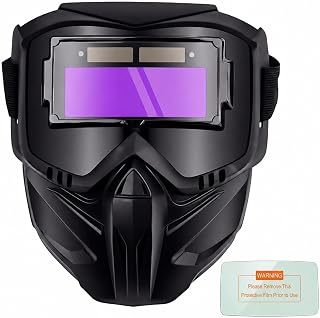
Auto-Darkening Welding Helmet with Vent System
Check PriceWelding shields come in two main forms. The traditional hand-held shield resembles a mask with a handle at the bottom. It is most common in inspection work or for an observer who only needs to glance at a weld briefly. The obvious downside is that it occupies one hand, making it impossible to TIG weld or hold a workpiece simultaneously.
Helmet-mounted shields are the industry standard. They attach to an adjustable headband that leaves both hands completely free. Inside the helmet, the welder can fit a cheater lens for magnification and a protective clear cover lens to protect the expensive filter from pitting. This hands-free design is essential for productivity and precise bead control.
Passive vs. Auto-Darkening Lenses
A passive lens stays dark at all times. It is a fixed shade, usually a deep tint of green or gold. The welder nods the helmet down as the arc starts and flips it up when they stop. These lenses are durable, inexpensive, and battery-free, making them a favorite for pipeline and outdoor work where reliability is king.
Auto-darkening lenses contain electronic sensors and a liquid crystal filter. In its idle state, the lens is light enough to see the workbench clearly. Within 1/25,000 of a second after sensing an arc, the lens darkens to a pre-set welding shade. This technology dramatically reduces neck fatigue and increases precision, though it requires battery or solar power to function.
Choosing the Right Shade Number
The level of darkness is measured in shade numbers, ranging roughly from 5 to 14 for most welding processes. A shade that is too low will leave you seeing spots after the weld and cause eye strain. A shade that is too high makes it nearly impossible to see the weld puddle, forcing you to move in too close and risk touching the hot metal with your shield.
General guidelines suggest using shade 10 for MIG welding under 200 amps, moving up to shade 12 for heavier flux-core welding, and shade 13 or 14 for high-amperage carbon arc gouging. Always start with a shade that is slightly too dark and work your way lighter if needed, because you can always adjust up the current, but you cannot undo a retinal burn.
Do All Welders Need a Shield?

TOPDC Flip Front Welding Helmet Shade 11
Check PriceAbsolutely. There is a stubborn myth among some hobbyists that squinting or closing your eyes during the tack is good enough for a quick spot weld. This is dangerously false. UV radiation penetrates the eyelid easily. Your thin layer of skin offers zero protection against arc rays, and you will still suffer a corneal flash burn even with your eyes fully shut.
Standards set by organizations like OSHA require a shield to be used during any arc welding process. The shield must have a proper filter plate and a clear cover lens to prevent impact damage. Even helpers and fire watchers standing nearby must wear shades or shields to avoid indirect exposure. The arc does not have to be your own to blind you, it just has to be in your line of sight.
Practical Tips for Using Your Welding Shield Effectively
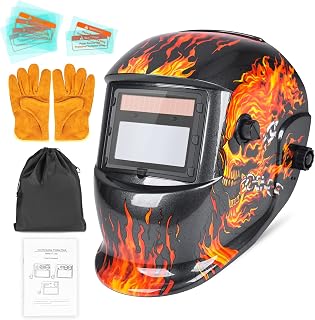
NDUUN True Color Auto Darkening Welding Helmet
Check PriceKeeping your shield clean is non-negotiable. A foggy, smoke-stained lens makes you lift your shield to see the joint, which defeats the entire purpose of wearing it. Wipe the clear cover lens with a microfiber cloth and approved plastic cleaner at the start of every shift. If the cover lens gets pitted with spatter, replace it immediately, because pits scatter light and cause eye fatigue.
Check the fit of your headgear regularly. A helmet that slips down during a vertical-up weld breaks your concentration and can cause weld defects. The headgear should be tight enough to stay put during a head nod but not so tight that it gives you a headache after an hour. Many professionals upgrade to cloth sweatbands to keep perspiration out of their eyes.
Always wear safety glasses underneath your hood. The shield is your primary protection, but secondary protection is the rule in every reputable shop. When you flip your hood up to chip slag or inspect a tack, your eyes are still vulnerable to flying debris. Side-shield safety glasses add that final layer of defense that can save your vision from a freak accident.
Frequently Asked Questions About Welding Shields
Hobart 770890 Auto-Darkening Welding Helmet
Check PriceCan a welding shield protect against everything?
A shield primarily protects against radiation, sparks, and impact. It is not a substitute for a respirator if you are working with stainless steel or galvanized metal that produces toxic fumes. For those applications, you need a powered air-purifying respirator (PAPR) or an N95 mask worn under the hood. However, the shield does deflect the main plume of smoke upward and away from your face.
Why do welders sometimes nod their heads before welding?
The head nod is a classic technique used with a passive-lens shield. The welder positions the torch with the helmet up, then gives a sharp nod to drop the hood into place just as the arc is initiated. This takes practice to coordinate perfectly. Auto-darkening helmets have made the head nod unnecessary, but many old-school welders keep the habit out of muscle memory.
Is a welding shield the same as a face shield?
No, a standard clear face shield used for grinding offers zero UV protection and will not protect you from arc eye. Welding shields have a specific national standard rating, typically ANSI Z87.1, with marking for welding filters. If your face shield is not marked specifically for welding, it is only suitable for grinding or light cutting, never for watching or performing an arc weld.
How long does an auto-darkening shield last?
The shell of a helmet can last for years with proper care, but the lens and battery components have a finite lifespan. Most auto-darkening cartridges are rated for several thousand hours of arc-on time. Exposure to extreme cold, moisture, or dropping the helmet can shorten that lifecycle significantly. Retire any helmet that shows signs of flickering or inconsistent darkening.
Conclusion: Shield Up and Weld Safe
Welders wear shields because the alternative is unthinkable. The fusion of metal that creates skyscrapers, bridges, and pipelines generates enough photonic energy to scar an eye permanently in a fraction of a second. A welding shield puts a scientifically engineered barrier between that brutal energy and the body’s most delicate sensory organs.
Modern shields have evolved into sophisticated systems that offer optical clarity, automatic darkening, and lightweight ergonomics. Yet the core mission remains the same: block 100 percent of harmful UV and IR radiation while standing firm against a storm of molten steel. Whether you choose a classic passive lens or a top-tier auto-darkening hood, the act of flipping that shield down is the single most responsible move a welder makes.
Invest in a quality helmet that meets ANSI standards, keep those cover lenses fresh, and always wear safety glasses underneath. Your eyes are irreplaceable, and in the welding trade, they are your most valuable tool. Shield up, stay comfortable, and let the arc light illuminate your work, not damage your future. For more guidance on meeting industry requirements, review OSHA’s eye and face protection standards before your next project.