You walk into a welding shop and see a row of machines. One of them, the TIG welder, sits silently while another welder creates a stack of dimes bead that looks like art. It is beautiful, precise, and a little intimidating. You ask yourself, Are TIG welders easy to use, or do I need years of practice just to stick two pieces of metal together?
The short answer is that TIG welding has a steeper learning curve compared to MIG or Stick welding. It requires patience, a steady hand, and solid coordination. However, calling it impossible for a beginner is a myth. With the right setup and understanding of the process, you can learn to lay decent beads faster than you might think.
This guide walks you through exactly why TIG welding is considered difficult. We will compare it to other processes. We will also give you actionable tips to flatten that learning curve. By the end, you will know if a TIG welder is the right machine for your shop.
Table of Contents
The Honest Truth About the TIG Welding Learning Curve
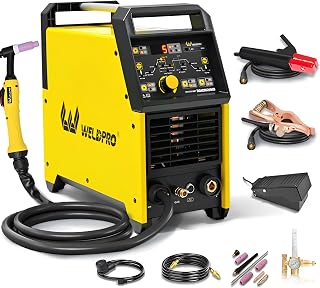
Weldpro 200A AC/DC TIG Welder with Pulse, 110V/220V Dual Voltage Aluminum TIG Welder
Check PriceLet’s not sugarcoat it. TIG welding, formally known as Gas Tungsten Arc Welding, is the most technique-sensitive welding process. Unlike MIG welding, where a machine feeds wire automatically, or Stick welding, where you just burn a rod, TIG requires you to use both hands and one foot simultaneously.
Your non-dominant hand holds the torch. Your dominant hand feeds a thin filler rod into the molten puddle. Meanwhile, your foot controls the amperage using a foot pedal. This is like playing a drum set, you need limb independence.
The puddle is tiny, and the margin for error is minimal. If you dip the tungsten electrode into the puddle, which happens constantly for beginners, you contaminate the weld and must stop to regrind the tungsten. This stop-start process can frustrate someone used to the speed of MIG welding.
Why TIG Welding Demands More Skill Than Other Processes
Weldpro 200A AC/DC TIG Welder with Pulse, 110V/220V Dual Voltage Aluminum TIG Welder
Check PriceHand-Eye Coordination
TIG welding forces you to control a molten puddle. You must watch the puddle size, not the arc. The filler rod must land exactly at the leading edge of the puddle. If your hand shakes, the rod sticks to the tungsten, or worse, you yank the rod out of the gas shielding zone and oxidize the metal.
The Foot Pedal Dance
Most entry-level MIG welders use a fixed voltage setting. TIG is dynamic. You start with high amperage to heat the metal quickly. As the puddle forms, you ease off the pedal. When you add filler rod, the puddle cools, so you might need to add a tiny burst of heat. Learning to vary the current without looking at your foot is a skill that takes muscle memory.
Cleanliness Is Non-Negotiable
MIG can burn through light mill scale and rust, within reason. Stick welding is famously tolerant of dirty surfaces. TIG welding is not. Any oil, paint, rust, or dirt on the base metal will cause porosity and contamination in the weld puddle. The metal must shine like a new coin before you can strike an arc. If you are not a patient person who enjoys cleaning metal meticulously, TIG will feel incredibly difficult.
TIG Welding vs. MIG Welding and Stick Welding for Beginners
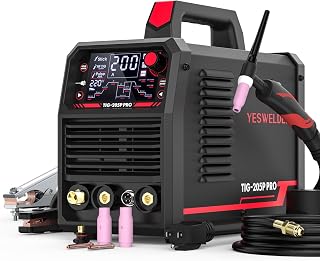
YESWELDER 205A Tig Welder Pulse STICK/DC TIG/PULSE TIG 3 in 1 TIG-205P Dual Voltage
Check PriceTo understand the difficulty level, a direct comparison helps. Each process has a distinct personality. One is a point-and-shoot camera, the other is a manual film camera requiring a darkroom setup.
- MIG Welding: Often called the hot glue gun of welding. Its ease of use is legendary. You pull the trigger, and wire feeds automatically. The learning curve is measured in hours. You can make functional welds on your first day. If you are looking for the easiest start, check out our guide on the best welder for beginners.
- Stick Welding: Harder than MIG to learn but more forgiving than TIG regarding surface prep. The biggest challenge is striking an arc without the rod sticking to the metal. Once you learn to hold a tight arc, you can weld outdoors in the wind. Stick welding forces you to move your hand toward the puddle as the rod melts, a similar motion to TIG, but the equipment is much simpler.
- TIG Welding: The artisan’s tool. It is slower, quieter, and cleaner than the other two. But it demands absolute control. The difficulty is high, but so is the reward. You can weld exotic metals like stainless steel, aluminum, and titanium with stunning results.
The Equipment Barrier: Does a Good Machine Make It Easier?
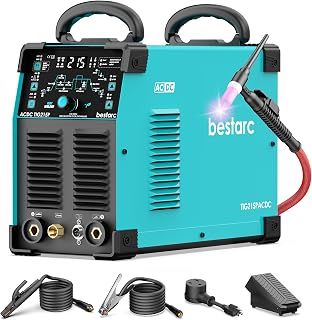
Bestarc TIG Welder AC/DC, 215Amp Aluminum TIG Welder with Pulse TIG and Dual Voltage
Check PriceAre TIG welders easy to use if you buy a top-of-the-line machine? Yes, the machine can make a massive difference. A cheap TIG welder with a scratch-start ignition and no high-frequency start will make a beginner want to quit. You have to drag the tungsten across the workpiece like a match, which easily contaminates the tip.
A modern inverter TIG welder with high-frequency start allows you to start the arc without touching the metal. This keeps the tungsten sharp. Furthermore, adjustable AC balance and pulse features on digital machines help you control heat input. A pulse setting automatically switches between high and low amperage, giving the puddle a split second to cool, which prevents blow-through on thin metal.
Investing in a machine with a smooth foot pedal response is critical. A jerky pedal that jumps from 0 to 50 amps is a nightmare for a beginner. You want a linear, predictable power curve. Don’t buy a cheap, used industrial transformer machine to learn on, it will punish you.
Common Beginner Mistakes That Make TIG Seem Harder
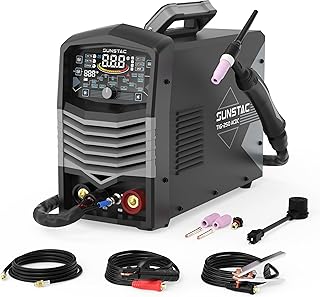
Sunstac 250A Aluminum TIG Welder with Pulse ACDC Foot Pedal Control 5 in 1
Check PriceMost beginners blame their hands when the real culprit is often setup or consumables. Before you decide you lack the talent, check these common pitfalls. Fixing these makes the process feel instantly easier.
- Incorrect Tungsten Grind: The tungsten grinding marks must run lengthwise, toward the tip. If you grind in a circular motion, the arc will wander and dance around the puddle. A wandering arc makes it impossible to control the heat.
- Wrong Tungsten Stick-Out: If you stick the tungsten out too far from the gas nozzle, the shielding gas won’t protect the hot metal. The weld will look like a gray, sugar-coated mess. This is a gas coverage issue, not a skill issue.
- Poor Body Positioning: You cannot learn to weld if you are holding your breath and shaking. You need to brace your torch hand against a steady surface. Slide your hand along the table, or use a TIG finger heat shield to rest your torch hand right next to the hot weld zone.
- Rushing the Puddle: MIG welders are used to instant gratification. TIG requires patience. You must wait for the shiny, mirror-like puddle to form before adding filler rod. Trying to push the arc before the base metal wets out results in a cold, lumpy bead with no penetration.
Actionable Tips to Make TIG Welding Easy
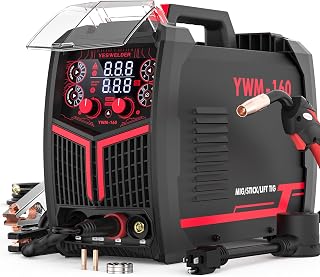
YESWELDER 160A MIG Welder, 110V/220V MIG/Flux Core/Lift TIG/Stick 4-In-1
Check PriceYou can start with techniques that simplify the coordination. Do not try to master all three actions at once. You need to isolate the skills.
1. Master the Torch Without the Rod
For your first session, leave the filler rod on the bench. Focus solely on the torch and foot pedal. Run autogenous welds, meaning welds without filler, on a flat plate. Simply create a puddle and move it across the plate. Your goal is to keep the puddle width consistent. This teaches you the relationship between torch travel speed and amperage.
2. Learn to Dab the Rod
Once you can move a puddle in a straight line, introduce the filler rod. Use a lay wire technique if you are struggling. Place the rod in the joint and run the arc over it without dabbing. This works well for lap joints. Once you are comfortable, practice the dab motion. Move the arc forward, dab the rod, retract the rod, and move the arc again. The rhythm is like a steady heartbeat.
3. Practice on Flat Aluminum
It sounds counterintuitive because aluminum is tricky, but it is excellent for learning puddle control. Aluminum melts suddenly, from solid to liquid, without a color change. This forces you to look for the wet appearance of the surface. If you can control the puddle on aluminum, stainless steel will feel like butter.
Is TIG Welding Easier to Learn If You Already Know Other Welding?
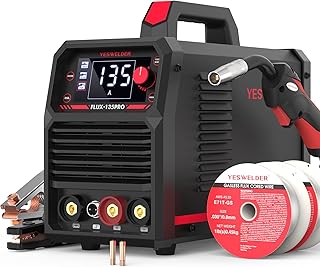
YESWELDER 135A MIG Welder, 110V Flux Core Gasless MIG/Lift TIG/Stick 3-in-1
Check PriceHaving prior welding experience is a double-edged sword. A Stick welder understands puddle manipulation and arc length control. This is a huge advantage. They know what a good puddle looks like. However, a MIG welder often struggles with the slow pace. They are used to moving fast and laying down a lot of metal quickly.
The biggest hurdle for experienced Stick or MIG welders is the light touch required. TIG is not about digging the arc into the plate. It is a gentle, precise heat application. If you press the pedal too hard, you blow a hole instantly. You must unlearn the aggressive habits of other processes. You can read more about the general difficulty of the trade in our article on is welding hard to learn.
The Role of Personal Protective Equipment in Forming Good Habits
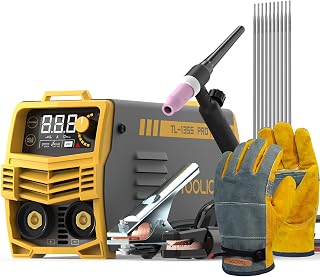
TOOLIOM 135A 110V Stick Welder Kit with Lift TIG Torch, rods and Gloves
Check PriceYou cannot learn a clean weld if you cannot see clearly. A high-quality auto-darkening helmet is not a luxury, it is a teaching tool. If you are using a passive fixed-shade helmet, the nod-down motion can cause you to lose your torch angle right at the start of the arc. An auto-darkening lens lets you position the torch perfectly before you strike the arc.
Visibility is crucial for TIG. You need a helmet with a large viewing area and optical clarity. If the lens is green and blurry, you cannot see the fine details of the puddle. This leads to dipping the tungsten. You should also wear thin, flexible TIG gloves. Heavy MIG gloves kill the dexterity needed to feed the filler rod. Miller Electric offers excellent resources on how a TIG welder functions and the best practices for setup.
Frequently Asked Questions
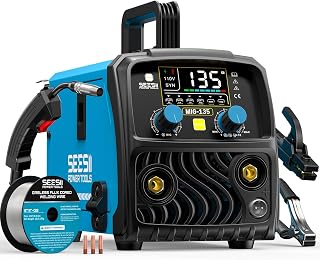
SEESII 135A MIG Welder 110V – 3-in-1 Gasless Flux Core/Lift TIG/Stick Welding Machine
Check PriceCan I teach myself TIG welding?
Yes, you can absolutely teach yourself. YouTube is a university for welders. However, without an instructor to correct your torch angle and arc length immediately, you risk developing bad habits that take weeks to break. Video yourself welding. Watching your hands afterward reveals mistakes you don’t feel while wearing the helmet.
How long does it take to get good at TIG welding?
You can stick two pieces of steel together in a weekend. To achieve a layered, corrosion-resistant weld on stainless steel pipe, you might need 40 to 100 hours of dedicated hood time. The standard for good varies. A hobbyist fixing a lawnmower deck can be proficient in a week. A pressure vessel welder trains for years.
Why does my TIG weld look gray and rough?
This is usually a shielding gas issue. You are either moving the torch too fast, pulling the hot tungsten out of the gas coverage zone, or there is a draft blowing the argon away. Check your gas flow rate, usually around 15 to 20 cubic feet per hour, and ensure your torch angle is about 15 degrees from vertical.
Is TIG welding safe for beginners?
It is safer than Stick or MIG in terms of spatter and smoke. There is virtually no smoke if the metal is clean. However, TIG produces intense ultraviolet light. Because the arc is quiet and spatter-free, some beginners mistakenly think they can weld with a lighter shade lens. Always use a shade 10 or higher, and cover all exposed skin to avoid the TIG sunburn.
So, Are TIG Welders Easy to Use? The Final Verdict
Are TIG welders easy to use immediately? No. They demand a mechanical sympathy that other welders do not. But are they impossible to learn? Absolutely not. The difficulty is often overstated by those who tried it once with a bad machine and a dull tungsten.
Think of TIG welding like learning to drive a manual transmission car. At first, you stall the engine constantly. You are clumsy and frustrated. But after a few weeks, your feet learn the clutch without thinking. Muscle memory takes over. TIG welding is the same. Once your hands learn the rhythm, the process becomes incredibly satisfying.
Start with clean metal, a sharp tungsten, and a comfortable resting position. Forget the filler rod for the first few hours. Focus on the light show and the puddle. If you respect the process and practice deliberately, you will find that the king of welding processes is not as hard to tame as you feared.