Understanding the equipment needed for MIG welding is the first step before you strike an arc. MIG welding, also called gas metal arc welding, uses a continuously fed wire electrode and a shielding gas to join metal. The process is beginner friendly, but only if you have the right tools and safety gear. This guide breaks down every essential item, from the welder itself to the smallest consumable.
Before buying anything, take a few minutes to learn how each tool supports the welding process. This will help you avoid overspending on unnecessary accessories and still build a safe functional workspace. Many first time shoppers focus only on the machine, but the supporting gear matters just as much.
Table of Contents
Core MIG Welding Equipment
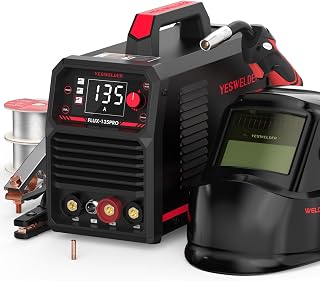
YESWELDER 135A Flux Core MIG Welder FLUX-135PRO with LYG-L600A Helmet
Check PriceThe core equipment for MIG welding includes the power source, the MIG gun, a ground clamp, and a shielding gas system. Without these four components, you cannot complete a basic weld. Some entry level machines use flux cored wire and do not need gas, but true MIG welding always requires shielding gas. You can still use many of the same setup tools for both processes.
MIG Welder Power Source
The MIG welder is the heart of your setup. It converts input power into a stable DC output for the welding arc. Most home users choose a 110 volt machine for thin steel or a 220 volt machine for thicker metal and longer duty cycles. Look for adjustable voltage and wire feed speed controls because these settings let you tune the arc. For a reliable starter unit, compare the best MIG welder options for beginners before you commit.
A 110 volt machine is portable and works on standard outlets, but it limits you to thinner material. A 220 volt machine handles more amperage and has a longer duty cycle, but it needs the correct outlet. Match the welder output to the thickest metal you plan to weld. Do not buy a machine with barely enough power for your largest project.
MIG Welding Gun and Consumables
The MIG gun delivers the wire, shielding gas, and electrical current to the weld puddle. It has a trigger that starts the wire feed and gas flow. The gun uses several wearable parts including contact tips, nozzles, and gas diffusers. Keep spare contact tips on hand because they wear out quickly and cause erratic arcs.
- Contact tips matched to your wire diameter
- Nozzles in different sizes for reach and gas coverage
- Gas diffusers and liner replacements
- Drive rolls and inlet guides for the wire feeder
Replace contact tips when the hole becomes oval or blocked. A worn liner will cause uneven wire feeding, so keep one spare liner that fits your gun length. These small parts are inexpensive, but neglecting them can ruin your weld quality.
Ground Clamp and Work Lead
The ground clamp completes the electrical circuit between the welder and the workpiece. A poor ground connection leads to a wandering arc, excessive spatter, and overheating at the clamp. Attach the clamp to clean bare metal as close to the weld area as practical. For most MIG machines, the ground clamp and work lead are included, but upgrading to a copper clamp improves current flow.
MIG Wire and Drive Rolls
MIG wire is the filler metal that melts into the joint. Solid wire for mild steel comes in diameters such as 0.023 inch, 0.030 inch, and 0.035 inch. Thinner metal typically uses smaller diameter wire, while thicker metal needs larger wire. Make sure the drive rolls in your wire feeder match your wire diameter and type.
For aluminum, you may need a spool gun or a push pull system because aluminum wire is soft and tends to bind. Stainless steel and aluminum also require the correct shielding gas. Keep your wire clean and dry to prevent feed issues and porosity.
Shielding Gas System
Shielding gas protects the molten weld pool from contamination. For mild steel, a mix of 75 percent argon and 25 percent carbon dioxide works well for most users. Aluminum requires pure argon, while stainless steel often uses a tri mix gas. You need a gas cylinder, a regulator with a flowmeter, and a gas hose that connects to the wire feeder.
- Gas cylinder rented or purchased from a local welding supplier
- Regulator with flowmeter to control cubic feet per hour
- Gas hose with secure connections and no leaks
Set flow between 20 and 30 cubic feet per hour for most indoor MIG welding. Too little gas causes porosity, and too much gas wastes money and creates turbulence. Always check for leaks with soapy water before welding. For recommended flow rates and gas selection, the American Welding Society welding resources provide reliable technical guidance.
Personal Protective Equipment for MIG Welding
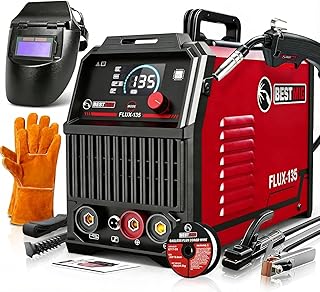
BESTMIG 135A MIG Welder – 3-in-1 Flux Core Welder, MIG/Lift TIG/Stick Welding Machine
Check PriceMIG welding produces intense light, infrared radiation, sparks, and fumes. You need dedicated personal protective equipment, or PPE, from head to toe. Never weld in shorts, open toed shoes, or synthetic clothing. Cotton or leather clothing reduces burn risk and keeps you comfortable.
Welding Helmet
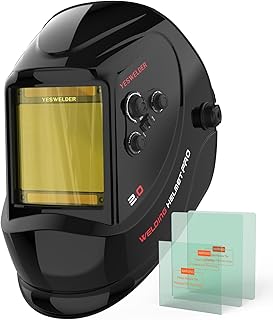
YESWELDER LYG-M800H Auto Darkening Welding Helmet
Check PriceA quality welding helmet protects your eyes and face from arc flash and flying spatter. For MIG welding, an auto darkening helmet is the easiest choice for beginners. It darkens the lens in milliseconds when the arc starts, so you can position the gun while the hood stays down. A shade range of 10 to 13 works for most MIG amperage levels. To find a hood suited to this process, look at a welding helmet designed for MIG welding with adjustable shade and sensitivity.
Gloves, Jacket, and Clothing
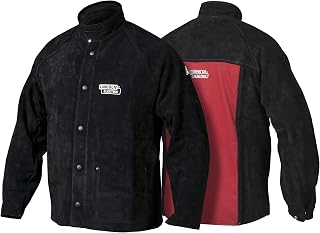
Lincoln Electric Heavy Duty Leather Welding Jacket
Check PriceHeavy duty welding gloves protect your hands from heat, sparks, and sharp metal edges. Choose MIG specific gloves with reinforced palms and a comfortable fit. A leather or flame resistant jacket protects your arms and torso. Wear long cotton or wool pants without cuffs, and use leather work boots that cover your ankles.
- MIG welding gloves with reinforced palm and thumb
- Leather welding jacket or flame resistant cotton jacket
- Long pants made from cotton, denim, or wool
- High top leather work boots with steel or composite toes
Respiratory Protection

Miller ML00894 Lpr-100 Respirator W/Filters
Check PriceMIG welding fumes contain metal particles and gases that can harm your lungs over time. Even if you weld outside, a lightweight respirator is a smart investment. For frequent indoor welding, use a powered air purifying respirator or a half mask with P100 filters. Basic disposable N95 masks are not rated for welding fumes.
Hand Tools and Workspace Setup
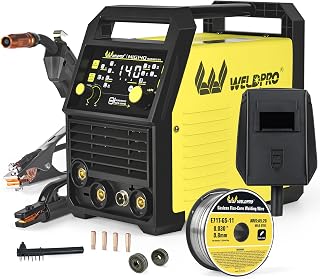
WELDPRO 140A MIG Welder 110/220V, 2026 Newest 5-in-1 Flux Core Welder
Check PriceYour workspace needs more than the welder itself. Metal preparation and fit up tools make the difference between a clean weld and a frustrating one. A stable table, clamps, and a grinder save time and improve safety.
Metal Prep Tools
MIG welding requires clean base metal. Rust, paint, oil, and mill scale can cause porosity and weak welds. Use an angle grinder with a flap disc or wire wheel to clean the joint. A stainless steel wire brush removes remaining debris without contaminating the surface.
- Angle grinder with grinding discs, flap discs, and wire wheels
- Stainless steel wire brush for cleaning the weld area
- Acetone or degreaser for removing oil and grease
- Soapstone or metal marker for layout lines
Clamps and Fixtures
Clamps hold your workpieces in position while you weld. MIG welding creates heat, and that heat can cause distortion. Use locking pliers, C clamps, or welding magnets to keep parts aligned. For repetitive parts, build a simple jig to speed up your work.
Welding Table and Grounding
A metal welding table gives you a flat, conductive surface for your work. It should have a thick steel top and sturdy legs. A solid table also lets you attach your ground clamp nearby, which helps maintain a stable arc. Avoid using a wooden table for heavy MIG work because sparks can collect and cause a fire risk.
Optional but Useful MIG Welding Accessories
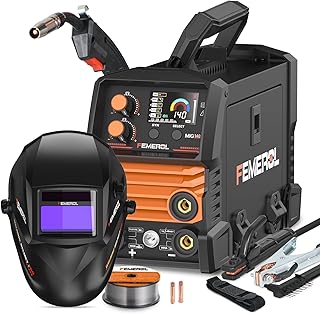
FEMEROL 140A 3 in 1 MIG Welder,Flux Core, MIG/Lift TIG/Stick Welding Machine 110V
Check Price- Welding cart to store your machine and gas cylinder
- Anti spatter spray to keep the nozzle and work surface cleaner
- MIG pliers for removing contact tips and nozzles
- Wire cutters for trimming the electrode wire before each start
- A dedicated fire extinguisher rated for electrical and metal fires
These accessories are not required on day one, but they make your workflow faster and more comfortable. A welding cart keeps the gas cylinder from tipping and gives you a place to wrap cords. MIG pliers save time when changing hot contact tips.
Setting Up Your MIG Welding Equipment

ANDELI 110V/220V MIG Welder 135A, PULSE Flux Core/Lift TIG/Stick 4-in-1
Check PriceProper setup prevents most beginner problems. Before you plug in, inspect your gun liner, drive rolls, and contact tip. Make sure all cable connections are tight and the gas hose is leak free. Then set your machine polarity to DCEP for solid MIG wire. Flux cored gasless wire uses DCEN.
- Install the correct drive rolls for your wire size
- Feed the wire through the liner until it exits the contact tip
- Set the shielding gas flow between 20 and 30 cubic feet per hour
- Clamp the ground to clean bare metal close to the joint
Run a short test bead on scrap metal before starting your project. This lets you adjust voltage and wire feed speed without ruining good material. Listen for a steady frying sound. A smooth crackling buzz usually means your settings are close to correct.
Common Mistakes When Buying MIG Welding Equipment
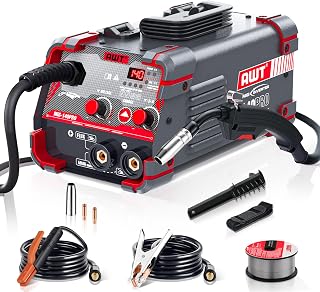
AWT 140A Flux Core MIG Welder/Stick/Lift TIG 3 in 1 Welding Machine 110V
Check PriceMany beginners buy the welder first and skip the supporting tools. This leads to a machine that sits unused. Budget for PPE, gas, and metal prep tools from the start. Another mistake is choosing the wrong input voltage or buying a machine without enough amperage for the metal you plan to weld.
Do not overlook the cost of consumables. Contact tips, nozzles, wire, and gas add up over time, but they are normal operating costs. Start with a modest setup and add accessories as your skills improve. Buying the cheapest helmet or gloves can cost more later when you replace them or deal with an injury.
FAQ Section
What is the minimum equipment needed for MIG welding?
At minimum, you need a MIG welder, a MIG gun, a ground clamp, shielding gas with a regulator, welding wire, and a welding helmet. Add gloves and protective clothing for safety. A clean metal workspace is also important.
Do I need gas for MIG welding?
True MIG welding requires shielding gas. Some machines run flux cored wire without gas, but that is a different process called FCAW. If you want clean, low spatter welds on thin steel, use shielding gas.
Can I use a stick welding helmet for MIG welding?
Yes, any welding helmet with a shade range of 10 to 13 can work for MIG welding. However, an auto darkening helmet is more convenient because you can keep the hood down while positioning the gun.
What size gas cylinder should I buy for home MIG welding?
For home use, an 80 cubic foot cylinder is a good balance between portability and refill cost. Small 20 or 40 cubic foot cylinders are easier to move but need more frequent refills.
What wire size is best for beginner MIG welding?
A 0.030 inch solid wire is a good all around choice for beginner MIG welding on mild steel. It works well on common thicknesses from auto body panels to light fabrication. Match your contact tip and drive rolls to the wire size.
Conclusion
The equipment needed for MIG welding goes far beyond the welding machine. You need a reliable power source, MIG gun consumables, shielding gas, and proper PPE. A clean workspace with clamps and an angle grinder helps you produce stronger welds. Start with the core tools, add accessories as needed, and always follow safety guidelines.
Before you buy, compare beginner friendly machines and choose a helmet that fits your budget. The right setup makes learning MIG welding safer and far more enjoyable. With the correct equipment on hand, you can practice with confidence and build skills that last a lifetime.