Welding sparks fly fast, and so do the questions about what you should wear. If you have ever looked at a basic pair of Levi’s and wondered, are jeans good for welding, you are not alone. Many beginners assume thick denim is tough enough for a hot arc. The truth is a bit more complicated, and your safety hangs in the balance. Before you strike an arc in street clothes, you need to understand exactly what happens when cotton meets molten metal.
We have listened to countless hobbyists who learned this lesson the hard way, often with a burn hole in their favorite pants. While denim feels sturdy compared to synthetic joggers, welding environments follow a different rulebook. This guide breaks down the fabric science, the specific risks of wearing regular jeans, and the proper protective gear that keeps your legs safe from UV burns and hot slag.
Table of Contents
The Fabric Problem with Regular Denim
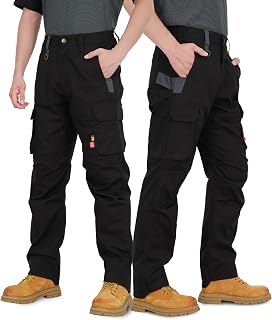
BOCOMAL FR Stretch Cargo Pants Lightweight Ripstop Relaxed Carpenter Jeans
Check PriceTo answer are jeans good for welding honestly, you have to look at the raw material. Almost all fashion jeans are made from 100% cotton or a cotton blend. Cotton is a natural fiber that catches fire and burns rather than melting away from the heat. In a workshop, that distinction is critical. Most people think denim is heavy and protective, but the typical pair of jeans weighs only about 12 to 14 ounces per square yard, which is simply not dense enough to stop flying sparks.
When a hot piece of spatter lands on your thigh, it sits on the surface for a moment. A proper welding pant made from leather or heavy flame-resistant (FR) cotton smothers the spark instantly. Denim, by contrast, allows that heat to transfer right through the weave. The fabric starts to glow and char before you can even react. This charring is not just a cosmetic issue, as it exposes your skin to a serious thermal burn.
The second hidden enemy is the distressed or fashion denim trend. Jeans with factory rips, frayed edges, or stretch materials introduce elastic fibers like spandex into the mix. Synthetics melt when hot slag touches them, causing a sticky, molten mess that bonds to your skin. The burn from melting plastic fibers is far worse than a simple cotton burn because it continues to transfer heat deep into the tissue, a painful reality many beginners fail to consider.
Cotton Jeans vs. Flame-Resistant Materials
In the world of welding safety, there is a vast difference between natural and fireproof. Cotton jeans are natural, but they are fuel for a flame. Quality welding gear uses treated FR cotton, which is chemically engineered to self-extinguish the moment an ignition source is removed. You can light the edge of an FR shirt, and it will char but not continue burning. Your average denim will simply burn like a candle wick. This chemical treatment does not wash out easily, making it a permanent safety barrier.
Leather is the heavyweight champion here. A dense split cowhide resists heat through sheer mass and does not catch fire at welding temperatures. Canvas cotton is the middle ground, but even heavy duck canvas can ignite. If you are set on a fabric look, you need rated FR pants specifically labeled for welding, not just heavy cotton. The safety standard to look for is NFPA 70E or ASTM F1506, which certify that the garment handles arc flash better than street clothes ever could.
Why Welding in Jeans Is Risky
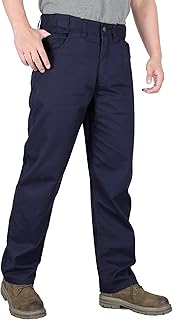
BOCOMAL FR Pants for Men Classic 5 Pockets Relaxed Fit Work Jeans
Check PriceSome old-timers will tell you they welded in jeans for forty years without an issue. While experience helps you position your body away from the spark stream, it does not eliminate bad habits or accidental slip-ups. Relying completely on blue denim ignores three major hazards in every welding bay. Understanding these dangers makes the answer to are jeans good for welding a firm no for serious work.
Sparks, Slag, and Melted Fabric Hazards
The most obvious threat is a direct hit from sparks. Stick welding and flux-core processes throw a generous shower of spatter that can reach upwards of 2,000 degrees Fahrenheit. When that spatter lands on the cuff of your straight-leg jeans, it often rolls right into the top of your boot. If the denim catches fire or burns through quickly, your ankle is the first victim. Jeans without a cuff that sits over the boot create a funnel for hot metal, a painful mistake that sends many beginners limping to the first aid kit.
Slag from cutting torches or heavy chipping also rains down in large, glowing chunks. A piece of slag half the size of a dime packs enough thermal energy to burn right through 12-ounce cotton. Once it burns a hole in the fabric, it keeps falling and burning the skin beneath. The denim itself curls black around the edges, acting like a smoldering ember against your leg. You often do not notice the deep burn until you smell the smoke, and by then the damage is done.
Lack of Arc Flash Protection
Burns from sparks are painful, but ultraviolet (UV) burns are sneaky because you cannot see them happening. The blinding light of a welding arc emits heavy UV radiation, similar to intense sunlight. Thick denim blocks some UV light, but it is not rated for it. If you are wearing thin or worn-out jeans, the UV rays can pass through the weave and cause a painful skin burn that looks exactly like sunburn. This is a common condition known as welder’s flash of the skin, and it appears several hours after you finish the job.
High-amperage MIG or TIG welding creates an aggressive arc that bounces off reflective surfaces, exposing your legs regardless of your body position. According to OSHA’s welding safety guidelines, exposed skin needs protection from radiation as well as heat. A basic pair of fashion jeans simply lacks the density and opaque nature of proper FR work pants, leaving you vulnerable to a red, peeling rash on your thighs that you might not connect to your afternoon project.
When Jeans Might Be Acceptable (with Caveats)
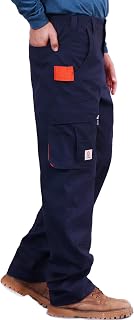
BOCOMAL FR Pants for Men Utility Cargo Carpenter Water Stain Oil Repellent
Check PriceDespite the warnings, most home welders will bend the rules for quick, low-intensity tasks. If you are determined to wear jeans while welding, strict boundaries are essential. The critical distinction comes down to the process and the body position. You can occasionally get away with denim if you are doing very short tack welds on a bench, standing upright, with minimal spatter falling toward you. However, this is a calculated risk, not a professional recommendation.
Light DIY Tasks and Jeans
A quick spot weld on a clean sheet metal patch with a MIG welder generates almost no spatter. If you set your machine correctly and use a simple trigger pull, the spark stream is minimal. In this exact scenario, a heavy pair of raw denim jeans might protect you just long enough. You still need to wear full leather footwear and a thick cotton jacket, but the risk to your legs drops significantly. Never push this to stick welding or overhead work, where gravity sends everything down onto your lap.
Yet even during light DIY tasks, you must constantly check your pockets and cuffs. Many small fires start in the roll of a denim cuff because a tiny spark hides and smolders there. You will not feel the heat through the thick fabric until it grows. If you catch yourself thinking are jeans good for welding a quick bracket, remind yourself that the ER visit from a hidden ember can cost more than a proper pair of FR work pants.
The Importance of Layering and Other PPE
If jeans are your only option for a brief tack, protective layering becomes non-negotiable. A heavy leather welding apron is the cheapest way to shield your lap and upper thighs from direct spatter. Pair jeans with a leather apron that hangs below the knee, and many of the risks diminish significantly. The denim essentially becomes a backing layer rather than the primary defense. This combination covers the crotch area and the pockets, which are notoriously prone to catching sparks because of the extra fabric folds.
You must also wear high-quality welding sleeves and proper boots under the jeans, not over them. Never tuck your jeans into your boots, as that creates a perfect landing pad for a molten ball of metal. The cuff should always go over the boot top to deflect debris, but a frayed cuff is a fire hazard. Safety glasses with side shields, a respirator, and a full leather glove setup are still mandatory regardless of your pant choice. The jeans might feel convenient, but they are only a small part of a much larger safety system that must never be compromised.
What to Wear Instead of Jeans for Welding
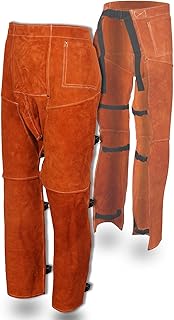
QeeLink Welding Pants – Heat & Flame Resistant Leather Leg Protection
Check PriceTransitioning away from cotton denim does not mean you need to wear a heavy, sweatbox suit all summer. Modern welding apparel combines breathability with serious heat resistance. The best alternative to asking is to simply wear pants engineered for the task. These garments are designed with two layers, a tough outer shell and a soft thermal barrier, to dissipate heat before it reaches your skin. They also feature no exposed metal buttons or zippers that can become a secondary source of burns.
Key Features of Proper Welding Pants
- Flame-Resistant Certification: Look for ASTM D6413 testing to confirm the fabric self-extinguishes. Unrated cotton is just a tinder bundle waiting for a spark.
- No Cuffs or Wide Cuffs: Proper welding pants often have a straight leg without a fold-over cuff. If they do have a cuff, it must be a tight, flat hem that prevents debris from catching.
- Durable Reinforcements: Repetitive bending and kneeling scorch the knees and seat fast. High-end pants use double-layer fabric or leather patches in these high-wear zones.
- Metal-Free Closure Systems: Brass zippers and snaps heat up instantly and can leave a brand on your skin. FR-rated pants use non-conductive buttons or covered zippers to protect against arc stray currents.
- Breathable Moisture Wicking: Staying safe does not mean passing out from heat. Many modern welder’s pants incorporate vents and moisture-wicking liners to keep your core temperature regulated.
Our Top Picks for Welding Pants
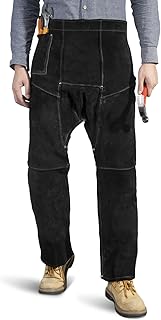
LeaSeek Leather Welding Pants, Heat & Flame Resistant Safety Leg Protection
Check PriceIf you want to retire the denim permanently, investing in a purpose-built pair of pants is the single best upgrade you can make. We have tested a wide range of top-rated welding pants that balance comfort with heavy-duty protection. From lightweight FR cotton blends for hot summer TIG sessions to heavy leather aprons with attached leggings for stick welding, there is an option tailored for every process.
For those who require the absolute highest level of defense, flame-resistant welding pants are a game changer. These options go through rigorous third-party testing to withstand direct exposure times far exceeding what denim can handle. The slight premium in price is a direct investment in your personal safety, and these pants outlast several pairs of ruined Levi’s, making them cost-effective over the long haul.
Frequently Asked Questions
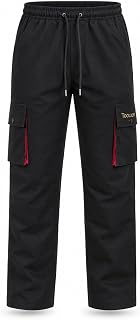
TOOLIOM Welding Pants Cotton Black
Check PriceCan you wear jeans under welding chaps?
Yes, wearing jeans under leather welding chaps is an acceptable and popular combination, especially for ranch or field repair. The chaps take the direct hit from sparks and slag, while the denim acts as a simple modesty layer beneath. However, the underlying jeans must still be 100% cotton without any synthetic stretch fibers. If a spark sneaks around the unfinished edge of a pair of half-chaps and hits a polyester blend jean, the result can be a dangerous melting injury. Always select full-grain leather chaps that wrap securely around the leg to eliminate gaps.
Are thick denim jeans safer than thin ones?
A heavy 21-ounce raw denim jean is definitely safer than a thin, elastic 10-ounce pair from a clearance rack. More mass takes longer to burn through, buying you crucial seconds to brush a spark away. Yet thick cotton still burns, and it does not offer the self-extinguishing properties of a chemically treated FR fabric. If you are forced to wear denim for a very short tack, the heaviest weight you can find is the minimum standard, but never consider it an equal replacement for dedicated welding apparel.
What is the best fabric for welding pants?
The best all-around fabric for welding pants is a treated 9-ounce FR cotton or FR cotton blend for indoor fabrication work. Leather is unmatched for heavy overhead stick welding, but it lacks breathability. Advanced fabric blends mixing Kevlar and carbon fiber offer extreme heat resistance while remaining flexible. Avoid synthetic nylon, polyester, or acetate at all costs, as these materials melt into the skin upon contact with any high-temperature debris and cause third-degree burns that require surgical removal.
How do you stop a welding shirt from catching fire?
Your shirt should be starched heavily if it is 100% cotton, as starch fills the weave spaces and creates a slightly more flame-resistant barrier. The most reliable method is to avoid cotton shirts entirely and wear a leather welding jacket or an FR treated fabric specifically designed for the task. Always button the top collar button to prevent sparks from falling down your back. Never work with frayed shirts, open pockets, or loose sleeves that can trap a smoldering ember out of your line of sight.
Conclusion
After examining the science of fabrics, the nature of spatter, and the hidden UV hazards, the answer to are jeans good for welding shifts from a casual maybe to a firm recommendation against them. Regular denim is simply too lightweight, too flammable, and too poorly designed to handle a continuous stream of molten metal. It might hold up for a ten-second tack weld on a bench, but relying on fashion jeans for any overhead work or heavy stick welding is inviting a painful burn incident. Your legs are too valuable to gamble on cheap cotton.
Invest in even a single pair of well-made FR welding pants or a high-quality leather apron, and your entire experience changes. You can focus on running a clean bead rather than swatting out small fires on your thighs. Pair that proper clothing with the right boots, gauntlet gloves, and a respirator, and you remove almost all the common variables that lead to workshop injuries. Ditch the denim for anything beyond the lightest hobby tasks, your skin will thank you after every single bead you lay.