If you spend hours under the hood, you know that lens clarity is everything. The debate between green and gold welding lenses has been going on for decades. Are gold welding lenses better, or are they just a flashy upgrade? The short answer is that gold lenses often provide superior visual clarity and reduced eye strain, but they are not a magic bullet for every welding process. Understanding the trade-offs will help you protect your vision and improve your weld quality.
Table of Contents
What Are Gold Welding Lenses?
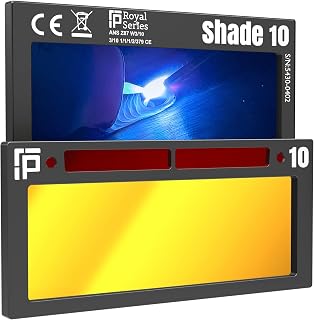
Shade 10 Gold Auto Darkening Welding Lens | 20A TIG Rated | King 2.0
Check PriceA gold welding lens is a passive polycarbonate filter treated with a thin layer of gold. This microscopic coating acts as a selective reflector. It reflects a portion of the infrared (IR) and ultraviolet (UV) radiation while allowing a wider spectrum of visible light to pass through. The result is a cooler, more natural view of the weld puddle and the surrounding work area.
Traditional green lenses use a different optical formula. They absorb harmful radiation primarily through a deep green dye. This dye blocks the light, but it also distorts the color spectrum. With a gold lens, you see vibrant orange and yellow tones in the puddle instead of a muddy green blur. Many welders describe the view as looking through a high-definition camera lens.
You can find gold lenses for passive welding hoods, especially in classic pipeliner setups. Some manufacturers also offer gold-coated clear cover plates that work with auto-darkening helmets. The technology is not new, but modern manufacturing has made it more accessible and consistent. If you are curious about the top-rated options, exploring a guide to best gold welding lenses can help you find a reliable model.
How Do Gold Welding Lenses Compare to Green Lenses?

Gold Welding Lens – Small 2″ × 4.25″ Premium Schott German Glass
Check PriceThe core difference lies in visible light transmission and color accuracy. A green lens absorbs up to 99% of visible light, which often leaves you squinting to see the edge of the joint. Gold lenses, by reflecting instead of absorbing, offer higher visible light transmission at the same shade number. A shade 10 gold lens will appear noticeably brighter and more crisp than a shade 10 green lens.
This brightness does not mean you are sacrificing protection. The gold coating still blocks 100% of harmful UV and IR rays, just like a green lens. The perceived brightness is simply a clearer, less distorted visible spectrum. You will see the electrode, the arc, and the molten metal with much better depth perception. The contrast between the bright puddle and the darker base metal becomes razor-sharp.
Green lenses tend to turn everything into a monochrome green wash. This can hide subtle defects like undercut or porosity until you lift your hood. With a gold lens, you can see the color of the heat zone and the flow of the filler metal. This immediate feedback allows you to make real-time adjustments to your technique. It is a massive advantage for out-of-position welding and critical pipe welds.
For a detailed side-by-side breakdown, check out this gold welding lens vs green comparison. It covers the optical properties and which one wins for different applications.
Optical Clarity and Color Recognition
Gold lenses excel in color recognition. You can distinguish the orange glowing puddle from the red heat-affected zone. This is critical when welding thin materials where burn-through is a constant risk. Green lenses tend to flatten these temperature gradients, forcing you to rely on sound and feel rather than sight. Improved visibility also reduces the need to constantly flip your hood up and down.
Eye Strain and Fatigue
Long welding sessions can cause significant eye strain. The high contrast of a gold lens reduces the visual fatigue associated with deciphering a dark green puddle. You are less likely to experience headaches or after-images at the end of a 10-hour shift. Many professional pipe welders insist that switching to gold extended their career longevity by keeping their eyes more relaxed.
Key Benefits of Gold Welding Lenses
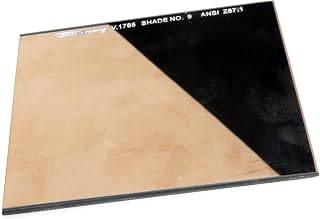
Forney 57070 Lens Replacement Gold Welding Filter
Check Price- Superior Weld Puddle Definition: The puddle appears crisp and three-dimensional. You can see the separation between the slag and the metal much easier than with green.
- Natural Color View: You see the true colors of the surrounding metal. This helps with pre-weld setup and post-weld inspection without lifting the hood.
- Reduced Heat Sensation: The gold layer reflects infrared heat away from your face. This keeps the inside of your hood cooler in hot environments.
- Less Eye Strain: Because the image is brighter and clearer, your eye muscles do not have to work as hard to focus on the arc.
- Better Arc Visibility: You can see the tip of the tungsten or the electrode wire clearly, which leads to more precise arc starts.
Potential Drawbacks to Consider
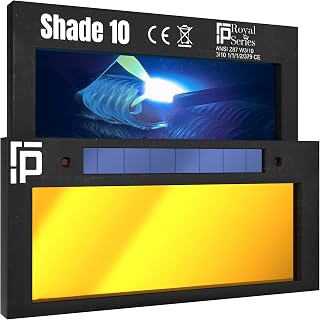
Ridge Products | Gold Shade 10 Auto Darkening Welding Lens
Check PriceGold lenses are not perfect for every scenario. The first drawback is the cost. A high-quality gold lens can be two to three times more expensive than a standard green lens. If you are prone to scratching your lens or welding in heavy spatter conditions, replacing them frequently can become expensive. You must treat a gold lens with care to preserve the delicate coating.
The brighter view can also be a problem for some welders. If you are used to a very dark, cozy green view, the increased brightness of a gold lens might feel harsh at first. It takes a few hours to adapt, but once you do, you will likely never want to go back. Additionally, not all gold lenses are created equal. Cheap knock-offs use a thin tint that scratches off easily and provides little real benefit.
Auto-darkening helmets have also narrowed the gap. A high-end auto-darkening lens with true-color technology attempts to mimic the optical clarity of a gold lens. However, a passive gold lens still offers zero lag time and a specific optical warmth that many digital sensors cannot fully replicate. If you prefer a passive hood, gold is the undisputed king.
When Should You Choose a Gold Welding Lens?
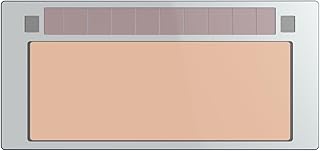
Tefuawe 2×4 1/4 Gold Automatic Welding Lens
Check PriceGold lenses shine brightest in low-amperage TIG welding and stick welding. At low amps, the arc is smaller and the light is less intense. A green lens often makes it look like you are welding in a cave. The gold lens brightens the scene, letting you see the fine tungsten arc and the delicate puddle. This is why you will find gold lenses on almost every pipeline rig in the field.
If you do a lot of out-of-position welding, like 6G pipe joints, the depth perception from a gold lens is a game changer. You can see the digital readout of your machine and your surroundings without flipping up your hood. For heavy-duty MIG welding at high amperage, the benefit is still there, but the difference is less dramatic because the arc is already so bright. In those cases, simply sticking to shade 11 or 12 might be the priority.
How to Choose the Right Shade for Gold Lenses
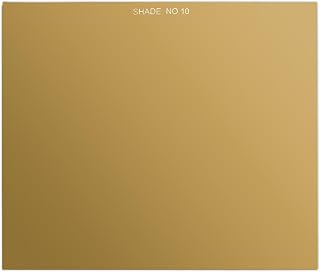
PATIKIL Gold Welding Glass Lens Shade 10
Check PriceSelecting the correct shade is just as important as the lens color. Because gold lenses look brighter, some welders make the mistake of buying a shade that is too dark. You should follow the same shade guidelines recommended by OSHA welding safety guidelines. For most stick and TIG welding under 200 amps, a shade 9 or 10 is standard. For high-amperage MIG or flux-core, shade 11 or 12 is necessary.
Start with a shade that matches your green lens preference. If you normally use a shade 10 green, try a shade 10 gold. You will instantly notice it is clearer. If the arc feels too bright, step up to a shade 11. Never go down to a shade 9 just because the view looks more comfortable. Comfort does not equal safety. You still need the lens to block the specific intensity of the arc to prevent retinal damage.
FAQs About Gold Welding Lenses

Forney 57061 Shade-10 Gold Welding Filter Lens
Check PriceDo gold welding lenses protect against UV and IR?
Yes, absolutely. A quality gold lens blocks 100% of ultraviolet and infrared radiation. The gold coating is not the only protective layer. The polycarbonate substrate and the other optical filters provide the essential safety barrier. The gold layer simply enhances the visible light quality. You always get the same level of protection as a standard green lens of the same shade number.
Can I use a gold lens in an auto-darkening helmet?
You cannot use a standard passive gold lens as the main filter in an auto-darkening helmet. However, several manufacturers sell gold-coated front cover lenses or clear inner lenses. These can add a slight color-improving tint to the view. The true-color technology in modern auto-darkening helmets is designed to achieve a similar bright, natural view without a physical gold coating.
How long does a gold welding lens last?
The lifespan depends on how you handle it. The gold coating is durable but can be scratched if you wipe it with a dirty glove or drop the hood. To maximize the life, use a clean microfiber cloth and replace the clear outer cover lens regularly. A well-maintained gold lens can last several months of daily use. If you see the coating peeling or turning blue, it is time to replace it.
Are gold lenses worth the extra money?
For professional welders who value precision and comfort, the answer is usually yes. The improved clarity and reduced eye strain translate directly to better welds and fewer mistakes. If you are a hobbyist welding occasionally, a high-quality green lens will serve you well. But if you are trying to make perfect X-ray quality welds, the investment in a gold lens pays for itself quickly.
Conclusion
So, are gold welding lenses better? In terms of optical clarity, color accuracy, and overall comfort, they are a significant upgrade over standard green glass. They reduce eye strain, keep you cooler, and let you see the weld puddle with stunning detail. The trade-off is a higher price tag and more delicate care. If you are a professional welder looking to optimize your hood, you owe it to yourself to try a genuine gold lens. Your eyes will thank you at the end of the day.