Walking into a hardware store or scrolling through welding supply websites, the price tags on MIG welders can feel confusing. You might see a compact 110v machine for under $200 right next to a heavy industrial setup pushing past $5,000. Understanding how much do MIG welders cost is not just about finding the cheapest sticker, it is about matching the machine to the metal you plan to weld and the frequency you plan to use it.
Your budget will always depend on your project goals. A weekend warrior fixing a lawnmower deck does not need the same firepower as a fabricator building roll cages. In this guide, we break down every price tier, explain the hidden costs that catch beginners off guard, and help you find a machine that respects both your wallet and your workflow.
Table of Contents
Key Factors That Influence MIG Welder Prices
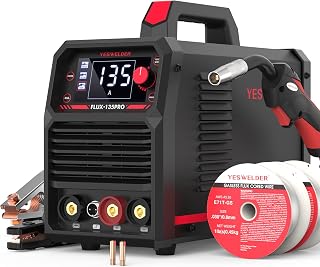
YESWELDER 135A MIG Welder
Check PriceBefore you click add to cart, you need to understand why one machine costs three times more than another that looks nearly identical. The gap is rarely about raw welding power alone. Several design and supply chain decisions stack up to create the final retail price.
Power Input and Amperage
The most obvious cost driver is how much electricity the machine turns into heat. A 110-volt MIG welder that plugs into a standard household wall outlet typically caps out around 140 amps. These machines are light, portable, and affordable, but they struggle on steel thicker than a quarter of an inch.
Stepping up to a 220-volt machine gives you access to 200 amps or more. That extra power lets you weld structural steel and makes the arc far smoother on aluminum. That jump in voltage requires a dedicated plug in your garage, and the internal components are built with heavier transformers or more complex inverter boards, all of which push the price upward.
Brand and Build Quality
Blue and red paint jobs, referring to the iconic Miller and Lincoln Electric brands, often cost extra for a good reason. These manufacturers invest heavily in research and development, thermal management, and long-term reliability testing. Cheaper import machines might cut costs by using smaller capacitors, thinner drive rolls, or less consistent wire feed systems.
That does not mean budget brands are always a bad idea. However, a higher upfront investment in a trusted name usually means better parts availability and customer support. When a drive motor fails two years into ownership, finding a replacement for a no-name brand can become a frustrating scavenger hunt.
Duty Cycle
The duty cycle tells you how long you can pull the trigger before the machine needs a break to cool down. A 20 percent duty cycle at 150 amps means you get two minutes of welding followed by eight minutes of cooling. Cheaper machines often overheat quickly because they use lighter internal components that cannot dissipate heat effectively.
High-end industrial MIG welders often boast a 60 or even 100 percent duty cycle. That durability requires robust copper windings, advanced cooling fans, and heavy-duty diodes. You pay for that engineering, but if you are welding all day long, the cost per arc hour drops dramatically.
Included Features and Accessories
Sometimes the price difference is hidden in the box. One $400 machine might include a basic gun, a tiny spool of flux-cored wire, and a flimsy hand shield. Another $600 package might throw in an upgraded 15-foot gun, a gas regulator, a sample spool of solid wire, and a spool hub adapter for larger spools.
Digital displays, programmable settings, spot weld timers, and infinitely variable voltage control also nudge the price higher. None of these are essential for a beginner, but they save time and reduce guesswork once you understand the basics.
MIG Welder Price Breakdown by Category
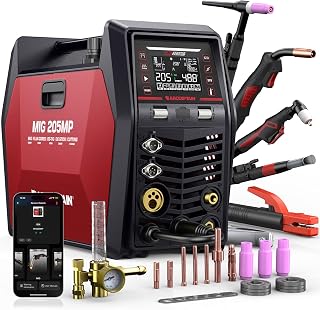
ARCCAPTAIN MIG205MP
Check PriceTo make sense of the market, we grouped the most common price ranges into four realistic tiers. These numbers reflect new machine pricing from major retailers as of 2026.
Hobbyist and DIY MIG Welders (Under $300)
This is where most beginners start their search. At this price point, you are almost certainly looking at 110-volt flux-core machines that can also run gas if you purchase a regulator separately. They work well for thin sheet metal, exhaust repairs, and small art projects.
- Typical price range: $120 to $300
- Amperage range: 70 to 140 amps
- Duty cycle: 10 to 20 percent
- Best for: light gauge steel, thin wall tubing, occasional repairs
Popular models in this range include the Chicago Electric Flux 125 and the Amico MIG-130A. Do not expect to weld thick plate or run a flawless spray transfer arc. These tools prioritize accessibility over finesse, and they are perfect for learning trigger control without financial stress. If you want to compare some well-loved reliable entry-level machines under $500, you will notice a big quality jump just slightly above this tier.
Intermediate and Home Shop Welders ($300 to $800)
This is the sweet spot for a serious hobbyist who wants to weld real projects, like custom furniture, off-road bumpers, or trailer repairs. Many machines here include both 110-volt and 220-volt dual voltage capability, which opens up thicker material without needing a separate machine.
- Typical price range: $300 to $800
- Amperage range: 140 to 200 amps
- Duty cycle: 20 to 40 percent
- Best for: automotive panels, gates, moderate fabrication
You start to see infinite voltage control instead of tapped settings, better wire feed mechanisms, and smoother arc starts in this bracket. The Hobart Handler 140 and Lincoln Electric Power MIG 180 Dual fall right into this category. The build quality feels sturdier, and the drive systems are less likely to slip when you pull the trigger in a tight corner. You can find several top-rated mid-range MIG welders that offer professional-level features without the industrial price tag.
Advanced and Professional MIG Welders ($800 to $2,000)
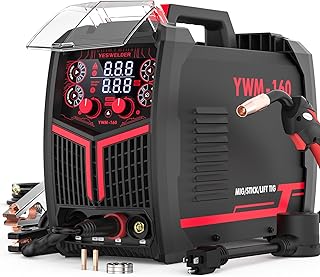
YESWELDER 160A MIG Welder
Check PriceOnce you cross the $800 threshold, you are entering the territory of serious fabrication shops and professional mechanics. These machines run exclusively on 220-volt power, deliver 200 to 250 amps, and offer duty cycles high enough to weld all day without thermal shutdown.
- Typical price range: $800 to $2,000
- Amperage range: 200 to 250 amps
- Duty cycle: 40 to 60 percent
- Best for: structural steel, pipe fencing, daily commercial use
The Lincoln Power MIG 260 and Miller Millermatic 255 are standout examples here. These machines support pulse welding programs that reduce spatter and control heat input on aluminum. The arc quality is instantly noticeable compared to budget machines. The digital interface remembers your favorite settings, and the wire feed remains consistent even with long cables. If you are earning money with your welder, this is where the investment pays for itself.
Industrial and Multi-Process Welders ($2,000 and Above)
At the top of the food chain, you find engine-driven MIG welders, full digital pulse-arc systems, and combined MIG-TIG-Stick units. These machines often live in factory environments or on the back of a service truck. Prices easily climb to $5,000, and specialized aluminum push-pull systems can exceed $8,000.
- Typical price range: $2,000 to $10,000
- Amperage range: 250 to 600 amps
- Duty cycle: 60 to 100 percent
- Best for: heavy manufacturing, shipbuilding, pipeline work
For a small home workshop, this tier is almost never necessary. The sheer weight and power requirements demand a full industrial electrical infrastructure. However, if a business depends on tool reliability, the cost becomes a simple calculation of uptime versus downtime.
New vs. Used MIG Welders: What You Need to Know
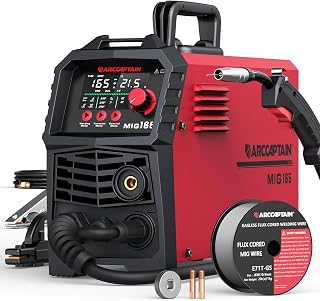
ARCCAPTAIN 165A MIG Welder
Check PriceBuying a used MIG welder can cut your upfront cost by 30 to 60 percent, but it also shifts the risk onto your shoulders. Transformer-based machines like old Miller Thunderbolts or Lincoln Idealarcs are often safe used buys because they have fewer sensitive electronics to fail. Inverter machines are another story. A failed circuit board on a used inverter welder can cost more to replace than the machine is worth.
Always ask to see a used welder running before you hand over cash. Listen for grinding in the wire feed motor, check for burn marks on the power cord, and smell the fan vent for any evidence of burnt insulation. A machine that sat in a dusty barn for five years may need a new liner, new drive rolls, and a thorough internal cleaning. Those small repairs add up quickly.
Additional Costs Beyond the Welder
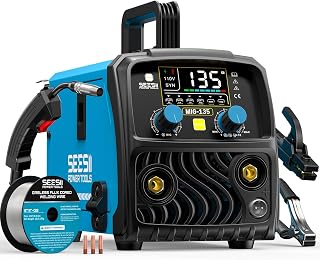
SEESII 135A MIG Welder
Check PriceStaring at the price of the machine alone is a common beginner mistake. You cannot plug in a naked MIG welder and start laying beads safely. The supporting equipment often equals 20 to 40 percent of the welder’s purchase price.
Consumables and Gas
MIG welding solid wire requires a shielding gas, typically a mix of 75 percent argon and 25 percent CO2. A full rent-free cylinder can cost between $200 and $350 depending on size, plus refill costs of $40 to $70. If you start with flux-core wire to avoid gas, you still need contact tips, nozzles, and a quality welding wire. Spools of solid wire range from $15 for a small roll to $80 for a large spool of high-quality ER70S-6.
Safety Gear and Accessories
You need an auto-darkening welding helmet, which costs anywhere from $50 to $400 depending on lens quality and viewing size. Heat-resistant gloves, a welding jacket, and safety glasses add another $60 to $150. Grinding tools, clamps, a chipping hammer, and a wire brush might seem like minor line items, but they easily run another $100 to $200 for decent quality.
Factor in an average of $200 to $500 for accessories when planning your first setup. Trying to save money by skipping safety gear is never a sound strategy.
How to Get the Best Value When Buying a MIG Welder

BILT HARD 135A MIG Welder
Check PriceSmart shoppers focus on the total cost of ownership, not just the purchase price. A $1,200 machine with a five-year warranty and cheap consumables might cost less over a decade than a $400 machine that eats drive motors every spring. Check the availability of replacement liners, tips, and drive rollers before committing to a brand.
Watch for seasonal sales at major online retailers and local welding supply stores. Black Friday and Father’s Day promotions often include bundled starter kits with a cart, a helmet, and a gas cylinder. Those kits can save you hundreds compared to buying everything individually. According to reputable welding equipment manufacturers, understanding your typical material thickness is the single most important step before you spend a single dollar.
Frequently Asked Questions
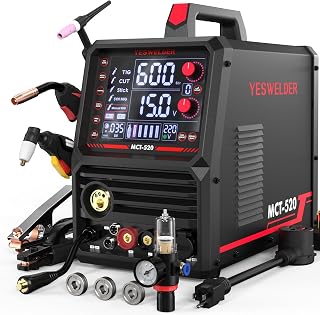
YESWELDER MCT-520
Check PriceCan I get a decent MIG welder for under $200?
Yes, but only for very light-duty work. In the under-$200 range, you are limited to 110-volt flux-core machines that handle thin sheet metal. They work fine for patching body panels or building small garden trellises, but they are not meant for serious structural welding.
Is it cheaper to buy a used MIG welder?
It can be, provided you test the machine thoroughly. Older transformer welders hold up well, but used inverters can hide expensive problems. If you are new to welding, the peace of mind and warranty that come with a new machine often outweigh the initial savings.
What is the best MIG welder for a beginner on a budget?
Look for a dual-voltage machine in the $400 to $600 range. It gives you room to grow without limiting you to thin material forever. Machines like the Hobart Handler 140 or the Lincoln Easy-MIG 180 are forgiving to learn on and hold their resale value well.
Why are some MIG welders so much more expensive than others?
The price difference usually comes down to duty cycle, arc quality, component durability, and post-purchase support. A professional-grade welder uses heavier copper windings, better cooling, and more precise wire feed motors. You are paying for reliability and a smoother arc, not just a higher maximum amp number.
Do I need a gas bottle for a MIG welder?
Not always. Many entry-level machines run flux-cored wire without gas. Self-shielded flux-core wire works well outdoors and in windy conditions. Solid MIG wire with gas produces cleaner welds with less spatter, but it adds the upfront cost of a cylinder and regulator.
Conclusion
How much do MIG welders cost is a layered question, but the answer gets clearer once you define your project list. A reliable entry-level machine lands between $200 and $400. A versatile home shop welder that handles most automotive and fabrication tasks sits comfortably in the $500 to $800 bracket. Professional and industrial tools start around $1,200 and climb based on specialized features.
Remember to budget for gas, consumables, and safety gear, those extra costs can match half the price of the unit itself. Match the machine to the thickest metal you realistically plan to weld, not the most ambitious dream in your head, and you will walk away with a tool that serves you for years without regret.