A cheap spot welder for batteries can be the difference between a reliable DIY battery pack and a pile of overheated cells. Many beginners assume soldering is safe for 18650 cells, but high heat damages internal seals and shortens battery life. Spot welding uses a controlled electrical pulse to fuse nickel strips to battery terminals without cooking the cell. In this guide, you will learn what to look for, which budget models actually work, and how to avoid wasting money on inflated specs.
I have built enough lithium ion packs to know that your tool choice matters less than your welding technique and your nickel strip thickness. Still, picking the right budget welder saves you time and prevents ruined cells. This article covers practical tips, false specs to ignore, and a safe step by step workflow.
Table of Contents
What Is a Cheap Spot Welder for Batteries?
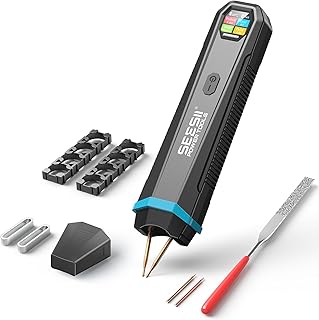
SEESII Battery Spot Welder, Custom Welding Settings, Max 0.15mm Pure Nickel
Check PriceA cheap spot welder for batteries is a small resistance welding tool designed to weld thin nickel or nickel plated steel strips onto cylindrical cells like 18650, 21700, and 26650. These welders work by passing a high current pulse through two electrodes pressed against the strip and battery terminal. The resistance at the contact point generates heat and fuses the metals together. Unlike a full size shop spot welder, these budget units are portable, often handheld, and cost under 100 dollars.
Most cheap battery spot welders use a supercapacitor bank, a lithium polymer battery, or a small transformer to deliver the pulse. Some models are simple printed circuit boards with a battery attached. Others are enclosed units with an LCD screen and adjustable power settings. According to battery pack construction guides, the goal is a solid weld that holds the nickel strip without burning through it or heating the cell body excessively.
Why You Need One for Battery Building
Soldering directly onto lithium ion cells is risky because the soldering iron tip transfers intense heat into the positive terminal and internal separator. That can cause internal shorts, venting, or reduced cycle life. Spot welding uses milliseconds of current, so the heat stays localized at the strip. A cheap battery tab welder allows you to build ebike batteries, power tool battery rebuilds, power walls, and 12V packs with much lower risk.
You also get stronger mechanical connections compared with conductive glue or tape. A proper nickel strip weld handles vibration and thermal expansion better over time. If you plan to build more than one or two packs, the low purchase price of a budget spot welder quickly pays for itself.
Key Features to Look For
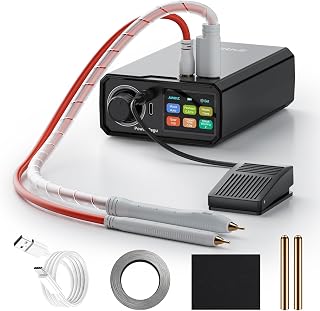
10000mAh Battery Spot Welder, Rotary Knob Operation 100 Gears Adjustable Foot Pedal Operated
Check PriceNot all cheap battery spot welders are worth buying. Some advertise 5000 amps but struggle to weld 0.15mm nickel. Focus on features that affect real performance.
Pulse Current and Power Output
The advertised peak current tells you the maximum pulse energy available to form the weld. For 0.15mm pure nickel strip, you need at least 600 to 800 amps of actual pulse current. Many budget units claim 3000 to 5000 amps, but test results often show far less. A unit with adjustable pulse current is more useful than a fixed high setting because you can tune for different strip thicknesses.
Welding Thickness and Nickel Strip Compatibility
Cheaper welders work best with 0.1mm to 0.15mm nickel plated steel or pure nickel strip. Thicker 0.2mm pure nickel requires more current and often exposes fake amp ratings. Check whether the product listing clearly states supported thickness. If a welder only handles 0.1mm strip, it is fine for low current applications but weak for high drain ebike packs. Match your nickel strip to your intended current load before buying.
Portability and Hybrid Soldering Tools
Many cheap spot welders now double as a soldering iron or power bank. That sounds useful, but hybrid designs often compromise welding performance. A dedicated mini spot welder with a separate power source usually delivers cleaner pulses than a soldering iron with a welding mode. If you only occasionally weld batteries and also need a portable soldering iron, a hybrid may still be acceptable for thin strips.
Safety Features and Duty Cycle
Look for overcurrent protection, reverse polarity protection, and automatic shutoff after continuous welding. A low duty cycle means the tool needs rest between welds to avoid overheating. For small battery pack projects, a 10 to 20 percent duty cycle at maximum power is fine. If you plan to weld hundreds of connections per session, choose a unit with active cooling or a higher duty cycle.
Signs of a Fake Amp Rating
Fake amp ratings are common on cheap battery tab welders. A tiny lithium polymer cell labeled as 5000 amps is a red flag. Real high current welding requires large capacitors or a bulky transformer. Check user photos and video tests before trusting the label. If the seller does not show a clear weld on 0.15mm pure nickel, assume the real output is much lower.
Best Cheap Battery Spot Welder Categories
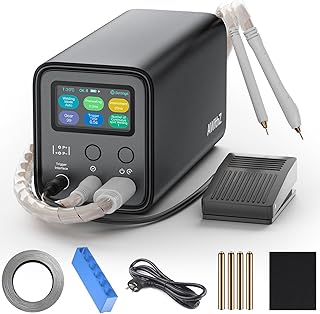
Capacitor Battery Spot Welder, AWithZ UF20B 10.5KW Spot Welder, 3-in-1 Auto & Manual & Foot Pedal
Check PriceBudget battery welders fall into three general categories. Each has strengths and tradeoffs.
Mini Portable Spot Welders
Mini portable spot welders are palm sized tools powered by a built in lithium polymer cell or supercapacitors. They are easy to store and carry. Most can weld 0.1mm to 0.15mm nickel strips for 18650 cells. They work well for occasional pack building and small DIY powerwalls. However, their small electrodes and light pressure can produce inconsistent welds if your hand shakes.
DIY Spot Welder Kits
DIY kits include a control board, nickel strips, and sometimes a battery holder. You supply a high drain battery or a car battery. These kits are often the cheapest route, sometimes under 30 dollars. The control board lets you adjust pulse timing and current. But you must assemble and understand basic wiring. For confident DIYers, this is the best value.
Upgraded PCB or Transformer Based Units
Upgraded PCB based welders have an LCD display, rotary encoder, and sometimes a foot pedal or automatic pulse trigger. Transformer based units are heavier but deliver a more stable high current pulse. They typically cost between 60 and 120 dollars. If you build battery packs regularly, this category balances price and consistency better than ultra cheap handheld units.
How to Choose Without Overpaying
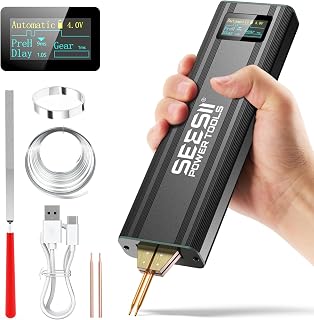
SEESII Battery Spot Welder, Durable Aluminum Casing, Max 0.15mm Pure Nickel
Check PriceFirst, list your project needs. A single 12V pack for a solar shed can use a 30 dollar DIY kit. A high drain 52V ebike pack with 0.2mm nickel needs more power. Do not buy the cheapest welder if you plan to weld copper strip or thick nickel. For most beginners, a mini spot welder with adjustable pulse works well up to 0.15mm nickel.
- Choose 0.1mm or 0.15mm pure nickel strip to match the welder.
- Ignore peak amp claims above 3000 unless real user tests confirm them.
- Look for replaceable electrodes because the tips wear down quickly.
- Prefer a unit with adjustable pulse time and current settings.
Another way to avoid overpaying is to search for a battery spot welder buying guide that shows real weld results on different strip thicknesses. That research matters more than the brand name. If you are still not sure whether these budget tools are worth it, read this breakdown of whether battery spot welders actually work.
Common Mistakes and How to Avoid Them
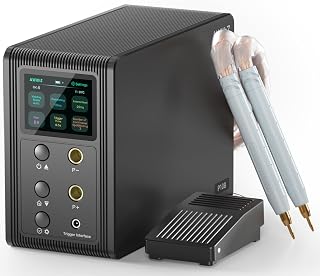
14.6 KW Capacitor Battery Spot Welder, AWithZ Spot Welder, 2-in-1 Automatic & Foot Pedal
Check PriceThe most common mistake is pressing too hard or too soft with the electrodes. Too much pressure flattens the nickel and overheats the cell. Too little pressure causes sparks and weak welds. You want firm, even contact without leaning on the cell.
Another mistake is ignoring nickel strip material. Nickel plated steel looks similar to pure nickel but has higher resistance and lower current capacity. For high current battery packs, use pure nickel strip. Test your welder with scrap cells and strips before building the final pack.
Many beginners also skip electrode maintenance. Worn or dirty electrodes increase resistance and create inconsistent welds. Clean the tips with fine sandpaper or replace them after every 50 to 100 welds.
Step-by-Step: Using a Cheap Battery Spot Welder Safely
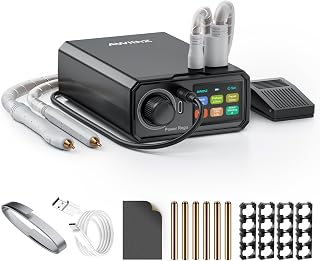
10000mAh Battery Spot Welder, AWithZ 1650A Output Current Max 100 Gears Adjustable
Check Price- Fully charge the welder and inspect the electrode tips.
- Cut the nickel strip to the correct length and position it over the cell terminal.
- Press both electrodes firmly onto the strip, keeping them close together.
- Trigger the pulse and release immediately after the weld forms.
- Check the weld by gently pulling the strip. It should not peel off easily.
Always work in a well ventilated space and keep flammable materials away. Never weld directly on a damaged or swollen battery. Use a fireproof surface and keep a bucket of sand nearby as a precaution. If the cell becomes warm during welding, stop and let everything cool down before continuing.
Cheap vs Expensive Battery Spot Welders
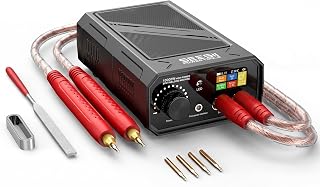
SEESII 10KW Battery Spot Welder: Cordless Spot Welding Equipment, Color LCD Display
Check PriceA 30 dollar DIY board can weld thin nickel, but it lacks safety protections and consistent timing. A 100 dollar unit adds a display, better capacitors, replaceable electrodes, and cleaner pulse control. Expensive professional spot welders above 300 dollars are unnecessary for most hobby battery packs.
- Cheap under 50 dollars: Good for 0.1mm nickel, small 18650 packs, occasional use.
- Mid range 50 to 120 dollars: Better 0.15mm nickel, adjustable current, more reliable.
- Expensive 120 plus dollars: Thicker nickel, copper strips, higher duty cycle, faster production.
If you plan to build only two or three power tool battery packs, buy a mid range model or a highly rated mini welder. Spending less on a kit and more on good nickel strip often gives better results than buying the absolute cheapest tool.
Practical Examples: What Can You Build?
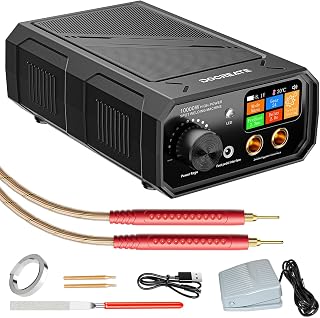
Battery Spot Welder, 10000W Cordless Spot Welding Machine with LCD Display
Check PriceA cheap spot welder for batteries opens up many projects. You can rebuild a cordless drill battery with fresh 18650 cells, build a 12V lithium pack for a fish finder, or assemble a 48V ebike pack. Each project uses the same core skills, right strip sizing, firm electrode pressure, and quick pulse timing.
For low current projects like LED strips or small power banks, 0.1mm nickel plated steel works fine with a 30 dollar welder. For high current projects like ebike batteries, use 0.15mm pure nickel and a welder with adjustable pulse energy. That one upgrade prevents hot spots and voltage sag under load.
FAQ Section
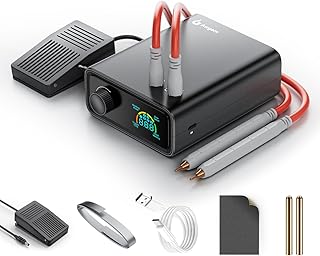
10000mAh Battery Spot Welder, 13000W Dual-Pulse Output, 100-Level Rotary Knob
Check PriceCan a cheap spot welder weld copper strip?
Most cheap battery spot welders cannot weld copper strip well because copper has very low resistance and needs much higher current. Some higher power capacitor units can weld thin 0.1mm copper with special settings, but most hobbyists use nickel plated copper hybrid strips instead.
What nickel thickness is best for a cheap spot welder?
Start with 0.15mm pure nickel strip. It balances weldability and current capacity. If your welder struggles, drop to 0.1mm nickel plated steel. Avoid 0.2mm pure nickel unless your unit has verified high amperage output.
Do battery spot welders really work for 18650 cells?
Yes. A properly set cheap spot welder creates solid mechanical and electrical connections on 18650 cells. The key is using sufficient pulse energy and clean electrode tips. For a deeper discussion on performance, read this article about whether battery spot welders actually work.
How many welds can a cheap spot welder make per charge?
It depends on the battery capacity and pulse energy. A mini welder with a 2000mAh cell may make 100 to 300 welds per charge. Supercapacitor units often recharge quickly from USB or a power supply. For large packs, keep a spare charged power source ready.
Is soldering still okay for battery packs?
Soldering is not recommended for most lithium ion cells. The prolonged heat from a soldering iron can damage the cell internally. A cheap spot welder uses a short pulse and is much safer. If you must solder, use a high wattage iron, work fast, and allow the cell to cool completely.
Conclusion
A cheap spot welder for batteries is one of the best investments for any DIY battery pack builder. Choose a model that matches your nickel strip thickness, has adjustable pulse settings, and uses replaceable electrodes. Ignore inflated amp claims and focus on real user weld tests.
If you want more detailed model comparisons, explore this battery spot welder buying guide. Then gather scrap cells and nickel strips to practice before building your final pack. With the right settings and firm electrode pressure, you can build safe, long lasting battery connections without breaking the bank.