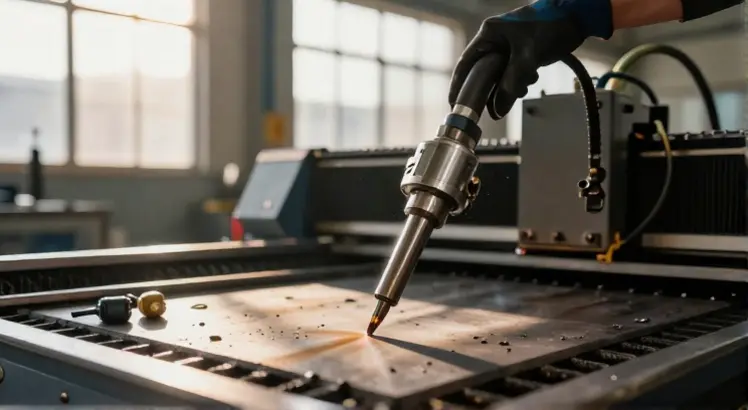
You have the CNC table bolted down, the gantry is gliding smoothly, and your design software is ready. But there is one critical component left that will make or break your cut quality: the plasma cutter itself. Picking the wrong unit will lead to excessive dross, poor edge angularity, and constant torch crashes. I have seen fabricators spend thousands on a motion system only to choke it with a low-quality power supply that cannot keep up.
Choosing the right plasma cutter for your CNC setup is not about buying the most expensive machine on the shelf. It is about matching the torch technology, duty cycle, and interface protocol to your specific production needs.
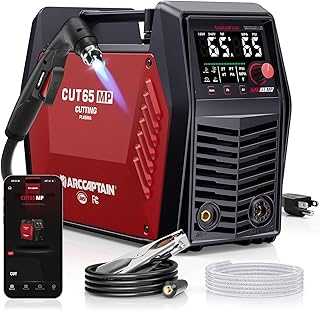
ARCCAPTAIN iControl [CNC] Plasma Cutter CUT65 MP with APP Control, Non-HF Blowback Pilot Arc, 65A 120V/240V, Upgraded LED Display, Expanded Metal, Pressure Detection, Plasma Gouging & Rust Removal
Check PriceIn this guide, I will walk you through exactly what type of plasma cutter for CNC you need. We will cover the non-negotiables like voltage divider boards and machine torches, break down the difference between high-frequency and blowback start, and help you avoid the headache of electrical noise interference that can fry your controller. If you want clean, dross-free cuts at high travel speeds, stick around.
Table of Contents
The Non-Negotiables: Hand Torch vs. Machine Torch
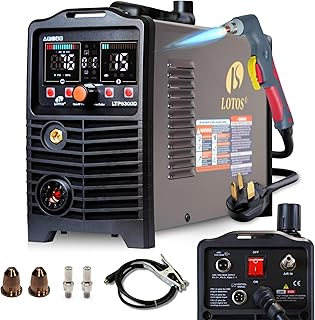
LTP6300DCNC 63A CNC Drag-Cut Blowback Plasma Cutter 110V/220V | Effortless tracking on automated tables or stencils | Slices 3/4-inch steel cleanly with zero electrical noise
Check PriceThe single biggest mistake beginners make is trying to strap a hand torch to a CNC gantry. While you can physically clamp a hand torch to a carriage, it is a compromise that comes with massive downsides. For precise automated cutting, you must understand the physical and electrical differences between these two delivery systems.
The Mechanical Alignment Problem
A hand torch is designed for human ergonomics. It has an angled head and a trigger that consumes space. When you clamp it in a CNC holder, the natural curve of the torch body makes it nearly impossible to achieve perfect perpendicular squareness to the material. Even a slight angle deviation of a few degrees creates a beveled edge.
In precision fabrication, that bevel means secondary grinding operations, costing you time and money. A machine torch features a straight, cylindrical barrel. It is designed to be mounted in a precision holder, ensuring the consumables are perfectly vertical and concentric to the pierce point every single time.
The Rack and Pinion Concept
Beyond the shape, advanced machine torches often include a rack and pinion mechanism or a spring-loaded mounting system for breakaway collision protection. If your torch head crashes into a tipped-up part, the breakaway system trips the limit switch and halts motion instantly. A hand torch rigidly clamped to the gantry will snap the retaining bracket or bend the consumables, potentially misaligning your entire Z-axis. If you are planning on production-level cutting, the machine torch is not a luxury; it is a requirement.
Start Technology: High Frequency vs. Blowback
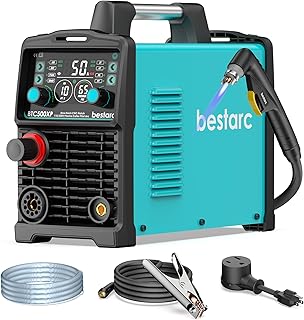
Bestarc Plasma Cutter, [Blow Back Pilot Arc][Large LED][Air Sensor] 50A Non-HF CNC Plasma Cutter Machine 110V/220V Dual Voltage, 5/8″ Clean Cut 1″ Max Cut, Post Flow, 2T/4T for Beginners DIY
Check PriceWhen I talk to custom fabricators about integrating a plasma cutter into their CNC table, the conversation always shifts to the pilot arc start method. This is where electrical compatibility really matters. Choosing the wrong start type can corrupt your drive signals and cause erratic motor behavior.
- High Frequency (HF) Start: These machines use a high-voltage, high-frequency spark, similar to a spark plug, to ionize the air gap and establish the pilot arc. While reliable for thick materials and industrial applications, HF is notoriously noisy. It generates RF (Radio Frequency) interference that can radiate through the air or back-feed into your power lines. Without serious grounding, shielding, and ferrite chokes, this EMI (Electromagnetic Interference) can scramble the brains of your CNC control box, causing missed steps or unexpected resets.
- Blowback (Contact) Start: This technology uses a moving piston inside the torch. The electrode and nozzle are initially shorted; when air flows, the pressure pushes the electrode back, creating a spark that fires the plasma. Because the energy is contained within the torch and doesn’t send out a massive electrical spike, blowback technology is inherently CNC-friendly. It is vastly cleaner electrically and is specifically recommended for sensitive electronics, including stepper motor drivers and PC-based controllers. If you are building a DIY table or using low-cost electronics, blowback is the safer bet.
The Critical CNC Interface Port
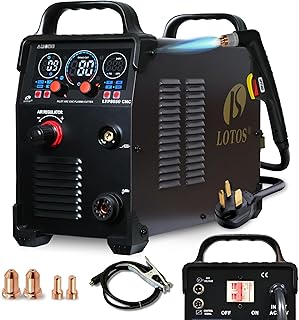
LTP8050CNC 80A CNC Drag-Cut Blowback Plasma Cutter 220V | Effortless tracking on automated tables or stencils | Slices 1-inch steel cleanly with zero electrical noise
Check PriceYou cannot just turn a plasma cutter on and expect it to talk to a CNC controller. The two machines need a physical electrical handshake. This is handled via a CNC interface port on the back or front of the power supply. This port serves two vital functions that allow the automated cutting process to work seamlessly.
Understanding the Voltage Divider (Arc Voltage Control)
To cut precise profiles, your CNC software needs to know the exact distance between the torch tip and the metal sheet. We measure this indirectly through arc voltage. As the torch moves farther from the plate, the resistance increases and the voltage goes up; as it gets closer, the voltage drops.
A raw plasma cutting arc carries up to 300VDC, which would instantly destroy a circuit board expecting a 5V signal. This is why a built-in voltage divider board (often 50:1 or 40:1 ratio) is the absolute most important internal component for a CNC plasma cutter. It steps down the raw harsh voltage to a safe, low analog signal that your THC (Torch Height Controller) can read.
Without a raw arc voltage access point on the terminal strip, you are stuck guessing the height, which leads to nose-diving into the plate or hovering too high, losing the arc. Always check the specification sheet for divided arc voltage output or CNC telemetry output.
The Remote Trigger Relay
The interface port also provides a dry contact connection for start/stop signals. Instead of a human pulling a trigger, the CNC controller sends a low-voltage signal to a relay inside the plasma cutter to fire the torch. This allows the software to pierce, cut, and stop exactly at the corner nodes of your drawing. A cutter with a proper CPC (Circular Plastic Connector) plug makes wiring incredibly simple, often providing screw terminals for easy integration.
Amperage, Thickness, and Cutting Speed
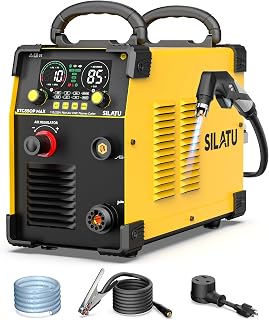
SILATU Plasma Cutter, 85Amps Non-HF Blowback Pilot Arc CNC Plasma Cutter Machine, 110/220V Dual Voltage Air Sensor Technology Large LED Display, 1” Clean Cut 7/5” Max Cut, PT/2T/4T for Beginners DIY
Check PriceWhile the electrical interface is the most technical aspect, you still need to size the power appropriately. Many people go for the highest amperage they can afford, but that can actually hurt cut quality on thin gauge sheet metal. The ideal CNC plasma cutter produces a high-energy-density arc that constricts the plasma gas tightly.
- Sub 45 Amps (Light Industrial/Hobby): Best for CNC tables doing artwork, signs, and auto body panels. On a 40-amp machine, you can pierce and cut 1/2-inch steel, but the sweet spot for smooth cutting at decent speeds is 16-gauge to 1/4-inch. These machines usually run on 110V or 220V single-phase power, making them a favorite for home garages.
- 65 to 85 Amps (The Prosumer CNC Sweet Spot): This is where automated cutting really shines. An 85-amp cutter can sever metal well beyond 1 inch thick, but it will production-cut 3/4-inch steel beautifully. More importantly, when cutting thin gauge steel, the higher amperage allows you to run at extremely high travel speeds (sometimes over 250 IPM), which creates a cleaner edge because the metal is cut before heat can warp the surrounding area.
- 100+ Amps (Full Industrial): These are three-phase monsters used in shipyards and heavy equipment manufacturing. They require massive air supply (often 12 CFM or higher at 90 PSI) and robust downdraft tables, but they can achieve near-laser edge quality on thick plates.
Duty Cycle and Thermal Overload
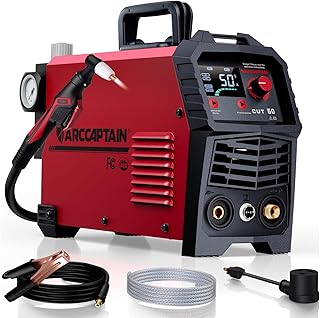
ARCCAPTAIN Plasma Cutter, [Large LED Display] 50Amps Cutter Machine with 110/220V Dual Voltage DC Inverter IGBT 1/2 Inch Clean Cut Post Flow and 2T/4T, for Beginners DIY
Check PriceHand cutting by an operator is intermittent. A human gets tired, moves, and repositions. A CNC table is a robot; it does not get tired. It will drive that torch at a steady travel speed for complex nests that can take hours. This calls for a high duty cycle rating. A hand-held cut-off saw duty cycle of 30% at 40 Amps will overheat and cool down mid-cut on a long CNC profile. Look for a machine rated for at least 50% duty cycle at the amperage you intend to run, or ideally 100% at lower ranges. Forced air cooling fans and thermal protection circuits keep the machine alive during long production runs.
Consumable Life and Gas Management
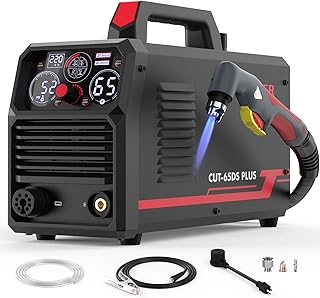
YESWELDER Plasma Cutter, 65Amp 110V/220V Non-High Frequency Non-Touch Pilot Arc 4-In-1 Plate Cutting/Grid Cutting/Gouging/Marking Multifunctional Plasma Cutting Machine CUT-65DS PLUS
Check PriceThe operational cost of CNC plasma cutting is driven by consumables. If your air supply contains moisture or oil, the inside of the torch breaks down rapidly. Any CNC plasma cutter needs a dedicated, high-quality air dryer, not just a small desiccant bead filter. Water vapor is the mortal enemy of hafnium electrodes. Additionally, look for cutters that offer Ohmic sensing capability. This uses the retaining cap or shield as a touch sensor (Ohmic contact) to detect the metal surface before piercing, providing a physical Z-reference that complements the arc voltage height control for unmatched pierce height accuracy.
Frequently Asked Questions
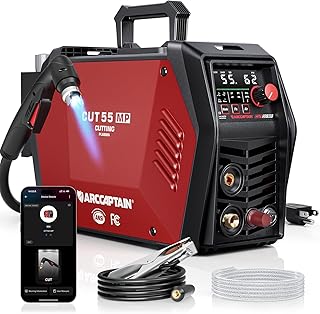
ARCCAPTAIN iControl [Non-HF] Plasma Cutter CUT55 MP with APP Control, 55Amp Blowback Pilot Arc, 120V/240V, Upgraded LED Display, Expanded Metal, Rust Removal, Plasma Gouging, Pressure Detection
Check PriceCan you use any plasma cutter on a CNC table?
Technically, you can clamp almost any hand plasma cutter to a gantry, but only units with a CNC interface port providing divided arc voltage will function correctly with a Torch Height Controller (THC). If a machine lacks a 50:1 or 40:1 voltage divider output, you lose the ability to automatically control the Z-axis height based on the arc gap, which is the defining feature of quality mechanized cutting.
Why does my CNC plasma cutter keep diving into the plate?
This is almost always a feedback loop issue with the arc voltage control. If the voltage divider connection is loose, or if the electrical noise is feeding back false voltage readings to the THC, the controller thinks the torch is too high. It will command the Z motor to drive down, often crashing the torch into the metal. Using a shielded torch lead and proper star-grounding techniques usually solves this drift.
Is a blowback torch better than HF for CNC?
For the vast majority of DIY and semi-industrial users, yes. Blowback start creates significantly less radio frequency noise, which preserves the stability of your PC, stepper drives, and sensor electronics. Industrial setups can handle HF noise with heavy filtering, but a blowback start simplifies your build and reduces the mystery glitches that plague many first-time table builds.
How much air pressure does a CNC plasma need?
It depends on the cutter rating, but you generally need a compressor that can output more than the stated requirement to avoid voltage sag due to pressure drop. If the cutter manual specifies 4.5 CFM at 90 PSI, you want a compressor that delivers at least 6 CFM at 90 PSI in continuous rating. The air must be bone-dry, so budget for a refrigerated air dryer if you plan to run the table for profit.
Conclusion
The right plasma cutter for CNC work is fundamentally a precision instrument, not just a thermal severance tool. It hinges on three core pillars: a straight-barrel machine torch for perfect perpendicularity, a dedicated CPC interface port that outputs divided arc voltage for height control, and a blowback start ignition system to keep your electronics safe from electromagnetic interference.
While your physical power requirements and amperage will vary based on whether you cut 22-gauge signage or 1-inch structural plate, the automation features are non-negotiable. If you treat the plasma cutter and the CNC table as a single integrated system rather than two separate tools, you will achieve that elusive factory-quality edge finish and long-term repeatability without constant operator babysitting.
Before you make a purchase, crack open the user manual online for the model you are considering and look for the section on Mechanized Cutting or CNC Interface. If that section is missing or vague, the machine was never engineered for the dance of automated motion you are about to put it through. Get that part right, and you will be pulling stunning parts off the table from day one.
To learn more about matching the right machine to your setup, read our guide on the best plasma cutter for CNC. Additionally, if you are trying to find the sweet spot between power and cost, check out our review of which plasma cutter for CNC fits specific shop budgets.
For official standards on mechanized plasma gas requirements and cut quality metrics, consult the technical resources at The American Welding Society (AWS).