If you are searching for an honest 3M Speedglas welding helmet review, you are likely wondering if the premium price tag is justified. 3M Speedglas helmets are known for their optical clarity and advanced auto-darkening technology. This guide breaks down real-world performance, comfort, durability, and value. I will also compare the most popular Speedglas models so you can choose the right one.
Before spending hundreds of dollars on a high-end helmet, it helps to know what separates the best from the rest. You should also review welding helmet safety standards to understand the protection requirements. With that in mind, let us get into the details.
Table of Contents
3M Speedglas Welding Helmet Review: Quick Overview
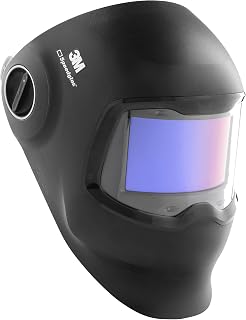
Speedglas Welding Helmet G5-02, Light State 2.5, Curved Wide View ADF
Check PriceThe 3M Speedglas lineup is often considered the benchmark for professional auto-darkening helmets. These helmets are not cheap, but they deliver consistent arc detection and minimal eye strain. For many full-time welders, that adds up to better weld quality and fewer headaches. Beginners may not need all the features, but they will appreciate the clear view and comfortable fit.
Pros and Cons at a Glance
- Excellent optical clarity with true-color options
- Very fast auto-darkening response and reliable sensors
- Comfortable, adjustable headgear for long sessions
- Modular design supports PAPR and grinding mode
- Higher initial cost than many competitors
- Some models are heavier than basic passive hoods
Why Welders Choose 3M Speedglas
3M Speedglas helmets stand out for their Swiss-engineered auto-darkening filters, or ADFs. They use multiple arc sensors to reduce the risk of flash. The lens technology offers uniform shading from edge to edge. This matters when you are welding out of position or in tight spaces.
Optical Clarity and True Color View
The Speedglas true-color lens, often called 3M Speedglas Natural Color Technology, gives a bright, crisp view of the weld puddle. You see more contrast between the arc, filler metal, and base material. That means you can keep a steady bead without lifting your hood as often. Welders who switch from budget helmets often notice the difference immediately.
Optical clarity is measured by an EN 379 or ANSI Z87.1 rating. Speedglas filters meet both, and many models carry a 1/1/1/1 optical class rating. This top rating indicates minimal distortion and consistent shading. For high-precision TIG work, that clarity is worth the investment.
Auto-Darkening Filter Speed and Sensors
A 3M Speedglas helmet typically switches from light to dark in 0.1 milliseconds, or 1/10,000 of a second. That is fast enough to prevent arc flash in almost all situations. Most Speedglas models use two to four arc sensors. This redundancy helps when a sensor is blocked by a pipe, a fixture, or your off-hand position.
Some high-end Speedglas models add a variable shade range, from shade 8 to shade 13. This allows you to fine-tune the darkness for low-amp TIG or high-amp MIG. You can also set the sensitivity and delay. These adjustments matter when you move between different welding processes.
Battery Life and Solar Assist
Most Speedglas helmets use solar-assisted battery power. The solar cell extends battery life by recharging during welding and ambient light. This means you spend less time worrying about dead batteries and more time welding. The ADF on many models also has a replaceable lithium battery, so you do not have to replace the entire lens when the battery ages.
Comfort and Headgear Quality
Comfort is one area where Speedglas helmets earn high marks. The headgear uses padded bands and multiple adjustment points. You can balance the helmet front to back and top to bottom. This reduces neck strain during long shop days.
The 9100 series includes a pivoting headgear that lets you raise the shell off your face while keeping the headband on. Grind mode is also easy to activate. You do not need a separate face shield for light grinding tasks.
Popular 3M Speedglas Models Worth Considering
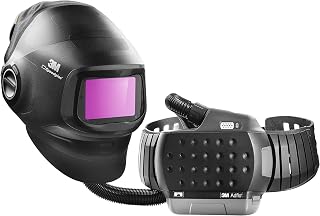
Speedglas Heavy-Duty Welding Helmet G5-01 with Adflo High-Altitude PAPR
Check Price3M makes several Speedglas lines, but three are especially popular. Each one has a different balance of price, features, and lens size. If you want a broader comparison, check this guide to the best Speedglas models compared.
Speedglas 9100 Series
The 9100 series is the flagship platform for heavy fabrication and pipe welding. It offers a large viewing area and compatibility with the 3M Adflo powered air purifying respirator system. The headgear is highly adjustable and the flip-up mechanism feels durable. You can choose from several lens configurations, including the XXL version for a wider view.
Many professional welders say the 9100 shell is heavier than a passive hood, but the balance makes it feel lighter. The lens has a true-color option and excellent clarity. It is one of the best choices for all-day MIG and stick welding. The price is high, but the modular design supports future upgrades like a PAPR unit.
Speedglas 100 Series
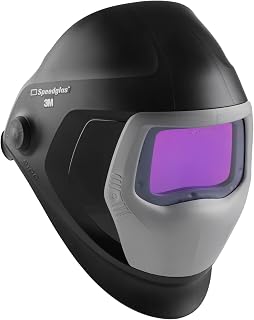
Speedglas Welding Helmet 9100 with Auto-Darkening Filter 9100XXi
Check PriceThe Speedglas 100 series is a more affordable entry into the 3M brand. It has a smaller viewing area than the 9100, but the optical quality is still above typical budget hoods. The 100 series is lightweight and simple to use. It is a solid choice for hobby welders and light fabrication work.
You still get reliable arc sensors and a shade range that covers most common processes. The headgear is not as refined as the 9100, but it is comfortable enough for shorter sessions. If you want a Speedglas lens without spending over $400, the 100 series is the place to start.
Speedglas 9000 Series
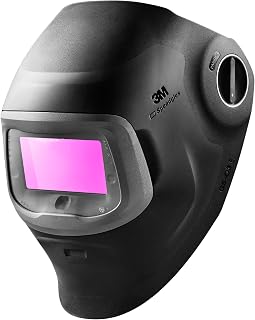
Speedglas G5-03 E Welding Helmet with G5NC ADF and Grind Mode
Check PriceThe 9000 series was a major step forward when it launched, and many welders still wear it today. It features a proven ADF with excellent battery life and a lightweight shell. The viewing area is slightly smaller than the 9100, but still generous by older standards. For a deeper look at this platform, read the Speedglas 9000 series details page.
Battery life on the 9000 is often rated for thousands of hours, thanks to solar assist. Replacement parts are widely available. One downside is that some 9000 models do not have the same true-color view as the newer 9100. Still, for many industrial welders, the 9000 remains a reliable workhorse.
Performance in Real Welding Conditions
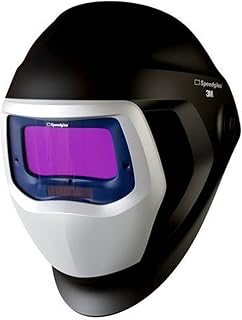
Speedglas Welding Helmet 9100 with Auto Darkening Lens ADF 9100X
Check PriceMIG and Flux-Cored Welding
For MIG and flux-cored welding, the Speedglas lens performs very well. The arc sensors trigger consistently, even when spatter and smoke build up around the sensor area. You can lower the shade to 10 or 11 for lighter MIG work or increase it to 12 or 13 for heavy spray transfer. The wide viewing angle helps you watch the weld toes and keep the gun on the joint.
TIG Welding at Low Amps
Low amperage TIG welding is the real test for any auto-darkening helmet. Cheap lenses often flicker or fail to darken at 5 to 15 amps. Speedglas helmets are known for stable arc detection at very low amperage. The true-color view also helps you see the tiny puddle on thin stainless or aluminum. That precision is why many TIG welders choose Speedglas despite the price.
Grinding Mode and All-Day Use
Grinding mode is a simple but valuable feature. You switch the ADF to a fixed shade 3 or 4, so the lens will not darken when you are using a grinder. The 9100 series can also be flipped up for an unobstructed view. These small touches reduce the need to swap between a welding hood and a face shield. That speeds up shop work and improves safety compliance.
Durability, Build Quality, and Spare Parts
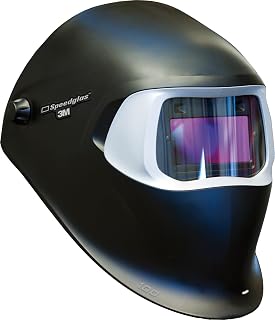
Speedglas Welding Helmet 100, Auto Darkening Filter 100V
Check Price3M Speedglas helmets are built with high-impact nylon shells and replaceable cover lenses. The outer cover lens protects the expensive ADF from spatter, scratches, and grinding debris. You should replace that cover lens regularly, especially when you weld overhead. In the long run, a $5 cover lens is cheaper than a damaged $300 filter.
Spare parts availability is another major advantage. You can easily order headgear components, sweatbands, batteries, and cover lenses online. This means a Speedglas helmet can last for many years with basic maintenance. Many professional welders keep a spare cover lens and battery in their tool bag at all times.
Potential Drawbacks of 3M Speedglas Helmets
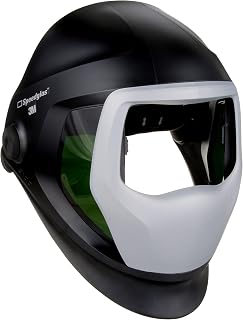
Speedglas 9100 Welding Helmet 06-0300-51SW, with SideWindows, No ADF
Check PriceThe biggest drawback is price. Even the entry-level Speedglas 100 series costs more than many decent auto-darkening helmets. The flagship 9100 series can easily exceed $800 with a PAPR setup. That is a serious investment for a beginner or hobby welder.
Weight can also be an issue on some Speedglas models, especially with an attached respirator. The shell is not the heaviest in its class, but it is not the lightest either. If you have a history of neck pain, you may want to test one before buying. Some welders also find the controls a bit fiddly at first, though the learning curve is short.
3M Speedglas vs Other Premium Welding Helmets
Miller and Lincoln also make excellent auto-darkening helmets in the same price range. Miller Digital Elite and Lincoln Viking offer large viewing areas and true-color lenses. Speedglas tends to have a slight edge in optical clarity and sensor reliability, especially for low-amp TIG. Miller helmets often win on weight and price, while Lincoln offers strong value for industrial use.
A budget auto-darkening helmet can work fine for occasional MIG welding. But if you weld every day, the difference in clarity and comfort is noticeable. The Speedglas filter reduces eye strain and makes it easier to maintain a consistent travel speed. That can directly improve weld quality and reduce rework.
Who Should Buy a 3M Speedglas Helmet?
Speedglas Welding Helmet G5-02, Light State 2.5, Curved Wide View ADF
Check PriceIf you weld for a living, especially in industrial fabrication or pipe welding, the Speedglas is a smart choice. The reduced eye strain and reliable sensors can help you maintain quality over long shifts. Hobby welders who plan to weld frequently will also benefit from the jump in clarity. If you only weld occasionally, a mid-priced auto-darkening helmet may be a better value.
Beginners often ask if they should start with a premium helmet. The answer depends on your budget and goals. If you are serious about learning TIG or pursuing a welding career, buying a Speedglas early can help you see the puddle more clearly. But if you are still deciding whether welding is for you, a decent budget helmet is a lower-risk starting point.
Frequently Asked Questions
Are 3M Speedglas welding helmets worth the money?
For professional welders and frequent hobbyists, yes. The optical clarity, fast response, and durable build justify the higher cost. If you weld only a few times a year, a mid-range helmet may be enough, but the Speedglas experience is hard to beat for daily use.
How long does a 3M Speedglas auto-darkening lens last?
The ADF itself can last for many years with proper care. The replaceable cover lens is the part that wears out fastest and should be swapped when scratched or pitted. Batteries on solar-assisted models often last for thousands of hours before needing replacement.
Can I use a Speedglas helmet for TIG welding?
Yes, many TIG welders prefer Speedglas helmets for their stable low-amp arc detection and true-color view. The adjustable shade and sensitivity settings let you tune the helmet for very low current work without flickering.
What is the difference between the Speedglas 9100 and 100 series?
The 9100 series has a larger viewing area, upgraded headgear, and more modular options like PAPR and flip-up shells. The 100 series is lighter and more affordable but has fewer premium features. Choose the 9100 for heavy daily welding and the 100 for lighter general use.
Conclusion
A 3M Speedglas welding helmet is a long-term investment in your eyes and your weld quality. It offers some of the clearest auto-darkening lenses on the market, with reliable sensors and comfortable headgear. The price is high, but many professional welders say it pays for itself through better visibility and less rework.
If you weld full time or do high-precision TIG work, choose the Speedglas 9100 series. If you want a more affordable entry point, the 100 series still delivers excellent protection and clarity. Make sure to replace cover lenses regularly and keep spare parts on hand. That way, your Speedglas helmet will serve you for years.