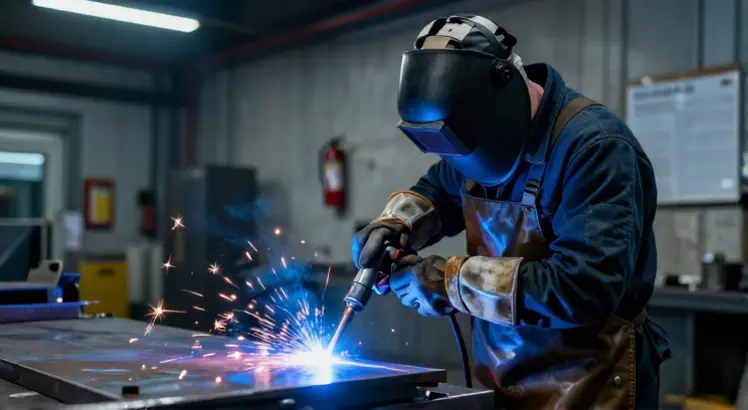
Plasma cutter safety starts with understanding just how powerful and unforgiving this tool really is. A plasma arc can reach temperatures over 40,000 degrees Fahrenheit, slicing through steel, aluminum, and copper with ease. That concentrated heat, combined with high-velocity ionized gas, creates a perfect storm of potential hazards if you skip the basics. Whether you are a first-time user or a seasoned fabricator, a serious approach to safety keeps your projects moving without a trip to the emergency room.
Many accidents happen not because of a lack of skill, but because of a casual attitude toward the daily routine. You get comfortable, you take a shortcut, and suddenly you are dealing with flash burns, electric shock, or a smoldering fire in the shop. This guide breaks down every critical layer of plasma cutter safety in plain language, giving you practical steps you can act on immediately. By the end, you will know exactly how to gear up, set up your space, and run your machine with confidence.
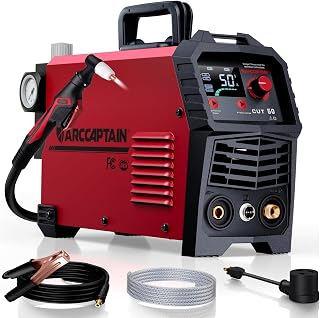
ARCCAPTAIN 50A Plasma Cutter with Large LED Display
Check PriceTable of Contents
Why Plasma Cutter Safety Deserves Your Full Attention
Plasma cutting is faster and cleaner than many other methods, but the risks are not always obvious at first glance. Unlike a grinding wheel that throws sparks you can see and feel, the plasma arc produces intense ultraviolet and infrared radiation that can damage your eyesight silently and permanently. The superheated air stream also blows molten metal across the room, and the process creates a cocktail of metallic fumes that can build up in your lungs over time.
Ignoring basic plasma cutter safety protocols often leads to three common injuries: radiation burns to the skin, severe arc eye, and respiratory irritation from inhaling zinc or hexavalent chromium when cutting coated metals. The power supply inside even a budget-friendly 50-amp machine carries enough voltage to stop your heart under the wrong conditions. When you treat the machine with respect, you eliminate these dangers before they ever have a chance to take hold.
Personal Protective Equipment (PPE) for Plasma Cutting
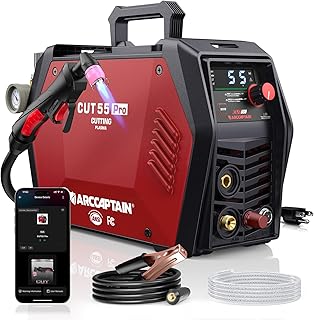
ARCCAPTAIN iControl CUT55 Pro
Check PriceGear is your first line of defense, and it is not the place to cut corners on cost. The right PPE shields your eyes, skin, and lungs from the immediate effects of the plasma arc and the secondary hazards of flying dross. Every piece of equipment needs to be rated for the specific intensity of plasma cutting, not just general welding or grinding. Here is how to layer up correctly.
Eye and Face Protection
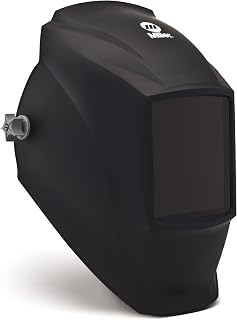
Miller 238497 Mp Welding Hood Protects Eyes, Neck and Face
Check PriceYour eyes are the most vulnerable target in plasma cutter safety. The arc emits a blindingly bright light that can cause photokeratitis, commonly known as arc eye, within seconds of unprotected exposure. A standard pair of safety glasses is not enough. You need a dedicated welding helmet or at minimum a face shield with the correct shade lens to filter out the harmful radiation.
For most plasma cutting tasks up to around 80 amps, a shade 5 to 8 lens provides sufficient protection while still allowing you to see the cut line clearly. If you push into higher amperages or use a CNC plasma table, the glare intensifies and you should step up to a shade 8 or higher. Many fabricators prefer an auto-darkening welding helmet with a plasma cutting mode, which adjusts quickly and protects your peripheral vision. If you need help finding the right helmet specifically for plasma work, take a look at our guide on choosing a welding helmet for plasma cutting to understand shade ratings and fit.
Never rely on tinted safety glasses alone. They may reduce visible glare but do not block the full spectrum of UV and IR rays that cause long-term retinal damage. Always combine a face shield or helmet with snug-fitting, impact-resistant safety glasses underneath to protect against flying particles that can sneak around the edges of your hood.
Hand and Body Protection

WZQH 16 Inches,932℉,Leather Welding Gloves, Heat/Fire Resistant
Check PricePlasma cutting throws molten metal droplets at high speed, often in unpredictable directions. Your hands are directly in the line of fire, so they demand heavy-duty, heat-resistant gloves made from leather or reinforced Kevlar. Choose gloves that extend past the wrist to protect against hot slag that can drop down into your sleeves, and make sure the stitching does not melt at high temperatures.
Your body needs a similar level of shielding. A flame-resistant welding jacket or apron made from tightly woven cotton, leather, or a hybrid carbon-felt material stops sparks from burning through your shirt. Denim jeans are a popular choice, but avoid synthetic fabrics like polyester, which can melt onto your skin and cause deep burns. If you are doing long runs or working on materials with heavy coatings, add a leather apron over your chest and lap for extra protection.

Leather Welding Jacket – Flame-Resistant Heavy Duty Work Welder Jackets
Check PriceRespiratory Safety
Plasma cutting produces more airborne contaminants than many people realize. The high-velocity air stream vaporizes the base metal and any surface coatings, releasing microscopic particles that can embed deep in your respiratory system. Cutting galvanized steel, for instance, releases zinc oxide fumes that cause metal fume fever, a flu-like illness that feels terrible and can become chronic with repeated exposure.
At a bare minimum, you need a well-fitted N95 or P100 respirator, especially if you are cutting indoors. For dedicated shops, a powered air-purifying respirator (PAPR) integrated into your welding helmet offers the best combination of comfort and filtration. Pair any mask with a strong local exhaust system that pulls fumes away at the source. Even with a respirator, never cut in a confined space without mechanical ventilation, the fumes can displace oxygen and create a suffocation hazard faster than you might think.
Workspace Setup and Environmental Hazards
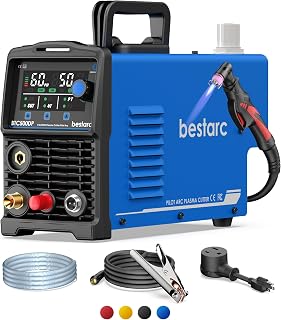
Bestarc 50A Pilot Arc Plasma Cutter
Check PriceA safe machine is only half the equation; your surrounding environment plays an equally important role. Plasma cutter safety demands a workspace that is intentionally designed to prevent fires, channel exhaust, and eliminate electrical risks before you ever pull the trigger. Small oversights like a cluttered floor or a missing ground clamp can turn a routine cut into a disaster.
Ventilation and Fume Extraction
Proper airflow is not a luxury; it is a biological necessity. Plasma cutting generates a visible cloud of metal dust and an invisible mix of toxic gases, including ozone and nitrogen dioxide, that can irritate your throat and lungs immediately. The best approach is a dedicated fume extraction arm positioned as close as possible to the cutting point, ideally no more than 4 to 6 inches away.
If you work in a garage or a small shop without a built-in system, a high-capacity shop fan blowing across the work surface and out an open door can make a huge difference. Position the fan to pull fumes away from your breathing zone, not push them back at you. Always stop and reassess if you notice your eyes watering or a metallic taste in your mouth, those are early warning signs that your ventilation is failing.
Fire Prevention and Housekeeping
The plasma cutter spits out an impressive shower of hot sparks that can travel up to 35 feet. These sparks find every pile of oily rags, every cardboard box, and every hidden pocket of sawdust in your shop. A clean, clutter-free work zone is non-negotiable. Sweep the floor thoroughly before each session and keep a fire extinguisher rated for electrical and combustible metal fires within arm’s reach, never further than the door.
Use a welding table made of steel or aluminum, never wood, and keep a fire-resistant blanket handy to cover any nearby surfaces or equipment you cannot move. If you are cutting on a concrete floor, be aware that the intense heat can cause small spalling explosions if the concrete has trapped moisture. Lay down a sheet of fire brick or a steel plate to protect both your floor and your machine. A small investment in a quality welding blanket, like the ones we test in our best welding blanket roundup, can save you from a preventable disaster.
Electrical Safety Essentials
Plasma cutters run on high-voltage DC power, and the circuit is only as safe as its weakest connection. Moisture, worn cables, and poor grounding turn your machine into a lethal shock hazard. Always inspect the power cord and torch leads for cracks, cuts, or exposed copper before you plug anything in. A single strand of damaged wire can arc against a metal bench and start a fire or deliver a severe shock.
The work clamp, often called the ground clamp, must be attached securely to clean, bare metal on the workpiece or the cutting table itself. A sketchy connection on a painted or rusty surface increases resistance, generates heat, and creates an erratic arc that can burn out your consumables and endanger you. Never bypass the ground clamp or use it as a trigger lock; if your machine has a fault, that ground path is your lifeline. Following the guidelines in OSHA’s comprehensive welding and cutting safety standards will keep your electrical setup up to code.
Operating the Plasma Cutter Safely
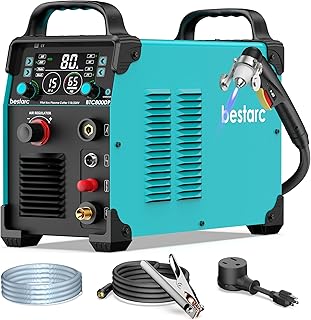
Bestarc 80A Plasma Cutter
Check PriceOnce your PPE is on and your workspace is dialed in, the way you physically handle the torch determines whether you stay safe or invite trouble. Most plasma cutter incidents happen during the first few seconds of ignition or right as the cut finishes and the operator drops their guard. A disciplined, consistent routine is your best insurance.
Pre-Use Inspection and Setup
A thorough walk-around check takes less than two minutes and catches 90% of problems before they become injuries. Start by looking at the torch body and consumables. Cracked, missing, or loosely assembled electrode and nozzle parts cause irregular arcs and can blow hot gas sideways instead of through the intended path. Verify that the air compressor is on, the pressure is set to the manufacturer’s specification, and the air is dry, moisture in the air line eats up consumables and creates a rough, unstable cut.
Check the work clamp connection and make sure the area around your cut is clear of bystanders and reflective surfaces. The arc can bounce off polished metal and hit someone standing to the side just as easily as it hits you. This is also the moment to confirm your emergency stop or kill switch is accessible. For a complete walkthrough on how to get your equipment dialed in from the start, our guide on how to set up a plasma cutter covers every detail you should not miss.
Best Practices During Cutting
Always set the amperage and air pressure to match the material thickness and type you are cutting. Running too hot for thin sheet metal warps the material and creates unnecessary spatter, while running too cold causes the arc to sputter and forces you to slow down, increasing your dwell time in the fume cloud. Use a drag shield or standoff guide whenever possible to keep the torch at the correct distance without riding directly on the metal.
Hold the torch at a slight angle, leaning back about 5 to 10 degrees from vertical, so the plasma stream blows the molten metal down and away from you, not up into your face. Keep your body positioned to the side of the cut line so the majority of the sparks and dross fly past you. If you have to lean over the workpiece, make sure your helmet is fully sealed at the neck and your sleeves are buttoned tight.
Post-Cut Safety and Shutdown
The moment the arc stops, the danger does not disappear. The freshly cut edge retains enough heat to cause third-degree burns for several minutes, and the workpiece may stay dangerously hot even longer. Develop the habit of marking hot metal with a piece of soapstone or a heat indicator crayon, and never leave a cut piece on a wooden bench or on the floor where someone can trip into it.
Power down the machine in the correct sequence: release the trigger, turn off the power supply, and then shut off the air compressor. Let the air run for a few seconds after the power is off to cool the torch and blow out any residual moisture. Coil your leads loosely without kinking, and store the torch in a dry, protected hanger away from foot traffic and falling tools. A five-minute shutdown routine extends the life of your equipment and eliminates that nagging, I think I left it on anxiety.
Common Plasma Cutter Mistakes and How to Avoid Them
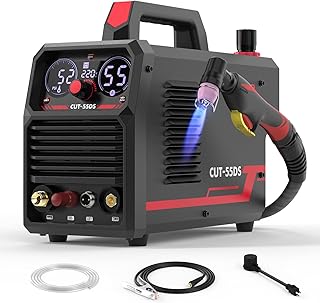
YESWELDER CUT-55DS
Check PriceEven experienced operators fall into bad habits that chip away at plasma cutter safety. Recognizing these pitfalls helps you self-correct before the consequences stack up. Here are the most frequent errors and the simple fix for each one.
- Skipping the shade lens for quick cuts. It takes one second of exposure to trigger arc eye. Always wear a helmet, even for test cuts and tacking. Keep a spare auto-darkening hood on a hook so it is never out of reach.
- Cutting over combustible surfaces. Plywood workbenches, cardboard templates, and plastic tarps are fuel sources waiting to ignite. Be relentless about removing everything flammable from your cutting zone.
- Ignoring air quality and moisture. Dirty or wet air does more than ruin consumables; it forces you to push the torch harder, creating more spatter and fume. Install a good air dryer and drain your compressor tank daily.
- Using damaged or mismatched consumables. A worn electrode or a cracked swirl ring throws the arc off center and can torch your hand or the torch body itself. Inspect consumables under bright light before every project.
- Leaning over the cut path. This puts your face directly above the hot metal plume. Shift your stance so you are looking at the cut from the side, not from above.
- Rushing the shutdown and clean-up. Hot metal looks exactly like cold metal. Use a temperature indicator and designated cooling zones to prevent burns and fires long after the machine is off.
Plasma Cutter Safety vs. Other Cutting Methods
Plasma cutting often gets compared to oxy-fuel and laser cutting, and each process carries a distinct safety profile. Understanding where plasma sits on that spectrum helps you respect its unique hazards without becoming complacent about the others.
Oxy-fuel torches rely on flammable gas and an open flame, so the fire risk is more immediate but the arc radiation is absent. You trade the intense UV light problem for a high-explosive gas management. Plasma cutting removes the explosive gas from your immediate workspace, but it introduces high-voltage electricity and a much higher fume generation rate per inch of cut.
Laser cutting, often enclosed in a CNC cabinet, largely removes the operator from direct exposure, but the moment you open that cabinet for maintenance, the residual heat, laser light, and fine metal dust present a different set of challenges. The takeaway is simple: plasma cutter safety is not about being better or worse than other methods, it is about recognizing that you are working with a hybrid hazard model that demands full PPE, aggressive ventilation, and strict electrical discipline every single time.
Frequently Asked Questions About Plasma Cutter Safety
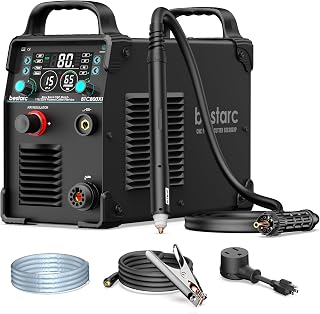
Bestarc 80A CNC Plasma Cutter
Check PriceNew and intermediate operators often share the same concerns, and getting clear answers builds the confidence to work safely. Here are the questions that come up most often in our shop and in our training sessions.
Can I use a plasma cutter without a welding helmet?
Technically you can, but you should not. The plasma arc emits the same spectrum of harmful light as a welding arc. A proper welding helmet or a dedicated plasma cutting face shield with at least a shade 5 lens is the only way to fully protect your eyes from UV and IR burns. Safety glasses alone will not stop arc eye.
Do I need a respirator for casual plasma cutting?
If you are cutting uncoated mild steel outdoors with a light breeze, the risk is lower, but for any indoor work or when cutting galvanized, stainless, or painted metal, a respirator is absolutely necessary. Metal fume fever and long-term lung damage are not worth the gamble, and a P100 mask is an inexpensive insurance policy.
What is the most overlooked fire hazard with a plasma cutter?
Dust and debris hiding in the flutes of corrugated metal or in the folds of a shop curtain are the top offenders. Sparks bounce into these pockets and smolder undetected, sometimes flaring up minutes after you have walked away. A thorough post-cut inspection of the surrounding area is a critical plasma cutter safety habit that is too often skipped.
How often should I replace my consumables for safety?
Swap them out the moment you see visible pitting, cratering on the electrode, or an irregular arc pattern that forces you to compensate with your torch angle. Worn consumables not only degrade cut quality, they can fail catastrophically, blowing out the side of the nozzle and sending a jet of plasma where it does not belong.
Is it safe to plasma cut over a wet concrete floor?
No. The intense heat can cause trapped moisture in the concrete to rapidly expand and explode small chunks of the surface, a phenomenon called spalling. Always cut on a dry, protected surface like a steel welding table or a fire brick base, and keep your work area free of standing water to eliminate both slip and shock hazards.
Conclusion: Build Safety Into Every Single Cut
Plasma cutter safety is not a checklist you complete once and forget, it is a mindset that colors every decision from the moment you walk into the shop. The machines are faster, more affordable, and more accessible than ever, which means the responsibility falls squarely on your shoulders to run them with the respect they demand. Every time you put on your helmet, check your ground, and clear your workspace of clutter, you are actively rewriting the odds in your favor.
Start today by auditing your current setup against the practices we have laid out here. Replace that cracked torch lead, invest in a proper shade 8 hood, and make a habit of checking your air quality before the first spark. A safe fabricator is a productive fabricator, and the work you do with a clear, protected mind will always be your best.