A mini spot welding kit opens the door to building custom battery packs, repairing electronics, and tackling thin metal projects that a soldering iron simply cannot handle. These compact devices deliver a precise, short burst of current to fuse nickel strips onto battery terminals without overheating the cells. Whether you are a hobbyist assembling a lithium-ion power bank or a maker creating a small sheet metal assembly, understanding how a mini spot welder works and which features matter will save you time, money, and frustration.
Table of Contents
What Is a Mini Spot Welding Kit?
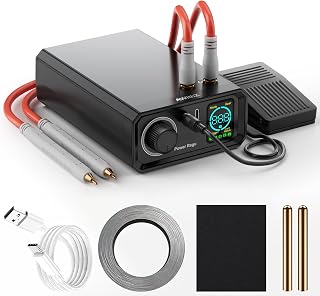
AWithZ 11500W Rotary Knob Spot Welder
Check PriceA mini spot welding kit is a scaled-down version of an industrial resistance welder designed for low-current, precision applications. Unlike large floor-standing spot welders that join thick automotive steel, a mini spot welder works with thin metals, typically nickel or steel strips between 0.1 mm and 0.3 mm thick. Most units use capacitor discharge technology, storing energy in capacitors and releasing it in a short, controlled pulse through copper electrodes.
These kits often come as a handheld device or a small benchtop unit with a foot pedal or touch trigger. The soldering-free process is essential for battery building because excessive heat from a soldering iron can damage the internal chemistry of lithium cells, reducing capacity and posing a safety risk. A mini spot welder creates a strong, clean joint in milliseconds, keeping the surrounding area cool.
How Does a Mini Spot Welder Work?

SEESII Battery Spot Welder
Check PriceThe core principle behind any spot welder is resistance heating. When electric current passes through two electrodes pressed against a metal strip and the workpiece below, the high resistance at the contact points generates intense localized heat. This heat melts the metals together, forming a weld nugget as the material cools under pressure. A mini spot welding kit follows the same principles of resistance spot welding, but on a much smaller scale.
Most hobby-grade units use a capacitor bank charged to a set voltage. When the user triggers the weld, the capacitors dump their stored energy through the electrodes in a pulse lasting a few milliseconds. The pulse duration and current determine the weld strength. Too little energy results in a weak joint, while too much can blow a hole through the nickel strip or damage the battery terminal. Quality kits include adjustable power settings and pulse control to match different material thicknesses.
Common Applications for Mini Spot Welding Kits
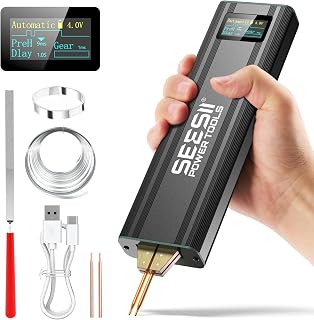
SEESII Durable Aluminum Spot Welder
Check PriceMini spot welders fill a gap between soldering and large industrial welders, making them ideal for projects where precision and low heat input matter. Here are the most frequent uses:
- Building lithium-ion battery packs for e-bikes, power tools, power walls, and portable electronics
- Joining nickel tabs to 18650, 21700, and 26650 cells without damaging the battery internals
- Repairing electronics that require wire-to-terminal connections on delicate circuit boards
- Constructing small metal assemblies for model making, jewelry, and RC vehicles
- Prototyping thin sheet metal enclosures or brackets where mechanical fasteners are impractical
Because the weld happens in under a second, surrounding components stay safe. This non-contact heat method also eliminates the need for flux, solder, or filler materials, leaving a clean, conductive joint.
Key Features to Look For in a Mini Spot Welding Kit
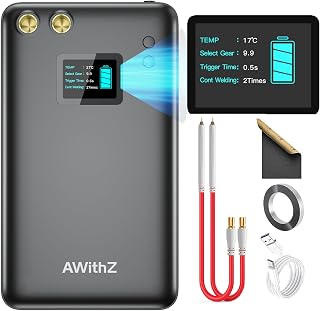
AWithZ 11000mAh LCD Spot Welder
Check PriceNot all kits perform the same, and a few critical features separate frustration from flawless results. When you start researching the best mini spot welders available, pay attention to these specifications:
Adjustable Pulse and Current Control
You need the ability to tweak the welding pulse length and power. Thin nickel strips (0.1 mm) demand a gentle burst, while thicker tabs (0.2 mm or 0.3 mm) require more energy. A knob or digital control that lets you dial in the exact setting prevents burn-through and ensures consistent welds across a project.
Power Source and Portability
Some mini spot welders run on a lithium polymer battery built into the handle, giving complete cordless freedom. Others rely on a mains-powered DC adapter or an external 12V battery, such as a car battery or large lead-acid unit. Cordless models are convenient for field repairs but may have limited weld counts per charge. Choose based on how many welds you plan to make in one session.
Electrode Material and Design
Alumina copper electrodes are the gold standard because they resist wear and maintain conductivity. Look for kits with replaceable tips or interchangeable electrode holders. A narrow, pointy tip works well for tight battery terminals, while a flat tip covers more surface area for larger strips. Some advanced kits include tweezer-style probes for reaching into cramped spaces.
Safety Mechanisms
A good mini spot welder includes overheat protection, a lockout trigger to prevent accidental firing, and a clear voltage display. Capacitor-based systems should have an automatic discharge when idle. If the kit uses mains power, look for an isolated power supply and a grounding connection to protect the user and the workpiece.
How to Use a Mini Spot Welder Safely
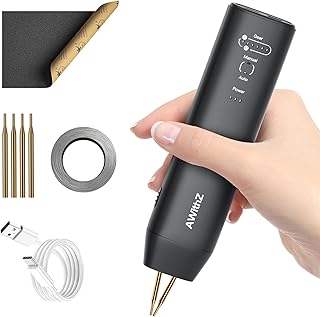
AWithZ Handheld 11-Gear Spot Welder
Check PriceUsing a mini spot welding kit is straightforward, but following a safe procedure ensures strong welds and prevents damage to your batteries or equipment. For a complete walkthrough, refer to a step-by-step guide on using a mini spot welder. The basic steps are:
- Clean the battery terminals and nickel strips with isopropyl alcohol to remove oils and oxidation.
- Set the pulse power to the lowest setting and perform a test weld on scrap material.
- Position the nickel strip firmly against the cell terminal and press the electrodes down evenly.
- Trigger the weld and hold pressure for a fraction of a second after the pulse to let the nugget solidify.
- Inspect the weld: a proper joint shows a small, round dimple with no blow holes. If it lifts easily, increase power slightly.
- Always wear safety glasses to protect against sparks, and work in a well-ventilated area away from flammable materials.
Avoid welding directly on the positive terminal’s top vent holes, as excessive heat or force can rupture the cell’s safety mechanism. Practice on dead cells first to build muscle memory and confidence.
Mini Spot Welder vs. Soldering: What’s the Difference?

Hosyond Handheld Spot Welder
Check PriceMany beginners wonder if they can simply solder battery packs instead of investing in a mini spot welding kit. The fundamental difference lies in heat transfer. Soldering requires heating the entire connection area to flow solder, which forces thermal energy into the battery terminal for several seconds. Lithium cells are highly sensitive to heat, and prolonged exposure above 100 degrees Celsius can permanently degrade capacity or cause internal short circuits.
A spot welder completes the joint in a few milliseconds, dissipating heat so fast that the cell body barely rises in temperature. The welded joint is also mechanically stronger and has lower electrical resistance than a soldered connection, because the metals fuse directly without an intermediate solder layer. For high-current applications like power tools or e-bike batteries, that lower resistance means less voltage drop and less heat generation during discharge.
Soldering still has its place for general printed circuit board work, but for building reliable battery packs, a mini spot welder is the safer, more professional choice.
Factors to Consider When Buying a Mini Spot Welding Kit
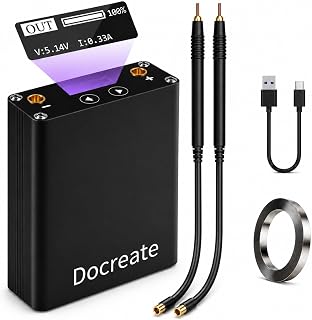
5500W Handheld Spot Welder
Check PriceYour Primary Application
If you only build small packs with four to eight cells, a simple portable spot welder with a built-in battery works fine. For repetitive jobs making dozens of welds in a row, look for a model that runs off an external power supply or a dedicated 12V battery, as these deliver consistent energy without cooldown pauses.
Welding Depth and Materials
Most mini kits handle pure nickel strips up to 0.2 mm without issue. If you plan to weld nickel-plated steel or thicker 0.3 mm strips, you need a unit with higher stored energy and adjustable current. Check the manufacturer’s stated maximum welding thickness, and remember that steel strips require more power than pure nickel due to higher resistance.
Build Quality and Longevity
Inexpensive kits often skimp on capacitor quality and electrode construction. Look for units using proven MOSFET switching and capacitor brands. Replaceable electrodes and a sturdy casing extend the tool’s life. Reading community reviews and forums helps you avoid models known for inconsistent pulsing or early capacitor failure.
Budget and Support
Mini spot welders range from affordable bare-board kits requiring some assembly to fully ready-to-use professional units. Spending a little more often gets you a calibrated output, better safety features, and a warranty. Consider the availability of spare electrodes and customer support before making a final decision.
Maintenance and Troubleshooting Tips
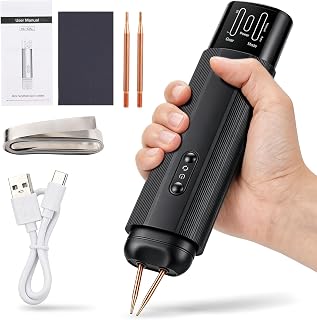
Rechargeable Mini Spot Welder
Check PriceKeeping your mini spot welder in top shape takes minimal effort. Clean the electrode tips regularly with fine-grit sandpaper or a dedicated tip cleaner to remove buildup and oxidation. Dirty tips increase resistance, causing weak welds and arcing. Check all cable connections for tightness and signs of wear, especially where the electrodes attach.
If you notice inconsistent weld quality, first lower the pulse setting and test again. Inconsistent results often mean the capacitor bank is not charging fully between welds, or the battery power source is sagging. Give the unit a few seconds of rest between pulses. For cordless models, a low internal battery will cause perceptibly weaker pulses, so recharge before extended sessions. When the electrodes show obvious pitting or mushrooming, replace them immediately to maintain performance.
Frequently Asked Questions
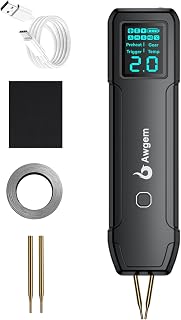
Awgem 99-Gear Handheld Spot Welder
Check PriceCan a mini spot welder weld copper strips?
Standard hobby mini spot welders struggle with copper because copper has very low electrical resistance and high thermal conductivity. They cannot generate enough heat at the contact point. Some advanced units with high-current output and copper-compatible electrodes exist, but most kits are designed for nickel or nickel-plated steel strips.
How many welds can I make on a single charge?
It varies widely. A typical portable spot welder with a 2000 mAh internal battery can produce between 200 and 400 welds on a full charge, depending on the pulse power setting. Higher power pulses drain the battery faster. For unlimited welds, choose a unit powered by an external 12V source.
Is a mini spot welding kit safe for lithium battery packs?
Yes, when used correctly, it is far safer than soldering. The key is to set the pulse energy appropriately and avoid welding near the cell vent. Always work on cells that are at a stable room temperature and never weld on a fully charged cell that is still under voltage. Following a cautious power progression minimizes any risk.
What is the difference between capacitor discharge and transformer-based mini welders?
Capacitor discharge welders store energy in capacitors and release it in a short, controlled burst. They are compact, portable, and work well with thin materials. Transformer-based welders pass AC current directly from the mains through the workpieces and are typically larger, heavier, and better suited for thicker metals. For battery building, capacitor discharge dominates the mini spot welding category.
Conclusion
A mini spot welding kit is a game-changer for anyone serious about battery building, electronics repair, or fine metal fabrication. By understanding the core working principles, evaluating key features like pulse control and electrode quality, and following safe welding practices, you can create durable, low-resistance connections that outperform soldered joints. Take the time to match the tool to your most common tasks, start with low power settings, and practice on scrap material until your weld dimples are consistent. Explore our detailed list of top-rated mini spot welders to find a unit that fits your workshop and take your projects to the next level.