Welding helmets protect you from intense light and sparks, but they don’t have to look boring. A custom Iron Man welding helmet turns a standard piece of safety gear into a conversation starter on the job site. More and more welders are looking for ways to express their personality while staying safe, and the red and gold armor of Tony Stark’s iconic suit is one of the most requested custom themes. Creating your own Iron Man helmet is a fun project that combines creativity with practical welding knowledge.
You don’t have to be a professional painter to pull off a cool look. With the right preparation and a few simple techniques, you can transform a basic auto-darkening hood or a passive helmet into something straight out of a Marvel movie. This guide walks you through everything you need to know, from design options to safety rules, so you can decide if a DIY paint job, a custom commission, or a pre-built themed hood is right for you.
Table of Contents
What Is an Iron Man Welding Helmet?

Smart Auto-Adjust Auto Darkening Welding Helmet with 3 LED Lights
Check PriceAn Iron Man welding helmet is a standard welding hood that has been painted or wrapped to look like the helmet worn by the Marvel superhero Iron Man. The design typically features the signature red faceplate, gold accents, glowing eyes, and mechanical panel lines that mimic the Iron Man armor. While there is no official Iron Man welding helmet produced by a major brand, many independent artists, airbrush shops, and DIY welders create these custom pieces for hobbyists and professionals alike.
The customizations are purely cosmetic and sit on top of the original shell. This means any proper auto-darkening or passive hood can become an Iron Man helmet without affecting its protective capabilities, as long as you use the right materials and avoid damaging the lens or electronics. The goal is to fuse creativity with the reliability of ANSI-approved safety gear.
Why Choose an Iron Man Design?

The Black Series Imperial Death Trooper Premium Electronic Helmet
Check PriceA themed hood does more than just catch attention. It reflects your interests and can make long welding sessions feel a bit more personal. In a booth or on a pipeline, a helmet with a superhero flair often boosts morale and becomes a signature part of your work identity. Many welders say their custom gear helps them stand out to clients and shows craftsmanship even before they strike an arc.
There is also a practical side. A brightly decorated helmet is easier to spot in a cluttered shop, and the extra clear coat layers can add a minor scratch-resistant shield to the original shell. Plus, getting into painting your own helmet opens the door to other custom projects, turning a functional tool into a creative outlet.
How to Get an Iron Man Welding Helmet

Auto Darkening Welding Helmet with Light, Upgraded Solar Powered
Check PriceYou have three main paths to owning an Iron Man helmet: buy a pre-painted hood from a vendor, commission a custom paint job from an artist, or paint one yourself. Each route has different costs, lead times, and levels of personal involvement.
Buying a Pre-Made Iron Man Helmet
Several online marketplaces like Etsy and specialty welding gear shops sell helmets that come already painted in an Iron Man theme. These are usually base-model hoods, often passive or entry-level auto-darkening units, that have been airbrushed by experienced artists. Prices range from $150 to over $400, depending on the complexity of the artwork and the quality of the base helmet.
Before you buy, confirm that the base helmet carries an ANSI Z87.1 certification. The flashy paint should never come at the expense of eye safety. Ask the seller about the type of paint used and whether the lens and sensors remain unobstructed. A reliable vendor will provide clear photos of the front, inside, and lens area so you can check for coverage over vital components.
Commissioning a Custom Paint Job
If you already own a helmet you trust, sending it to a custom airbrush artist gives you full control over the design. You can specify the exact Iron Man suit version, from the classic Mark III red and gold to the sleeker nanotechnology suits, and even add your name or welding number. Commission prices usually start around $200 and can go much higher for photorealistic details.
Choose an artist who has experience with hard plastic and curved surfaces. Helmets are not flat canvases, so you need someone who understands how to work with contours and the heat resistance required for a shop environment. Ask for a portfolio of similar work and agree on a timeline before shipping your hood.
DIY: Painting Your Own Iron Man Welding Helmet
This is the most rewarding and budget-friendly route. A DIY custom paint job can cost as little as $50 in materials and lets you learn a new skill. You will need automotive-grade spray paints, fine-grit sandpaper, painter’s tape, stencils or vinyl masks, and a two-part clear coat for durability.
Plan your design first. Sketch the helmet and mark where the red base, gold faceplate lines, and eye glow sections will go. The classic Iron Man look uses a metallic red base with gold upper cheek plates and a glowing white or light blue arc reactor and eye elements. Some welders add black panel line accents with a fine brush or paint pen after the base colors are down.
Step-by-Step Process for a DIY Paint Job
- Remove all internal parts: Take out the lens, headgear, and any electronics. Mask off the sensor areas with low-tack tape.
- Sand the shell lightly: Use 600 to 800 grit sandpaper to scuff the glossy surface so the paint adheres. Do not sand through the plastic.
- Clean thoroughly: Wipe down with isopropyl alcohol to remove all dust and oils. Let it dry completely.
- Apply primer: A light coat of plastic adhesion promoter followed by a gray or white primer gives your colors a uniform base.
- Base coat red: Spray several thin coats of metallic red, letting each coat flash off for about 10 minutes. Avoid heavy coats that can drip.
- Mask and paint gold: Once the red is dry, use fine line tape and masking sheets to create the gold facial details. Spray metallic gold carefully.
- Add details: Use small brushes or paint markers to draw panel lines, arc reactor glow, and eye accents. Acrylic enamel paints work well over lacquer bases.
- Clear coat: Seal everything with two or three coats of a high-gloss, UV-resistant clear coat. This protects the artwork from scratches and grinding dust.
- Reassemble: Once fully cured (24 to 48 hours), reinstall the headgear, lens, and sensors. Test the auto-darkening function before welding.
Safety Considerations When Customizing
Smart Auto-Adjust Auto Darkening Welding Helmet with 3 LED Lights
Check PriceYour helmet’s primary job is to protect your eyes and face from arc radiation and molten metal. Any customization must not compromise that function. Never paint over the auto-darkening sensors, the lens opening, or the control knobs. Even a thin layer of overspray on the sensor window can cause delayed lens reactions, which leads to painful arc flash exposure.
Use only paints that are safe on ABS or nylon helmet shells. Some harsh solvent-based paints can weaken plastic over time. Always work in a well-ventilated area when spraying, and wear a proper respirator. Once the helmet is dry and reassembled, do a full function test: quickly move your hand in front of the sensor while the lens is on to see if it darkens instantly. If it hesitates, clean the sensor or check your masking.
For the highest level of protection, your finished helmet should still meet ANSI Z87.1 standards. A custom paint job does not automatically void that rating as long as the shell and lens remain intact, but it is your responsibility to ensure safe operation. For more on proper eye safety, refer to OSHA’s guidelines for eye and face protection.
Design Inspiration and Variations

Mandalorian Helmet – 18 Gauge Steel Medieval Boba Fett
Check PriceYou don’t have to stick to a straight copy of the movie suit. Welders have created Iron Man helmets with a weathered, battle-scarred look, a carbon-fiber wrap underneath the gold, or a fusion with a classic pipeliner style. Some add LED strips behind a tinted lens cover to simulate the glowing eyes, though this requires careful wiring and battery placement away from heat sources.
If you want to see how the Iron Man theme fits into the larger world of personalized hoods, browse our welding helmet designs collection for even more creative ideas. Mixing elements from different suits, like the War Machine armor or the Iron Patriot color scheme, can make your helmet truly one of a kind.
Many welders also combine the superhero look with practical add-ons, such as cheater lenses or side LED work lights, keeping the function high while the style turns heads. For an extensive roundup of eye-catching concepts beyond the Marvel universe, check out our list of cool welding helmets from Star Wars to skull motifs.
Maintenance and Long-Term Care
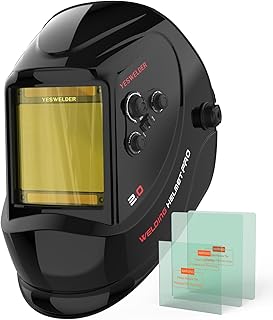
YESWELDER LYG-M800H Auto Darkening Welding Helmet
Check PriceA custom painted helmet needs a bit more care than a plain one. Grinding dust, spatter, and shop grime can dull the clear coat over time. Wipe the shell down regularly with a damp microfiber cloth, and avoid strong solvents that could eat through the paint. If you get a small scratch, you can often buff it out with polishing compound and reapply a spot of clear coat.
Store your helmet in a bag or on a shelf away from direct sunlight. Prolonged UV exposure fades the red pigment faster than you might expect. If the headgear eventually wears out, you can replace it without damaging the paint, because most shells use standard mounting points.
Frequently Asked Questions

MIGVAN Welding Helmet Auto Darkening True Color
Check PriceWill painting my welding helmet void the warranty?
It often does, especially with big brands like Miller or Lincoln. Paint overspray can interfere with sensor function, which manufacturers cite as a reason to deny warranty claims. If the warranty matters to you, consider buying a second inexpensive hood for customizing and keep your primary helmet stock.
Can I wrap the helmet instead of painting it?
Yes, high-quality vinyl wraps work well on smooth helmet shells and are reversible. The main challenge is the complex curves around the lens area, which require a heat gun and patience. A wrap can be a good option if you rent a helmet or want to change designs later.
How much does a professional Iron Man helmet cost?
A complete custom painted hood from an established airbrush artist typically ranges from $250 to $600, depending on detail and the base helmet model. Buying a pre-painted hood online usually falls between $150 and $350, but always verify the safety rating before purchasing.
Can I use a normal auto-darkening helmet for this project?
Absolutely. Standard auto-darkening helmets are the most popular choice because they offer variable shade and enhanced productivity. Just be extra careful masking the sensors and lens cartridge. Passive hoods with a fixed shade lens are simpler to paint because they have fewer electronic components to protect.
Will the painted helmet hold up to welding heat and sparks?
A properly applied automotive clear coat withstands the ambient heat of most welding environments. Direct spatter, though, can burn through any paint. Keep a spare clear lens cover on hand and replace it when it gets pitted, the shell itself will stay protected as long as you don’t let heavy slag sit on it.
Conclusion
An Iron Man welding helmet is more than a paint job, it is a statement of skill and personality. Whether you buy one ready-made, hire an artist, or grab some spray cans and do it yourself, the result is a hood that makes you proud every time you flip it down. The key is to plan your design around the helmet’s safety features, use the right materials, and never sacrifice protection for looks.
Start by deciding how much time and money you want to invest. If you are new to painting, a simple two-color scheme with gold accents is easier to execute than a full airbrush mural. Gather your materials, work in a clean space, and test everything before you weld. A custom Iron Man helmet not only protects your eyes, it also reminds you that even everyday gear can be awesome.