If you are new to welding, you have likely heard the terms welding rod and electrode used interchangeably. While they sound technical, the concept is actually very straightforward. A welding rod is the metallic filler material melted down to fuse two pieces of metal together.
Understanding what a welding rod is, and how it works, is the first step toward laying strong, clean beads. However, not all rods are created equal. Choosing the wrong one can lead to weak joints, excessive spatter, or dangerous cracks in your project.
In this guide, we will break down the science, the numbering system, and the practical selection process into simple, digestible steps. Whether you are setting up a stick welder for the first time or just curious about how manual arc welding functions, you will walk away with the confidence to pick the right consumable for the metal you are joining.
Table of Contents
The Simple Definition: What Is a Welding Rod?
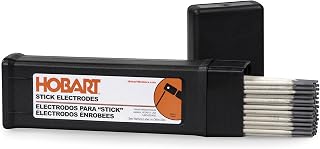
Hobart 770472 6013 Stick Welding Electrodes 5/32 in, 5 lb
Check PriceAt its core, a welding rod is a coated metal wire used in shielded metal arc welding (SMAW), commonly referred to as stick welding. During the welding process, an electric arc forms between the tip of the rod and the base metal. The intense heat melts both the rod and the workpiece, creating a molten pool that solidifies into a solid joint.
It helps to think of a welding rod like a combination of fuel and glue. The inner core wire conducts electricity, carries the current, and provides the filler metal. The outer coating, called flux, does the dirty work of protecting the weld puddle from atmospheric contamination.
Without this protective flux layer, the molten metal would react instantly with oxygen and nitrogen in the air. The result would be a porous, brittle weld full of holes. The welding rod ensures these atmospheric gases are pushed away, stabilizing the arc and floating impurities to the surface in the form of slag.
How a Welding Rod Actually Works

Hobart H117119-RDP 6013 Stick Welding Electrode, 1/16-Inch
Check PriceThe process is fast, violent, and extremely hot. The moment the rod tip scratches against grounded steel, the circuit completes, converting electrical energy into thermal energy reaching up to 7,000 degrees Fahrenheit. This heat simultaneously burns the flux coating and liquefies the core wire.
As the flux burns, it releases shielding gases, usually carbon dioxide, that envelop the arc stream. This shields the molten metal from contamination. The remaining flux ingredients melt into a liquid slag, which floats on top of the weld bead, cooling slower than the metal underneath.
Once the weld cools, this glass-like slag layer must be chipped away with a chipping hammer. A high-quality rod produces slag that detaches easily, sometimes even rising on its own, a phenomenon welders call self-peeling slag. The electrode’s length shortens as the filler metal transfers into the joint, meaning you constantly need to insert a new rod as you progress along a seam.
Breaking Down the AWS Classification System
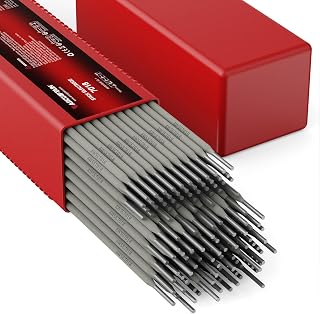
ARCCAPTAIN E7018 Welding Rods 1/8″ 10LB
Check PriceOne of the most confusing aspects for beginners is the numbering on the box. The American Welding Society (AWS) standardizes these numbers, and once you crack the code, you can identify a rod’s properties in seconds. The system for mild steel electrodes typically starts with the letter ‘E’, signifying electrode, followed by four or five digits.
- Tensile Strength (First two digits): Multiply the first two numbers by 1,000. This gives you the tensile strength of the deposited weld metal in pounds per square inch (PSI). A 6010 rod, for example, produces 60,000 PSI tensile strength.
- Welding Position (Third digit): The ‘1’ indicates the rod can run in all positions (flat, horizontal, vertical, and overhead). A ‘2’ restricts it to flat and horizontal fillets only. A ‘3’ is for flat only but is rarely seen in common rods.
- Flux Coating and Current Type (Fourth digit): This tells you the chemical makeup of the coating and the required polarity. For instance, a rod ending in ‘0’ (like E6010) is a high-cellulose sodium coating requiring DC (Direct Current) reverse polarity (electrode positive). A number ‘8’ (like E7018) is a low-hydrogen iron powder coating that works on both AC and DC.
Decoding Special Electrodes (Non-Steel)
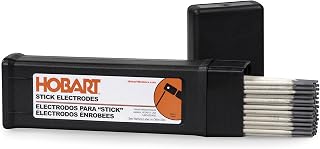
Hobart 770459 6011 Welding Electrode, 1/8 in, 5 lb
Check PriceNot all rods are designed for mild steel. You will also run into specific alloys for cast iron, stainless steel, and hard-surfacing. They follow slightly different classification prefixes but the logic remains the same.
- Stainless Steel (E308L-16): The “308” marks the alloy type, “L” stands for low carbon to prevent carbide precipitation, and “16” describes the type of coating, usually for AC/DC current.
- Nickel Rods (ENi-CI): Designed specifically for welding cast iron. These rods usually contain a high-percentage nickel core to match the expansion and contraction rates of brittle cast iron, preventing cracks.
- Hardfacing Rods: Often labeled with a generic Hard name or an ‘R’ prefix, these produce abrasion-resistant surfaces on earth-moving equipment, not structural joints.
Consumable Electrodes vs. Non-Consumable Electrodes
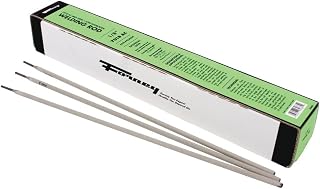
Forney 30685 E7018 AC Welding Rod, 1/8-Inch, 5-Pound
Check PriceTo fully grasp what a welding rod is, you must separate it from the world of Tungsten Inert Gas (TIG) welding, where things work differently. The welding world splits into two distinct categories: consumable and non-consumable electrodes.
- Consumable (Stick and MIG): The electrode is the filler metal. It melts, shortens, and becomes part of the permanent weld joint. In stick welding, the rod is the consumable electrode. In MIG, the wire spool serves this purpose.
- Non-Consumable (TIG): The tungsten electrode does not melt into the pool. It only provides the precise arc point. If you need filler metal for a TIG joint, you manually dip a separate bare welding rod into the puddle with your other hand. The TIG torch electrode stays sharp.
This distinction matters because a stick welding rod brings both the arc conductor and filler metal to the table. It sacrifices itself for the weld, making it a single-use product. You cannot reuse a short stub of a stick electrode without risking burn-through of your electrode holder.
The Most Common Welding Rod Types (And When to Use Them)
Different rods have vastly different personalities, regarding arc aggression, slag thickness, and crack resistance. Here are the four heavy hitters you will stock in your rod oven or dry box.
E6010: The Deep Digger
The E6010 is known for its forceful, spraying arc and rapid freezing puddle. It digs deep into the root of a joint, making it the industry standard for pipeline root passes. This rod requires DC positive (reverse polarity) only and produces little slag. It is notoriously difficult for beginners because it requires fast travel speeds, but it excels on dirty, rusty, or painted steel where other rods fail.
E6011: The AC Alternative
Hobart 770459 6011 Welding Electrode, 1/8 in, 5 lb
Check PriceThink of the E6011 as the cousin of the 6010 that plays nice with AC (Alternating Current) machines. It shares the fast-freeze characteristic but uses a slightly different flux to stabilize under alternating current. It is ideal for maintenance repair where only a basic AC buzz box is available, and it handles galvanized pipe or bad fit-up comfortably.
E6013: The Smooth Sheet Metal Rod
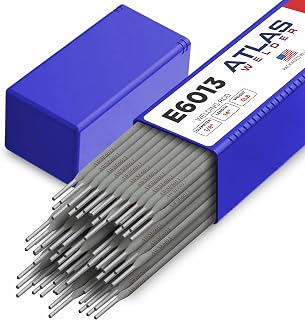
ATLASWELDER E6013 1/8” 5LB Welding Rods
Check PriceThe E6013 is the go-to rod for beginners learning flat and horizontal welding. It boasts a soft, quiet arc with minimal spatter. The slag covers the bead completely but is very thin. It is great for low-penetration projects like truck beds, thin sheet metal, and ornamental gates. However, avoid this rod for structural beams because it lacks the deep penetration of the 6010 group.
E7018: The Low-Hydrogen Heavy Lifter
ARCCAPTAIN E7018 Welding Rods 1/8″ 10LB
Check PriceThe E7018 is the premium structural electrode. It contains iron powder in the flux, allowing a high deposition rate and a smooth, thick bead. The secret weapon in its chemistry is the low-hydrogen coating. Hydrogen, absorbed from moisture, can cause under-bead cracking in high-strength steel. The E7018 minimizes this risk, making it essential for bridges, buildings, and heavy equipment. It must be stored in a rod oven at 250 to 300 degrees Fahrenheit to keep moisture out.
The Critical Role of Flux Coating
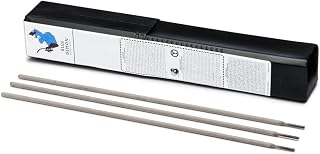
Blue Demon 6011 X 5/32″ X 14″ X 5LB Plastic Carbon Steel Electrode
Check PriceThe coating on a welding rod is not just a paint-like layer of chemicals, it is a finely engineered system. A bare wire would instantly short out, stick, and form a ball of oxidized metal. The flux solves several problems simultaneously.
- Arc Stabilization: Ingredients like potassium silicate and sodium silicate ionize the arc gap, smoothing out the electrical flow.
- Gas Shielding: Cellulose burns off into hydrogen and carbon dioxide, displacing air from the molten pool.
- Deoxidation and Cleaning: Ferromanganese and ferrosilicon scavenge oxygen from the metal, preventing porosity.
- Slag Formation: Rutile (titanium dioxide) and calcium carbonate create a liquid blanket that cools on top of the bead, controlling cooling rate and surface profile.
- Alloying Elements: Some specialty rods feed nickel, chromium, or molybdenum into the weld deposit directly through the flux to alter the final chemistry.
If the flux is cracked, chipped, or damp, the rod is effectively ruined, even if the core wire looks shiny. Wet flux releases hydrogen into the weld pool, leading to delayed cracking hours after the part has cooled.
Welding Rod vs. Filler Rod: Clearing the Confusion
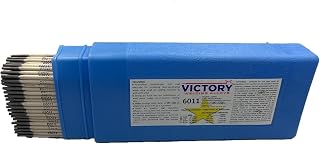
Victory Welding Alloys 6011 Welding Rod 1/8″ 5 Pound Box
Check PriceIn oxy-acetylene and TIG processes, users often reference a filler rod. While they share a similar rod-like shape, there is a fundamental difference in how they function compared to stick electrodes.
- Stick Welding Rod: Coated, carries electric current, provides shielding, forms slag.
- TIG Filler Rod: Bare, uncoated, no current flows through it. Dipped manually into a separate arc. Shielding comes from an external gas tank, not the rod itself.
- Oxy-Fuel Rod: Bare, melted by a neutral flame, not electricity. Often uses a separate flux powder or paste applied to the joint.
If you tell a supplier you need a rod for a TIG machine and they hand you E7018 stick electrodes, you will have a very confusing and smoky afternoon. Always specify the process when requesting consumables. A bare TIG filler rod trades under designations like ER70S-2 for carbon steel or ER308L for stainless.
Storage, Moisture, and the Importance of a Rod Oven
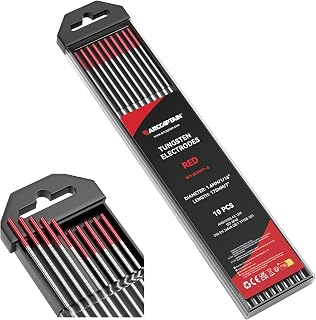
ARCCAPTAIN TIG Welding Tungsten Electrode 10-Pack 1/16″ (Red, WT20)
Check PriceWelding rods do not age like fine wine, they degrade like a sponge in a humid basement. The flux coating is hygroscopic, meaning it draws moisture from the surrounding air. Even high-quality code-grade work can be rejected if the inspector finds a rod box left open overnight.
Low-hydrogen rods, specifically the E7018 family, require strict storage discipline. Once opened, they must be kept in a portable rod caddy heated to at least 250 degrees Fahrenheit. If rods are exposed to ambient air for more than a few hours, you can re-bake them following manufacturer procedures, typically at 650 to 750 degrees Fahrenheit for one hour. Cellulosic rods like E6010, however, actually require a small percentage of moisture in the coating to work properly, so they should not be baked dry.
To maintain trustworthiness in your work, always check warehouse policies. A vacuum-sealed container confirms the factory freshness. If you are a hobbyist, vacuum seal opened packs in heavy-duty bags with silica gel packets to extend life, but do not rely on this for structural certification jobs.
Expert Tips for Arc Striking Without Sticking
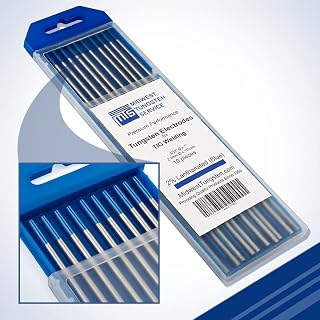
Midwest Tungsten Service TIG Welding Tungsten Electrodes 10-Pack (Blue, 3/32″)
Check PriceOne of the most frustrating beginner experiences is seeing the welding rod fuse solidly to the base metal. This is called freezing the rod, and it happens when the current is too low or the striking technique is too slow. A stuck rod overheats in seconds, and you must twist the stinger immediately to snap it off.
To avoid sticking, brush the rod against the metal using a motion similar to striking a match. As soon as the arc ignites, raise the rod to the correct arc length, roughly the diameter of the core wire itself. Try keeping an arc gap around 1/8 inch. If the rod tries to dive back down, increase your amperage by 5 to 10 amps. Running too cold is the enemy of a clean start.
Another pro tip involves resting the rod handle on your glove for stability. Tripoding your free hand under the stinger while bracing your body against a solid object stabilizes the arc start, eliminating the wild wobbles that often lead to sticking.
Polarity and Current Selection for Common Rods
ATLASWELDER E6013 1/8” 5LB Welding Rods
Check PriceConnecting your electrode holder to the wrong terminal on the machine results in a chaotic arc, excessive spatter, and sometimes no penetration at all. The polarity depends entirely on the rod classification number.
- DC Electrode Positive (DCEP, Reverse Polarity): Required for E6010 and most E7018 rods. The electrode gets hot, providing deep penetration into the base plate.
- DC Electrode Negative (DCEN, Straight Polarity): Used for some hard-surfacing rods and thin sheet metal rods where you want shallow penetration. The workpiece heats up more, melting the surface quickly.
- AC (Alternating Current): Primarily for E6011 and E6013. It neutralizes arc blow, a condition where magnetic fields deflect the arc. AC is less effective for deep penetration tasks.
Always look at the fourth digit and the manufacturer’s spec sheet. If you mistakenly run an E6010 on AC, the arc will pop and extinguish repeatedly, making a consistent bead impossible.
Selecting the Right Diameter for Your Project
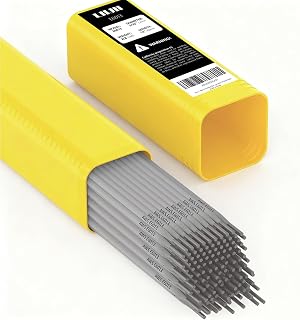
LIIJII E6013 Welding Rod 3/32″, 1lb
Check PriceWelding rods come in varying diameters, often listed in fractions of an inch. The standard sizes are 1/16″, 3/32″, 1/8″, 5/32″, and 3/16″. The thickness of the base metal, the position you are welding, and the output capacity of your machine determine the correct size.
- 1/16″ and 3/32″ Rods: Ideal for thin sheet metal (16 gauge to 1/8″) and low-amperage beginner machines. The small wire reduces the chance of blowing holes through the metal.
- 1/8″ Rods: The universal workhorse. It handles structural steel from 1/8″ thickness up to 1/4″ plates without requiring overly high amperage.
- 5/32″ and 3/16″ Rods: Reserved for heavy equipment repair and multi-pass structural work on thick plate. These demand a machine capable of delivering 200+ amps comfortably.
A general rule of thumb sets the amperage at roughly 30 amps per 1/32” of diameter. A 1/8″ rod is 4/32″, so starting around 120 amps puts you in the sweet spot for flat welding.
Practical Rod Identification and Maintenance
WISUNO E6013 3/32” 1LB Carbon Steel Stick Electrodes
Check PriceWhen your shop rod pile gets mixed, identifying them becomes a visual puzzle. Mild steel E6013 and E7018 look similar, a grey-brown coating with a shiny metal core. To avoid confusion, the AWS requires the classification to be printed in ink near the bare stub end of every single rod.
Always inspect the flux integrity before inserting a rod into the stinger. Tap the rod lightly against a metal table. A ringing ping sound indicates a solid, unbroken coating. A dull thud suggests the flux has separated from the core wire internally, creating a hollow spot. Using a “shelled” rod causes localized arc instability, fizzing, and massive slag inclusions.
If you find rust on the core wire at the grip end, clip off a quarter inch with wire cutters to get back to bright steel. Rust introduces moisture and resistance at the electrical connection point, overheating your electrode holder.
Rod Angles and Travel Directions
How you hold the rod relative to the plate significantly impacts bead shape. In flat positions, adopt a drag technique for low-hydrogen rods, tilting the electrode back 10 to 15 degrees away from the direction of travel. This allows the slag to pool behind the arc, preventing it from flowing ahead and causing inclusions.
For E6010 downhill pipe welding, use a slight push angle, holding the rod perpendicularly or even leaning it slightly forward into the puddle. This forces the fast-freeze slag to solidify behind you on vertical-down progression, preventing gravity from dragging the liquid metal out of the gap.
Frequently Asked Questions
Why does my welding rod keep sticking to the metal?
Sticking almost always results from low amperage. If the preset current is insufficient to melt the wire, the cold rod fuses to the plate instead of burning off. Increase your heat incrementally. Additionally, check your arc length, holding the tip too close eliminates the space needed to ionize the gas and maintain the plasma stream.
Can I use the same welding rod for AC and DC?
Only specific dual-rated rods, like E6011, E6013, and E7018 AC, work across both currents. Classic E6010 and E6011 are generally split by power source. Forcing a DC-only rod onto an AC transformer results in arc blowout and erratic fusion.
What is the shelf life of a welding rod?
Indefinite, in theory, if hermetically sealed with zero humidity. Once opened, low-hydrogen rods like E7018 have a usable exposure window of about 4 hours in a non-controlled environment before risking hydrogen damage. Cellulosic rods like E6010 last for years in a dry, capped tube, and some pipeliners even prefer old stock for its arc characteristics.
What is the difference between a welding rod and a welding wire?
A welding rod is a rigid, cut-length stick (typically 14 inches), covered in flux. A welding wire is a continuous spool of bare or flux-cored metal fed through a mechanized gun in MIG welding. The rod requires manual dexterity, the wire relies on machine feeding speed.
Do I need different rods for cast iron?
Yes. Standard mild steel rods like E7018 shrink too fast for brittle cast iron and will crack the base metal. You must use high-nickel rods (ENi-CI or ENiFe-CI) specifically designed to produce machinable, ductile deposits that absorb the contraction stress.
Conclusion
Understanding what a welding rod is gives you control over the very foundation of your weld’s integrity. It is not merely a stick of metal, it is a carefully engineered consumable containing deoxidizers, slag formers, and arc stabilizers that protect the molten pool from atmospheric destruction. From the deep-digging 6010 on a pipeline to the smooth-running 7018 on a skyscraper beam, each rod serves a specific purpose.
To get consistent results, remember the three pillars of rod selection: match the tensile strength to the base metal, match the coating type to your power supply, and store the rod properly to prevent moisture pickup. Master the identification code on the packaging, set the correct polarity, and always respect the rod’s storage requirements.
The best welding helmet in the world will not fix a bad arc caused by a damp, wrong-sized, or incorrectly polarized electrode. Start with the right rod, control your rod angle, keep your arc tight, and you will produce clean, structural beads that withstand the test of time.
[TITLE]: What Is a Welding Rod? The Complete Guide for Beginners
[META]: Learn exactly what a welding rod is, how electrode classifications work, and which stick rod to choose for your project. Simple guide for beginners.