If you spend hours under a hood, you know the lens makes all the difference. Many experienced welders swear by a specific type of passive filter. It has a distinct amber or blue reflection when the light hits it just right. We are talking about the gold welding lens.
But are gold welding lenses better than the standard green ones or even a high-tech auto-darkening cartridge? The answer is not a simple yes or no. It depends heavily on the type of welding you do, your working environment, and what you value most in visibility.
In this guide, we break down the science behind the gold coating. We compare old-school performance against modern technology. By the end, you will know exactly if putting a gold lens in your hood is the right move for your eyes and your weld quality.
Table of Contents
What Exactly Is a Gold Welding Lens?
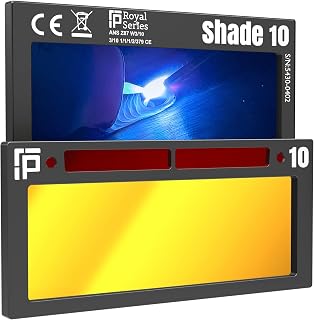
Shade 10 Gold Auto Darkening Welding Lens | 20A TIG Rated | King 2.0
Check PriceA gold welding lens is a passive glass filter. Manufacturers coat the surface of the glass with a microscopic layer of real gold particles. This is not just for aesthetics. The gold film acts as a reflector, bouncing infrared and ultraviolet radiation away from your eyes before it fully penetrates the glass.
Unlike standard color filters that absorb harmful light, a gold lens primarily reflects it. This keeps the glass cooler and reduces heat transfer. The result is a clearer, cooler view of the arc and the puddle. Most gold lenses fall within shade ranges 9 to 14, making them versatile for Stick, MIG, and TIG welding.
These are not auto-darkening lenses. You must nod your hood down to strike an arc, just like any passive system. The magic happens in the optical clarity and the true color representation they provide.
Are Gold Welding Lenses Better for Visibility?

Gold Welding Lens – Small 2″ × 4.25″ Premium Schott German Glass
Check PriceVisibility is where the gold lens truly shines. In the welding world, we measure optical clarity using four specific ratings. You might see them listed on a lens box as a sequence like 1/1/1/1. These numbers represent distortion, haze, light transmission uniformity, and angular dependence.
High-quality gold lenses can achieve perfect 1/1/1/1 optical clarity ratings much more easily than standard green filters. The gold coating eliminates a significant amount of the green tint that washes out the work area. Instead of seeing a monochrome green blur, you see a high-contrast, yellow-amber tone. This allows you to distinguish between the molten puddle, the slag, and the base metal with surgical precision.
For TIG welders, this color definition is critical. Seeing the delicate tungsten and the exact edge of the puddle prevents contamination and improves the final bead profile. If you struggle to see your joint while welding, swapping to a gold lens often feels like someone turned the lights on.
The Science of Color Recognition
The human eye is most sensitive to the yellow-green spectrum of light. Standard green lenses force you to view the arc through a heavy green filter. This blocks the variety of colors in the arc, leaving everything looking flat. Gold filters shift the visible light to a warmer hue, which is closer to the natural peak sensitivity of your eyes.
This means your pupils do not have to strain as hard to focus. Many welders report a drastic reduction in eye fatigue after a 10-hour shift when they switch to gold. The improved contrast helps you keep the arc tight inside the joint. Less squinting means better welds and fewer end-of-day headaches.
Comparing Gold Lenses to Standard Green Filters
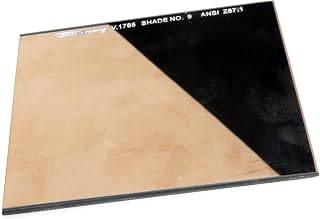
Forney 57070 Lens Replacement Gold Welding Filter
Check PriceIf you walk into any supply store, you will see shelves full of cheap green lenses. They are the industry standard passive lens. But are gold welding lenses better than green ones when we look at the facts? In almost every measurable category, the gold lens takes the lead, except for the price tag.
Here is how they stack up:
- Optical Clarity: Gold lenses typically offer high-definition clarity. Green lenses often have slight distortion and haze, particularly around the edges. The plastic laminate on cheap green lenses can warp over time.
- Heat Reflection: The gold coating acts as a thermal mirror. It reflects a massive amount of heat away from the lens. Green lenses absorb heat. This can cause them to crack if they get too hot or if you touch them with a wet glove.
- Color View: Green lenses show you a neon green world. Gold lenses show you a natural, amber-tinted world. You can actually see the difference between a clean base metal and oxidation.
- Durability: The gold coating is delicate. If you accidentally scratch the back of the lens with a screwdriver, you ruin it. Green lenses are cheap to abuse and toss. Gold requires care, but the glass itself is often higher quality.
If you want a deep dive into this specific battle, take a look at our breakdown of the gold welding lens vs green comparison. It covers the exact shade numbers and application differences.
The Unique Benefits of Using a Gold Lens
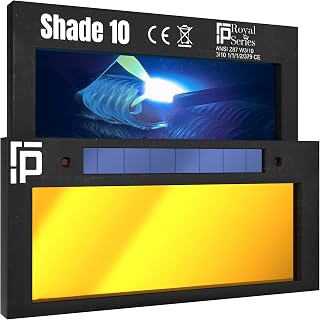
Ridge Products | Gold Shade 10 Auto Darkening Welding Lens
Check PriceMany professional pipe welders and TIG specialists treat gold lenses as a non-negotiable tool. The advantages go beyond just seeing better. They actually change how you interact with the arc.
First, the contrast helps with low-amp welding. If you are running 40 amps on thin stainless steel, the arc is small and faint. A green lens often forces you to use a lighter shade just to see the torch. A gold lens lets you stay at a darker, safer shade while keeping the puddle perfectly visible. You get the protection of a Shade 11 with the brightness visibility of a Shade 9.
Second, the heat reflection keeps you comfortable. In tight quarters like a pipe rack, radiant heat can make the hood feel like an oven. Gold lenses reduce the heat load on your face. This prevents sweat from dripping into your eyes and ruining your concentration.
Finally, they are completely analog. There is no battery to die, no sensors to block, and no flickering when the arc breaks. This reliability is why pipelines and structural welders trust passive gold hoods. If you want reliability, look at our guide to the best gold welding lens on the market.
Potential Drawbacks You Must Consider
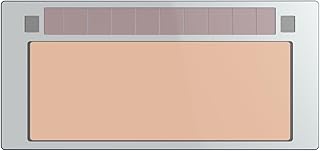
Tefuawe 2×4 1/4 Gold Automatic Welding Lens
Check PriceBefore you throw away your auto-darkening helmet, you need to understand the reality of working with gold lenses. They are not perfect, and they come with a learning curve. The biggest pain point is the maintenance.
Gold lenses are scratch magnets. Because the coating is on the outside of the glass, a dirty finger or a misplaced cover plate can create a permanent blemish. You must baby them. You also need to use proper cleaning solutions, as some chemicals will strip the gold coating right off. While a green lens costs a few dollars, a premium gold lens can cost twenty times that.
Another drawback is the fixed shade. If you go from welding a heavy root pass at 160 amps to a small cap pass, you might want a darker or lighter view. With a gold lens, you must physically pop out the filter and swap it. Auto-darkening helmets adjust instantly. The gold lens demands you stop and adapt, which is not ideal in a high-production shop where arc-on time is king.
There is also the neck strain factor. Passive lenses require a firm head nod to drop the hood. Over a career, that repetitive motion can take a toll on your spine. Auto-darkening hoods allow you to keep the hood down constantly.
Gold Lens vs. Auto-Darkening Helmets
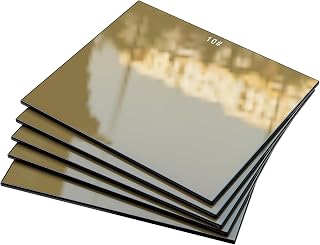
TRQWH 5pcs Welding Glass Lens Shade 10 Gold
Check PriceThis is the modern dilemma. Are gold welding lenses better than auto-darkening cartridges? The answer depends entirely on the job. The auto-darkening filter (ADF) wins on productivity. You remain hands-free. You position the torch exactly where you want it without the jarring motion of a head nod. This is critical for MIG welding in a production facility.
However, many auto-darkening lenses fail to deliver true color clarity. Entry-level ADF hoods often show a puddle that looks like a dark green smudge. High-end ADF hoods with true color optics have closed the gap significantly, but they come with a hefty price tag. Even the best auto-darkening lens relies on electronics, a battery, and arc sensors. These can fail in the rain, under extreme heat, or when surrounded by scaffolding that throws shadows.
The gold lens is the king of optical clarity for the purest view. It is a dead-simple tool with no lag time. If you are an artist with a TIG torch, the clarity of a gold lens beats a budget auto-darkening hood every time. But if you are a structural MIG welder running a lot of short tacks, the auto-dark hood will save your neck and speed up your production.
Who Should Absolutely Use a Gold Lens?
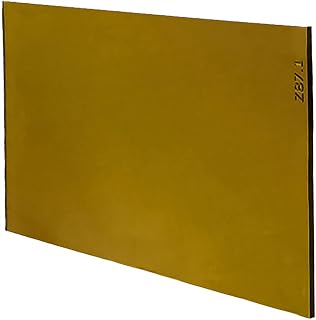
Large Welding Lens 4.5″ x 5.25″ Gold Coated Shade 11
Check PriceGold lenses are not for everyone. They are specifically suited for welders who prioritize precision over speed. If you fall into one of these categories, you should seriously consider making the switch.
- Pipeline Rig Welding: The environment is rough, dirty, and often remote. Batteries fail in the cold. Gold lenses in a fixed shade hood are bombproof. The clarity allows you to see the bevel edges in low-light conditions.
- Low-Amp TIG Welding: When fusing razor blades or repairing intricate aluminum castings, you need to see the subtle color change in the metal. Gold lenses provide the contrast necessary to avoid blowing a hole in the material.
- Sensitive Eyes: Some people simply cannot adjust to the green hue. They suffer from severe eye strain. The natural amber tone of a gold lens can be the difference between a lifelong career and quitting the trade.
- Outdoor Sunlight Work: Standard auto-darkening sensors sometimes struggle when the sun is blazing directly behind you. A passive gold lens ignores the sun completely. It only darkens when the arc hits it.
How to Maintain a Gold Lens for Long Life
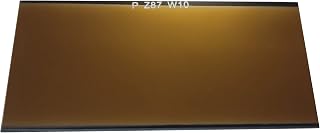
Best Welds Hardened Glass Gold Replacement Welding Lens
Check PriceTo make a gold lens better and last longer, you must protect your investment. The most critical step is using a clear outer cover plate. Never weld with a bare gold lens exposed to spatter. A single ball of hot steel will embed into the glass and ruin the coating instantly.
Stack your lenses carefully. The proper setup in a standard hood is a clear protective plate on the outside, the gold filter in the middle, and sometimes a thin clear plastic cover on the inside to keep sweat off the glass. Change the outer cover plate the moment it becomes pitted. It is much cheaper to replace a fifty-cent plastic cover than a fifty-dollar gold filter.
Cleaning is a delicate process. Never wipe a dry gold lens with a dry rag. This creates micro-scratches. Use a lens cleaning solution specifically designed for coated glass. Spray the lens and blot it gently with a microfiber cloth. Aggressive rubbing is the enemy. Store the hood with the lens facing down so dust does not settle on the surface and grind into the coating when you put the hood on.
Dispelling Common Myths About Gold Lenses
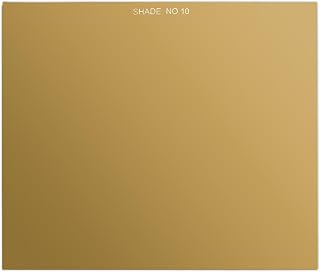
PATIKIL Gold Welding Glass Lens Shade 10
Check PriceThere is a lot of shop talk about gold lenses that simply is not true. One common myth is that the gold coating provides extra UV protection that you cannot get elsewhere. The truth is that standard passive lenses block 100 percent of harmful UV and IR radiation regardless of the coating. The glass composition stops the radiation, not the gold. The gold merely improves visible light clarity and reflects heat.
Another myth is that all gold lenses are created equal. The market is flooded with cheap imported lenses that use a tinted amber dye instead of a true gold coating. These knock-offs look yellow but lack the reflective properties. They will not improve clarity and they degrade quickly. Always look for reputable brands that specify a 1/1/1/1 optical rating. A genuine gold lens has a mirror finish on the outside, not just a sheen.
Finally, some believe you cannot use a gold lens with a cheater magnifier. This is false. You simply place the cheater lens behind the gold filter inside the hood. The gold lens works perfectly with magnification. The combination actually helps older welders see the puddle better than any other passive setup.
Frequently Asked Questions
Tefuawe 2×4 1/4 Gold Welding Lens Fixed Shade 10.5
Check PriceDo gold welding lenses require special shade numbers?
No, the shade numbers are standardized. A Shade 10 gold lens is the same density as a Shade 10 green lens. However, because the view is clearer and less bloated with green light, many welders find they can use a slightly darker shade with a gold lens. You might run a Shade 11 gold lens where you previously used a Shade 10 green lens, resulting in better protection and comfort.
Can you use a gold lens for Arc Gouging?
Yes, as long as the shade is dark enough. Arc gouging throws intense light and heavy slag. You will likely need a Shade 12 or darker. The heat reflection properties of gold lenses are actually a huge advantage during gouging because the process generates massive radiant heat. Just ensure you keep a fresh cover plate on the front, as the spatter is extreme.
Why are gold welding lenses so expensive?
The cost comes from the precise manufacturing process and the real gold used in the coating. High-quality glass must be ground optically flat. The vaporized gold deposition process is meticulous and must be perfect to avoid blind spots. This premium material and quality control process produces a lens with zero distortion, which justifies the higher price for professional welders.
Is a gold lens safe for beginners?
They are safe, but they might not be the best choice for a student. Beginners often struggle with the head nod timing required for a fixed shade passive hood. Accidentally striking an arc with the hood still up is a serious risk. Beginners are better off learning on an auto-darkening helmet to avoid flash burn. Once you master arc length and travel speed, upgrading to a gold lens can refine your skill.
Making the Final Decision
Are gold welding lenses better for your specific situation? If you value optical clarity, color recognition, and mechanical reliability above all else, then yes, they are the superior choice. Nothing beats the crisp view of a puddle through a high-grade gold filter. It allows for an intuitive understanding of puddle fluidity that makes you a better welder.
If your job requires high-volume tacks, awkward out-of-position work, or strict production deadlines, you might be frustrated with a passive setup. In that case, a high-end auto-darkening hood with true color technology might serve you better. It is not a matter of one being universally better. It is a question of matching the tool to the task.
Whichever route you choose, never compromise on protection against infrared and ultraviolet radiation. Your eyes need the correct shade and full UV protection regardless of the filter color. Invest in quality glass, keep it clean, and you will see a noticeable improvement in your welding quality immediately.