Picking the right stick electrode can make or break your weld. If you are just getting started with shielded metal arc welding, or SMAW, the sheer variety of rods available can feel overwhelming. Every electrode has a specific purpose, a unique coating, and distinct performance traits. This guide breaks down the major types of welding electrodes so you can match the rod to your project with confidence.
Stick welding remains one of the most versatile joining processes in the industry. The electrode you use determines arc stability, penetration depth, slag behavior, and even the strength of the finished joint. Understanding these factors helps you avoid common defects like porosity, undercut, or cracking. We will walk you through everything from the AWS classification system to the practical differences between a 6010 and a 7018 rod.
If you want to dive deeper into specific product recommendations, our best welding electrodes reviewed guide offers hands-on comparisons. For now, let us start with the core classification system that organizes all these rods.
Table of Contents
How Are Welding Electrodes Classified?
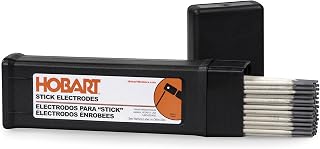
Hobart 770472 6013 Stick Welding Electrodes 5/32 in, 5 lb
Check PriceThe American Welding Society (AWS) created a numbering system that tells you exactly how an electrode behaves. This system is used across North America and in many international markets. Once you learn to decode the numbers, you will instantly know the rod’s tensile strength, position capability, coating type, and current requirements.
A typical stick electrode carries a code like E6010 or E7018. The “E” stands for electrode. The first two digits (or three, for strengths above 100,000 psi) indicate the minimum tensile strength in thousands of pounds per square inch. For example, E60xx means 60,000 psi, and E70xx means 70,000 psi. The third digit tells you the welding positions the rod can handle.
A “1” in the third position means the rod works in all positions, from flat to overhead. A “2” limits you to flat and horizontal fillets only. The last digit, combined with the third, reveals the coating composition and the type of current the electrode needs, either AC, DC positive, or DC negative. You can explore the full standard on the AWS A5.1 specification.
Common Types of Stick Welding Electrodes

Hobart H117119-RDP 6013 Stick Welding Electrode, 1/16-Inch
Check PriceBelow are the workhorse rods you will encounter in almost every shop or field job. Each offers a distinct balance of penetration, slag removal, and arc control. Understanding these profiles lets you pick the right type of welding electrode for carbon steel, the most commonly welded material.
E6010 Electrodes
E6010 rods are famous for deep, forceful penetration. They run exclusively on DC electrode positive, or DCEP. The coating is high in cellulose, which creates a strong, driving arc and a thin, fast-freezing slag. This makes them perfect for vertical-up and overhead welding on pipelines, structural steel, and root passes where full fusion is critical.
Welders prize the E6010 for its ability to dig through rust, mill scale, and light dirt. Because the slag solidifies quickly, you can carry a puddle out of position without the metal dripping away. The tradeoff is that the arc is harsh and produces more spatter than other rods. Beginners often find this electrode challenging until they develop a steady hand.
E6011 Electrodes
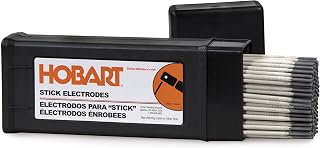
Hobart 770458 6011 Stick, 3/32-10lbs
Check PriceThe E6011 is essentially the AC-friendly cousin of the 6010. Its coating still relies on a cellulose base, but it includes stabilizers that let the arc stay lit when alternating current passes through zero. This makes it a go-to choice for field repairs where you only have a basic AC welder or a generator that struggles to maintain a smooth DC arc.
You can also run an E6011 on DCEP, giving it extra versatility. The penetration is deep, though slightly less aggressive than a straight 6010. It handles dirty surfaces well and remains popular for farm equipment repair, fence work, and maintenance welding. If you encounter a machine with limited settings, an E6011 often saves the day.
E6013 Electrodes
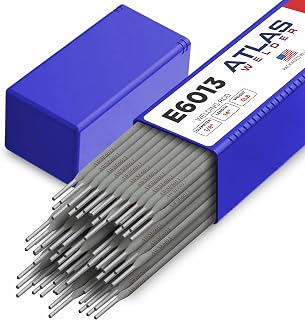
ATLASWELDER E6013 1/8” 5LB Welding Rods
Check PriceE6013 rods are the easiest to strike and produce the smoothest arc among common electrodes. Their coating contains rutile, a titanium dioxide mineral, which creates a soft, stable arc and a thick, easily removable slag. You can use them with AC or DC, and they run wonderfully on low-end machines, making them the favorite for hobbyists and sheet metal work.
Penetration is moderate, so these electrodes are best suited for clean metal and thin sections. The weld bead looks exceptionally flat and shiny, often requiring minimal cleanup. While not intended for structural root passes or high-strength joints, the E6013 shines on general fabrication, ornamental iron, and beginner practice. If you want a forgiving rod that builds confidence, start here.
E7018 Electrodes
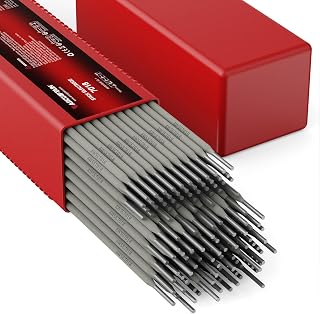
ARCCAPTAIN E7018 Welding Rods 1/8″ 10LB
Check PriceThe E7018 is the industry standard for low-hydrogen welding. Its coating is basic, made from lime, calcium fluoride, and other minerals. This formulation drastically reduces diffusible hydrogen in the weld metal, which helps prevent hydrogen-induced cracking in thicker, restrained steel plates. The rod runs on AC or DC and delivers a smooth, medium-digging arc with very low spatter.
You will see E7018 used extensively in structural steel erection, pressure vessels, shipbuilding, and heavy equipment repair. The slag is dense and needs proper cleaning between passes, but the resulting weld offers excellent toughness and ductility. One crucial note: this electrode must be stored in a sealed, moisture-free environment. Low-hydrogen rods absorb humidity from the air, which defeats their purpose if not properly re-dried before use.
E7024 Electrodes
E7024 rods contain a heavy iron powder addition in their rutile coating. This dramatically increases the deposition rate, making them a high-productivity choice for flat and horizontal fillets. The welding arc is exceptionally soft, and the slag detaches almost by itself, sometimes curling up as the weld cools. Use these when you need to lay down a lot of metal quickly on thick plate.
The main limitation is position. E7024 is only rated for flat and horizontal fillet welding. Attempting vertical or overhead work results in a fluid puddle that is impossible to control. You will find these rods in fabrication shops, tank building, and heavy manufacturing where down-hand welding dominates.
Other Specialized Electrodes
- E308L-16: A stainless steel electrode designed for welding 304L and similar grades. It provides excellent corrosion resistance and a smooth arc on AC or DC.
- ENi-CI: A nickel-based rod for welding cast iron. It produces a soft, machinable deposit and minimizes cracking in the heat-affected zone.
- E4043: An aluminum stick electrode used infrequently but handy for emergency repairs when TIG or MIG is unavailable. Requires significant preheat and skill.
Applications like underwater welding demand even more specialized rods with waterproof coatings and specific metallurgy. You can read about those unique requirements in our article on specialized electrodes for underwater use.
Understanding Electrode Coatings
ARCCAPTAIN E7018 Welding Rods 1/8″ 10LB
Check PriceThe coating on a welding electrode is not just a nuisance layer, it performs multiple critical functions. It creates a shielding gas that protects the molten metal from oxygen and nitrogen. It forms a slag blanket that controls cooling and shapes the bead. It also stabilizes the arc by adding ionizing elements, and it introduces alloying materials to refine the weld chemistry.
Coatings fall into three broad families: cellulose, rutile, and basic. Cellulose coatings, found on E6010 and E6011, produce a hydrogen-rich atmosphere and a forceful arc. Rutile coatings, typical of E6013 and E7024, burn smoothly with easy slag removal and a gentle arc. Basic coatings, as on E7018, contain calcium carbonate and fluorspar, giving the lowest hydrogen content and the best mechanical properties for critical work.
How to Read an Electrode Number
Hobart 770458 6011 Stick, 3/32-10lbs
Check PriceOnce you grasp the pattern, electrode selection becomes second nature. Let us decode an example, E7018, step by step. “E” means electrode for SMAW. “70” tells you the weld metal will have a minimum tensile strength of 70,000 psi. The third digit “1” confirms it can weld in all positions. The fourth digit “8” indicates a basic coating with low-hydrogen properties and AC or DC+ current capability.
Take another rod, E6010. The “60” is 60,000 psi, “1” for all positions, and “0” signals a cellulose sodium coating with deep penetration and DC+ only. If you see a number like E7024, the “2” in the third position restricts you to flat and horizontal welding, while the “4” means rutile with high iron powder. Knowing this code prevents you from ordering the wrong rod and wasting hours on a project.
Choosing the Right Electrode for Your Project
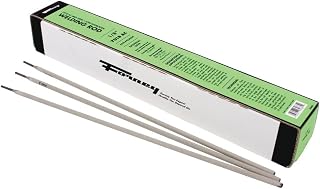
Forney 30685 E7018 AC Welding Rod, 1/8-Inch, 5-Pound
Check PriceStart by assessing three things: the base metal, the material thickness, and the welding position. For thin sheet metal in the flat position, a mild rutile rod like E6013 gives you easy control and a clean bead. For open-root pipe joints in the field, a cellulose rod like E6010 gives the digging force you need.
When welding thick, restrained structures, always reach for an E7018. The low-hydrogen design prevents underbead cracking, especially on high-carbon or alloy steels. If your machine only puts out AC, choose an E6011 or E7018 with an AC-compatible coating. Avoid using E6010 on an AC-only machine, it will simply refuse to run.
- Beginners: Start with E6013 for flat and horizontal practice.
- Farm or home repairs: E6011 handles rust and AC machines well.
- Pipelines and root passes: E6010 delivers the best penetration.
- Structural steel and high strength: E7018 is the professional standard.
Tips for Storing and Handling Electrodes
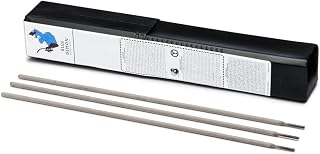
Blue Demon 6011 X 5/32″ X 14″ X 5LB Plastic Carbon Steel Electrode
Check PriceMoisture is the enemy of all stick electrodes. Cellulose rods need a small amount of moisture to function, but too much will cause porosity and arc instability. Keep them in a dry box at ambient shop temperature. Low-hydrogen rods like E7018 are far more sensitive. They must be stored in a rod oven at the temperature recommended by the manufacturer, typically around 250°F to 300°F.
Once low-hydrogen electrodes leave the oven, you typically have a four-hour exposure window before they must be reconditioned. After that, they absorb enough moisture to potentially introduce hydrogen into the weld. Write the date and time on the container and never return damp rods to the oven without proper re-drying cycles. Following this routine ensures your welds meet code and remain defect-free.
Frequently Asked Questions
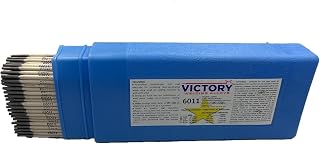
Victory Welding Alloys 6011 Welding Rod 1/8″ 5 Pound Box
Check PriceWhat is the easiest welding electrode for a beginner?
The E6013 is widely considered the most beginner-friendly stick electrode. Its rutile coating provides a soft, stable arc that reignites easily, and the slag peels off with little effort. This rod allows new welders to focus on travel speed and arc length without fighting the arc. Because it runs on AC and low open-circuit voltages, it pairs well with affordable home machines.
Can I use E7018 for all positions?
Yes, the standard E7018 is rated for all positions, and it performs beautifully out of position. The fast-freezing puddle and dense slag support the weld metal during vertical-up and overhead joints. However, some special variants like E7018-1 have improved toughness, and E7028 is a high-deposition rod limited to flat and horizontal use. Always check the specific manufacturer datasheet before you start.
Why does my E7018 rod keep sticking?
Sticking usually happens when the arc length is too short or the amperage is set too low. E7018 electrodes run best with a slightly longer arc than cellulose rods. Moisture absorption can also cause arc instability and sticking. Ensure your rods are properly stored and pre-dried. If the problem continues, try raising the amperage by 5 to 10 amps and practice a clean lift-start motion.
What do the different colors on electrode tips mean?
Manufacturers often apply a small paint dot or band to the bare end of the electrode to identify the rod type quickly. For example, many brands use a blue dot for E7018 and a yellow dot for E6010. There is no industry-wide standard, so always verify the stamped code on the coating instead of relying solely on color.
Conclusion
Mastering the types of welding electrodes puts you in complete control of your stick welding results. Whether you need the deep bite of a 6010 for a pipe root, the buttery arc of a 6013 for thin sheet, or the crack-resistant strength of a 7018 for a structural beam, the right rod is waiting on your rack. Learn the AWS code, match the coating to your task, and treat every electrode with proper storage discipline.
Start your next project by testing a few rods on scrap metal. Notice how the arc sounds, how the slag removes, and how the bead profile looks. That hands-on experience, combined with the knowledge from this guide, will turn electrode selection from guesswork into a repeatable skill. For a carefully vetted list of top performers, explore our full welding electrode recommendations.