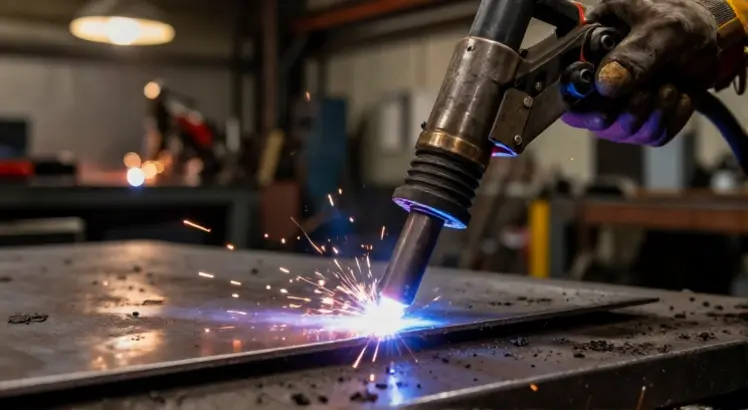
If you just picked up a 50 amp plasma cutter or you are shopping for one, the first question on your mind is likely, What can a 50a plasma cutter cut? It is the sweet spot for serious hobbyists, mobile welders, and small fabrication shops. You get enough punch to handle thick plate without the industrial footprint of an 80 or 100 amp monster. In this guide, you will learn exactly how thick you can cut steel, aluminum, and stainless, along with real-world factors that change what your machine can do. No marketing fluff, just clear, experience-based answers.
Too many charts only list the clean cut number and leave you guessing about severance cuts, travel speed, and air pressure. We break it all down so you can set up your 50A plasma cutter with confidence. You will also find a practical thickness chart, tips for better edge quality, and answers to the most common questions about 50 amp cutting capacity.
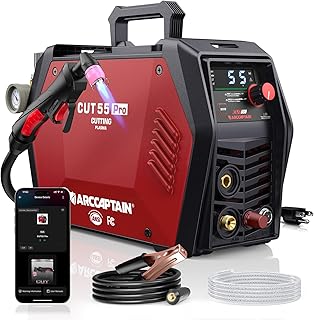
ARCCAPTAIN iControl CUT55 Pro
Check PriceTable of Contents
What Does a 50 Amp Plasma Cutter Actually Mean for Capacity
Plasma cutters are rated by output amperage, and the number directly controls how much metal you can burn through. More amps equal a hotter, more concentrated arc, which translates to a thicker cut. A 50 amp unit sits right between light duty 30 amp machines and heavy industrial models. It gives you a wide envelope without breaking the bank.
But amperage alone does not set the limit. Cut capacity is always split into two numbers: the rated cut and the severance cut. The rated cut, often called the quality cut, is the thickness you can run at a steady speed and get a clean, nearly dross-free edge. The severance cut is the maximum you can push the torch through, slower and with a rougher edge, often followed by grinding.
For a 50 amp machine on mild steel, the rated cut usually lands around 1/2 inch, with a severance thickness of 3/4 inch or slightly more. These numbers shift depending on your material, torch design, and air supply. Understanding this split is key because many beginners assume they can casually zip through the max thickness all day. In reality, you want to stay within the rated cut range for production work and only touch the severance limit when you have no other option.
What Can a 50A Plasma Cutter Cut? A Detailed Material Breakdown
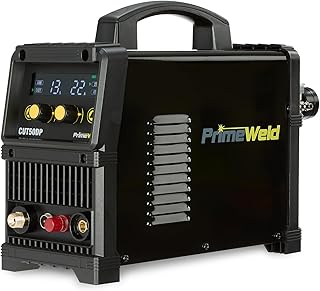
PRIMEWELD CUT50DP 50A Non-Touch Pilot Arc
Check PriceEvery metal behaves differently under a plasma arc. Thermal conductivity, melting point, and surface condition all change the effective thickness you can cut. Here is exactly what you can expect from mild steel, stainless, and aluminum when you run a properly set 50 amp machine.
Mild Steel Cutting Thickness with 50 Amps
Mild steel is the baseline, and your 50A cutter shines here. The rated quality cut thickness is 1/2 inch. You will hold a steady travel speed, get a smooth edge, and see minimal slag. You can go up to 5/8 inch without much trouble, though you may need a light post-cut cleanup. The maximum severance cut for 50 amps on mild steel is typically 3/4 inch, and on a well-tuned machine with fresh consumables, you might push 7/8 inch in a pinch.
At the severance limit, you move much slower, the cut face is rougher, and dross forms on the bottom edge. It is totally workable for scrap cuts, demo work, or pieces you will grind anyway. For a smoother experience on thicker mild plate, consider the exact model. You can check our top-rated 50A plasma cutters to see which units hold their arc the best at the high end.
Stainless Steel Cutting Capabilities
Stainless steel has a lower thermal conductivity than mild steel, which sounds like good news, but it also has a sticky, high-chromium slag that can make the cut harder. With a 50 amp plasma cutter, the rated quality cut sits right around 3/8 inch. You will get a clean edge on 10 gauge to 3/8 inch stainless plate. The maximum practical severance cut is about 1/2 inch to 5/8 inch, depending on alloy.
Stainless requires slightly faster travel and spot-on torch height. If you go too slow, the cut gap widens and dross becomes a nightmare to chip off. Keep your air dry and pressure steady, moisture will ruin a stainless cut in seconds. When you stick within the 3/8 inch rated zone, you can produce parts that need almost no finish work.
Aluminum Cutting Thickness on a 50A Machine
Aluminum conducts heat rapidly, so the plasma arc has to work harder to maintain a localized melt zone. That means your effective cutting capacity drops compared to mild steel. With 50 amps, the quality cut on aluminum is around 1/4 inch. You can achieve a decent edge on 3/8 inch plate with careful speed control. The absolute severance limit usually tops out at 1/2 inch.
One of the biggest hurdles with aluminum is the oxide layer, which melts at a much higher temperature than the base metal. A strong, stable arc blows that oxide away, but if your air pressure lags or your consumables are worn, you will see a lot of edge buildup. Use a dedicated drag shield or standoff guide to maintain the correct torch distance. For more insight on aluminum cutting, our guide on cutting aluminum with a plasma cutter walks through the nuances.
Practical 50A Plasma Cutting Thickness Chart
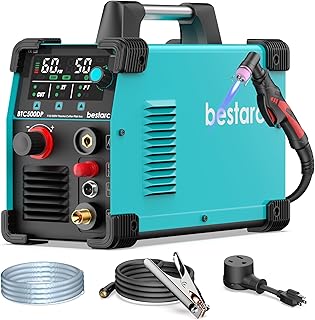
Bestarc BTC500DP 50A Pilot Arc Cutter
Check PriceBelow is a quick reference chart based on real-world use with a 50 amp, 220V machine using clean dry shop air. Always consult your specific cutter’s manual, but these numbers give you a dependable starting point.
- Mild Steel Quality Cut: 1/2 inch (rated), up to 5/8 inch clean at slower speed.
- Mild Steel Severance Cut: 3/4 inch, occasionally 7/8 inch with fresh consumables.
- Stainless Steel Quality Cut: 3/8 inch, decent edge on 1/2 inch with practice.
- Stainless Steel Severance: 5/8 inch max, dross heavy and slow.
- Aluminum Quality Cut: 1/4 inch, 3/8 inch with careful torch control.
- Aluminum Severance: 1/2 inch, edge will need cleanup.
If you need a deeper dive into how amperage scales across different materials, take a look at our plasma cutter amperage guide. It explains the relationship between input power and cutting depth for everything from tiny 20 amp units to big industrial rigs.
Key Factors That Influence What a 50A Plasma Cutter Can Handle
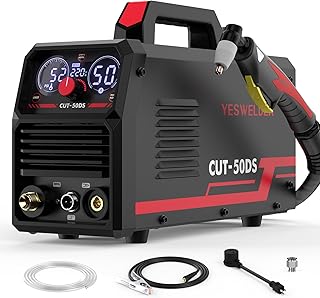
YESWELDER CUT-50DS 50Amp Digital Cutter
Check PriceTwo 50 amp machines can behave very differently on the same piece of metal. The amperage rating is only part of the story. Dial in these four variables and you will squeeze every bit of capacity out of your cutter.
Air Pressure, Flow, and Dryness
Plasma cutting is a pneumatic process as much as an electrical one. Most 50A cutters need a steady 60 to 75 PSI with enough flow to blast the molten metal out of the kerf. If your compressor lags and pressure drops mid-cut, the arc destabilizes and you lose thickness capacity instantly. Even more important is moisture. Water in the air line chews up electrodes and nozzles, shortens consumable life, and creates a ragged cut face. A good inline desiccant dryer is not optional if you want to hit the max thickness numbers.
Torch Consumables Condition
A 50 amp cutter with a worn nozzle or electrode cannot punch through its rated plate. The arc becomes wider and cooler, eating away at speed and edge quality. Change consumables the moment you see an unstable arc, excessive dross, or beveled edges where you used to get a clean 90-degree cut. Keep a small stock of electrodes, nozzles, swirl rings, and shields, and match them to the amperage you are running. Using a 40 amp nozzle when you need 50 amps will choke performance.
Standoff Distance and Travel Speed
Standoff distance, the gap between the shield cup and the workpiece, needs to stay tight and consistent. A drag shield lets you ride right on the plate, which is easiest for beginners. Too much standoff spreads the arc and reduces cutting depth. Travel speed is equally critical. Too fast and you lose the cut or get a heavy bevel. Too slow and you create a wide kerf, low speed dross, and burn through consumables faster. Practice on scrap until you find the sweet spot where sparks exit nearly vertically from the bottom of the cut.
Input Voltage and Real Power
Not all 50 amp plasma cutters run on the same input voltage. Many dual voltage units drop to 110V mode, which limits output amperage and cuts capacity in half. To unlock the full 50 amps and the 1/2 inch rated cut on steel, you need 220V, 240V input. Even on a 220V circuit, long, thin extension cords cause voltage sag and rob performance. Use a heavy gauge cord as short as practical, and plug directly into a dedicated outlet if possible.
How to Achieve a Clean Cut Every Time with Your 50 Amp Machine
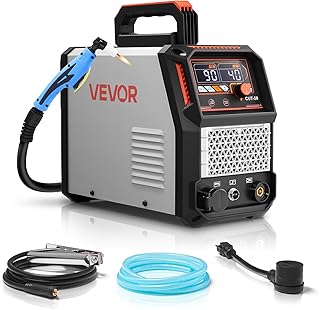
VEVOR 50A Digital Display IGBT Cutter
Check PriceGetting a smooth, weld-ready edge at your cutter’s rated capacity is as much about technique as horsepower. Start by setting the air pressure exactly where the manual recommends, often 65 70 PSI measured at the gauge with the torch triggered. Do not guess. Next, use a straight edge or a clamped guide plate for long cuts. Freehand wobbles create uneven standoff and a beveled edge.
Position your torch perpendicular to the plate or ever so slightly tilted forward in the direction of travel. A small drag angle helps the arc blow into the metal and can improve cut quality on thicker sections. Listen to the sound, a steady, sharp hiss means you are locked in. A sputtering, popping sound tells you speed or standoff is off.
Post-cut, a quick pass with a chipping hammer removes the light dross edge you get near the upper limit. If you are doing production cutting, aim to stay no more than 80 percent of the rated capacity so you can maintain speed and reduce cleanup. When you need to cut right at the severance limit, accept that you will spend extra time on grinding and edge prep.
Frequently Asked Questions
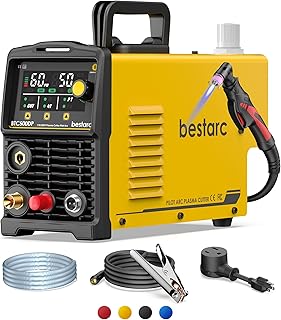
Bestarc 50A Pilot Arc Cutter, Yellow
Check PriceCan a 50 amp plasma cutter cut 1 inch steel?
No, 1 inch solid mild steel is beyond the realistic severance capacity of a 50 amp machine. Even under perfect conditions, you might get a piercing that sputters halfway through. If you need to cut 1 inch plate regularly, step up to a 60 or 80 amp plasma cutter. A 50A unit can pierce and roughly sever 3/4 inch, occasionally 7/8 inch, but 1 inch will leave you frustrated with an incomplete cut.
Is a 50 amp plasma cutter enough for home use?
For most home shops and automotive work, a 50 amp plasma cutter is more than enough. It handles 1/4 inch and 3/8 inch steel easily, which covers brackets, body panels, trailer repair, and artwork. You also get the headroom to occasionally tackle 1/2 inch and 5/8 inch plate without buying a bigger machine.
Does a 50 amp plasma cutter require 220V?
To use the full 50 amp output and reach its maximum cutting capacity, yes, you need a 220V or 240V power source. Many 50A units offer dual voltage 110V/220V operation, but on 110V they usually limit output to around 25 to 30 amps, which severely reduces cutting thickness. For thick plate work, always run on 220V.
What is the ideal air compressor for a 50A plasma cutter?
You want a compressor that delivers at least 4 to 5 CFM at 90 PSI continuously. A 20 or 30 gallon tank helps keep pressure steady during longer cuts. Always include a water separator and a desiccant dryer to protect your consumables and arc quality. Undersized compressors lead to pressure drops that ruin cut capacity.
How much faster is a 50 amp plasma cutter than a 30 amp?
A 50 amp cutter moves significantly faster on the same thickness. On 1/4 inch mild steel, a 30 amp machine might cut at 20 inches per minute, while a 50 amp can reach 35 to 45 IPM. The extra amperage also gives you the ability to cut thicker plate and handle aluminum without as much backside dross.
Conclusion
A 50 amp plasma cutter is a versatile powerhouse that answers the question what can a 50a plasma cutter cut? with a clean yes for 1/2 inch steel, 3/8 inch stainless, and 1/4 inch aluminum in quality mode, while pushing severance cuts up to 3/4 inch on mild plate. That range covers the vast majority of repair, fabrication, and art projects you will ever tackle at home or in a light shop.
The real secret to hitting those numbers consistently is not just the amperage knob. It is dry air, fresh consumables, proper standoff, and a stable 220V power supply. Master those fundamentals and your 50 amp machine will outperform the spec sheet. If you want to dig deeper into the machines themselves, our best 50 amp plasma cutter roundup gives you a clear look at today’s top performers. And for a broader understanding of plasma physics and torch technology, visit Lincoln Electric’s plasma cutting resource, it is one of the best industry-backed deep dives available.
Now grab some plate, set your pressure, and start cutting with the confidence that you know exactly what your 50 amp machine can do.